
In modern robotics, the integration of sensors has become pivotal for enhancing perceptual capabilities and enabling sophisticated human-robot interactions. Among these, the six-axis force sensor plays a critical role in measuring forces and torques applied to robotic end-effectors. However, during practical deployment, factors such as load connection methods and tightening intensity introduce installation errors that cannot be compensated for during the manufacturing process. These errors manifest as non-zero readings when no external forces are applied, leading to inaccuracies in force feedback. In this article, we propose a method to calculate the installation error of a six-axis force sensor, accounting for tool gravity, sensor self-gravity, and the inherent installation discrepancies. By leveraging coordinate transformations and experimental validation, we demonstrate the feasibility of our approach in improving measurement accuracy.
The core issue stems from the fact that installation errors arise post-deployment due to mechanical assembly variations. Traditional calibration methods often overlook these errors or attribute them to pre-delivery adjustments by manufacturers. Our method addresses this gap by deriving a comprehensive model that incorporates all gravitational influences and installation-induced deviations. We begin by establishing coordinate systems for the robot, six-axis force sensor, and end-effector tool, followed by deriving transformation matrices to express forces across different frames. Subsequently, we compute the gravitational effects and isolate the installation error through controlled experiments. The results confirm that our method significantly reduces residual errors compared to existing techniques, ensuring reliable force sensing in applications like collaborative robotics and precision assembly.
To model the system, we employ the Denavit-Hartenberg (D-H) convention to define the robot’s coordinate frames. Consider a six-degree-of-freedom serial manipulator, where the base frame is denoted as {x₀, y₀, z₀} and the end-effector frame as {x₆, y₆, z₆}. The D-H parameters for each link are summarized in Table 1. The transformation matrix between consecutive frames is given by:
$$ T^{(i-1)}_i = \begin{bmatrix} c\theta_i & -s\theta_i c\alpha_i & s\theta_i s\alpha_i & a_i c\theta_i \\ s\theta_i & c\theta_i c\alpha_i & -c\theta_i s\alpha_i & a_i s\theta_i \\ 0 & s\alpha_i & c\alpha_i & d_i \\ 0 & 0 & 0 & 1 \end{bmatrix} $$
where $c\theta_i$ and $s\theta_i$ represent cosine and sine of the joint angle $\theta_i$, respectively. The parameters $\alpha_i$, $a_i$, and $d_i$ are the twist angle, link length, and link offset, respectively. The cumulative transformation from the base to the end-effector is computed as:
$$ T^0_6 = T^0_1 \cdot T^1_2 \cdot T^2_3 \cdot T^3_4 \cdot T^4_5 \cdot T^5_6 $$
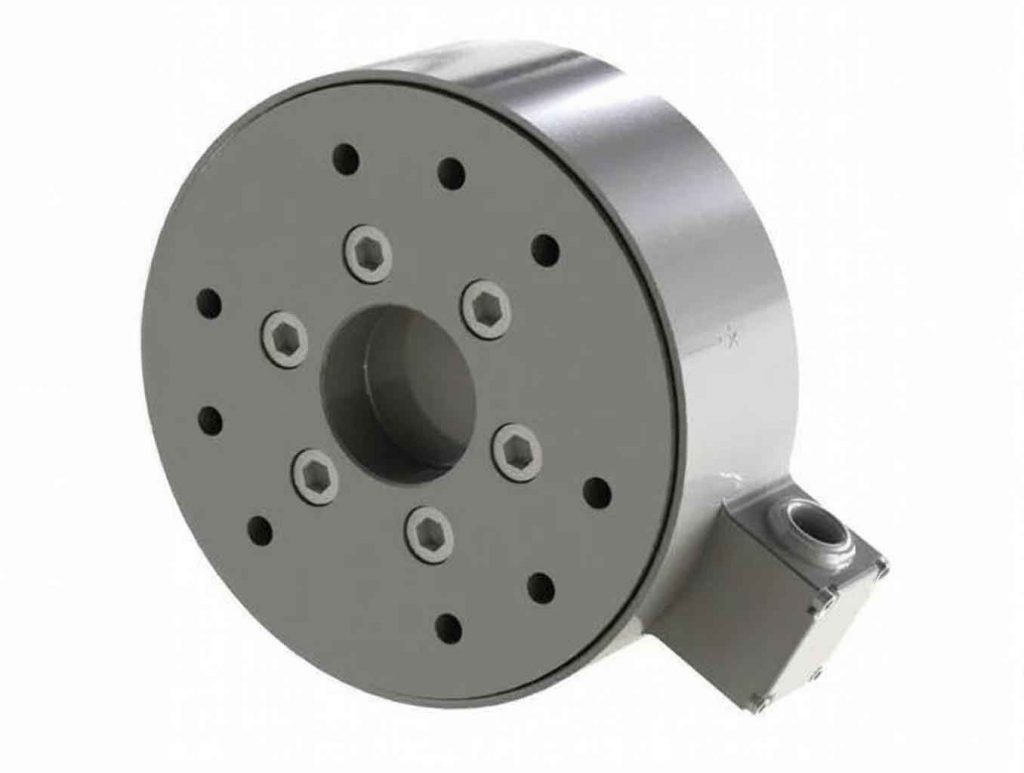
The six-axis force sensor is mounted between the robot flange and the end-effector tool. We define the sensor frame S {S_x, S_y, S_z} with its origin at the sensor’s center of mass, and the tool frame T {T_x, T_y, T_z} at the tool’s center of mass. The transformation from the end-effector frame to the sensor frame accounts for offsets in the x, y, and z directions:
$$ T^6_S = \begin{bmatrix} 1 & 0 & 0 & S_x \\ 0 & 1 & 0 & S_y \\ 0 & 0 & 1 & S_z \\ 0 & 0 & 0 & 1 \end{bmatrix} $$
Similarly, the transformation from the sensor frame to the tool frame involves the positional differences between their centers of mass:
$$ P_x = T_x – S_x, \quad P_y = T_y – S_y, \quad P_z = T_z – S_z $$
$$ T^S_T = \begin{bmatrix} 1 & 0 & 0 & P_x \\ 0 & 1 & 0 & P_y \\ 0 & 0 & 1 & P_z \\ 0 & 0 & 0 & 1 \end{bmatrix} $$
The overall transformation from the base frame to the tool frame is then:
$$ T^0_T = T^0_6 \cdot T^6_S \cdot T^S_T $$
To compensate for the tool’s gravity, we express the gravitational force in the base frame as a wrench vector:
$$ \begin{bmatrix} ^0\mathbf{f} \\ ^0\mathbf{n} \end{bmatrix} = \begin{bmatrix} 0 \\ 0 \\ G \\ 0 \\ 0 \\ 0 \end{bmatrix} $$
where G is the magnitude of the tool’s gravity. Using the adjoint transformation, we convert this wrench to the tool frame:
$$ \begin{bmatrix} ^T\mathbf{f} \\ ^T\mathbf{n} \end{bmatrix} = \begin{bmatrix} R^T_0 & \mathbf{0} \\ S(^T\mathbf{p}) R^T_0 & R^T_0 \end{bmatrix} \begin{bmatrix} ^0\mathbf{f} \\ ^0\mathbf{n} \end{bmatrix} $$
Here, $R^T_0$ is the rotation matrix from the base to the tool frame, and $S(^T\mathbf{p})$ is the skew-symmetric matrix of the position vector $^T\mathbf{p}$. The tool gravity’s effect on the six-axis force sensor is further transformed to the sensor frame:
$$ \begin{bmatrix} ^S\mathbf{f}_{tg} \\ ^S\mathbf{n}_{tg} \end{bmatrix} = \begin{bmatrix} R^S_T & \mathbf{0} \\ S(^S\mathbf{p}) R^S_T & R^S_T \end{bmatrix} \begin{bmatrix} ^T\mathbf{f} \\ ^T\mathbf{n} \end{bmatrix} $$
Similarly, the sensor’s self-gravity is compensated by transforming its gravitational force from the base to the sensor frame:
$$ \begin{bmatrix} ^S\mathbf{f}_{sg} \\ ^S\mathbf{n}_{sg} \end{bmatrix} = \begin{bmatrix} R^S_0 & \mathbf{0} \\ S(^S\mathbf{p}) R^S_0 & R^S_0 \end{bmatrix} \begin{bmatrix} 0 \\ 0 \\ G_s \\ 0 \\ 0 \\ 0 \end{bmatrix} $$
where $G_s$ is the sensor’s gravity magnitude. The installation error, denoted as $D_I$, is a constant offset arising from mounting inconsistencies. The total reading from the six-axis force sensor, $D_s$, comprises the tool gravity effect $D_{TG}(\theta)$, sensor self-gravity effect $D_{SG}(\theta)$, installation error $D_I$, and external forces $D_O(t)$:
$$ D_s = D_{TG}(\theta) + D_{SG}(\theta) + D_I + D_O(t) $$
By setting external forces to zero ($D_O(t) = 0$) during calibration, we isolate the installation error:
$$ D_I = D_s – D_{TG}(\theta) – D_{SG}(\theta) $$
This value of $D_I$ remains constant for a fixed installation and can be used for real-time compensation. The compensated external force is then:
$$ D_O(t) = D_s – \left( D_{TG}(\theta) + D_{SG}(\theta) + D_I \right) $$
To validate our method, we conducted experiments using a UR5 collaborative robot and an ATI six-axis force sensor. The robot was programmed to orient the end-effector tool in five distinct directions: right, up, backward, down, and left. For each direction, twenty random positions were selected, and sensor readings were recorded under no external load. We compared three compensation methods: Method 1 (our proposed approach), Method 2 (tool gravity compensation only), and Method 3 (an alternative method from literature). The geometric mean of force and torque magnitudes was computed for each set, along with standard deviations to assess stability.
Table 2 presents the geometric mean values for the tool-oriented-right direction. Method 1 shows near-zero force and torque errors, outperforming Methods 2 and 3. Specifically, the force error is reduced by 3.6 N compared to Method 2, and the torque error is lowered by 0.42 Nm. Method 3, while better than Method 2 in torque compensation, exhibits higher force errors. The stability of Method 1 is evident in the low standard deviations, as illustrated in Figure 8 for force components and Figure 9 for torque components.
| Link | $\theta_i$ | $\alpha_i$ | $a_i$ | $d_i$ |
|---|---|---|---|---|
| 1 | $\theta_1$ | 0 | 0 | $d_1$ |
| 2 | $\theta_2$ | $\pi/2$ | 0 | $d_2$ |
| 3 | $\theta_3$ | 0 | $-a_3$ | $d_3$ |
| 4 | $\theta_4$ | 0 | $-a_4$ | $d_4$ |
| 5 | $\theta_5$ | $\pi/2$ | 0 | $d_5$ |
| 6 | $\theta_6$ | $-\pi/2$ | 0 | $d_6$ |
| Method | Force Magnitude (N) | Torque Magnitude (Nm) |
|---|---|---|
| Method 1 | 0.0189 | 0.0122 |
| Method 2 | 3.6908 | 0.4353 |
| Method 3 | 5.1165 | 0.1034 |
For the tool-oriented-up direction, Table 3 highlights the superiority of Method 1, with force errors reduced by nearly 4 N and torque errors by 0.44 Nm relative to Method 2. Method 3 shows improvements in torque but fails to stabilize force compensation. The force and torque components for this direction are plotted in Figure 10, demonstrating Method 1’s consistency around zero. The standard deviations in Figure 11 further confirm the robustness of our approach across varying orientations.
| Method | Force Magnitude (N) | Torque Magnitude (Nm) |
|---|---|---|
| Method 1 | 0.0120 | 0.0038 |
| Method 2 | 4.4279 | 0.4464 |
| Method 3 | 5.9899 | 0.0507 |
In the tool-oriented-backward direction, Table 4 reveals that Method 1 reduces force errors by 9.4 N and torque errors by 0.35 Nm compared to Method 2, representing a 63% improvement in force accuracy over Method 3. The force and torque components in Figure 12 show minimal fluctuations for Method 1, while Method 2 and Method 3 exhibit significant variability. The standard deviations in Figure 13 underscore the stability of Method 1 in both force and torque domains.
| Method | Force Magnitude (N) | Torque Magnitude (Nm) |
|---|---|---|
| Method 1 | 0.1808 | 0.0077 |
| Method 2 | 9.5964 | 0.3589 |
| Method 3 | 6.1964 | 0.1234 |
For the tool-oriented-down direction, Table 5 indicates that Method 1 nearly eliminates all errors, reducing force by 11.55 N and torque by 0.63 Nm relative to Method 2. This corresponds to an 89% reduction in force error compared to Method 3. The force and torque components in Figure 14 display Method 1’s precision, with standard deviations in Figure 15 confirming its consistency. Similarly, in the tool-oriented-left direction, Table 6 shows Method 1 achieving force error reductions of 8.64 N and torque error reductions of 0.47 Nm, outperforming Method 3 by 65% in force compensation. The components in Figure 16 and standard deviations in Figure 17 validate the method’s reliability.
| Method | Force Magnitude (N) | Torque Magnitude (Nm) |
|---|---|---|
| Method 1 | 0.0060 | 0.0082 |
| Method 2 | 11.5635 | 0.6394 |
| Method 3 | 10.3358 | 0.2247 |
| Method | Force Magnitude (N) | Torque Magnitude (Nm) |
|---|---|---|
| Method 1 | 0.0085 | 0.0051 |
| Method 2 | 8.6540 | 0.4811 |
| Method 3 | 5.6913 | 0.0789 |
Across all orientations, Method 1 demonstrates an average reduction of 70% in force errors and 22% in torque errors compared to conventional methods. The stability of Method 1 is consistently high, unaffected by tool direction, whereas Methods 2 and 3 show significant fluctuations. This underscores the importance of compensating for both tool and sensor self-gravity, as well as accurately calculating the installation error.
In conclusion, our method provides a robust solution for calculating the installation error of a six-axis force sensor in robotic systems. By systematically addressing gravitational influences and mounting discrepancies through coordinate transformations, we achieve precise sensor zeroing. Experimental results confirm that our approach enhances measurement accuracy and stability, making it suitable for demanding applications such as force-controlled assembly and collaborative robotics. The simplicity and effectiveness of this method facilitate its integration into existing robotic frameworks, ensuring reliable force feedback without additional hardware requirements.