
By our Technology Desk
The global march towards automation and intelligent machinery is accelerating, positioning robotics as a cornerstone of future economic and societal frameworks. As nations vie for leadership in this transformative field, a clear and forward-looking development strategy is paramount. Drawing from recent scholarly analysis and national priorities, the path for China’s robotics evolution is crystallizing around core technological challenges and strategic imperatives to ensure its competitive edge in the coming era of advanced machines.
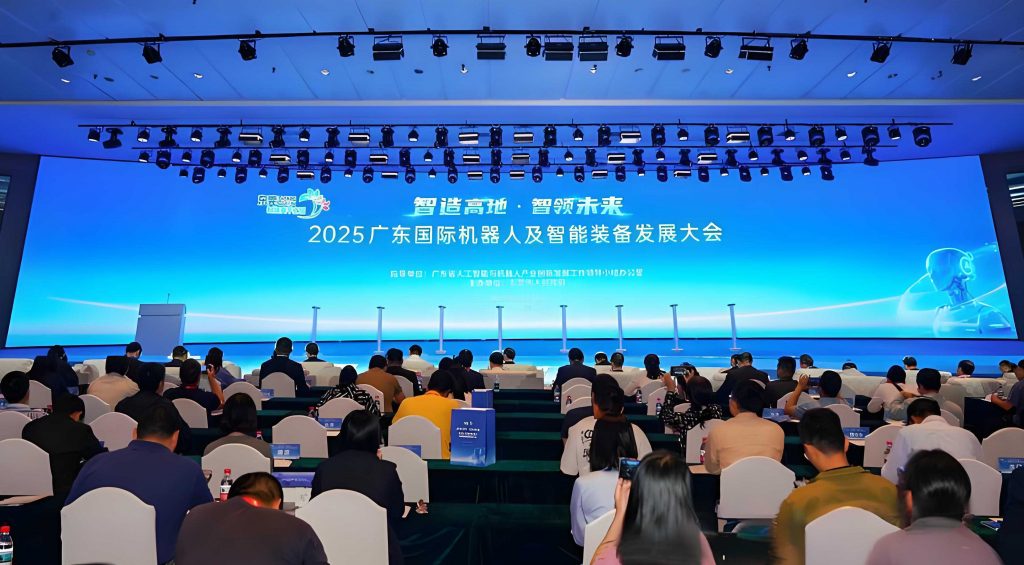
Powerful global forces are driving the robotics revolution. These include rising manufacturing labor costs against a backdrop of declining product prices, a growing aging population requiring services that outstrip human caregiving capacity, the persistent need to operate in hazardous environments from disaster zones to battlefields, and the ambition to explore extreme frontiers like the deep sea and outer space. Robots are no longer merely tools for repetitive factory tasks; they are increasingly seen as partners and proxies for human capability.
However, a significant gap persists between this vision and current reality. Traditional industrial robots excel in structured settings with deterministic tasks but falter in unstructured, dynamic spaces shared with humans. Modern robotics aims for collaboration, requiring machines that can understand abstract commands, perceive complex environments in real-time, perform dexterous manipulation, interact intuitively, and operate safely alongside people. The transition from isolated automation to integrated, cooperative intelligence represents the central challenge for the next generation of China robot development and for the global field as a whole.
1. The Global Robotics Landscape: A Race for Next-Generation Capabilities
Recognizing robotics as a disruptive technology with the potential to reshape economies, leading nations have embarked on ambitious roadmaps. The United States, through initiatives like the Advanced Manufacturing Partnership and the National Robotics Initiative, seeks to develop next-generation collaborative robots and revitalize its manufacturing base. Japan’s long history with industrial robots is now pivoting towards a “Robot Revolution,” aiming to double its manufacturing robot market and expand service robotics twentyfold in non-manufacturing sectors by 2020. South Korea, Germany with its “Industry 4.0” vision, and the European Union with its “SPARC” programme have all launched significant national strategies, investing billions to secure leadership in robotics innovation and application.
The technological focus has broadened dramatically. While industrial robots remain vital, the frontier now encompasses sophisticated service robots for healthcare, domestic assistance, and hospitality, as well as specialized robots for exploration, logistics, and defense. The common thread across these domains is the move towards systems that feature enhanced human-robot interaction, cooperation, and even fusion. The key technological bottlenecks to be overcome worldwide involve three-dimensional environmental perception, real-time navigation and planning, human-like dexterous operation, intuitive human-robot interfaces, and the establishment of robust safety protocols for shared workspaces.
2. China Robot Development: Current Status and Strategic Imperatives
China’s engagement with robotics began in the 1970s, but its market and technological capabilities have expanded remarkably in the last two decades. The nation is now the world’s largest market for industrial robots, a status driven by rising labor costs and the strategic need for manufacturing upgrading. Landmark achievements, such as deep-sea submersibles, surgical robots, heavy-duty forging manipulators, and bionic robots, showcase the growing depth of Chinese research and development.
Yet, a stark contrast exists between market size and indigenous technological mastery. International giants dominate approximately 70% of the domestic market, highlighting a critical reliance on foreign core components and systems. The development of precision reducers, high-performance controllers, servo systems, and drives within China remains a bottleneck, constraining the innovation and competitiveness of domestic robot manufacturers. This dependency underscores an urgent national strategic need: to master the fundamental theories and key technologies of modern robotics.
The scholarly analysis posits that the advancement of China robot technology must address three core scientific questions to achieve breakthroughs:
- Adaptability: Uncovering the principles governing robot adaptation to unstructured environments and uncertain tasks, forming the theoretical foundation for innovative robot design.
- Human Understanding: Revealing the mechanisms by which robots can comprehend human behavior and abstract instructions, providing the basis for intelligent human-machine communication and safety frameworks.
- Collaborative Control: Elucidating the principles of human-robot interactive and autonomous synergistic control, offering theoretical and technical support for seamless human-robot cooperation.
Addressing these questions requires a multidisciplinary effort, converging insights from mathematics, mechanics, materials science, mechanism theory, bionics, information science, computer science, and control theory.
3. The Three-Pronged Strategic Development Path for China Robot
To navigate these challenges and capitalize on opportunities, a coherent development strategy for China robot is essential. This strategy should focus on strengthening core capabilities across the spectrum of robotic applications, from the factory floor to the home and the most extreme environments.
3.1. Fortifying Industrial Robotics: From Imitation to Innovation
The primary objective here is to move beyond assembly and towards mastery. This involves:
- Deepening Design Theory: Conducting fundamental research into whole-machine design theories and methodologies for industrial robots. This includes exploring novel kinematic configurations, dynamic performance evaluation and optimization, and light-weighting strategies.
- Breaking Core Component Bottlenecks: Prioritizing the indigenous development and manufacturing of critical components such as precision reducers, high-performance servo motors and drives, and advanced controllers. This is the most crucial step towards technological independence and cost reduction for the domestic China robot industry.
- Enhancing Operational Intelligence: Improving robot flexibility and real-time online perception capabilities. Research should focus on dexterous end-effector design, integrated force/tactile sensing, and real-time adaptation to variable tasks on the production line, moving away from purely pre-programmed, repetitive motions.
3.2. Accelerating Service Robotics: Building Bridges to Human Needs
Service robots represent the direct interface between robotics technology and societal needs. Strategic development must center on:
- Advancing Human-Centric Interaction: Enabling robots to understand human intent from abstract commands, natural language, gestures, and expressions. This requires breakthroughs in multimodal information fusion and cognitive reasoning.
- Fostering Cooperative Ability: Developing the algorithms and control frameworks that allow robots to work alongside humans safely and efficiently, complementing human actions rather than merely executing isolated tasks.
- Establishing Trustworthy Safety Mechanisms: Designing intrinsic safety features—through both mechanical design (compliant actuators, soft robotics) and control software (real-time collision avoidance, force limiting)—that are robust enough for close-proximity operation in dynamic human environments like homes, hospitals, and public spaces.
3.3. Pioneering Special-Purpose Robotics: Conquering the Extremes
For tasks in environments too dangerous, remote, or delicate for humans, special robots are indispensable. The strategy here involves:
- Pursuing High-Level Autonomy: Moving beyond teleoperation to develop robots capable of autonomous operation and decision-making in dynamic, unknown, or communication-denied environments (e.g., deep-sea exploration, post-disaster rubble, planetary surfaces).
- Mastering Real-Time Interactive Operation: For scenarios where human oversight remains essential, creating ultra-responsive and intuitive telepresence systems with sophisticated haptic feedback for delicate remote operations, such as in nuclear facility maintenance or complex surgical procedures.
- Developing Robust and Reliable Platforms: Engineering robots with extreme durability, energy efficiency, and protective measures to withstand radiation, high pressure, corrosive materials, or volatile operational conditions.
| Strategic Pillar | Core Objectives | Key Research Directions |
|---|---|---|
| Industrial Robotics | Indigenous innovation, core component mastery, enhanced flexibility | Novel mechanism design, precision reducer/controller development, real-time force/vision servo |
| Service Robotics | Intuitive interaction, safe collaboration, understanding human intent | Multimodal perception, human behavior modeling, compliant actuation & safety control |
| Special-Purpose Robotics | High autonomy for extreme environments, reliable teleoperation | Dynamic environment navigation, AI-based decision-making, robust platform engineering |
4. Foundational Research: The Scientific Bedrock for Advancement
Underpinning these three strategic pillars is a need for sustained investment in foundational research. This encompasses a wide array of scientific inquiries critical for the long-term health of the China robot ecosystem:
- In Mechanism and Design: Bionic limb design, high-energy-density actuation principles (e.g., artificial muscles), drive-transmission integration, safety-incorporated design, exoskeleton biomechanics, and robot accuracy calibration.
- In Perception and Understanding: Multi-dimensional tactile/force/slip sensing, robot self-parameter identification, non-structured environment modeling, human intent and emotion recognition from physiological and behavioral signals, and fault diagnosis.
- In Planning and Control: Real-time motion planning in complex topologies, multi-robot (multi-arm, multi-agent) cooperative planning, stability control for legged robots, human-in-the-loop control architectures, and autonomous task-level planning.
This research will fuel the development of next-generation robotic systems, from mobile additive manufacturing platforms and micro-nano manipulation robots to advanced search-and-rescue systems, ocean engineering robots, and sophisticated healthcare assistants.
Conclusion: Seizing the Robotics Era
The trajectory is clear: robotics is evolving from tools of automation to partners in collaboration. For China, the world’s largest market and a rising technological power, the imperative is to translate this demand into indigenous innovation and leadership. The proposed three-pronged strategy—strengthening industrial foundations, accelerating human-centric service robotics, and pioneering special-purpose systems—provides a coherent framework. By simultaneously addressing the critical bottlenecks in core components and investing deeply in the fundamental science of adaptability, human understanding, and collaborative control, the development of robots in China can transition from following trends to setting them.
The integration of robotics into the national “Made in China 2025” initiative underscores its strategic importance. Success in this endeavor will not only reshape Chinese manufacturing and society but also determine the nation’s role in the global landscape of a forthcoming robotics era, where intelligent machines work alongside humans to tackle the world’s most pressing challenges and unlock new frontiers of possibility. The journey for China robot development is one of strategic perseverance, scientific curiosity, and technological mastery.