
As we witness an unprecedented surge in interest surrounding humanoid robots, it becomes clear that we are at the dawn of a transformative era in robotics. From captivating performances on global stages to high-profile developments by industry leaders, the humanoid robot has rapidly ascended as a focal point of technological innovation and capital market fascination. This wave is not merely about advanced AI or intricate mechanics; it is fundamentally underpinned by breakthroughs in chemical and advanced materials. In this analysis, I will delve into the core chemical materials that serve as the essential building blocks for humanoid robots, exploring their properties, applications, and the significant investment opportunities they present. The convergence of material science and robotics engineering is creating a multi-trillion-dollar blue ocean, and understanding this synergy is crucial for navigating the future landscape.
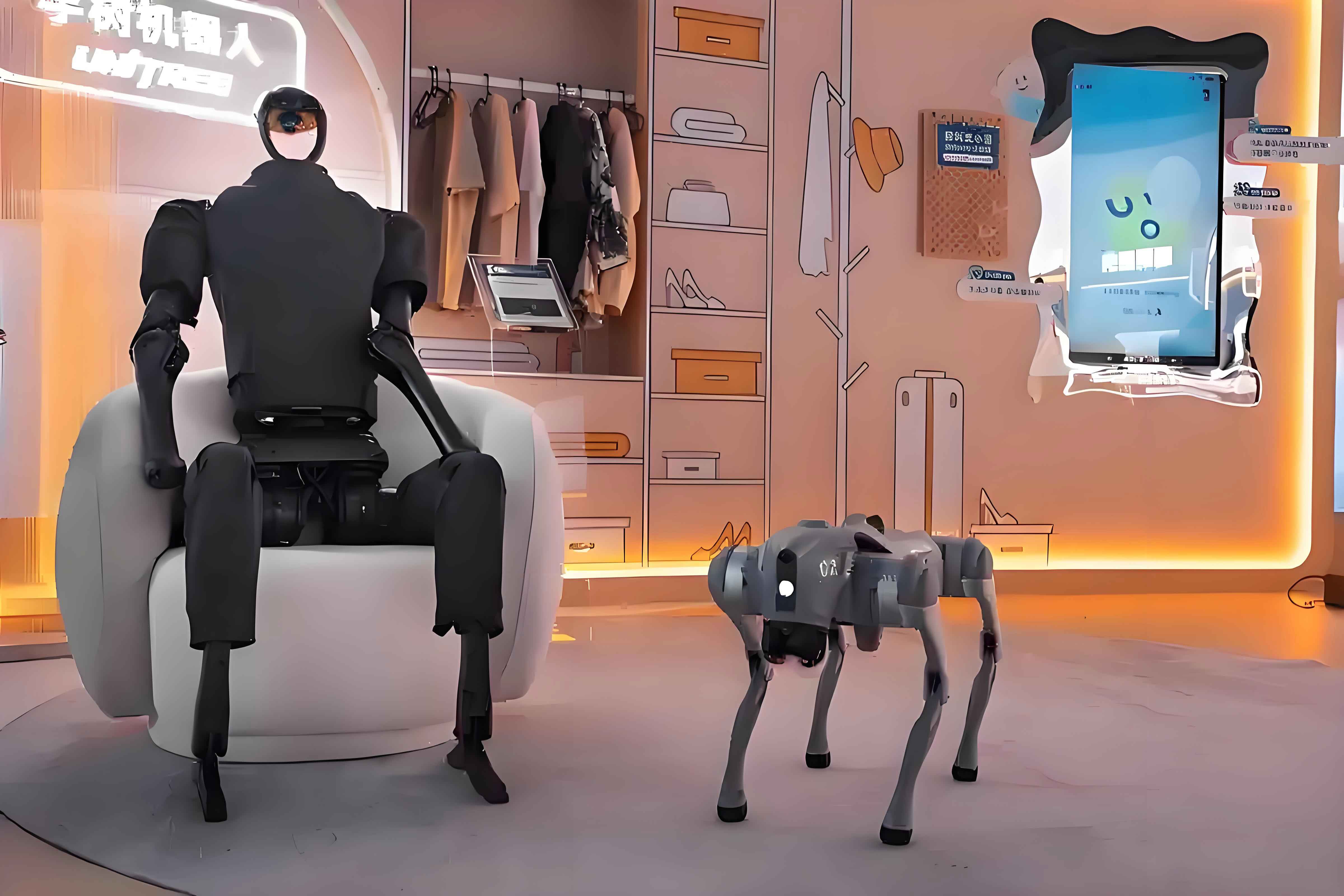
The propulsion of the humanoid robot into mainstream consciousness is marked by a series of catalytic events, signaling robust technological and commercial momentum. We see the trajectory pointing towards 2025 as a potential landmark year for initial mass production, with 2026 anticipated for full-scale commercial proliferation. For a humanoid robot to achieve the desired dexterity, efficiency, and durability, every material choice, from its internal actuators to its external shell, carries immense weight. The role of chemical materials is therefore not supportive but foundational, directly influencing motion performance, energy consumption, operational lifespan, and overall feasibility. The core technological modules of a humanoid robot—environmental perception, AI processing, motion control, and operating systems—rely heavily on hardware whose capabilities are defined by material properties. It is within this context that we explore the specific chemical investment passwords embedded in the humanoid robot value chain.
Neodymium Iron Boron (NdFeB) Permanent Magnets: The “Power Heart” of Servo Systems
At the core of a humanoid robot’s movement lies the servo system, a critical component constituting a significant portion of the total cost. The servo motor, acting as the robot’s muscle, requires a permanent magnet material that offers high power density and reliability. Here, sintered Neodymium Iron Boron (NdFeB) magnets emerge as the undisputed champion. As a third-generation rare-earth permanent magnet, NdFeB possesses an exceptional combination of high remanence, high coercivity, and high maximum energy product, which can be represented by the formula for magnetic energy density:
$$(BH)_{max} = \frac{B_r \cdot H_c}{4}$$
where $B_r$ is the remanent magnetization and $H_c$ is the coercivity. The superior $(BH)_{max}$ of NdFeB magnets allows for the creation of smaller, lighter, and more powerful servo motors, a non-negotiable requirement for the agile and efficient humanoid robot. Compared to stepper motors, servo motors equipped with NdFeB magnets provide superior control precision, overload capacity, and speed response. The drive for a lightweight and compact humanoid robot design makes high-performance NdFeB the optimal choice. Market projections underscore this demand; a multi-billion dollar market for humanoid robots is expected to create substantial pull for high-grade NdFeB magnets. The following table summarizes the key types and characteristics of NdFeB permanent magnets:
| Type | Production Process | Market Share | Key Characteristics | Primary Application in Humanoid Robot |
|---|---|---|---|---|
| Sintered NdFeB | Powder metallurgy & sintering | >85% | Highest magnetic energy product, high coercivity, cost-effective for mass production | Core rotor material in servo motors for joints and limbs |
| Bonded NdFeB | Mixing magnetic powder with polymer binder | ~10% | Complex shapes possible, good mechanical properties, slightly lower magnetic output | Smaller or non-standard shaped motor components |
| Hot-pressed NdFeB | Hot deformation of nanocrystalline powder | <5% | High density, good magnetic orientation, excellent thermal stability | High-temperature or precision-demanding motor applications |
The expansion of the humanoid robot ecosystem will be a key demand driver for this critical material. I estimate that the performance requirements for each humanoid robot will necessitate a continuous evolution in magnet grades, focusing on higher operating temperatures and improved corrosion resistance without sacrificing magnetic strength.
Carbon Fiber Composites: Engineering the “Lightweight Skeleton”
Weight management is a paramount concern in humanoid robot design. Every gram saved translates directly into enhanced mobility, greater energy efficiency, faster operational speeds, and improved motion accuracy. To achieve this, the structural framework of a humanoid robot must be both strong and light. Carbon fiber reinforced polymer (CFRP) composites are the ideal solution, offering a specific strength and specific modulus far superior to traditional metals like aluminum. The fundamental advantage can be expressed through the specific stiffness equation:
$$Specific\ Stiffness = \frac{E}{\rho}$$
where $E$ is the Young’s modulus (stiffness) and $\rho$ is the density. Carbon fiber composites exhibit a significantly higher $E/\rho$ ratio compared to metals. This material is pivotal for constructing the robot’s exoskeleton or internal load-bearing structures—the “bones” of the humanoid robot. Its applications are multifaceted: in skeletal frames for support and protection, in joint components like axes and connectors to withstand torque and impact, and in external covers for aesthetics and electromagnetic shielding. The comparative benefits are substantial, as shown below:
| Property | Carbon Fiber Composite | Aluminum Alloy (6061) | Advantage for Humanoid Robot |
|---|---|---|---|
| Density (g/cm³) | ~1.6 | ~2.7 | ~40% lighter, reducing inertial forces |
| Tensile Strength (MPa) | 1500 – 3500 | ~310 | Higher load-bearing capacity |
| Young’s Modulus (GPa) | 70 – 300 | ~69 | Improved rigidity and precision control |
| Fatigue Life | Excellent | Good | Longer operational lifespan under cyclic loads |
By integrating carbon fiber composites into the chassis and limbs, a humanoid robot can achieve a dramatic reduction in mass while maintaining or even enhancing structural integrity. This directly contributes to longer battery life and more dynamic movement, which are critical for the commercial viability of any humanoid robot platform. The design freedom offered by composites also allows for more ergonomic and biomimetic forms, improving the human-robot interaction experience.
PEEK: Pioneering the “Plastic Replaces Steel” Paradigm
In the relentless pursuit of lightweighting and performance, polyetheretherketone (PEEK) stands at the apex of specialty engineering plastics. This high-performance polymer is making significant inroads in replacing metals in demanding applications within the humanoid robot, particularly in joints and limb structures. PEEK offers an outstanding balance of properties: high temperature resistance (continuous use above 250°C), exceptional mechanical strength, inherent lubricity, superb chemical resistance, and a density approximately half that of aluminum. The trade-off between weight and strength is optimally managed, which is crucial for the moving parts of a humanoid robot. The stress-strain behavior of PEEK, especially when reinforced with fibers, allows it to withstand the repetitive loading in robotic joints. The wear rate, a critical factor for longevity, can be modeled for PEEK bearings and gears using an empirical relation:
$$W = k \cdot P \cdot v \cdot t$$
where $W$ is wear volume, $k$ is a material-specific wear coefficient, $P$ is pressure, $v$ is sliding velocity, and $t$ is time. PEEK’s low wear coefficient ensures durability. The application spectrum includes PEEK gears for precise power transmission in joints, PEEK bearings for smooth and maintenance-free rotation, and PEEK structural frames for limbs. The latter can reduce weight by up to 40% compared to metal counterparts while meeting all strength requirements. The PEEK value chain is intricate, with raw material purity being paramount. The cost structure of PEEK production highlights the importance of key monomers:
| Upstream Raw Material | Approximate Cost Contribution to PEEK | Key Role & Note |
|---|---|---|
| Difluorobenzophenone (DFBP) | >50% | Core monomer; purity dictates final polymer quality; complex synthesis |
| Hydroquinone | ~15% | Co-monomer; readily available from chemical suppliers |
| Disodium Carbonate | ~1% | Catalyst/acid scavenger; commodity chemical, minimal impact |
| Additives (CF, GF, PTFE) | Variable | Enhance mechanical, thermal, or tribological properties |
For a humanoid robot to achieve fluid and reliable motion, the components in its kinematic chains must be lightweight and robust. PEEK fulfills this role excellently, enabling more degrees of freedom and complex movements without the penalty of excessive weight. The growth of the humanoid robot industry is thus a direct tailwind for high-performance polymer producers.
PPS Composites: The “Robust Performer” for Critical Components
Polyphenylene sulfide (PPS) is another formidable engineering thermoplastic finding its niche in the humanoid robot architecture. Known for its exceptional combination of thermal stability (withstanding temperatures over 200°C), inherent flame retardancy, superb mechanical strength, and outstanding chemical resistance, PPS competes directly with metals in harsh environments. Its dimensional stability and excellent electrical insulation properties make it suitable for critical components where precision and reliability are non-negotiable. In a humanoid robot, potential applications include structural parts like joint links, gear housings, and even specialized elements like drive wheels. The material’s ability to maintain properties in humid conditions is vital for real-world deployment. The thermal degradation kinetics of PPS, which informs its service life, can be described by the Arrhenius equation applied to polymer aging:
$$k = A e^{-E_a/(RT)}$$
where $k$ is the degradation rate constant, $A$ is the pre-exponential factor, $E_a$ is the activation energy for degradation, $R$ is the gas constant, and $T$ is absolute temperature. PPS has a high $E_a$, contributing to its longevity. When fabricated into components such as joint linkages, PPS composites provide the necessary toughness and creep resistance to ensure the humanoid robot operates smoothly over extended periods. The following table contrasts PPS with standard engineering plastics and metals:
| Characteristic | PPS (40% GF reinforced) | Nylon 66 (30% GF) | Aluminum Die Casting | Relevance to Humanoid Robot |
|---|---|---|---|---|
| Continuous Use Temp. | >200°C | ~80-120°C | ~150°C (alloy dependent) | Stable in high-friction joint areas |
| Tensile Strength (MPa) | ~180 | ~160 | ~300 | Sufficient for structural links |
| Flame Rating | UL94 V-0 | UL94 HB to V-2 | Not applicable | Enhances safety, critical for electrical parts |
| Chemical Resistance | Excellent | Good | Poor to acids/bases | Reliable in varied environments |
The integration of PPS parts contributes to the overall durability and maintenance-free operation desired in commercial humanoid robot models, especially in industrial or outdoor settings.
Silicone Elastomers: Bestowing “Lifelike Skin” for Enhanced Interaction
The embodiment of a humanoid robot extends beyond mechanics to interaction, where material touch and safety are paramount. Silicone rubber, with its unique set of properties, is the leading candidate for creating realistic, functional, and safe artificial skin and soft actuation components. Its low modulus, high elasticity, excellent biocompatibility, and wide range of controllable hardness allow it to mimic the tactile feel and flexibility of human skin. This is essential for a humanoid robot designed for close human contact, such as in healthcare, companionship, or customer service roles. The hyperelastic behavior of silicone can be approximated by constitutive models like the Mooney-Rivlin model for incompressible rubbers:
$$W = C_{10}(I_1 – 3) + C_{01}(I_2 – 3)$$
where $W$ is the strain energy density, and $I_1$, $I_2$ are the first and second invariants of the Cauchy-Green deformation tensor. Parameters $C_{10}$ and $C_{01}$ are material constants. This tunable elasticity enables the design of soft grippers or compliant skin that can absorb impacts and perform delicate tasks. Key advantages of silicone for humanoid robot skin include: superior flexibility for natural motion articulation; non-toxic and hypoallergenic nature for safe human interaction; excellent weatherability and resistance to temperature, humidity, and UV exposure; and mature processing techniques (like liquid injection molding) that allow for the integration of sensor networks (pressure, temperature) directly into the silicone matrix. This fusion of material and electronics is key to creating a sensitive and responsive outer layer for the humanoid robot, enabling sophisticated haptic feedback and safe physical collaboration.
Policy Tailwinds and Market Projections: Fueling Exponential Growth
The development of the humanoid robot industry is not occurring in a vacuum; it is being actively accelerated by strategic national policies aimed at securing technological leadership. We observe a clear governmental consensus on the importance of robotics, with multi-year roadmaps outlining goals for innovation system establishment, cultivation of world-leading enterprises, and achievement of safe, mass-produced humanoid robots for diverse applications. These policies create a stable, supportive environment for R&D investment and supply chain development. The market potential is staggering. Forecasts suggest the global addressable market for humanoid robots will experience exponential growth over the coming decades. I have synthesized various projections into a phased outlook to illustrate the scale:
| Timeframe | Development Phase | Estimated Global Humanoid Robot Market Scale | Primary Drivers & Application Focus |
|---|---|---|---|
| 2025-2027 | Mass Production Initiation & Early Commercialization | $10B – $50B | Technology breakthroughs, prototype refinement, early industrial & specialty applications |
| 2028-2035 | Scale-up & Diversification | $50B – $500B | Cost reduction, reliability validation, expansion into manufacturing, logistics, elderly care |
| 2036-2045 | Mainstream Integration & Ubiquity | $500B – $1T | Full autonomy advances, consumer applications, personalized services, massive manufacturing scale |
| Post-2045 | Market Maturation & Saturation | >$10T | Ubiquitous presence across all economic sectors, becoming a general-purpose technology platform |
This growth trajectory implies a commensurate expansion in demand for the advanced chemical materials discussed. The compound annual growth rate (CAGR) for the material markets servicing humanoid robots will likely outpace that of the robots themselves in the early phases, as material content per unit is high and specifications are demanding. The formula for material market size ($M$) driven by humanoid robot production can be expressed as:
$$M(t) = N(t) \cdot \sum_{i} (q_i(t) \cdot p_i(t))$$
where $N(t)$ is the number of humanoid robots produced in year $t$, $q_i(t)$ is the quantity of material $i$ per robot, and $p_i(t)$ is the price per unit of material $i$. As $N(t)$ grows exponentially and $q_i(t)$ stabilizes or increases with functionality, $M(t)$ surges.
Enterprise Opportunities: Strategic Positioning in the Value Chain
The rise of the humanoid robot presents a golden strategic window for chemical enterprises. Companies with expertise in high-performance polymers, advanced composites, rare-earth magnetics, and specialty elastomers are poised to become indispensable suppliers to this nascent but colossal industry. We are already seeing forward-thinking chemical firms engaging through various strategies: vertical integration in key polymer synthesis (like PEEK), capacity expansion for high-demand materials (like NdFeB magnets), strategic investments in promising humanoid robot startups, and dedicated R&D to tailor material properties for robotic applications. The competitive advantage will lie in mastering the synthesis of ultra-pure monomers, developing proprietary composite formulations, achieving scale in sustainable production, and forming deep technical partnerships with humanoid robot OEMs. Success in this space requires not just material supply but co-engineering solutions that solve the unique challenges of bipedal locomotion, dynamic balance, and human-safe interaction inherent to the humanoid robot platform.
In conclusion, the journey of the humanoid robot from concept to ubiquitous partner is fundamentally a materials science journey. Each incremental improvement in magnetic energy density, specific strength, thermal stability, or tactile realism unlocks new capabilities for the humanoid robot. As an analyst observing this convergence, I am convinced that the chemical sector holds some of the most critical and valuable “investment passwords” for this revolution. The companies that can provide the lightweight bones, powerful muscles, durable joints, and sensitive skin for these machines will not only capture significant value but will also enable the very realization of advanced humanoid robots that can work alongside us, assist us, and transform our economy. The era of the humanoid robot is dawning, and it will be built molecule by molecule.