
Since the birth of the first robot in the United States half a century ago, the field of robotics has undergone a transformative evolution. Not only have industrial robots demonstrated remarkable capabilities, but a vast new family of service robots has also emerged. Advances in the economy and society have created new demands for robots, while technological progress has provided the necessary foundation for their development. Robotics is now entering a brilliant era, poised to increasingly influence human work and life. It is also set to be a crucial force in driving smart manufacturing in China and meeting the evolving needs of its populace.
1. Global Emphasis on Robot Development
Over the past decade, discussions about robots have continually surfaced in global discourse. Robotics is regarded as one of the four technologies influencing human production and life, a technology leading the third industrial revolution, one of the twelve disruptive technologies shaping the global economic transformation, and one of the top ten technologies of the year 2015. Numerous countries worldwide, including developed nations and emerging economies, have prioritized robots in their national strategies, formulating key plans and deployments. For instance, the United States released a robotics development roadmap report, placing contemporary robotics on par with the importance of the internet in the 20th century. The European Union launched SPARC, the world’s largest civilian robotics research and development program, planning to invest 28 billion euros by 2020 to create 240,000 jobs. Japan has formulated a long-term development strategy for robotics technology, identifying the robot industry as one of seven key industries to be supported under its “New Industrial Structure Strategy.” South Korea established the “Intelligent Robot Basic Plan” and announced the “Robot Future Strategic Vision 2022,” focusing policy on expanding the domestic robot industry and supporting local robot companies in entering overseas markets. This global strategic focus underscores the universal recognition of robotics as a cornerstone for future economic and technological supremacy, with the China robot sector actively engaging in this international landscape.
The concerted global efforts highlight a shared vision where automation and intelligent machines will redefine industries. International collaborations and competitions are fueling rapid innovation. The China robot industry observes these trends closely, aiming to integrate global best practices while forging its own path. The strategic investments by major economies signal a long-term commitment, ensuring that robotics will remain at the forefront of technological policy for years to come, influencing everything from factory floors to household appliances, with China robot developments being a significant part of this narrative.
2. Expanding Demand for Robots in China
During this same period, China has experienced rapid growth in robot imports. According to statistical reports from the International Federation of Robotics (IFR), China imported only 380 industrial robots in the year 2000. By 2013, this number had surged to 36,860 units. Over these 13 years, import volume increased by two orders of magnitude. Globally, approximately 179,000 industrial robots were sold in 2013, representing a historical peak in demand with a year-on-year growth of 12%. Among these, sales in China reached about 37,000 units, ranking first globally in sales volume and achieving a 60% year-on-year increase. The Chinese market accounted for one-fifth of the global robot market in 2013, rising to one-quarter by 2014. These figures tangibly reflect the escalating demand for robots within China, solidifying its position as the world’s largest consumer of robots.
The dynamics of China’s economic development fundamentally drive this demand for robots. Currently, labor shortages in the manufacturing sector coupled with rising wages have led to increased human resource costs. Enterprises are seeking alternative solutions, and robots are evidently the preferred choice due to their ability to enhance labor productivity. Since the reform and opening-up, China’s manufacturing output value has risen swiftly, yet its labor productivity remains relatively low. The number of robots per 10,000 industrial workers in China is still far below the world average. The transformation and upgrading of the manufacturing industry present massive demand for robotics. In the long term, the new wave of technological progress is an inexorable trend. Smart manufacturing is the primary direction for manufacturing technology, and robots are the main technical pillar for smart manufacturing—a consensus held by nations worldwide. The growth trajectory of the China robot market is intrinsically linked to these macroeconomic and industrial shifts.
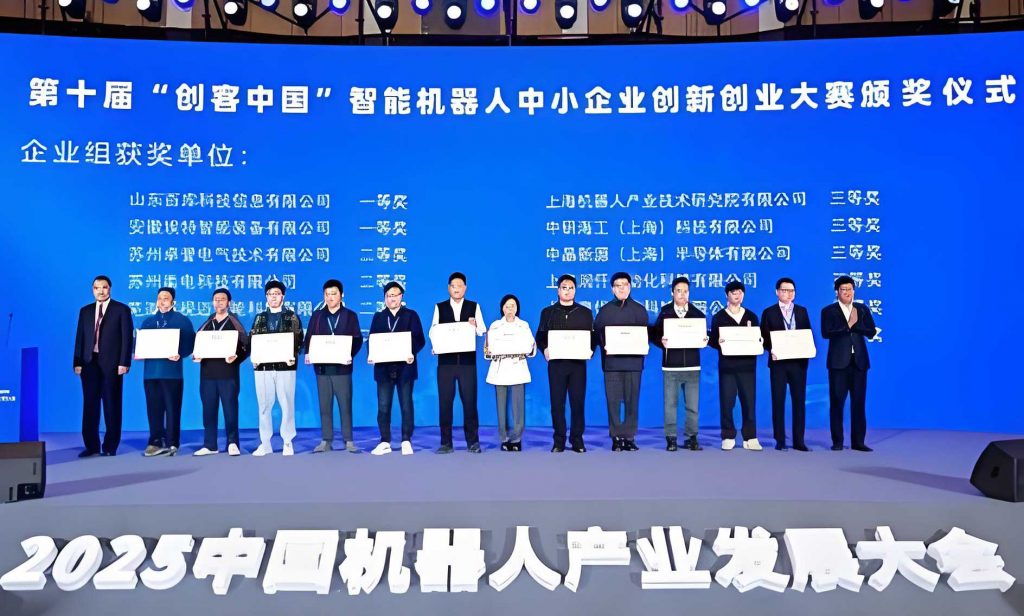
Industrial robots possess immense market potential in China, and service robots similarly offer substantial room for development. Various types of service robots, including special-purpose robots designed for different needs, rehabilitation and assistive robots for the elderly and disabled, and medical auxiliary robots, all exhibit clear demand within China. Presently, policies promoting “mass entrepreneurship and innovation” are incentivizing the creation of robots for diverse applications, further stimulating the China robot ecosystem.
| Year | Industrial Robots Imported into China | Industrial Robots Sold in China | Global Industrial Robot Sales | China’s Share of Global Market |
|---|---|---|---|---|
| 2000 | 380 | Data not specified in source | Data not specified in source | Data not specified in source |
| 2013 | 36,860 | ~37,000 | ~179,000 | ~20.7% (1/5) |
| 2014 | Data not specified in source | Data not specified in source | Data not specified in source | 25% (1/4) |
The data illustrates the explosive growth of the China robot market. This expansion is not merely quantitative but also qualitative, as demand diversifies across sectors. From automotive manufacturing to electronics assembly, and increasingly into logistics, healthcare, and domestic services, the penetration of robots is accelerating. The China robot demand story is one of scale and sophistication, driven by the dual engines of economic necessity and technological ambition.
3. Leapfrog Progress in China’s Robot Research and Development
After years of concerted effort, China has mastered the design technology for industrial robots and accumulated substantial application experience. Many domestic institutions have achieved research outcomes in robotics technology that have been put into practical use. For example, the Shenyang Institute of Automation (SIA) under the Chinese Academy of Sciences is one of the earliest units engaged in robotics research in China, hailed as the cradle of the Chinese robotics cause. It currently serves as the home for the “National Engineering Research Center for Robotics Technology” and the “State Key Laboratory of Robotics.” The industrial robots and Automated Guided Vehicles (AGVs) developed here inaugurated the prelude to the industrialization of robots in China. Furthermore, numerous other achievements have played irreplaceable roles in practical applications, creating many firsts in China’s robotics endeavors. These include rescue and anti-terrorism mobile robots, rotorcraft flying robots, five-degree-of-freedom high-pressure waterjet cutting robots, laser processing robots, as well as robots developed for scientific exploration and resource development in extreme environments like the deep sea and polar regions—such as long-range autonomous underwater vehicles, Arctic scientific expedition robots for observing ice covers from underwater, Antarctic polar research robots, and the 6000-meter unmanned untethered submersible “Qianlong-1.”
Additionally, robotics technology from Harbin Institute of Technology has not only been adopted in various regions but has also achieved outstanding application results in the aerospace field. The neurosurgical assistant robot developed by Beihang University has been successfully used in medical practice. Several nuclear power plant robots developed by China General Nuclear Power Group have been successfully applied in nuclear power construction. These examples underscore the depth and breadth of innovation within the China robot research community.
The pioneering enterprises in China’s robot industry have essentially embarked on a path of independent and sound development. Taking Shenyang Siasun Robot & Automation Co., Ltd. as an example, since its successful listing as one of the first companies on the ChiNext board in 2009, its market capitalization has reached 50 billion RMB, establishing it as a leading enterprise in the field of robot automation in China. Simultaneously, China’s industrial robot products have filled many domestic gaps. Cleanroom (vacuum) robots have repeatedly broken foreign technological monopolies and blockades, substantially replacing imports. Mobile robot products have been listed as key procurement targets by numerous internationally renowned enterprises. Special-purpose robots have been deployed in bulk within key national defense sectors. Guangzhou CNC Equipment Co., Ltd., besides producing robot products, is also a supplier of complete machine tool numerical control systems. Companies like Guangzhou Start, Nanjing Estun, Anhui Effort, and Shanghai Step also possess distinct characteristics, gradually exploring development models suitable for themselves and playing significant roles in China’s robot industry. It is worth noting that Shenzhen DJI Innovations Technology Co., Ltd. is a globally leading developer and manufacturer of unmanned aerial vehicle control systems and drone solutions, with clients spanning over 100 countries and achieving dazzling performance. The success of these companies highlights the commercial viability and growing competitiveness of the China robot sector on the world stage.
4. Continuous Efforts Needed in China’s Robot Sector
Overall, China’s industrial robot manufacturing enterprises still have a relatively small scale, and their market share remains comparatively low. The quality of some key components lags significantly behind international advanced products. Technological innovation capability is still in development, and large-scale industries for service robots are still few. President Xi Jinping pointed out: “China will become the largest market for robots, but can our technology and manufacturing capabilities cope with this competition? We must not only improve the level of robots in China but also capture as much market share as possible.” To this end, weaknesses must be strengthened, and enterprises must be bolstered. Concurrently, to enhance future competitiveness, it is essential to pay attention to robotics development trends, conduct research, and prepare technological reserves.
Currently, product life cycles in the manufacturing industry are becoming shorter, and user demands for personalization are growing stronger. This necessitates flexible manufacturing systems, requiring a significant reduction in the time needed for production line changes. For production systems composed of wirelessly connected elements, including conveyor belts or AGVs, robots, and other processing machines, the future should allow reorganization within days rather than the current weeks or even months. After components are connected, they should achieve “plug-and-play” functionality without undergoing lengthy debugging processes. Faced with such requirements, robots must improve their motion capabilities and rapid programming abilities. Present industrial robots suffer from low absolute positioning accuracy, making rapid and high-precision calibration a challenge. Moving forward, employing information technology to achieve rapid and high-precision three-point positioning will become a key technology. Addressing these technical hurdles is paramount for the sustained growth and global leadership of the China robot industry.
The journey for the China robot sector involves not only catching up in core technologies but also pioneering in next-generation applications. Investment in fundamental research, talent cultivation, and industry-academia collaboration will be critical. Standardization and the creation of robust supply chains for critical components like reducers, controllers, and servos are areas requiring persistent focus. The integration of the China robot ecosystem with global value chains, while fostering indigenous innovation, presents a complex but necessary path forward.
5. Interdisciplinary Integration Promoting Human-Robot Collaboration
Humanity invented machines to replace labor, not to exclude itself from the equation. In the future, robots will be able to coexist and collaborate with humans. Currently, in many manufacturing sectors such as aircraft and shipbuilding, components are processed by highly automated precision equipment, but tasks like aircraft assembly and ship welding still rely mainly on manual labor, lacking flexible equipment assistance. Many manual tasks in labor-intensive manufacturing are still beyond the capability of current robots. Due to robots’ online perception abilities being far inferior to humans, their inability to receive abstract commands, inefficient communication with humans, and the lack of appropriate safety mechanisms, robots remain mechanical entities isolated from humans. Future human-robot cooperation represents the optimal solution to such problems. Robots capable of collaborating with humans are ideal operational equipment. For robots to serve humans effectively, they must integrate seamlessly with people. The degree of this human-robot integration will be a significant benchmark for robotics development.
Technological advancements in related fields will continuously propel the development of robot technology. For instance, progress in artificial intelligence and internet technology will provide robots with a powerful “back-brain,” enhancing their intelligence levels. With developments in materials science, robots composed of artificial muscles and other components, forming so-called “soft robots,” could revolutionize the field. Integration with brain science could enable some robot behaviors to be directly controlled by humans. Convergence with life sciences may give rise to life-like robots. The China robot research community is actively exploring these interdisciplinary frontiers, recognizing that the future of robotics lies beyond traditional mechanical automation. The concept of human-robot collaboration is central to making China robot systems more adaptable, safe, and useful in unstructured environments, from homes to hospitals to disaster sites.
The evolution towards collaborative robots, or cobots, represents a paradigm shift. These machines are designed to work alongside humans without safety cages, sensing their presence and adjusting force and motion accordingly. For the China robot industry, mastering cobot technology is essential to address the nuanced demands of advanced manufacturing and service sectors. Furthermore, the fusion of robotics with big data, cloud computing, and the Internet of Things (IoT) is creating intelligent networked robots, opening new avenues for the China robot market in areas like remote operation, predictive maintenance, and swarm robotics.
There is every reason to believe that the robot industry faces a brilliant tomorrow. The trajectory is set for increased automation, deeper human-machine symbiosis, and transformative applications across all facets of society. As a pivotal player, the China robot sector stands at a historic juncture—with vast domestic demand, growing technical prowess, and strategic national focus. The journey involves overcoming present challenges in core components and scale, while aggressively investing in the disruptive trends of collaboration, intelligence, and soft robotics. The global race in robotics is accelerating, and China’s commitment to innovation and market development positions its robot industry not just as a consumer but as a future shaper of this technological domain. The synergy between industrial policy, entrepreneurial spirit, and research excellence will determine how effectively the China robot narrative transitions from one of impressive growth to one of sustained global leadership and innovation.