
In recent years, propelled by a series of supportive national policies and driven by robust market demand, the China robot industry has gradually entered a phase of rapid development. The scale of the market continues to expand, and a basic industrial system has taken shape. Leading enterprises are growing rapidly, and cross-sector giants are entering the field. Breakthroughs have been achieved in fundamental theories, core components, and key technologies. Industry standards, specifications, and certification systems are continuously improving, and statistical data is becoming more comprehensive. However, significant gaps remain between the China robot industry and international leaders in terms of technical level and R&D capability. The scale of domestic enterprises is generally small, industrial concentration is low, and there is a risk of high-end industries being trapped in low-end production. A severe talent shortage further hinders the industry’s ability to effectively meet the demands of China’s advanced manufacturing development and consumption upgrading. To foster the healthy development of the robot industry, it is essential to further improve the policy support system, strengthen industrial innovation capacity with a focus on breaking through common key technologies and core components, actively cultivate leading enterprises to build world-class robot clusters, optimize industrial layout by highlighting regional characteristics, vigorously promote robot application demonstrations, and construct a multi-level talent cultivation system.
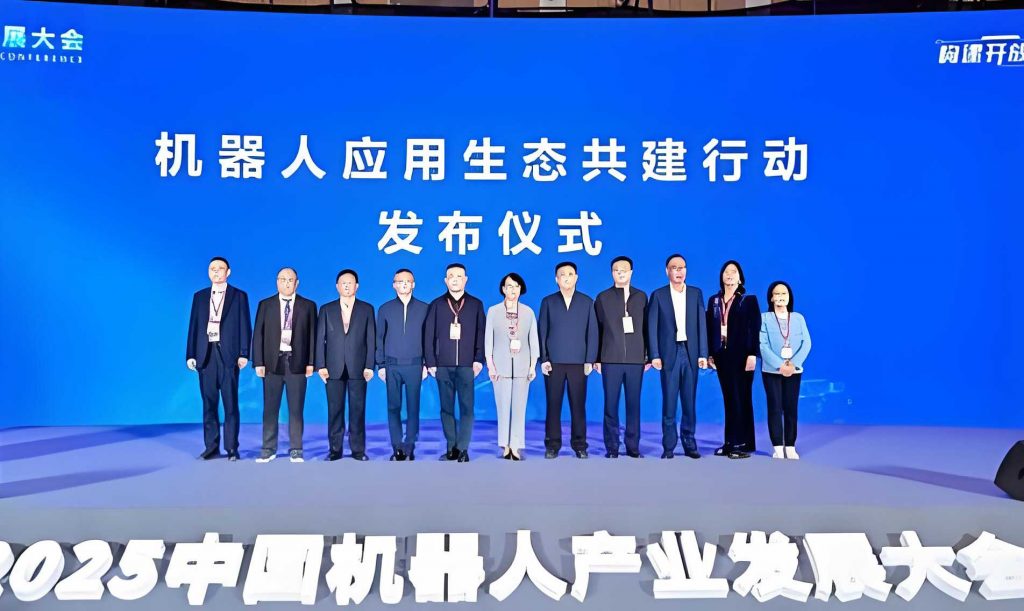
Robots are not only key enabling equipment for advanced manufacturing but also a crucial entry point for changing human lifestyles in an intelligent society. Dubbed the “Pearl at the Top of the Manufacturing Crown,” the R&D, manufacturing, and application of robots have become important indicators of a nation’s level of technological innovation, manufacturing prowess, and social intelligence. Major manufacturing powers like the US, Germany, Japan, and South Korea place high importance on them. In recent years, with the advent of a new round of scientific and technological revolution and industrial transformation, major industrial countries have elevated the development of their robot industries to a national strategic level, competing to seize the commanding heights of technology and market.
The Chinese government also attaches great importance to and actively promotes the development of the China robot industry, having rolled out a series of policy measures. These include the “12th Five-Year Plan for High-end Equipment Manufacturing” (2012), the “Guiding Opinions on Promoting the Development of the Industrial Robot Industry” (2013), and notably, “Made in China 2025” (2015), which positioned robots as a key strategic field. The “Robotics Industry Development Plan (2016-2020)” set clear targets: forming a relatively complete robot industry system by 2020, with annual production of 100,000 units of own-brand industrial robots, service robot sales exceeding 30 billion RMB, cultivating over 3 internationally competitive leading enterprises, and achieving a robot density of over 150 units per 10,000 employees. Supported by national policies and pulled by market demand, the China robot industry is now on a fast track.
Current Status of the China Robot Industry
1. Expanding Market Scale and a Maturing Industrial System
Statistics show that the global robotics market reached $23.2 billion in 2017, with an average growth rate of about 17% from 2012 to 2017. In contrast, the China robot market was approximately $6.28 billion in 2017, with an average growth rate of 28% during the same period, far exceeding the global average. China has been the world’s largest application market for industrial robots for five consecutive years since 2013. The rapid growth of the China robot market can be modeled by a simple exponential growth formula:
$$ M_t = M_0 \times (1 + r)^t $$
Where $M_t$ is the market size at time $t$, $M_0$ is the initial market size, and $r$ is the compound annual growth rate (CAGR). For the China robot market, $r$ has been significantly higher than the global average.
The industrial system is fundamentally established, covering industrial, service, and special-purpose robots.
- Industrial Robots: Domestic production is growing rapidly. In 2017, China produced over 130,000 sets of industrial robots, a year-on-year increase of 68.1%. The domestic industrial robot market size was $4.22 billion, accounting for 67.2% of the total domestic robotics market. The application density of robots in China has grown from 25 units per 10,000 employees in 2013 to 88 in 2017, surpassing the global average for the first time, though still lagging behind developed nations. The product structure is continuously optimizing. High value-added multi-joint robots became the main model for domestic industrial robots. Their sales accounted for 40.1% of total domestic industrial robot sales in the first half of 2017, reflecting a shift towards more complex and capable China robot offerings. Application industries are rapidly expanding, now covering 37 major categories of the national economy.
- Service Robots: The market is experiencing rapid growth. In 2017, the market size for service robots in China reached $1.32 billion, an increase of 28%. This includes household (e.g., vacuuming, education, entertainment), medical, and public service robots. With rising income levels, increasing labor costs, and an aging population, the service China robot sector holds immense potential. The penetration of AI technologies like voice interaction and facial recognition is driving product diversification and market expansion.
- Special-Purpose Robots: This sector is developing at a relatively fast pace. The market size reached $740 million in 2017, a growth of 17.4%. These robots are used in military applications, extreme environments, and emergency rescue scenarios. Chinese enterprises have developed a batch of proprietary products, such as underwater robots, drones, and explosion-proof robots. As safety awareness increases, demand for special-purpose China robot solutions is expected to rise.
2. Rapid Growth of Leading Enterprises and Influx of Cross-Industry Giants
Leading China robot enterprises are growing quickly. In the industrial field, companies like Siasun, Estun, Efort, and STEP have established a presence in robot本体 manufacturing. In service robots, companies like Ecovacs, Canbot, and Ubtech have emerged with competitive products in specific segments. In special-purpose robots, DJI stands out as a global leader in consumer drones.
Furthermore, internet and home appliance giants are actively entering the China robot industry:
| Company Type | Company | Key Activities in Robotics |
|---|---|---|
| Internet | Tencent | Launched home assistant robots in collaboration with hardware partners. |
| Internet | Baidu | Developed the DuerOS AI platform, integrated into video-call robots. |
| Internet | Alibaba | Released AI customer service robot for merchants. |
| Home Appliance | Gree | Established intelligent equipment companies, pursuing a full industry chain model covering servos, AGVs, etc. |
| Home Appliance | Midea | Acquired KUKA (Germany) and formed strategic partnerships, focusing on industrial automation. |
This cross-industry convergence brings capital, technological expertise, and market channels, injecting new vitality into the China robot ecosystem.
3. Breakthroughs in Foundational Theories, Core Components, and Key Technologies
Supported by national R&D programs, progress has been made in basic research areas such as motion control algorithms, multi-sensor fusion systems, and offline programming for China robot platforms. The independent intellectual property portfolio is growing.
Significant progress has been made in core components, which are critical for the competitiveness of the China robot industry. The cost structure of a typical industrial robot can be broken down as follows, highlighting the importance of these components:
$$ C_{total} = C_{reducer} + C_{servo} + C_{controller} + C_{body} + C_{integration} $$
Where typically, $C_{reducer} \approx 0.35C_{total}$, $C_{servo} \approx 0.20C_{total}$, and $C_{controller} \approx 0.15C_{total}$. Domestic manufacturers like Nantong Zhenkang, Suzhou Green, and Estun have achieved breakthroughs and started batch production of reducers and servo systems, though overall performance and reliability still need improvement compared to established international leaders.
4. Continuous Improvement in Standards, Certification, and Statistical Systems
The establishment of the National Robot Testing and Assessment Center and the National Robot Standardization Overall Group has accelerated the construction of a standard system for the China robot industry. The “Guidelines for the Construction of the National Robot Standard System (2017)” outlines a plan to develop approximately 100 national and industry standards by 2020. Industry norms and management measures have been issued to regulate market entry and competition. Furthermore, robot manufacturing was listed as an independent industry in the 2017 revision of the “National Economic Industry Classification,” which will provide more accurate statistical data for policy-making and industrial research related to the China robot sector.
Challenges Facing the China Robot Industry
1. Insufficient Independent Innovation and High Dependence on Imported Core Components
The lack of mastery over core component technology remains a key bottleneck constraining the high-quality development of the China robot industry. High-precision reducers, high-performance servo motors and drives, and sophisticated controllers are still heavily reliant on imports, primarily from Japan and Europe. This dependence can be expressed as a dependency ratio $D$:
$$ D = \frac{I}{T} $$
Where $I$ is the value of imported core components and $T$ is the total value of core components used in domestic robot production. For the China robot industry, $D$ remains unacceptably high. While domestic alternatives are emerging, gaps in stability, precision, and longevity persist. This external dependency increases costs, affects supply chain security, and limits the profit margins and technological sovereignty of China robot manufacturers.
2. Generally Small Enterprise Scale, Low Industrial Concentration, and Weak Competitiveness
Despite a large number of enterprises (reportedly over 6,500 by end of 2017), most China robot companies are small in scale, with over 90% having an annual output value of less than 100 million RMB. Even leading domestic players have revenues measured in single-digit billions of RMB, paling in comparison to the tens of billions of RMB revenues of the “Big Four” international giants (ABB, Fanuc, Yaskawa, KUKA). The industry concentration ratio $CR_n$, which measures the market share of the top $n$ firms, is very low for the China robot industry. A low $CR_n$ indicates a fragmented market:
$$ CR_n = \sum_{i=1}^{n} S_i $$
where $S_i$ is the market share of firm $i$. This fragmentation leads to duplicated, low-level R&D investments, weak bargaining power in the supply chain, and an inability to achieve significant economies of scale. The traditional cost advantage of domestic China robot products is also eroding as foreign giants lower prices.
3. Emerging Risks of “High-End Industry, Low-End Production” and Overcapacity
Driven by local government enthusiasm, numerous robot industrial parks have been established across China. Over 65 such parks have been planned or built. Many local governments have set ambitious targets and offered subsidies, often focused on robot adoption rather than core technology development. This has led to a concentration of enterprises in the system integration segment—the less technology-intensive,组装-intensive end of the value chain. This phenomenon risks trapping the China robot industry in low-value-added activities, creating redundant low-end capacity, and hindering the formation of truly innovative, high-value industrial clusters. The following table shows the wide geographical distribution of these parks:
| Province/City | Number of Major Robot Industrial Parks |
|---|---|
| Guangdong | 9 |
| Jiangsu | 6 |
| Zhejiang | 5 |
| Hebei | 6 |
| Anhui | 5 |
| Other Regions | >20 |
Without proper coordination and differentiated positioning, this sprawling development may lead to inefficient resource allocation for the China robot sector as a whole.
4. Severe Talent Shortage Acting as a Major Constraint
The talent gap is a critical challenge at multiple levels for the China robot industry. Forecasts indicate a shortage of 3 million professionals in high-end CNC and robotics by 2020, expanding to 4.5 million by 2025. The shortage spans from top-tier R&D scientists and compound management leaders to application-oriented engineers, technicians, and system integrators. The problem stems from the interdisciplinary nature of robotics, which combines mechanics, electronics, control theory, computer science, and AI. Traditional educational programs in China have not kept pace with this integrated demand. The talent deficit $L$ can be seen as a function of market growth $G$ minus the talent supply rate $S$:
$$ L(t) = \int (G(\tau) – S(\tau)) d\tau $$
where $G(t)$ is growing exponentially with the China robot market, while $S(t)$ lags due to educational and training pipeline delays. This gap directly hampers innovation, product quality, and market expansion for China robot enterprises.
Strategies and Recommendations for the China Robot Industry
1. Further Improve the Policy Support System
Policies should be more comprehensive, detailed, and targeted. Key actions include:
- Accelerate the implementation of existing industry norms and management measures, establishing a “white list” system to regulate competition.
- Expand the “Catalog for the Promotion and Application of the First (Set) of Major Technical Equipment” to encourage the adoption of domestic China robot brands.
- Formulate industry-specific application guidance policies. Mandate robot substitution for highly dangerous jobs and incentivize substitution in harsh environments. Support the establishment of robot leasing companies to serve SMEs.
- Establish government-guided industrial funds to leverage social capital and foster high-end development in the China robot sector through market-based mechanisms.
The effectiveness of a policy mix $P$ can be conceptualized as a weighted function of its components (regulation $R$, financial incentives $F$, market creation $M$):
$$ E_p = w_1 \cdot R + w_2 \cdot F + w_3 \cdot M $$
where optimal weights need to be calibrated for the China robot industry’s stage of development.
2. Strengthen Industrial Innovation Capacity, Focusing on Key Common Technologies and Core Components
Innovation is the fundamental driver for the China robot industry.
- Increase national R&D project funding for fundamental theories and common key technologies, such as AI algorithms for robotics, multi-robot collaboration, and human-robot interaction.
- Proactively track future trends (e.g., biomimetics, smart materials, deep learning) and conduct early-stage research.
- Accelerate R&D in core components (reducers, servos, controllers). Utilize multiple approaches: independent innovation, joint攻关, technology transfer, and adaptive improvement. The progress in component localization can be modeled as a technology index $T$:
$$ T = \sum_{i} (w_i \cdot p_i) $$
where $p_i$ represents the performance ratio (domestic/international) for component $i$ (reducer, servo, controller), and $w_i$ is its weight in the overall system. The goal is to maximize $T$. - Integrate existing R&D resources to build robust innovation and public service platforms, as well as incubation platforms, to accelerate the commercialization of research成果 for the China robot ecosystem.
3. Actively Cultivate Leading Enterprises and Build World-Class Robot Clusters
Scale and cluster effects are crucial for global competitiveness.
- Focus on cultivating a few leading enterprises with international influence to serve as benchmarks for the China robot industry.
- Support integration between internet companies and traditional robot manufacturers, and encourage mergers, acquisitions, and跨国并购 to enhance capabilities.
- Attract well-known international robot companies to establish headquarters or R&D centers in China through favorable policies.
- Foster innovative SMEs and cultivate “hidden champion” enterprises in niche segments, promoting symbiotic development between large and small firms to form a world-class China robot industrial cluster with a complete, collaborative supply chain.
4. Optimize Industrial Layout by Highlighting Regional Characteristics
Guiding regional development rationally is key to avoiding homogenized competition.
- Develop regional industrial development guides based on local industrial foundations, academic resources, and research institutes to help regions identify their strategic focus within the broader China robot landscape.
- Encourage local governments to set up specialized matching funds based on their unique advantages to support robot industrialization and application, particularly for innovative SMEs.
- Establish industrialization platforms. While traditional high-end markets (auto, electronics) are competitive, encourage China robot enterprises to develop specialized solutions for untapped low- and mid-end segments, forming a new pattern of differentiated, regionally-linked, and complementary development.
5. Vigorously Promote Robot Application Demonstrations
Demonstration projects are vital for validating technology and stimulating demand.
- Implement a batch of high-impact application demonstration projects in key sectors like automotive, electronics, logistics, and defense to showcase the value of China robot solutions.
- Promote the use of service and special-purpose robots in public service fields such as disaster rescue, medical rehabilitation, and elderly/disabled assistance to address major national and social needs.
- Carry out industrialization application demonstrations for key components and core industrial robot technologies to strengthen the weak links in the China robot industry chain.
The adoption rate $A$ following a demonstration can be influenced by its visibility $V$, proven ROI $R$, and ease of integration $E$:
$$ A \propto V \cdot R \cdot E $$
Effective demonstrations maximize these factors for China robot technologies.
6. Construct a Multi-level Talent Cultivation System
Talent is the most critical resource for the sustainable development of the China robot industry.
- Establish sound incentive mechanisms to attract and retain top-tier R&D and engineering talent for major China robot projects.
- Strengthen robotics-related disciplines in universities. Promote integrated industry-academia-research-application talent cultivation models. Use large collaborative projects as a training ground for the full spectrum of needed talents, from R&D to integration.
- Utilize vocational training and certification systems, coupled with hands-on project experience, to cultivate practical engineers and technicians for the China robot workforce.
- Popularize robotics knowledge through primary/secondary education and public science facilities to raise social awareness and cultivate future talent pools for the China robot industry.
The talent supply function $S(t)$ must be addressed through these multi-pronged, long-term measures to close the gap $L(t)$ with market demand.
In conclusion, the China robot industry stands at a critical juncture. It has achieved remarkable scale and momentum, fueled by strong policy support and vast domestic demand. However, to transition from a large market player to a global technological and industrial leader, it must decisively address its core weaknesses in innovation, component technology, industrial structure, and talent. By implementing a coordinated strategy focusing on high-quality innovation, cultivated leadership, rational layout, application-driven validation, and talent foundation, the China robot industry can realize its full potential and become a true pillar of intelligent manufacturing and technological advancement.