
The industrial robot sector stands as a cornerstone of modern manufacturing, driving automation, efficiency, and innovation globally. In China, this industry has witnessed exponential growth over the past decade, propelled by strategic national policies and ambitious economic plans. The release of “Made in China 2025” in 2015 marked a pivotal moment, explicitly advocating for the accelerated adoption of industrial robots in production processes. Since then, a flurry of supportive measures from the central government and various ministries has catalyzed the expansion of the China robot industry, positioning the nation as the world’s largest market for industrial robot installations. However, this rapid ascent is not without its complexities. While overall indicators show promising trends, deeper examination reveals persistent challenges related to regional disparities, technological dependencies, and market volatility. This news report delves into the current state of China’s industrial robot industry, analyzing its achievements, identifying key obstacles, and exploring strategic recommendations for sustainable development, with a particular focus on the need for cohesive policy frameworks and technological breakthroughs.
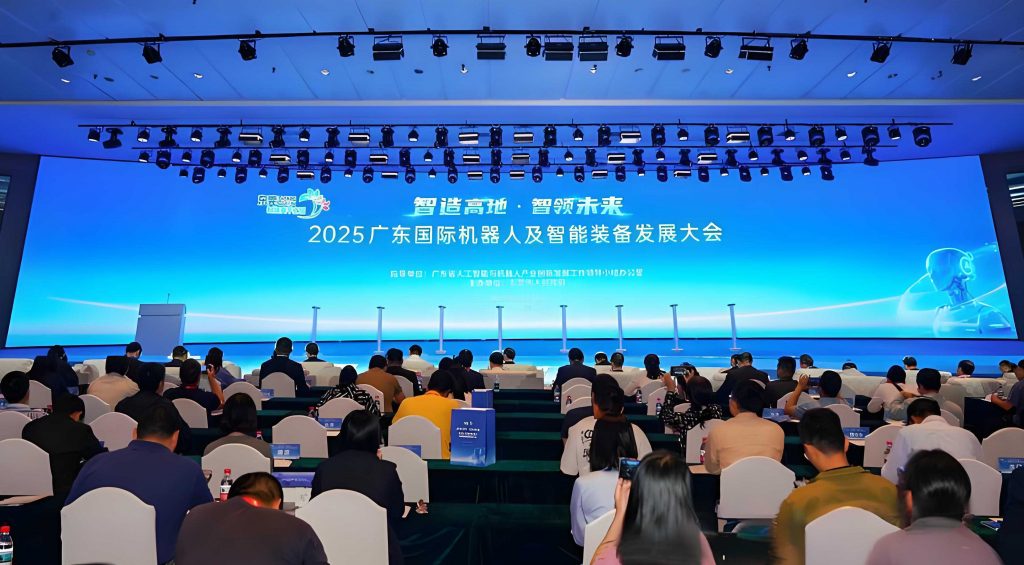
The evolution of the China robot industry is a narrative of ambitious state-led initiatives intersecting with global technological trends. From its nascent stages in the late 20th century to its current preeminence in installation volume, the sector’s trajectory offers critical insights into the future of advanced manufacturing. This report synthesizes recent research and data to present a holistic view, emphasizing how the China robot ecosystem is navigating the dual pressures of domestic demand and international competition. The following sections are structured to provide a detailed exploration of the industry’s foundational policies, its quantitative and qualitative performance, the technological landscape, inherent challenges, and proposed pathways forward.
- Policy Framework and Regional Development Initiatives
Government policy has been the primary engine driving the growth of the China robot industry. The strategic roadmap began with the “National Medium- and Long-Term Program for Science and Technology Development (2006-2020),” which first included intelligent robots as a key area in advanced manufacturing technology. Momentum significantly accelerated post-2015. The “Made in China 2025” blueprint served as a national clarion call, directly linking industrial robot application to manufacturing modernization. This was swiftly followed by more targeted directives. In 2016, the Ministry of Industry and Information Technology (MIIT), alongside the National Development and Reform Commission and the Ministry of Finance, issued the “Robot Industry Development Plan (2016-2020),” setting ambitious targets for industrial scale, technological innovation, and industrial system perfection. This plan specifically called for breakthroughs in key components and high-end products within the China robot domain. Concurrently, MIIT released the “Industrial Robot Industry Standard Conditions” to regulate and standardize market development.
At the regional level, provincial and municipal governments, incentivized by central directives and the potential for economic transformation, have launched their own packages to foster local China robot clusters. These measures typically include the establishment of specialized industrial parks, financial subsidies, tax incentives, and support for research and development. The goal is to attract enterprises across the robot value chain, from core component manufacturers to system integrators. However, this decentralized approach has led to a fragmented landscape. While regions like the Yangtze River Delta, Pearl River Delta, and Bohai Rim have emerged as strongholds due to their existing manufacturing bases, other areas struggle to develop competitive advantages. A critical issue is that many local policies offer broad financial incentives without precise technical requirements or alignment with local industrial strengths. This can lead to redundant investments, inefficient resource allocation, and a focus on quantity over quality in the China robot sector, potentially hindering the deep technological advancement the national plan envisions.
- Market Performance: Installation, Production, and Sales Trends
The impact of these policies is most visible in the market performance metrics of the China robot industry. According to the International Federation of Robotics (IFR), China has consistently been the world’s largest market for industrial robots since 2013. In 2018, installations in China accounted for a staggering 36% of the global total. Even more notably, the share of domestic China robot suppliers in the home market rose to 27% in 2018, up from previous years, indicating a gradual strengthening of local players. Despite this dominance in volume, robot density—measured as the number of robots per 10,000 employees—remains significantly lower than in leading nations like South Korea, Japan, and Germany. This gap underscores both the vast potential and the considerable runway for growth within the China robot market.
Domestic production and sales figures tell a story of rapid expansion tempered by recent fluctuations. From 2015 to 2017, the China robot industry experienced a production boom, with year-on-year growth rates exceeding 20%. However, this trend encountered headwinds in late 2018 and through much of 2019. As illustrated in the table below, monthly production data reveals a period of negative growth starting in September 2018 and persisting until September 2019, before returning to positive territory in the final quarter of 2019. This volatility is directly tied to demand cycles in key application industries.
| Year & Month | Industrial Robot Output (Units) | Year-on-Year Growth (%) |
|---|---|---|
| 2016 January | 7,538 | — |
| 2016 March | 4,201 | 20.1 |
| 2016 April | 7,482 | 16.5 |
| 2016 May | 7,613 | 14.7 |
| 2016 June | 6,670 | 62.8 |
| 2016 July | 5,839 | 40.1 |
| 2016 August | 6,506 | 65.5 |
| 2016 September | 5,728 | 35.1 |
| 2016 October | 5,687 | 15.1 |
| 2016 November | 7,485 | 54.4 |
| 2016 December | 7,891 | 48.0 |
| 2017 January | 13,662 | — |
| 2017 March | 10,163 | 78.2 |
| 2017 April | 9,782 | 57.4 |
| 2017 May | 10,057 | 47.3 |
| 2017 June | 12,614 | 61.1 |
| 2017 July | 12,458 | 90.4 |
| 2017 August | 12,121 | 61.3 |
| 2017 September | 13,085 | 103.2 |
| 2017 October | 9,445 | 63.7 |
| 2017 November | 11,243 | 45.8 |
| 2017 December | 12,682 | 56.5 |
| 2018 January | 18,770 | — |
| 2018 March | 14,036 | 34.4 |
| 2018 April | 13,496 | 35.4 |
| 2018 May | 13,659 | 35.1 |
| 2018 June | 13,777 | 7.2 |
| 2018 July | 13,669 | 6.3 |
| 2018 August | 14,068 | 9.0 |
| 2018 September | 11,448 | -16.4 |
| 2018 October | 9,590 | -3.3 |
| 2018 November | 11,104 | -7.0 |
| 2018 December | 11,961 | -12.1 |
| 2019 January | 20,041 | — |
| 2019 March | 13,696 | -14.0 |
| 2019 April | 12,917 | -7.3 |
| 2019 May | 13,317 | -9.3 |
| 2019 June | 13,680 | -11.0 |
| 2019 July | 15,478 | -7.1 |
| 2019 August | 14,600 | -19.3 |
| 2019 September | 13,726 | -14.6 |
| 2019 October | 14,369 | 1.7 |
| 2019 November | 16,080 | 4.3 |
| 2019 December | 20,014 | 15.3 |
Sales revenue for the China robot industry has followed a similar trajectory. Data from the Chinese Institute of Electronics and IFR shows continuous growth in sales value from 2015 to 2021 (with 2019-2021 being forecasts), though the growth rate has moderated since 2018. In 2018, domestic China robot brands sold approximately 43,600 units, a 16.2% increase year-on-year, capturing 27.88% of the domestic market. While foreign brands still commanded a 72.12% share, the rising proportion of local brands signifies progress in the indigenization efforts of the China robot sector. The primary application industries—automotive, electrical/electronics, and metal/machinery—heavily influence these sales cycles. The downturn in China’s automotive production in 2018 and 2019, coupled with trade friction impacts on the electronics sector, directly contributed to the temporary slump in demand for industrial robots, highlighting the China robot industry’s vulnerability to macroeconomic and sector-specific shifts.
- Technological Landscape and Core Component Breakthroughs
The long-term competitiveness of the China robot industry hinges on its technological capabilities, particularly in mastering the three core components: controllers, servo motors, and precision reducers. Together, these account for about 70% of a robot’s total cost. Recent years have seen determined efforts and notable, though uneven, progress in these areas.
Controllers are considered the area where the gap between Chinese and international leaders is narrowest. Domestic controller products are reported to match foreign counterparts in hardware processing performance and long-term stability. The shortfall lies primarily in software, including aspects like response speed, user-friendliness, and software stability. For servo systems, the China robot industry has achieved improved self-sufficiency, with the domestic market share gradually increasing. Chinese companies have made key breakthroughs in core technologies for AC servo motors. However, foreign products still dominate the mid-to-high-end market. A critical weakness remains in high-precision encoders, a core technology within servo motors, where domestic technical levels are comparatively lower. The most challenging frontier is precision reducers, especially RV reducers, which have high technical barriers. While domestic enterprises started late, some Chinese firms have achieved consecutive breakthroughs in modular technology and harmonic reducer manufacturing processes. Certain harmonic reducers from the China robot supply chain are now said to be on par with foreign products in performance and reliability. Nonetheless, overall dependence on imports for high-end reducers persists, constraining the profit margins and technological sovereignty of the broader China robot industry.
- Persistent Challenges Facing the China Robot Industry
Despite impressive scale and momentum, the China robot industry confronts several structural challenges that could impede its journey towards high-quality development. The first challenge stems from the policy environment itself. While central policies provide a clear strategic direction, their implementation at the local level often lacks specificity and coordination. Regional governments, eager to capitalize on the China robot boom, sometimes roll out generic subsidy programs without a nuanced understanding of local industrial foundations or a focus on fostering genuine innovation. This can result in wasteful duplication of low-end manufacturing capacity and fails to address the critical need for regional specialization within the national China robot ecosystem.
The second major challenge is market volatility driven by downstream demand. As evidenced by the 2018-2019 production dip, the China robot industry is highly sensitive to the economic health of its primary customer sectors. A contraction in automotive or electronics manufacturing translates directly into reduced orders for robots. This cyclicality poses a significant risk, especially for small and medium-sized enterprises (SMEs) in the China robot field that may lack the financial resilience to weather prolonged downturns. It underscores the industry’s need for diversification and deeper integration into a wider array of manufacturing and non-manufacturing applications.
The third and most fundamental challenge is technological. While progress is undeniable, the China robot industry still lags in core component technology and high-end product development. Mastery of advanced controllers, high-performance servo systems with indigenous encoders, and reliable precision reducers is not yet widespread. This technological gap keeps a large portion of the value chain and profits in the hands of foreign suppliers, limits the performance and application scope of domestically produced robots, and affects the global competitiveness of the China robot brand. Bridging this gap requires sustained, high-level R&D investment—a daunting task for many companies facing financing difficulties and market pressure.
- Strategic Recommendations for Sustainable Advancement
To navigate these challenges and solidify its global position, the China robot industry must adopt a multi-pronged strategic approach. First and foremost, policy formulation must evolve from being broadly supportive to being strategically precise. Local governments should conduct thorough assessments of their regional assets, existing industrial clusters, research institutions, and workforce capabilities. Based on this analysis, they should design targeted policies that incentivize specific technological advancements, such as R&D in precision reducers or AI-integrated controllers, rather than offering blanket subsidies for any robot-related activity. This would encourage the development of regional specialties within the national China robot framework, reducing fragmentation and fostering healthy competition based on innovation.
Second, enterprises within the China robot ecosystem must enhance their market intelligence and strategic agility. Companies need to establish robust mechanisms for monitoring trends in key application industries and broader macroeconomic indicators. This will enable them to anticipate demand shifts, adjust production plans proactively, and diversify their customer base into emerging sectors like logistics, healthcare, and consumer electronics. By developing niche applications or customizable solutions, China robot firms can build more resilient business models less susceptible to the cycles of traditional heavy industry.
Third, accelerating technological innovation requires breaking down barriers between academia and industry. Strengthening collaboration between universities, research institutes, and private enterprises is crucial. Such partnerships can direct cutting-edge research towards practical industrial problems, facilitate the commercialization of laboratory breakthroughs, and provide a talent pipeline equipped with both theoretical knowledge and practical skills. Learning from models in countries like the United States, establishing joint R&D centers and government-funded consortiums focused on key China robot technologies could dramatically shorten the innovation cycle. Additionally, financial mechanisms such as venture capital funds and innovation grants specifically tailored for core component development could help alleviate the funding constraints faced by SMEs in the China robot sector.
In conclusion, the China robot industry stands at a critical juncture. Its achievements in market scale and initial technological gains are undeniable testaments to the power of strategic policy direction and market demand. However, the path to becoming a truly global leader in both quantity and quality is fraught with challenges related to policy coordination, market dependence, and technological depth. The future success of the China robot industry will depend on its ability to implement more sophisticated and localized policies, cultivate market-smart and agile enterprises, and foster a deeply collaborative innovation ecosystem that bridges research and industry. By addressing these areas, the China robot sector can transition from being the world’s largest installation market to becoming a powerhouse of technological innovation and high-value manufacturing, ultimately contributing to the long-term goals of industrial upgrading and economic resilience outlined in China’s national development vision. The journey of the China robot industry is far from over; it is evolving into a more complex and strategically nuanced phase where quality, innovation, and sustainability will define the next era of growth.