
The global robotics landscape is being reshaped, and at its epicenter lies China. As the world’s largest market for industrial robots, the China robot sector is experiencing unprecedented growth. However, beneath the surface of this explosive expansion, industry experts are raising urgent concerns about a foundational weakness: a severe shortage in core technologies. While applications in automation, such as specialized construction equipment for infrastructure projects, demonstrate capability, the heart of the China robot industry—critical components like high-precision reducers, servo systems, and drives—remains heavily reliant on foreign imports. This dichotomy between market size and technological depth defines the current state of the China robot ecosystem.
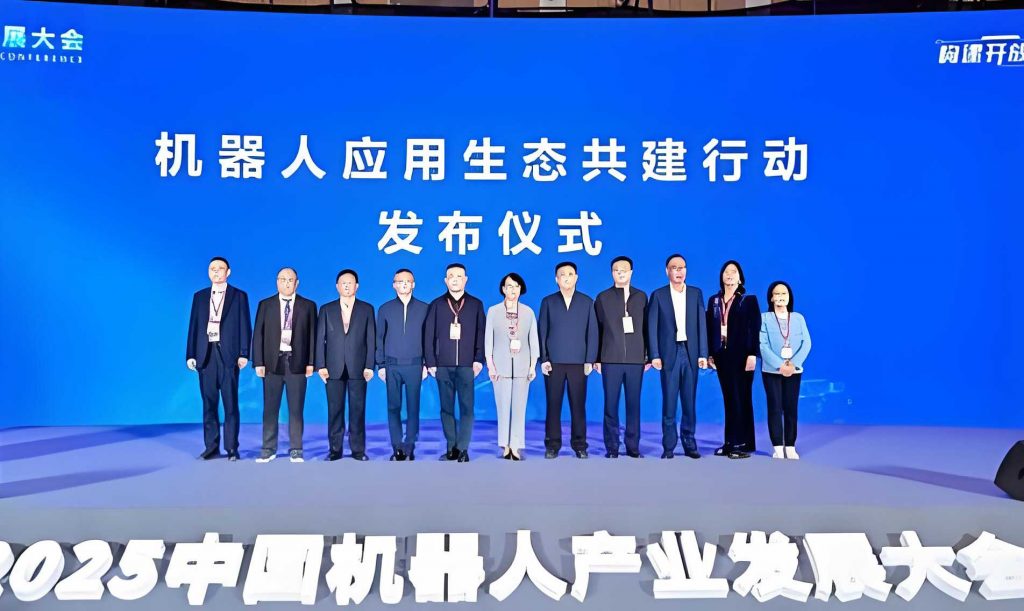
The statistics paint a picture of a market in hyperdrive. China has consecutively held the title of the world’s largest robot market, accounting for a staggering 56% of global industrial robot applications. The number of companies associated with the China robot concept has skyrocketed into the hundreds, with over a hundred listed firms and nearly a thousand enterprises of varying sizes operating in related fields. More than thirty robot development zones and industrial parks have been established across the nation. This explosive growth in scale is undeniable. Yet, a closer examination reveals a more nuanced reality. The global average robot density stands at 62 robots per 10,000 employees, but the figure for China is approximately 30 per 10,000, indicating significant room for penetration. More critically, robots currently replace only about 0.6% of work globally; in China, this figure is even lower, with 99.7% of work still performed by humans. This gap highlights that the current generation of robots, including many developed within the China robot sphere, often fails to meet the rigid, high-volume demands of advanced manufacturing due to limitations in functionality and performance.
1. The Core Technology Deficit: The “Hollow Heart” of China’s Robot Ambitions
The central challenge facing the sustainable development of the China robot industry is its lack of indigenous core technology. Industry analyses consistently point to key deficiencies. The most critical shortcomings lie in core components and underlying technologies. For high-performance robots, precision reducers, high-response servo drives and motors, and sophisticated controllers are essential. At present, the domestic supply chain for these components within the China robot ecosystem is weak, leading to high costs, supply chain vulnerabilities, and limitations on the performance ceiling of locally assembled robots. This reliance creates a dangerous “hollowing out” of the industry, where final assembly may occur domestically, but the value and innovation reside elsewhere.
Furthermore, the technological capabilities of robots themselves are limiting wider adoption. Current robots, including those deployed in China robot applications, excel at programmed, repetitive tasks but struggle with adaptability. Capabilities such as advanced dexterity, autonomous decision-making in unstructured environments, and safe, intuitive human-robot collaboration (often termed “co-robotics”) are areas where significant breakthroughs are needed. The safety of robots working alongside humans without extensive caging is another hurdle that must be overcome for the China robot industry to move into more dynamic sectors. The industry’s focus has predominantly been on robots for handling, welding, palletizing, and assembly, often deployed in sectors like home appliances and metal processing. The more complex, high-margin applications in areas like automotive manufacturing or electronics assembly are still largely dominated by international players.
2. A Case Study in Applied Control: Demonstrating Capability Amidst Challenges
While core component technology lags, the application and integration of control systems in specialized equipment showcase the practical engineering strengths emerging in China’s automation sector. A pertinent example is the development of a control system for a drilling device used in the construction of rigid overhead catenary systems for subway tunnels. This project, which integrates mechanical, electrical, and hydraulic systems, illustrates a path where the China robot and automation industry can build reliability and precision.
The system’s design encompasses a hydraulic control system for power, an electronic control system for logic, and a remote wireless control system for operational flexibility. The remote control scheme, designed to be cost-effective, utilizes mature brand walkie-talkies (such as Motorola or Kenwood) for robust signal transmission. To ensure reliability in the complex environment of a subway tunnel, rigorous interference tests were conducted. A high-power 4W Motorola walkie-talkie was used as an interference source. Tests in an empty tunnel showed no interference at distances of 50 and 70 meters between the remote transmitter and receiver. More challenging scenarios were also tested.
The following table summarizes interference test results when a metal-shielded equipment vehicle was placed between the transmitter and receiver:
| Test Distance (m) | Interference Distance from Transmitter (cm) | Interference Distance from Receiver (cm) |
|---|---|---|
| 20 | None | None |
| 50 | 3 | 3 |
Further tests were conducted with the added obstacle of a reinforced concrete wall (a tunnel bend) along with the equipment vehicle:
| Test Distance (m) | Interference Distance from Transmitter (cm) | Interference Distance from Receiver (cm) |
|---|---|---|
| 20 | None | None |
| 50 | 5 | 5 |
Given that the operational design distance for this equipment is within 20 meters, the system was deemed effectively immune to such wireless interference, meeting all design requirements for stability and reliability. This project underscores that in focused applications, Chinese engineers can successfully develop integrated control systems. However, it also implicitly highlights a dependency: the core wireless communication modules and reliable components likely sourced from established international suppliers. The path for the broader China robot industry involves mastering the creation of such core components internally.
3. Market Reality vs. Technological Aspiration: The Quantitative Gap
The disparity between the sheer volume of the China robot market and the technological sophistication of its offerings can be further quantified. The following data illustrates key metrics comparing global averages with the situation in China, highlighting both the opportunity and the gap for the China robot sector.
| Metric | Global Average | China |
|---|---|---|
| Robot Density (per 10,000 employees) | 62 | 30 |
| Percentage of Work Done by Humans | ~99.38% | ~99.7% |
| Percentage of Global Industrial Robot Applications | N/A | 56% |
| Robot Replacement Rate of Work | ~0.62% | <0.3% |
This table clearly shows that while the China robot market absorbs more than half of the world’s industrial robots, its utilization density and replacement rate are below global averages. This suggests that robots in China are often deployed in less intensive applications or that their functional limitations prevent deeper integration into production lines. The high percentage of human labor underscores that the current generation of robots, even within the vast China robot market, has not yet reached the flexibility and capability to automate a wider range of tasks. This is a direct consequence of the core technology deficits in perception, adaptability, and human-robot interaction that plague not only the China robot industry but the global robotics community, albeit with China feeling the pinch more acutely due to its import dependency.
4. Beyond Manufacturing: The Future Frontiers for China Robot Development
The future growth of the China robot industry is not confined to traditional factory floors. Experts identify vast, untapped potential in several high-value sectors. Healthcare represents a major frontier, with opportunities in surgical assistance, rehabilitation, and patient care robots. The defense and security sector demands robust, autonomous robots for surveillance, logistics, and hazardous duty. Service robotics, encompassing everything from domestic helpers and educational companions to logistics robots in hotels and hospitals, presents a massive consumer and commercial market. For the China robot industry to capture leadership in these areas, moving beyond hardware assembly to mastery of AI, machine vision, advanced sensors, and compliant actuation is non-negotiable. These fields require precisely the kind of灵巧性 (dexterity), autonomous decision-making, and interactive capabilities that are currently in short supply. Success here would transform the China robot brand from one associated with volume to one synonymous with innovation.
5. Strategic Responses: Building Platforms for a Sustainable China Robot Ecosystem
Recognizing these strategic vulnerabilities, concerted efforts are underway to strengthen the foundational ecosystem for the China robot industry. The government and industry bodies are actively fostering the development of large-scale, shared platforms. These initiatives aim to provide the necessary infrastructure for indigenous innovation. Key platforms under development include national-level research and development (R&D) platforms focused on core technologies like precision drives and intelligent control algorithms. Comprehensive testing and certification platforms are being established to ensure quality and safety standards, building trust in domestically produced China robot components and systems. Additionally, standardization platforms are working to create unified technical specifications, reducing fragmentation and accelerating adoption. The goal of these measures is to reduce the “hollow heart” risk by cultivating a domestic supply chain capable of producing world-class core components. This, in turn, would allow the China robot industry to move up the value chain, designing and manufacturing robots that compete on performance and intelligence, not just cost.
6. The Integration Challenge: Learning from Applied Automation Successes
The journey toward a technologically independent China robot industry can draw lessons from successful integration projects in niche fields. The subway tunnel drilling equipment control system serves as a microcosm. Its development involved the seamless integration of hydraulic power (providing high power density and reliability), electronic control via programmable logic controllers (PLCs) for precise sequencing, and a robust wireless interface for operational convenience. This “mechatronics” approach is a hallmark of advanced automation. The system’s reported high stability, reliability, and degree of automation were achieved through careful engineering design and testing, as evidenced by the detailed interference mitigation studies. This demonstrates that the engineering talent and system integration capabilities exist within the China robot and broader automation sector. The challenge is to apply this same rigorous, integration-focused mindset to the creation of the core components themselves—to design not just the system that uses a servo motor, but the servo motor itself. This shift from integration to invention is the critical next step for the long-term health of the China robot industry.
7. The Global Context: China Robot Industry in the World Arena
The evolution of the China robot industry does not occur in isolation. It is a key player in a global race for technological supremacy in automation and artificial intelligence. Other nations and regions are also investing heavily in robotics R&D. For the China robot sector, this global competition underscores the urgency of overcoming its technology gaps. The current reliance on imported core components creates strategic supply chain risks, as seen in global chip shortages. Developing indigenous capabilities is therefore not merely an economic ambition but a strategic imperative. Furthermore, as the China robot industry matures, it will increasingly look to expand internationally. To compete successfully in global markets against established players, Chinese robot manufacturers will need to offer products distinguished by technological excellence and innovation, not just competitive pricing. This necessitates a deep, internal pool of core technology. The global market, while large, is also discerning; winning it requires that the China robot industry solves its “core” problem.
8. Path Forward: Balancing Scale with Substance in China Robot Growth
The central theme emerging from industry analysis is the need for a recalibration in the development of the China robot ecosystem. The focus must expand beyond the sheer number of companies, industrial parks, and units sold—the “speed” of growth—to an intense focus on the “quality” of growth. This means channeling investments and talent into the hard problems of core technology: designing and mass-producing reliable, high-precision reducers; developing servo systems with superior bandwidth and torque density; creating intelligent drive systems with embedded diagnostics; and advancing the algorithms that enable true autonomy and collaboration. It also requires fostering closer collaboration between academia, government research institutes, and private enterprises to translate basic research into commercializable technologies. The thriving application scene, from subway construction to factory logistics, provides a valuable testing ground and source of feedback for these core technologies. By deliberately linking downstream application success with upstream technology development, the China robot industry can build a virtuous cycle. The massive domestic market provides the demand; the strategic focus must now be on cultivating the sophisticated supply.
In conclusion, the China robot industry stands at a pivotal moment. It commands the world’s largest market, boasts immense manufacturing scale, and has demonstrated proficiency in system integration for specific applications. Yet, its progression to a global technology leader is hampered by a critical shortfall in core components and advanced robotic capabilities. The examples from applied automation prove that the engineering expertise is present. The data shows the market potential is enormous. The strategic initiatives are being put in place. The imperative for the future of the China robot industry is clear: to bridge the gap between market size and technological depth, turning the current “hollow heart” into a center of innovation that drives not only the automation of Chinese industry but also shapes the next generation of robotics worldwide. The journey from being the world’s largest user of robots to being a leading creator of robotic core technology is the defining challenge for the China robot sector in the coming decade.