
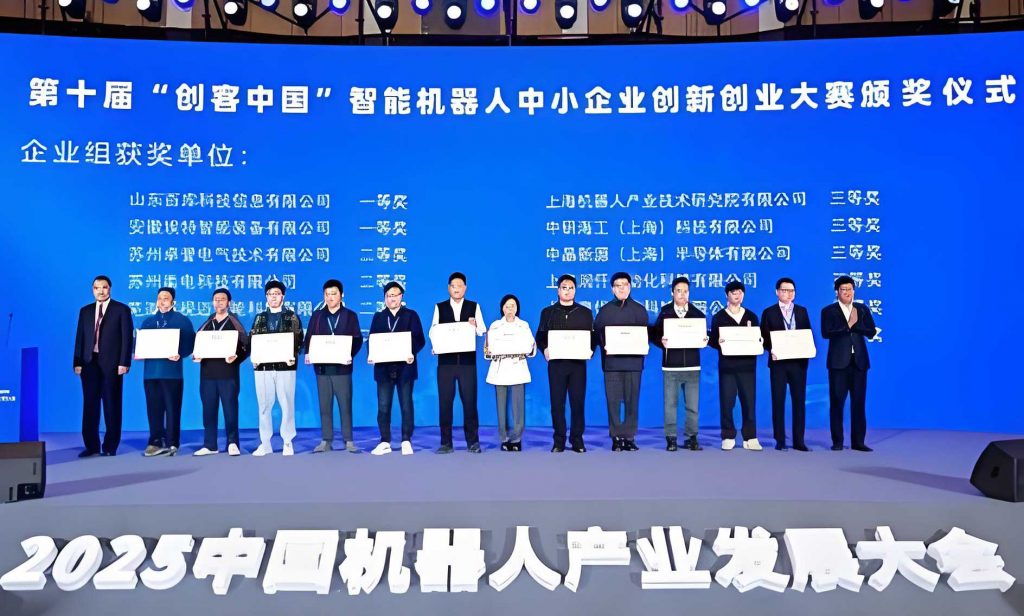
As a cornerstone of “intelligent manufacturing,” robotics, though not yet a massive industry, has become a critical benchmark for a nation’s scientific innovation and manufacturing prowess through its R&D, production, and application. In recent years, leading industrial powers like the United States, Japan, Germany, and South Korea have strategically prioritized robotics. They aim to leverage robot technology to offset pressures from high labor costs, realize a “return of manufacturing,” and maintain dominance in high-end production. Similarly, the China robot sector is receiving unprecedented attention from the government, enterprises, and financial institutions. Building a consensus on utilizing robotics to elevate manufacturing capabilities, transform from a large manufacturing nation into a powerful one, and improve quality of life, the China robot landscape is undergoing a transformative phase.
-
China Ascends as the Global Leader in Industrial Robot Consumption
The journey of the China robot industry began in the 1970s, progressing through prototype and demonstration phases in the 1980s-90s and an industrialization phase in the early 2000s. Post-2010, with annual installations soaring, China embarked on developing a full robot industry chain. Government policies encouraging the China robot industry have intensified, becoming more effective and fueling rapid expansion. However, this vigorous growth coexists with pronounced challenges: weak core technologies, low product value-added, low market share and brand recognition for domestic brands, and risks of overcapacity from hastily launched projects nationwide.
Over the past five years, the China robot market has experienced hyper-growth. From 2009 to 2013, sales of industrial robots in China grew at an average annual rate of 60.7%. Following rapid development during the “12th Five-Year Plan” period, China has solidified its position as a pivotal global market. In 2011, China’s industrial robot sales reached 22,577 units, a 50.7% year-on-year increase, ranking fourth globally. Sales grew to 26,135 units in 2012 (up 15.8%) and surged to 36,860 units in 2013 (up 41%), overtaking Japan to become the world’s largest industrial robot market. This explosive demand from the China robot market has significantly contributed to global industry growth.
Sales and Growth of Industrial Robots in China (2009-2013) Year Sales (10,000 units) Growth Rate (%) 2009 0.5525 171.00 2010 1.4978 50.73 2011 2.2577 15.76 2012 2.6135 41.04 2013 3.6860 38.00 Despite being the largest market, China’s manufacturing robot density remains relatively low. In 2013, China’s industrial robot density was merely 30 units per 10,000 employees, less than half the global average and far behind leaders like South Korea (437 units/10,000 employees), Japan (323), and Germany (282). This gap underscores both the current disparity and the immense latent potential for the China robot market.
Industrial Robot Density by Country/Region (2013, units per 10,000 employees) Country/Region Robot Density South Korea 437 Japan 323 Germany 282 Sweden 174 Belgium 169 Denmark 166 Italy 153 United States 152 Taiwan, China 142 Spain 141 Mainland China 30 World Average 62 -
The Struggle of Domestic Brands in the China Robot Arena
Over the past decade, driven by national research initiatives and industrial upgrading demands, the China robot industry has accelerated. Core design and application technologies have been largely mastered, transitioning the industry from an incubation to a formation period. Universities and research institutes have laid a technical foundation, while numerous enterprises have independently developed various robots for welding, palletizing, assembly, handling, injection molding, and painting.
However, international giants dominate the China robot market. Foreign robot companies, represented by the “Big Four” (ABB, KUKA, Yaskawa, and Fanuc), hold approximately 85% of the market share. Their aggressive strategies, including price competition, severely threaten domestic players. Consequently, China robot manufacturers remain relatively small-scale, with leading firms generating annual revenues around only 2 billion RMB, far below the hundreds of billions of international leaders. This lack of scale limits market influence, making the cultivation and expansion of domestic brands an urgent priority for the China robot industry.
Competitive Landscape of China’s Industrial Robot Market (2013) Category Market Share Foreign Brands (Six-axis and above) 62% Foreign Brands (Below six-axis) 12% Domestic Brands (Six-axis and above) 6% Domestic Brands (Below six-axis) 20% -
Three Fundamental Forces Propelling the China Robot Industry
Amid a nationwide rush, with over 40 robot industrial parks emerging in recent years, the core drivers for the China robot industry are clear. First, rising labor costs, a rapidly aging society, and an irreversible decline in frontline industrial workers create a pressing need for automation. Second, intense global and domestic competition necessitates customization, flexible manufacturing, cost efficiency, and global resource integration, where robots excel. Third, in high-stakes sectors like aerospace, defense, precision surgery, and hazardous operations, robots offer irreplaceable advantages. These factors collectively establish robotics as a critical pathway for manufacturing upgrade in China.
-
Automotive and Electronics: Primary Application Fields for China Robot Deployment
In terms of application types, material handling robots, especially palletizing robots, have seen remarkable growth, with a compound annual growth rate exceeding 40% over five years. In 2013, handling robots surpassed welding robots as the best-selling category in China, with 14,475 units sold, followed by welding robots at 13,028 units. Together, they accounted for about 75% of the domestic industrial robot market. Additionally, assembly and cleanroom robots, primarily used in the electronics sector, have grown rapidly.
Sales of Industrial Robots in China by Application Field (2011-2013, units) Application Field 2011 2012 2013 Welding Robots Data integrated in chart Data integrated in chart 13,028 Handling Robots Data integrated in chart Data integrated in chart 14,475 Assembly Robots Data integrated in chart Data integrated in chart Approx. values from chart Processing Robots Data integrated in chart Data integrated in chart Approx. values from chart Coating Robots Data integrated in chart Data integrated in chart Approx. values from chart Cleanroom Robots Data integrated in chart Data integrated in chart Approx. values from chart Others Data integrated in chart Data integrated in chart Approx. values from chart From an industry perspective, automotive and electronics are the mainstay sectors for the China robot market. The automotive industry is the largest application sector, accounting for 38% of total sales. It also boasts the highest robot density, estimated at 213 robots per 10,000 workers in 2012—nearly ten times the average for other Chinese manufacturing industries. Beyond automotive, robots are gaining traction in electronics, rubber and plastics, military, aviation manufacturing, food, pharmaceutical equipment, and metal products. This broadening adoption highlights the expanding role of the China robot industry across the industrial spectrum.
Global Industrial Robot Application by Industry (2014) Industry Share of Total Installations Automotive 39.0% Electrical/Electronics 20.3% Metal and Machinery 9.3% Rubber and Plastics 6.8% Food and Beverage 3.5% Pharmaceuticals/Cosmetics 1.1% Others 20.0% -
“Machine Replacement”: The Central Driver for China Robot Adoption
Rising labor costs, industrial transformation pressures, and demographic shifts have converged to make China the world’s largest robot demand center, creating a golden opportunity for the China robot industry. Concurrently, global robotics is evolving with AI and IT integration, prompting developed nations to strategize for the next technological frontier, adding competitive pressure.
Structural labor market issues, such as skill shortages and harsh working conditions, have led to widespread “recruitment difficulties.” The primary driver behind the China robot market surge is precisely this substitution of machines for human workers. Adopting robots helps companies mitigate skilled labor shortages, achieve scale, boost productivity, and lower labor costs. Furthermore, robots free workers from dangerous or unhealthy environments (e.g., grinding, spraying), reducing occupational hazards and facilitating a shift toward service-sector employment. In industries like explosives manufacturing, robots significantly enhance safety.
The installed base of industrial robots in China reflects this accelerating adoption. From 2009 to 2013, the cumulative operational stock grew steadily, with annual growth rates exceeding 30%, indicating deepening market penetration for the China robot ecosystem.
Operational Stock of Industrial Robots in China (2009-2013) Year Operational Stock (10,000 units) Growth Rate (%) 2009 3.7 — 2010 5.2 40.5% 2011 7.4 42.3% 2012 9.7 31.1% 2013 13.4 38.1% -
Service Robots: An Emerging Growth Engine for the Broader China Robot Sector
Beyond industrial applications, service robots are gaining momentum. Drones, floor cleaners, delivery robots, and more are entering daily life, driven by technological advances and higher living standards. Growth in service robots has recently outpaced industrial segments, becoming a new dynamic force for the China robot industry.
First, accelerated population aging creates vast demand for “robotic” elderly care. By 2020, China is projected to have 248 million people aged 60 and above (17% of the population), indicating a massive potential market for care robots. Second, China’s large disabled population and frequent natural disasters generate significant need for assistive, rehabilitation, and rescue robots. Finally, rising disposable income over the past decade enables more families to afford domestic service robots. Thus, the service robot segment represents a enormous future market space for the China robot industry, attracting strategic attention globally, as seen with major acquisitions by technology firms aiming to lead in next-generation robotics.
-
Three Critical Challenges Demanding Immediate Resolution in the China Robot Industry
While the China robot industry has established a foundation, significant gaps remain in core technology originality, high-reliability component mass production, and application. Heavy reliance on imports for key components like precision reducers, servo motors, and controllers poses a risk of industrial hollowing. Lacking competitive edges, domestic supply of high-end robots is insufficient. In 2013, domestically produced six-axis and above robots accounted for only 6% of total sales, compared to 62% for foreign brands. Overall, a technological gap of over a decade exists between local and foreign products, with domestic firms generally being smaller and less innovative.
-
Dependence on Imported Critical Components
Although some Chinese companies have made progress in developing reducers, servos, and controllers, technological disparities persist. Precision reducers are the weakest link. Manufacturing complexities lead to issues with stability, accuracy, and lifespan, hindering true domestic mass production and creating a major bottleneck for the China robot industry’s advancement.
-
Small Enterprise Scale and High Cost Pressure
China robot manufacturers are typically small, with even leading firms having revenues around 20 billion RMB, preventing economies of scale and keeping R&D, human resource, and marketing costs high. Combined with expensive imported parts, production costs for domestic robots are substantially higher. For instance, a 165kg six-axis articulated robot may cost 44% more to produce domestically than abroad, placing China robot brands at a significant price disadvantage against foreign competitors.
-
Significant Brand Credibility Gap and Lack of Verification Period
Over the past decade, foreign robot companies have established extensive sales networks and local production bases in China. Giants like ABB and Yaskawa dominate high-end sectors like automotive, where nearly half of domestic robot demand originates. Downstream customers in these sectors are accustomed to foreign brands, and domestic China robot brands, lacking extensive project track records, face a prolonged validation period. This hinders the market entry of technically breakthrough components and robots, even those with some successful applications, from achieving scale.
-
Dependence on Imported Critical Components
-
Future Trajectory: Strategic Imperatives for the China Robot Industry
The development of the China robot industry stands at a critical juncture, marked by unprecedented market opportunity and formidable challenges. To solidify its position and achieve sustainable growth, the China robot sector must address its foundational weaknesses. Strategic focus should intensify on indigenous innovation in core technologies, particularly in precision reducers, high-performance servos, and advanced controllers. Fostering industry consolidation to build larger, more competitive enterprises with economies of scale is essential to reduce costs and enhance global market presence. Moreover, creating robust application verification platforms and encouraging pilot programs in key state-led projects can help build trust and accelerate the adoption of domestic China robot brands.
Simultaneously, the emerging service robot segment offers a parallel avenue for growth, requiring supportive policies, R&D investment, and ecosystem development tailored to domestic needs like elderly care and disaster response. As global competition intensifies with nations vying for technological leadership in next-generation robotics, a coordinated, long-term national strategy for the China robot industry is indispensable. Success will depend on balancing market-driven growth with targeted support to overcome technological dependencies, scale barriers, and brand perception gaps, ultimately enabling the China robot industry to not only serve its vast domestic market but also compete effectively on the global stage.
The path forward for the China robot industry is complex, but the momentum is undeniable. With its vast market, increasing policy support, and growing technical expertise, the China robot sector has the potential to transition from a volume leader to an innovation and quality leader. The coming years will be decisive in determining whether the China robot industry can navigate its current hurdles and fully harness the transformative power of robotics for its manufacturing upgrade and broader economic transformation.