
The global industrial landscape is undergoing a profound transformation, driven by the rapid advancement and adoption of automation technologies. At the heart of this transformation lies the industrial robot, a quintessential symbol of modern manufacturing prowess. For the China robot sector, this era presents a unique confluence of unprecedented market opportunity and formidable competitive challenges. The nation’s ascent as the world’s primary manufacturing hub has created a voracious and growing appetite for automation, positioning the domestic China robot industry at a critical inflection point. This analysis delves into the complex dynamics shaping this sector, examining the global context, domestic drivers, inherent challenges, and strategic pathways for Chinese enterprises aiming to secure a significant role in the future of automated production.
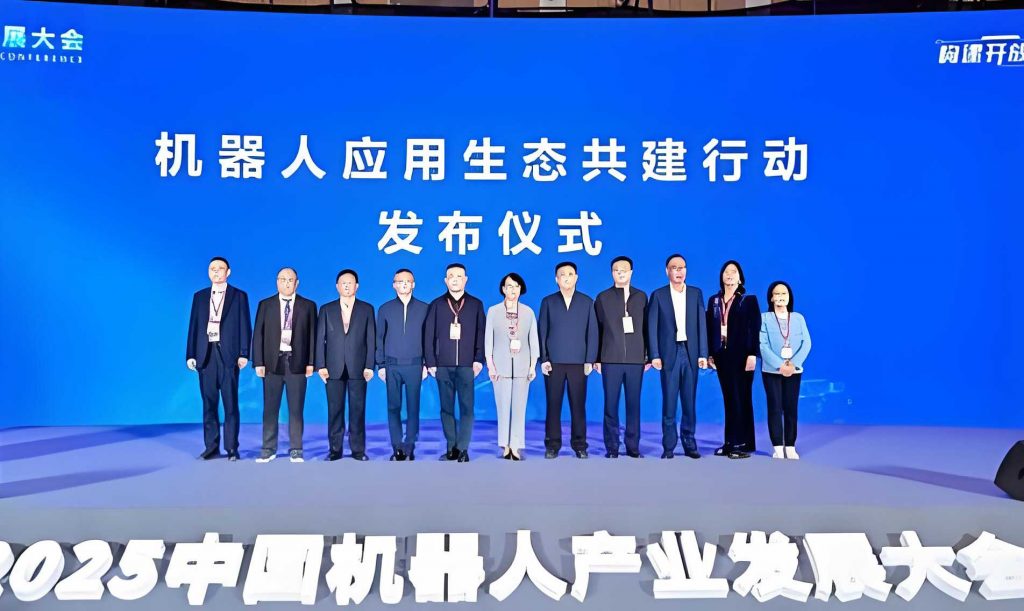
The international arena for industrial robotics is dominated by well-established players from Japan, Europe, and North America. Companies like ABB (Switzerland/Sweden), FANUC and Yaskawa (Japan), and KUKA (Germany) possess decades of technological accumulation, brand recognition, and economies of scale. Their competitive edge is fundamentally rooted in mastery over core components and advanced software, areas where the China robot ecosystem is still developing. The technological gap can be summarized by examining key performance parameters and market control.
| Dimension | Established International Leaders (e.g., ABB, FANUC, KUKA) | Emerging China Robot Manufacturers |
|---|---|---|
| Core Component Technology | Dominance in high-precision reducers (RV, Harmonic), servo motors, controllers. Mass production ensures cost and reliability advantages. | Heavy reliance on imports for critical components. Domestic production exists but often lags in consistency, precision, and durability. |
| Software & Control Platforms | Proprietary, mature motion control software and intuitive programming environments. Advanced force sensing and AI integration. | Significant R&D efforts underway. Many platforms are still in development or adaptation phases, with gaps in advanced functionality and ecosystem. |
| Brand & Market Penetration | Global brand loyalty, extensive installed base, and deep integration with multinational manufacturing systems. | Primarily competing on cost and local service in the domestic market. Global brand presence is minimal. |
| Production Scale & Cost | Massive global production volumes leading to optimized supply chains and lower unit costs for components and final products. | Lower production volumes for domestically produced robots, resulting in higher per-unit costs for China robot makers despite lower labor inputs. |
The mathematical reality of market penetration underscores the challenge. If we define the market share of domestically produced China robot units in a given year as $MS_{dom}$, it is a function of domestic production volume $P_{dom}$ and total market sales $S_{total}$:
$$
MS_{dom} = \frac{P_{dom}}{S_{total}} \times 100\%
$$
For many years, this ratio has been critically low. While $S_{total}$ has experienced compound annual growth rates (CAGR) exceeding 30%, $P_{dom}$ has struggled to keep pace, resulting in a $MS_{dom}$ historically below 5%. This highlights the supply-side constraint facing the China robot industry.
Despite these competitive headwinds, the demand-side fundamentals for the China robot market are extraordinarily robust. The convergence of multiple macro-economic and socio-demographic trends has created a perfect storm driving automation adoption. The primary catalysts can be modeled as a multi-factor function:
$$
\text{Demand Growth Rate } (G) \approx f(\Delta L, \Delta W, A, PI, GSI)
$$
Where:
$\Delta L$ = Rate of change in labor availability (negative due to aging population and rising expectations)
$\Delta W$ = Rate of change in labor wage costs (consistently positive)
$A$ = Amplification factor from national policy and strategic industrial directives (e.g., “Made in China 2025”)
$PI$ = Penetration increase from technological improvements and cost reductions in robotics
$GSI$ = Growth from structural industrial shifts towards higher-value, precision manufacturing
| Driver | Description | Impact on China Robot Market |
|---|---|---|
| Demographic Shift & Labor Cost | Aging population, shrinking workforce, and rapidly rising minimum wages erode the traditional low-cost labor advantage. | Makes robotics a cost-effective alternative for an expanding range of tasks and industries, including SMEs. |
| National Manufacturing Strategy | Policies like “Made in China 2025” explicitly prioritize smart manufacturing and robotics as pillars for industrial upgrading. | Creates top-down momentum, R&D funding, and pilot project opportunities for the domestic China robot sector. |
| Quality and Consistency Demands | Transition from being the “world’s factory” for assembly to a producer of high-quality, precision goods. | Requires automation for processes where human error is unacceptable, driving demand for advanced China robot solutions. |
| Supply Chain Resilience | Global events highlighting risks of concentrated manufacturing. Automation enhances flexibility and productivity of localized production. | Encourages investment in automated lines within China, benefiting both international and domestic China robot suppliers. |
The financial calculus for a Chinese manufacturer considering automation has shifted decisively. The Return on Investment (ROI) period for a robot workcell is shortening. A simplified model for the payback period $T$ in years is:
$$
T = \frac{C_r + C_i}{(\Delta W \times H \times N) – (C_m + C_e)}
$$
where $C_r$ is the robot cost, $C_i$ is integration/installation cost, $\Delta W$ is the annual wage cost saved per displaced worker, $H$ is annual work hours, $N$ is number of workers replaced, $C_m$ is annual maintenance cost, and $C_e$ is energy cost. The steady increase in $\Delta W$ and improvements in robot affordability ($C_r$) are pushing $T$ below critical thresholds for wider adoption, fueling the China robot market expansion.
For domestic China robot enterprises, the path to success is fraught with technical and commercial obstacles that extend beyond mere market competition. The core challenge lies in the foundational technology stack. High-precision reducers, such as RV reducers, are a prime example. The performance gap can be expressed in terms of key metrics like backlash, transmission error, and lifespan. Let $\epsilon_b$ represent backlash and $L_{10}$ represent the rated life in hours. For many domestic components:
$$
\epsilon_{b,\ domestic} > \epsilon_{b,\ import} \quad \text{and} \quad L_{10,\ domestic} < L_{10,\ import}
$$
This reliability gap forces domestic China robot integrators to import core components, which erodes cost competitiveness and stifles iterative design optimization crucial for innovation.
Furthermore, the software and systems integration layer presents another complex hurdle. Advanced motion control requires sophisticated algorithms for path planning, vibration suppression, and force control. The performance of a robot in a dynamic task can be related to its controller’s ability to minimize a cost function $J$ encompassing error $e(t)$, energy consumption $u(t)$, and time $t_f$:
$$
J = \int_{0}^{t_f} [\mathbf{e}^T(t)Q\mathbf{e}(t) + \mathbf{u}^T(t)R\mathbf{u}(t)] dt + \Phi(\mathbf{e}(t_f))
$$
Developing software that robustly optimizes such functions across diverse real-world conditions is a significant R&D undertaking for the China robot industry, requiring deep collaboration between academia and application engineering.
Navigating these challenges requires a multi-pronged strategic approach from China robot companies and supportive ecosystems. The strategy cannot be one of direct, head-on competition with international giants across all fronts immediately. Instead, a more nuanced path is necessary.
1. Strategic Collaboration and Technology Integration: Rather than purely indigenous development from scratch, successful China robot firms will actively engage in global technology partnerships, mergers, and acquisitions. The goal is to accelerate capability building through licensed technology, joint ventures, and the integration of international R&D with deep understanding of local market nuances. The formula for a successful hybrid technology approach could be modeled as:
$$
\text{Competitive Advantage} = \alpha(\text{Global Tech Access}) + \beta(\text{Local Process Knowledge}) + \gamma(\text{Agile Customization})
$$
where $\alpha$, $\beta$, and $\gamma$ are weighting coefficients reflecting the firm’s strategic focus.
2. Application-Led Innovation and Niche Domination: The vast and diverse Chinese manufacturing base offers endless specific application scenarios. China robot companies can thrive by becoming experts in automating industries or processes that are uniquely important in China but may be lower priority for global giants. This includes sectors like food packaging, ceramics, metal fabrication for consumer goods, and specialized assembly for electronics. By developing deep, turnkey solutions for these niches—combining the robot, tooling, and process knowledge—they can build defensible market positions. The value proposition shifts from selling a generic robot arm to providing a guaranteed productivity increase $\Delta P$ for a specific line:
$$
\Delta P = \frac{T_{manual} – T_{automated}}{T_{manual}} \times 100\%
$$
where $T$ represents cycle time or cost per unit. Demonstrating a high, reliable $\Delta P$ is more critical than competing on generic technical specifications.
| Strategic Pillar | Key Actions | Expected Outcome |
|---|---|---|
| Component Breakthrough | Focused R&D and strategic partnerships in precision reducers, servo drives, and controllers. Government-led “moonshot” projects for core technology. | Reduced import dependency, lower BOM cost for domestic China robot builders, and improved system integration capabilities. |
| Ecosystem Development | Fostering close “产学研” (Industry-University-Research) collaboration. Creating open platforms for application software development. | Faster translation of research into market-ready products. Growth of a skilled talent pool in robotics engineering and integration. |
| Policy-Enabled Adoption | Implementation of direct subsidies for end-users of certified domestic China robots, similar to electric vehicle incentives. Tax benefits for R&D. | Bridges the initial cost-competitiveness gap, accelerates market feedback loops, and stimulates production scale-up. |
| Global-Local Synthesis | Leveraging global supply chains for best-in-class sub-components while focusing internal innovation on system integration, AI, and niche applications. | Rapid time-to-market with competitive products, allowing China robot firms to generate revenue and fund deeper R&D cycles. |
3. Policy as a Catalyst for Industry Maturation: Government policy will play a decisive role in the trajectory of the China robot industry. Beyond R&D grants, the most impactful policies will be those that stimulate demand for domestic products. A subsidy model $S$ for an end-user purchasing a qualifying domestic China robot could be structured as:
$$
S = k_1 \cdot C_{robot} + k_2 \cdot \text{Productivity Bonus}
$$
where $k_1$ is a base percentage of the robot cost, and $k_2$ is a bonus multiplier tied to verified post-installation productivity or efficiency gains. Such demand-side stimulation is crucial to help domestic China robot manufacturers cross the valley of death from low-volume, high-cost production to the virtuous cycle of scale, learning, and cost reduction.
Looking forward, the evolution of the China robot industry is inextricably linked to broader trends in Industry 4.0. The future China robot will not be an isolated unit but a connected node in a cyber-physical system. This integration involves the Internet of Things (IoT), big data analytics, and artificial intelligence. The intelligence of a future robotic workcell can be conceptualized by its ability to perceive its environment $s_t$, make decisions $a_t$ based on a policy $\pi$, and learn from outcomes to optimize performance, akin to a reinforcement learning framework aiming to maximize cumulative reward $R$:
$$
R = \mathbb{E}\left[\sum_{t=0}^{\infty} \gamma^t r(s_t, a_t)\right]
$$
where $\gamma$ is a discount factor and $r$ is the immediate reward. Chinese companies have significant potential in developing the AI and data layer for smart factories, potentially leapfrogging in areas of swarm robotics for logistics or AI-powered visual inspection systems.
In conclusion, the China robot industry stands at a pivotal juncture, buoyed by the world’s most dynamic automation market yet pressured by intense international competition and internal technological gaps. The opportunity is not merely to replace imported hardware but to forge a new path that leverages China’s strengths in manufacturing scale, digital ecosystem, and policy agility. Success will depend on a concerted, patient strategy combining targeted technology acquisition, deep vertical integration in key applications, robust policy support, and a relentless focus on solving the real-world productivity problems of Chinese industry. By doing so, the China robot sector can evolve from being a contested market to becoming a vital, innovative pillar of the global automation landscape, ultimately contributing to the nation’s strategic vision of industrial modernization and technological self-reliance.