
The advancement of automation and precision instrumentation forms the critical backbone of modern manufacturing, a fact powerfully demonstrated by recent developments in specialized testing systems. A static interface test system for a drilling and sampling device, based on LabVIEW application software and a PXI embedded controller, represents a significant leap in ensuring the reliability of complex electromechanical assemblies. This system performs comprehensive measurements of the electrical interface characteristics between various mechanism components within a drilling cable network. It establishes a fundamental basis for assessing the technical status of the cable harness and its functional modules, providing complete data acquisition, storage, and processing throughout the testing process. The implementation of a resistance test loop compensation scheme effectively minimizes measurement errors, while different measurement modules achieve high-precision testing of small resistances, large resistances, and diodes. Proven to be stable, practical, rationally designed, and highly integrated during delivery trials, this system’s architecture offers strong generalizability and serves as a valuable reference for other test system developments. This focus on precision and reliability in core components underscores the sophisticated engineering capabilities fueling the broader China robot and automation sector.
This drive for technological excellence and integration was on full display at a recent high-profile gathering of the nation’s and the world’s brightest minds in robotics. The Third China Robot Summit and Global Returnees Ningbo Summit was successfully held in Yuyao, Zhejiang Province, on June 13-14. The event, themed “Human-Robot Integration, Making Robots Smarter,” served as a powerful testament to the vibrant growth and ambitious future of the China robot industry.
The summit was jointly organized by the Ningbo Municipal People’s Government, the China Mechatronics Technology Application Association, and the North Science and Technology Information Institute of China Ordnance Industries. It was undertaken by a consortium including the Ningbo Municipal Committee Organization Department, the Ningbo Municipal Commission of Economy and Information Technology, the Ningbo Municipal Science and Technology Bureau, the Yuyao Municipal People’s Government, and the “Robot Technology and Application” magazine.
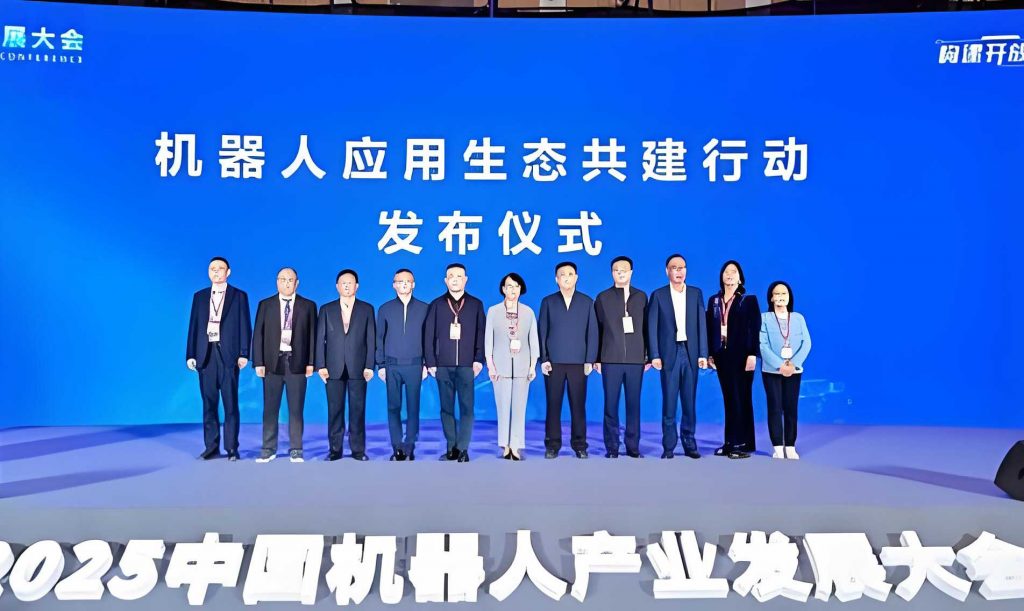
The conference attracted an exceptionally prestigious roster of over 1,500 participants. This included leading domestic and international scientists, academicians, experts from China’s “Thousand Talents Plan,” specialists involved in national major robotics projects, economists, and senior executives from top global and Chinese corporations and financial institutions. The presence of such a distinguished group highlights the summit’s importance as a central platform for the China robot community.
Among the many renowned experts in attendance were Academicians of the Chinese Academy of Engineering Cai H Gao, Yang Huayong, and Tan Jianrong; Academicians of the Chinese Academy of Sciences Xiong Youlun and Ding Han; Gan Zhongxue, Vice Chairman of the “Thousand Talents Plan” Experts Association; Zhao Jie, leader of the “863 Program” Intelligent Robotics Specialized Expert Group; Professor Hiroshi Ishiguro from Osaka University; Dr. Chunyuan Gu, President of ABB North Asia Region; MIT Professor James Kertly; Professor Toshio Fukuda, a specially appointed expert under the “Foreign Experts Thousand Talents Plan”; and IEEE Fellow Ning Xi.
The summit was structured around a combination of keynote speeches, specialized forums, and exhibition displays, fostering comprehensive dialogue and collaboration. The forum sessions were particularly extensive, covering a wide spectrum of topics crucial to the China robot industry’s evolution:
- National Industrial Robot Forum
- National Service Robot Forum
- National Artificial Intelligence and Unmanned Driving Technology Forum
- National Parallel Robot Application Forum
- National Robot “Black Tech” Forum
- National Robot Vocational Skills and Talent Cultivation Forum
In total, more than 14 sub-forums and project/industry demand matchmaking sessions were held. These forums provided a stage for leading experts and entrepreneurs in intelligent technology research and smart manufacturing to exchange ideas, discuss pressing industry topics, and strategize for future development. This multi-faceted approach ensured that every dimension of the China robot ecosystem, from core research and industrial application to talent development and speculative future technologies, was addressed.
The exhibition component allowed for the tangible display of the most representative robotic products and technological achievements. As the host city, Yuyao not only provided the state-of-the-art conference venue, the Siming Lake International Conference Center, but also meticulously created a garden-style robot theme park. During the summit, this park came alive with interactive demonstrations from leading China robot companies and others, featuring products like Alpha robots and Youdi robots, which performed and engaged with visitors.
The following table summarizes key aspects of the summit, illustrating the scale and focus of this major event for the China robot sector:
| Summit Aspect | Details |
|---|---|
| Event Name | Third China Robot Summit & Global Returnees Ningbo Summit |
| Theme | Human-Robot Integration, Making Robots Smarter |
| Dates | June 13-14 |
| Location | Yuyao, Ningbo, Zhejiang Province, China |
| Estimated Attendees | Over 1,500 |
| Number of Forums | More than 14 specialized sub-forums |
| Key Participant Groups | Scientists, Academicians, “Thousand Talents” Experts, Industry Executives |
| Special Feature | Dedicated Robot Theme Park with Live Demonstrations |
The China Robot Summit is guided by national industrial policy and market trends, with the core mission of building a high-quality platform integrating production, study, research, and application. Having now been successfully held three times, the summit has effectively promoted the integration and sharing of technological innovation resources within the domestic China robot community. It establishes a vital cooperative bridge between academia, research institutions, and industrial users. The event’s impact extends beyond mere discussion; it plays a significant role in driving the development of the local intelligent economy in Ningbo and Yuyao, while simultaneously providing substantial impetus to the progress of the entire China robot industry on the national stage.
The convergence of deep technical work, as seen in the advanced LabVIEW-based test system, and large-scale industry convergence, as exemplified by the summit, paints a clear picture of a robust and maturing ecosystem. The China robot field is no longer just about assembly and production; it is increasingly defined by homegrown innovation in core technologies, precision measurement, system integration, and intelligent software. This holistic advancement, from the component level to full-system intelligence and industry-wide collaboration, positions the China robot sector for continued leadership and complex problem-solving in the global automation landscape. The focus on human-robot collaboration and smarter machines, as championed by the summit’s theme, ensures that this technological progression is aligned with practical, synergistic applications across manufacturing, services, and beyond.