
The global robotics landscape is witnessing a seismic shift, with China robot enterprises surging from behind to claim a dominant position. Leveraging a vast domestic market, multi-layered consumer demographics, and densely packed application scenarios, the China robot sector has secured an unparalleled commercial testing ground. This momentum, reminiscent of China’s earlier success in electric vehicles, is now propelling robotics onto a new trajectory of rapid commercialization and innovation.
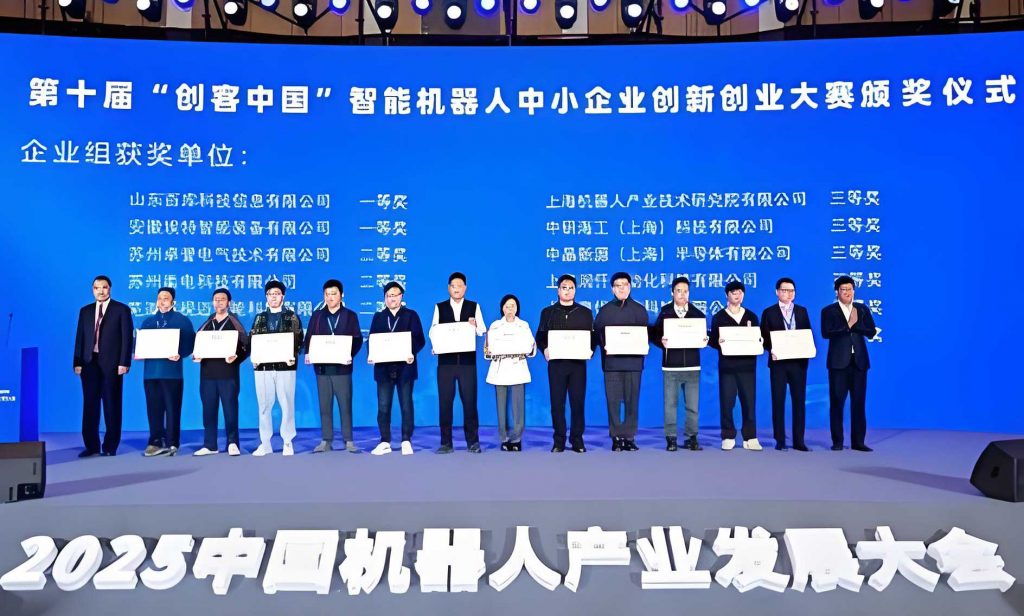
The first half of 2025 has crystallized this ascent, revealing a trifecta of trends: policy and capital fueling growth, industrial robots achieving steady export increases, and humanoid robots breaking through into the global consciousness. This is not a speculative bubble but a foundational shift, built upon an increasingly self-sufficient and competitive industrial chain. The China robot ecosystem is demonstrating that the best way to surpass incumbents is to create a new starting point, and it is doing so with remarkable speed and scale.
1. The Emergence of a Full Industrial Chain
The most telling sign of the China robot industry’s maturity is the formation of a comprehensive industrial chain, spanning from core components to final integration. This holistic development is reducing external dependencies and fostering rapid innovation cycles.
Host manufacturers have shown robust performance. Representatives like Estun and Inovance Technologies reported a striking 61.5% growth in industrial robot exports in H1 2025. Meanwhile, humanoid robot makers such as Unitree and Ubtech have become global sensations, captivating international audiences while simultaneously accelerating their commercial deployment plans.
However, the true “dark horse battalion” of H1 2025 has been the upstream component and material suppliers. Their explosive growth underscores the depth of the China robot supply chain’s capabilities. The following table highlights the extraordinary performance of key players driving the China robot revolution from the ground up:
| Company | Sector / Focus | Key Achievements & Data (H1 2025) | Significance for China Robot Ecosystem |
|---|---|---|---|
| Southern Precision | Reducer Manufacturing (Core Component) | Net profit forecast increased by 3215%. RV reducer market share exceeds 30%. Orders for harmonic reducers grew by 300% year-on-year. Became a core supplier for Tesla’s Optimus. | Demonstrates breakthrough in a critical, previously import-dominated component. Vital for precision and cost reduction across the China robot industry. |
| Huahong Technology | Core Materials for Robot Motors | Net profit forecast surged by 3384.71%. | Highlights advancements in foundational materials, enabling better performance and reliability for China robot actuators. |
| Tianyu Digital | Core Control System R&D | Net profit increased by 369%. | Indicates strong capability and demand in the “brain” of robots, a sophisticated segment crucial for autonomous China robot operations. |
| Zhwei Intelligent | Motion Control & Computing | Achieved computing power of 275 TOPS for motion control solutions. | Provides superior processing power for real-time decision-making in China robots, surpassing key international benchmarks. |
| Shuobede | Perception & Interaction (Antennae) | Joint-built 5G mmWave antenna market share over 40%. | Enables advanced obstacle avoidance and flexible movement for China robots through enhanced communication and sensing. |
| CATL (Contemporary Amperex Technology Co. Limited) | Energy Supply & Batteries | Developed high-energy-density battery (350Wh/kg). | Solves the critical endurance bottleneck for mobile and humanoid China robots, enabling longer operational cycles. |
This robust component base empowers the final integration stage. Companies like Ubtech have achieved globally leading technologies, such as multi-robot collaborative handling. The synergy across this chain allows the China robot industry to iterate quickly, control costs, and tailor solutions for diverse markets.
2. Policy Tailwinds: Fueling the China Robot Ascent
The strategic importance of robotics has been unequivocally recognized at the highest levels of Chinese governance, providing a powerful catalyst for the industry. The 2025 Government Work Report marked a milestone by explicitly calling for the cultivation of future industries like embodied intelligence and the vigorous development of intelligent robots. This top-level endorsement has triggered a cascade of supportive policies across major cities, creating a fertile environment for China robot innovation.
- Beijing has outlined plans to break through 100 key robotics technologies and release procurement demand worth 50 billion yuan for robots by 2027.
- Shenzhen aims for an AI terminal industry scale of 800 billion yuan by 2026, explicitly pushing for the mass production of “out-of-the-box” ready robots.
- Other tech hubs like Shanghai, Tianjin, and Hangzhou have introduced similar initiatives focusing on industrial clusters, R&D subsidies, and scenario-based application pilots for intelligent robots.
This policy framework acts as a powerful accelerant. It de-risks investment, directs research priorities, and, crucially, creates early, large-scale demand through public procurement. This virtuous cycle of state support and market response is a distinctive feature propelling the China robot sector forward at an unmatched pace.
3. Core Technological Breakthroughs: Running at “China Speed”
Beyond scale and policy, the China robot industry is making significant strides in core technologies, breaking long-standing foreign monopolies and transitioning innovations from the lab to the production line with remarkable velocity—a phenomenon often termed “China Speed.”
- Precision Reducers: As evidenced by Southern Precision’s market share, Chinese manufacturers are now capable of high-quality RV and harmonic reducers, reducing a critical dependency and lowering costs for the entire China robot supply chain.
- Artificial Muscles: Companies like GaoDe Infrared have released carbon nanotube driver systems. This advancement significantly enhances the flexibility and precision of surgical robots, a high-end application within the medical China robot segment.
- VLA Multimodal Models: The Tianqong Robot Ultra, powered by its proprietary Visual-Language-Action model, showcases advanced dynamic terrain recognition and adaptive gait control. It can run at a speed of 12 km/h and continuously climb 134 steps without falling, setting a high bar for mobility in legged China robots.
- AI Foundation Models for Robot Brains: Integration of large language models is supercharging robot intelligence. For instance, Ubtech’s Walker S humanoid robot, after being connected to Baidu’s ERNIE 4.5 model, can understand natural language commands to orchestrate multi-robot collaboration. Furthermore, Ubtech’s BrainNet architecture enables 40 robots to share decision-making data with a task response latency of less than 50 milliseconds—a feat not yet widely reported among overseas peers.
- Motion Control and Sensing: The 275 TOPS computing power from Zhwei Intelligent for motion control and the over 40% market share of specialized 5G mmWave antennas from Shuobede illustrate deep capabilities in real-time processing and environmental perception, essential for any advanced China robot.
These breakthroughs are not isolated laboratory achievements. They are being rapidly integrated into commercial products, allowing the China robot industry to offer increasingly sophisticated and competitive solutions.
4. The Crucible of Application: A Nation-Scale Testing Ground
The ultimate validator for any technology is real-world application. Here, the China robot sector enjoys its most decisive advantage: an immense, layered, and scenario-rich domestic market. This acts as a commercial testing ground where products can be deployed, iterated, and refined at a scale unavailable elsewhere.
The penetration of China robot solutions is expanding far beyond traditional factory floors into complex, demanding environments:
| Application Scenario | Specific Example | Impact & Performance Data |
|---|---|---|
| Industrial & Hazardous Environments | Tianchuang Robot and Huarong Co. jointly launched the world’s first explosion-proof humanoid robot, “Tiankui-1”. | Deployed in mines and nuclear power plants to replace humans in high-risk operations, enhancing safety and continuity. |
| Medical Care & Rehabilitation | Nursing robot co-developed by Meditech and Ubtech. | Performs patient vital sign monitoring, medicine delivery, and fall alarms. Reported to improve triage efficiency by 3 times. |
| Elderly Care & Companionship | 100 elderly care robots developed by Maishang Consumer deployed in Shanghai communities. | Serve individuals with limited mobility, providing emotional companionship with a reported response accuracy rate of 92%. |
| Agriculture & Logistics | Quadruped robot developed by Alexander Intelligent Technology. | Carries 20kg of agricultural supplies on steep slopes, solving the “last mile” transport challenge in mountainous regions. |
This widespread deployment across such varied sectors does more than just prove functionality. It generates vast amounts of operational data, which feeds back into improving algorithms, hardware durability, and user experience. Each successful deployment in a Chinese factory, hospital, or farm strengthens the value proposition of the China robot industry globally.
5. The Global Context: China’s Pragmatic Commercialization vs. Overseas Caution
The rise of the China robot industry becomes even more striking when viewed against the global backdrop. The year 2025 has seen numerous major international technology companies announce ambitious robotics initiatives. Tesla continues to develop its Optimus humanoid, Amazon has plans for Digit robot量产, Toyota is researching its soft-interactive Punyo robot, and LG Electronics is working on the CLOi home robot. However, a common thread among many of these projects is a prolonged, cautious approach to commercialization, often remaining in prototype or limited pilot stages.
In contrast, the defining characteristic of the China robot sector in 2025 is its focus on rapid technological translation and scalable application. While global giants cautiously refine their designs behind closed doors, Chinese companies are pushing products into the market, learning from real users, and iterating at a breakneck pace. This “launch and learn” philosophy, supported by the domestic market’s scale and tolerance for iteration, is a key competitive edge.
The China robot strategy is not about unveiling flawless concept robots but about achieving functional utility and continuous improvement through mass deployment. This pragmatic path is accelerating the maturity curve for China robot technologies and business models, positioning Chinese firms to define practical standards for robotics adoption across industries worldwide.
6. The Road Ahead: Sustaining Momentum and Navigating Challenges
For the China robot industry, the current trajectory is undeniably upward, but the path forward involves consolidating gains and navigating new challenges. The foundation is strong: a near-complete industrial chain mitigates supply chain risks, proactive policy ensures sustained investment and demand, and relentless technological innovation builds competitive moats.
The next phase will likely focus on:
- Deepening Technological Sophistication: Moving from component substitution to pioneering entirely new architectures in actuators, AI integration, and energy systems for next-generation China robots.
- Global Market Expansion: Leveraging cost-competitiveness and proven application cases to increase exports of both industrial and service-oriented China robots.
- Standard Setting: As a leader in deployment density, the China robot industry is in a position to influence global standards for robot safety, interoperability, and performance metrics.
- Talent Cultivation: Sustaining innovation will require a continuous influx of engineers and researchers specialized in robotics, AI, and advanced manufacturing to support the growing China robot ecosystem.
The journey of the China robot sector from follower to frontrunner exemplifies how a combination of market scale, strategic state support, and entrepreneurial agility can reshape a global industry. By treating its vast and varied homeland as the ultimate proving ground, the China robot industry has not only caught up but is now setting the pace, demonstrating that the future of robotics is being written, in large part, through its relentless commercial experimentation and evolution.