
In a significant dual development for the nation’s technological advancement, the China robot sector has witnessed two pivotal events this week. The formal establishment of the China Robot Industry Alliance in Beijing marks a unified national effort to propel the industry forward, while the inauguration of a National Engineering Practice Education Center in Wuhan underscores the commitment to cultivating future talent. These initiatives collectively signal a robust, coordinated push to strengthen China’s position in the global robotics landscape, focusing on industrial integration, innovation, and human capital development.
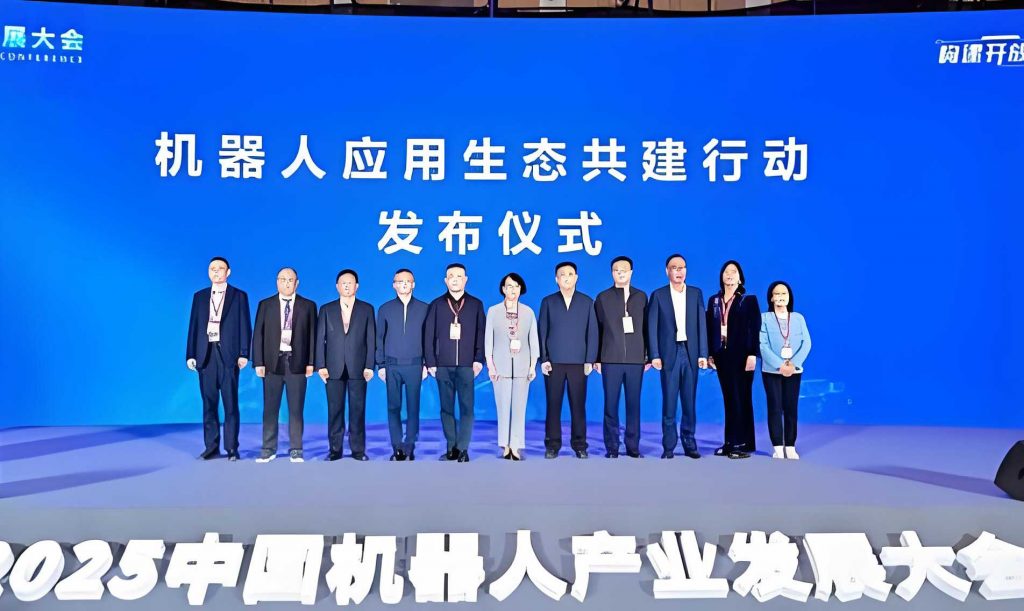
The synchronized progress in alliance formation and practical education highlights a comprehensive strategy for the China robot ecosystem. The alliance aims to serve as a central platform for collaboration across industry, academia, research, and application, addressing systemic challenges and fostering growth. Concurrently, the new education center represents a critical investment in hands-on engineering skills, ensuring the China robot industry has a steady pipeline of qualified professionals. These steps are seen as essential for reducing external dependencies and accelerating the domestic development and adoption of advanced robotic solutions across manufacturing and beyond.
1. China Robot Industry Alliance Holds Inaugural Assembly in Beijing
On April 21, 2013, the China Robot Industry Alliance was officially founded in a ceremony in Beijing, attended by over 150 leaders, experts, and representatives from relevant government departments, industrial organizations, member units of the alliance, and related enterprises. The establishment of this alliance is a milestone event for the China robot sector, guided by China’s National Development and Reform Commission, the Ministry of Industry and Information Technology, and the Ministry of Science and Technology, with strong promotion from the China Machinery Industry Federation and active participation from mainstream robot enterprises, universities, and research institutes both domestically and internationally.
The primary mandate of the China Robot Industry Alliance is to function as a national协同 work platform for production, education, research, and application within the China robot field. Its work encompasses implementing relevant governmental industrial policies and requirements; collecting and统计 foundational industrial data; studying the current status, development trends, difficulties, and problems of the China robot industry; reflecting the aspirations and demands of alliance members to propose policy suggestions for governmental decision-making; promoting exchange, cooperation, and self-discipline among members in technology, market, and intellectual property;协同 promoting the orderly development of the China robot industry chain; and vigorously advancing deep cooperation between the China robot行业 and user industries to accelerate the普及 application of robot technology and products across various sectors.
The inaugural assembly elected key leadership units for the alliance. Shenyang Siasun Robot & Automation Co., Ltd. was elected as the Chairman Unit, with the China Machinery Industry Federation serving as the Executive Chairman Unit. A group of prominent domestic and international entities were elected as Vice Chairman Units, demonstrating the inclusive and representative nature of this China robot initiative.
| Position | Unit Name | Category |
|---|---|---|
| Chairman Unit | Shenyang Siasun Robot & Automation Co., Ltd. | Domestic Robot Enterprise |
| Executive Chairman Unit | China Machinery Industry Federation | Industry Association |
| Vice Chairman Units | Guangzhou CNC Equipment Co., Ltd. | Domestic Robot Enterprise |
| Shenzhen Institute of Advanced Technology, Chinese Academy of Sciences | Research Institute | |
| Anhui Effort Intelligent Equipment Co., Ltd. | Domestic Robot Enterprise | |
| Yaskawa Electric Corporation | International Brand (Japan) | |
| KUKA AG | International Brand (Germany) | |
| Googol Technology (Hong Kong) Ltd. | Domestic Technology Firm | |
| ODE (Oldrich Dilong s.r.o.?) / Note: Likely refers to a specific entity; presented as per source. | International Brand | |
| Harbin Boshi Automation Co., Ltd. | Domestic Robot Enterprise | |
| Nanjing Estun Automation Co., Ltd. | Domestic Robot Enterprise | |
| Tangshan Kaiyuan Group Co., Ltd. | Domestic Manufacturing Enterprise |
The founding membership of the China Robot Industry Alliance comprises over 80 entities, forming a powerful coalition that represents the core strength of the China robot industry. The membership base covers the entire industry chain, including leading domestic enterprises and large groups such as Shenyang Siasun, Guangzhou CNC, Anhui Effort, Nanjing Estun, Harbin Boshi, Tangshan Kaiyuan, Kunshan Huahang, Googol Technology, China National Machinery Industry Corporation (Sinomach), and Shanghai Electric; international brand enterprises operating in China including KUKA, Stäubli, Comau, Adept Technology, Yaskawa, Kawasaki Heavy Industries, Nachi-Fujikoshi, OTC Daihen, and ODE; and prestigious universities and research institutes such as Shenyang Institute of Automation, Beijing Institute of Automation, Harbin Institute of Technology, Beihang University, and Shanghai Jiao Tong University. This broad participation ensures the alliance accurately reflects the development level and addresses the common interests of the entire China robot ecosystem.
The strategic work plan for the China Robot Industry Alliance focuses on several key areas: organizational development, industry data statistics and industrial economic research, industrial system construction and study of common development issues, industry promotion, and the construction of conference and exhibition platforms. The alliance pledges to promptly respond to member concerns, jointly研究 raised problems, and actively propose policy recommendations to relevant government departments regarding common technology research and development, standard systems, quality systems, fiscal and tax policies, funding projects, vocational education and training, and industry collaboration. A major goal is to推动 policies favorable to the growth of the China robot industry. Furthermore, the alliance will actively build platforms for industrial exchange and cooperation, utilizing events like the China Robot Industry Promotion Conference, thematic seminars, and the China International Robot Exhibition (CIROS) to foster interaction and collaboration among industry, academia, research, and users,协同 advancing the development of the China robot sector.
On the international front, the China Robot Industry Alliance has already laid groundwork for global engagement. During its preparation phase, it established cooperative relationships with robot industry organizations worldwide, including the International Federation of Robotics (IFR), the German Robotics Association (VDMA Robotics + Automation), the Japan Robot Association (JARA), and the Taiwan Intelligent Robotics and Automation Association. After its establishment, the alliance will actively promote deeper cooperation and exchange between the China robot industry and its international counterparts, seeking mutually beneficial outcomes to共同 promote the development of the China robot industry. This international outlook is crucial for the China robot sector to integrate with global trends, share knowledge, and compete effectively on the world stage.
2. National Engineering Practice Education Center Launched at Wuhan Heavy Duty Machine Tool Group
Complementing the national alliance’s efforts, a significant educational initiative for nurturing engineering talent was inaugurated on April 20. The “National Engineering Practice Education Center,” jointly established by Wuhan Heavy Duty Machine Tool Group (WHZ) and Huazhong University of Science and Technology (HUST), held its official挂牌 ceremony and a professorial appointment仪式 at WHZ. The event was attended by Gui Lin, Chief Expert of China North Industries Group Corporation (Norinco Group) and Chief Engineer of WHZ, along with WHZ Deputy General Managers Zhang Wenqiao and Yu Zhonghua, relevant department heads, as well as leaders, teachers, and student representatives from HUST.
This National Engineering Practice Education Center was established in response to the requirements outlined in China’s “National Medium and Long-Term Education Reform and Development Plan (2010-2020)” issued by the Ministry of Education. The center was proposed through joint consultation between WHZ and HUST at the end of 2010, officially approved and授牌 by the Ministry of Education in December 2012. The center is tasked with providing off-campus engineering practice education for mechanical engineering students from HUST and all other universities across China participating in the “Outstanding Engineer Education and Training Plan.” It will operate in accordance with the Ministry’s management measures for national engineering practice education centers, diligently履行 its duties, actively探索 management models and operational mechanisms, promote the construction and development of the center, and establish a new mechanism for joint talent cultivation between enterprises and universities.
The establishment of this center at WHZ is a testament to the group’s leading role in China’s equipment manufacturing sector. WHZ is a backbone enterprise in China’s装备制造业, and hosting the national “WHZ-HUST Engineering Practice Education Center” further highlights its status and function within the national heavy-duty machine tool industry. For years, WHZ has represented national capability in the研发 and制造 of heavy and ultra-heavy equipment. It possesses a National-Level Technology Center, a Postdoctoral Research Workstation, the Mechanical Industry High-Grade Heavy-Duty CNC Machine Tool Engineering Research Center, the National High-End Equipment Industry Technology Strategic Alliance, and an Academician Expert Workstation. It is recognized as a technological innovation demonstration enterprise by relevant national ministries and commissions. During the 11th Five-Year Plan period, WHZ accomplished major national projects like the “863 Program” focused on developing a数控重型七轴五联动车铣复合加工 machine for large naval vessel propellers, showcasing its advanced technological prowess. This extensive experience and infrastructure make WHZ an ideal partner for providing real-world, high-level engineering practice, which is indispensable for training the next generation of engineers who will drive innovation in the China robot industry and related advanced manufacturing fields.
The synergy between the newly formed China Robot Industry Alliance and the WHZ-HUST Engineering Practice Education Center is evident. While the alliance works to streamline industry collaboration, policy advocacy, and market development for the China robot sector, the education center addresses the fundamental need for skilled human resources. Practical, hands-on experience with heavy machinery, automation systems, and complex manufacturing processes is directly relevant to the design, integration, and maintenance of industrial robots. Therefore, the center’s output of well-trained engineers will directly feed into and strengthen the talent pool available to member companies of the China Robot Industry Alliance, creating a virtuous cycle of industrial growth and educational enhancement.
3. Strategic Implications and Future Outlook for the China Robot Industry
The concurrent launch of these two major initiatives represents a carefully orchestrated effort to overcome key challenges facing the China robot industry. Historically, the sector has faced issues such as fragmented development, a reliance on imported core components and high-end robots, a gap between academic research and industrial application, and a shortage of experienced engineers capable of implementing complex automation solutions. The China Robot Industry Alliance directly tackles the fragmentation issue by creating a unified voice and a platform for collective action. Its data collection and policy recommendation functions will help create a more transparent and supportive environment for the entire China robot value chain.
Similarly, the National Engineering Practice Education Center tackles the talent deficit head-on. By immersing students in a real industrial environment at a leading enterprise like WHZ, the center ensures that theoretical knowledge is complemented by practical skills relevant to the needs of the China robot industry and advanced manufacturing as a whole. This model of enterprise-university cooperation is vital for keeping educational curricula aligned with the rapid technological evolution in fields like robotics, artificial intelligence, and智能制造, all critical for the future of the China robot market.
The composition of the China Robot Industry Alliance itself sends a strong message about the intended development path for the China robot sector. The inclusion of major international players like Yaskawa, KUKA, and Kawasaki alongside leading domestic firms such as Siasun and Estun indicates a strategy of openness and learning through cooperation. The China robot industry does not seek isolation but aims to deepen international collaboration while fostering domestic capabilities. This approach allows for technology transfer, knowledge sharing, and healthy competition, which can ultimately elevate the overall technological level and global competitiveness of the China robot industry.
Looking ahead, the work plans of both entities suggest a busy and transformative period for the China robot landscape. The alliance’s focus on industry data will for the first time provide comprehensive, reliable statistics on the China robot market, including production, sales, imports, exports, and application penetration across different sectors. This data is crucial for investors, policymakers, and companies to make informed decisions. The promotion of events like CIROS will raise the profile of the China robot industry domestically and internationally, facilitating business matching and technology展示. The alliance’s role in proposing standards and quality systems will help bring order and reliability to the China robot market, building trust among end-users.
Ultimately, the success of these initiatives will be measured by their impact on the ground: an increase in the market share of domestically produced robots in key industries, a growth in innovation and intellectual property originating from China robot companies, a deeper integration of robotics into China’s manufacturing升级, and a robust pipeline of world-class engineering talent. The founding of the China Robot Industry Alliance and the National Engineering Practice Education Center are not merely ceremonial events; they are foundational steps in building a self-sustaining, innovative, and globally competitive China robot ecosystem for the decades to come. The coordinated action between industry consolidation and talent development exemplifies a holistic national strategy to ensure that the China robot industry becomes a cornerstone of the country’s advanced manufacturing and technological sovereignty.