
A new wave of technological transformation is sweeping through China’s industrial landscape, marked by an unprecedented surge in the adoption of industrial robots. While this “machine replacement” trend has sparked widespread concern over massive job losses, particularly for production line workers, a groundbreaking study offers a more nuanced and ultimately optimistic perspective. The research reveals that China robot applications are not merely displacing workers but are actively reshaping their career paths, primarily driving them towards more complementary and higher-value roles rather than leading to widespread unemployment or low-skilled transitions.
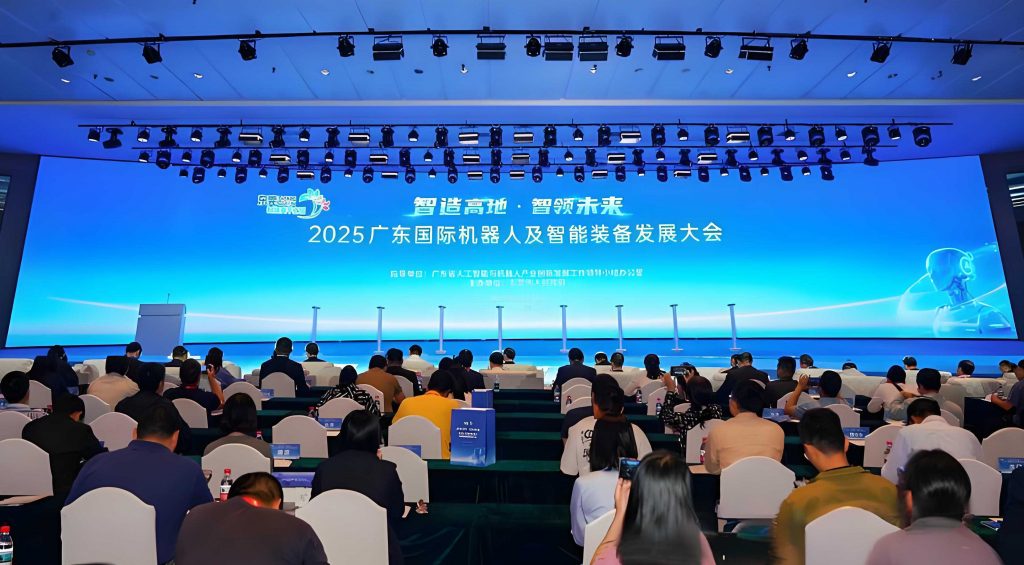
The Rise of China’s Robot Arsenal
China’s commitment to industrial智能化 is undeniable. According to the International Federation of Robotics (IFR), from 2011 to 2021, the total installation of robots in China reached a staggering 1.191 million units, securing the country’s position as the world’s largest market. This hardware expansion is backed by vigorous domestic innovation. Patent applications for robotics technology during the same period accumulated to approximately 377,000, nearly 6.5 times the number filed between 2000 and 2010. This dual thrust of deployment and development underscores China’s strategic push to become a global leader in robotics and智能制造, as outlined in national plans like the “14th Five-Year Plan for Robot Industry Development.”
Beyond the Headlines: A Nuanced View of Job Displacement
The visible trend of a shrinking industrial workforce has been a focal point of anxiety. Macro data shows that alongside the explosive growth of China robot installations, the share of employment in the secondary industry and the proportion of production workers have been declining annually. However, this narrative of direct replacement misses a crucial dynamic: labor mobility. Crucially, the overall national unemployment rate did not show a corresponding significant increase during this period of intense China robot adoption. Instead, a massive shift towards the tertiary sector was observed, with the service workforce expanding rapidly. This suggests that workers are moving, not simply vanishing. The critical question addressed by the recent research is: where are they going, and is this movement a sign of constructive adaptation or disruptive displacement?
Research Methodology: Tracing the Path of the Production Worker
To answer this, researchers conducted an empirical analysis matching industry-level China robot application data with individual worker data from the China Labor-force Dynamics Survey (CLDS) for the periods 2012-2014, 2014-2016, and 2016-2018. The study focused specifically on “production workers” – those engaged in manufacturing, transportation, and equipment operation.
The core of the analysis was to measure the impact of robot penetration (the change in robot stock per 10,000 base-year workers in an industry) on the probability of a worker leaving their production role. More importantly, it classified the nature of that occupational mobility:
- Complementary Mobility: This includes vertical promotion (e.g., moving into technical, managerial, or entrepreneurial roles) or horizontal transfer to a complementary sector (e.g., moving to roles in transportation, technical support, IT services, or equipment maintenance directly linked to the robotics ecosystem).
- Substitutive Transfer: This includes vertical decline into unemployment or unstable work, or horizontal movement to an unrelated, non-complementary service or agricultural sector.
Key Findings: A Push Towards Complementarity
The study’s findings provide robust evidence that the China robot phenomenon is intricately linked to workforce transformation.
- Increased Mobility: As expected, exposure to robotics increases the likelihood of a production worker changing jobs. A 1% increase in industry robot penetration raises a worker’s probability of occupational mobility by an average of 1.2%. This confirms the direct disruptive or “replacement” effect at the original task level.
- Direction Matters – Complementary Flow Dominates: The pivotal finding is that this induced mobility is not random or uniformly negative. The same 1% increase in China robot penetration raises the probability of a worker undertaking complementary mobility by an average of 0.5-0.6%. In contrast, the effect on the probability of a substitutive transfer is statistically insignificant. This indicates that while robots displace workers from specific manual tasks, they simultaneously create demand for new, complementary roles. Workers, when possible, are flowing towards these new opportunities within the technologically evolving industrial ecosystem or its directly related service chains, rather than being forced into unemployment or low-productivity sectors.
- Robust and Reliable Conclusions: These results hold firm under a battery of rigorous tests, including using alternative measures of robot exposure (like regional penetration metrics), different statistical models (linear probability, logistic regression), corrections for rare event bias, and treatments for potential endogeneity (using U.S. robot penetration and lagged variables as instruments).
Who Benefits Most? A Look at Heterogeneity
The study also reveals that not all production workers navigate the China robot transition equally successfully. The propensity for beneficial complementary mobility is stronger among certain groups:
- Higher-educated workers are better equipped to shift into new technical or supervisory roles created by automation.
- Healthier workers find it easier to adapt to new career paths.
- Male workers currently show a higher tendency for complementary mobility, hinting at a potential gender gap in accessing new opportunities created by the China robot wave that may need policy attention.
Supporting Data and Trends
The following tables illustrate the macro trends underpinning this micro-level study of worker mobility.
| Year | Robot Installations (10,000 units) | Robot Patent Applications (10,000) |
|---|---|---|
| 2011 | ~2.3 | ~1.5 |
| 2012 | ~2.8 | ~2.0 |
| 2013 | ~4.0 | ~2.8 |
| 2014 | ~6.0 | ~3.5 |
| 2015 | ~8.5 | ~4.5 |
| 2016 | ~11.0 | ~5.5 |
| 2017 | ~15.0 | ~6.5 |
| 2018 | ~18.0 | ~7.0 |
| 2019 | ~16.5 | ~7.2 |
| 2020 | ~19.5 | ~7.5 |
| 2021 | ~26.0 | ~8.0 |
| Year | Share of Production Worker Occupations (%) | Share of Secondary Industry Employment (%) |
|---|---|---|
| 2011 | ~30.5 | ~29.5 |
| 2012 | ~30.0 | ~30.0 |
| 2013 | ~29.2 | ~30.0 |
| 2014 | ~28.5 | ~29.5 |
| 2015 | ~27.8 | ~28.5 |
| 2016 | ~27.0 | ~28.0 |
| 2017 | ~26.3 | ~27.5 |
| 2018 | ~25.5 | ~27.0 |
| 2019 | ~24.8 | ~27.0 |
Policy Implications: Fostering a “Human-Robot Complementarity” Ecosystem
The research carries significant implications for policymakers navigating the Fourth Industrial Revolution. The findings suggest that fears of technologically driven mass unemployment in China may be overstated, but a proactive strategy is essential to maximize the benefits of the China robot transition.
- Sustain the Momentum in Industrial Intelligence: Policies should continue to support the development and adoption of robotics and automation through fiscal incentives, R&D funding, and industry support. The goal is to enhance manufacturing productivity and global competitiveness, recognizing that the associated workforce transition can be managed towards positive outcomes.
- Remove Barriers to Labor Mobility: To facilitate the efficient reallocation of workers from displaced tasks to newly created complementary roles, reforms are needed. Streamlining the household registration (hukou) system, improving job-matching platforms, and reducing information asymmetries in the labor market are crucial to lowering frictions and enabling smoother occupational transitions.
- Invest in Transition Support Systems: Targeted programs should be established to aid production workers. These could include upskilling and reskilling initiatives, career counseling focused on emerging roles in the China robot ecosystem, health management support, and specific attention to ensuring female workers have equal access to the new opportunities generated by automation.
Conclusion
The narrative surrounding China robot adoption is evolving. This research moves the discussion beyond a simplistic “jobs versus machines” framework. It demonstrates that while industrial automation disrupts existing job structures, its net effect in the Chinese context is catalyzing a structural shift in the workforce towards more complementary and potentially higher-value activities. The challenge for China is not to halt technological progress but to strategically guide it and equip its workforce with the tools and pathways to successfully ride the wave of change, ensuring that the rise of the China robot goes hand-in-hand with the advancement of the Chinese worker.