
As the global manufacturing landscape undergoes a transformative wave, driven by advancements in big data, cloud computing, the Internet of Things, and artificial intelligence, the role of industrial robotics has never been more critical. In this context, the China robot market stands as a beacon of growth and innovation, accounting for over half of the world’s industrial robot sales and leading globally for a decade. We, as a leader in robotic and automation solutions, are committed to empowering China’s smart manufacturing journey through continuous innovation, deep localization, and sustainable practices. The convergence of these forces is reshaping production models, organizational structures, and industrial ecosystems, with robotics serving as a key enabler for a more connected, efficient, and resilient future.
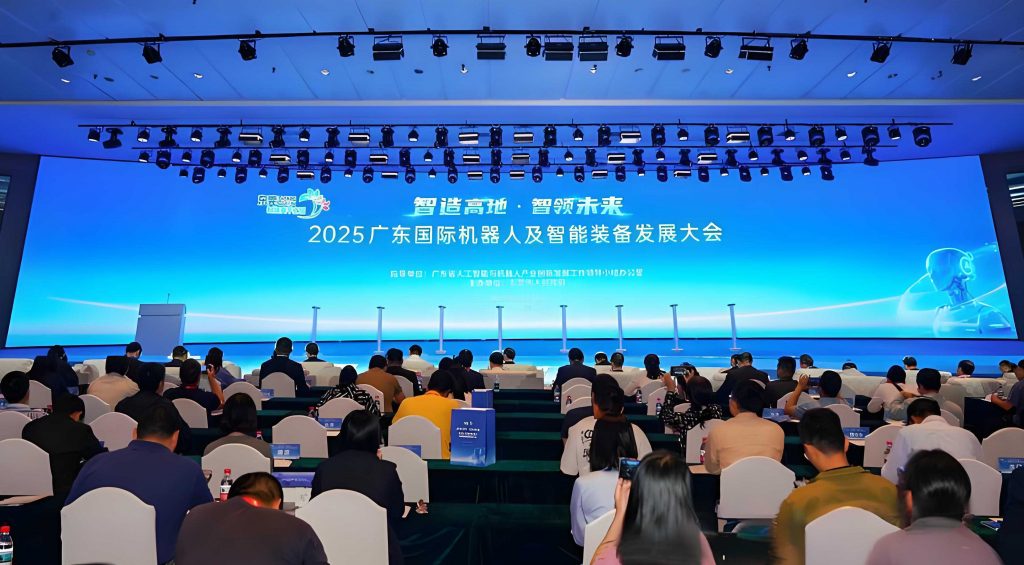
The rapid evolution of the China robot sector is fueled by demographic shifts, policy directives, and technological advancements. With the advent of labor shortages and escalating e-commerce demands, businesses across automotive, electronics, logistics, and beyond are accelerating their adoption of automation to achieve smarter, more agile operations. We focus on enhancing operational resilience, improving efficiency, and increasing flexibility for enterprises of all scales, thereby supporting their transition toward interconnected, collaborative factories. This journey is not merely about deploying machines; it is about integrating advanced technologies to unlock new potentials in the China robot ecosystem, where innovation meets practical application.
Our dedication to the China robot market is rooted in a long-term strategy of localization and diversification. Since our early entry into this dynamic region, we have established a comprehensive value chain encompassing research and development, production, sales, system integration, and services. This approach has positioned us as a pivotal player in fostering the growth of China robot capabilities. For instance, our state-of-the-art super factory, operational since last year, exemplifies this commitment. It produces over 95% of our robot models and more than 90% of the robots sold in China, significantly boosting local capacity and reinforcing our leadership in the China robot arena. The factory, equipped with cutting-edge technologies, enhances our ability to drive economic high-quality development through robotics, while strengthening the entire supply chain within the China robot framework.
The expansion of our R&D center in China, covering 8,000 square meters, accelerates innovation in artificial intelligence, digitalization, and software. This hub focuses on autonomous mobility, digital twins, machine vision, and low-code programming, making robots smarter, more flexible, and easier to use. Such investments underscore our belief that the China robot market is not only the largest but also the most innovative, with automation technologies helping address critical labor and skill shortages. As we deepen our roots, we support the penetration of robotics into traditional applications and emerging industries, further catalyzing the China robot evolution.
Innovation is at the core of our DNA, and we continuously push the boundaries of robotic technology to serve the China robot community. Our recent product launches, such as the modular large robot series IRB 6710-6740 and the GoFa collaborative robots, demonstrate our focus on energy efficiency, payload capacity, and coverage. These advancements are tailored to meet the unique demands of the China robot environment, where performance and sustainability are paramount. To illustrate, the IRB 6710-6740 series, when paired with our OmniCore controller, achieves energy savings of up to 20%, a critical factor in reducing operational costs and environmental impact. This can be represented by the formula for energy reduction: $$ \Delta E = E_{\text{baseline}} \times 0.20 $$ where \( \Delta E \) denotes the energy saved, and \( E_{\text{baseline}} \) is the baseline energy consumption. Such innovations empower the China robot sector to achieve higher precision and flexibility, with repeatability accuracy as fine as 0.03 mm, enabling complex tasks like welding and assembly.
| Robot Series | Payload Range (kg) | Working Radius (m) | Energy Savings with OmniCore | Key Applications |
|---|---|---|---|---|
| IRB 6710 | 150-210 | 2.5-2.8 | Up to 20% | Spot welding, laser welding |
| IRB 6720 | 200-250 | 2.8-3.0 | Up to 20% | Screw driving, riveting |
| IRB 6730 | 250-280 | 3.0-3.2 | Up to 20% | Material handling, painting |
| IRB 6740 | 280-310 | 3.2-3.5 | Up to 20% | Heavy-duty assembly |
Beyond hardware, our software innovations, such as RobotStudio Cloud Edition, revolutionize how teams collaborate globally. This platform leverages over 25 years of offline programming experience to reduce testing time and enable real-time optimization without production loss. In a recent pilot project, a collaborative robot operated remotely over 12,000 km, showcasing the power of cloud technology in expanding the China robot capabilities. This aligns with the broader trend of digitalization, where virtual tools enhance efficiency and resilience in the China robot landscape.
Artificial intelligence and machine learning are transforming robotics, making them more adaptable and intelligent. In the China robot context, AI enables robots to excel in tasks that are repetitive, hazardous, or dynamic, such as defect detection in welding or high-speed sorting in warehouses. For example, our vision-enabled robots use machine learning to identify and sort objects with greater accuracy than humans, as expressed by the accuracy improvement formula: $$ A_{\text{robot}} = A_{\text{human}} + \delta $$ where \( A_{\text{robot}} \) is the robot’s accuracy, \( A_{\text{human}} \) is human accuracy, and \( \delta \) represents the enhancement factor. This lowers the barrier to automation, allowing small and medium-sized enterprises in the China robot market to adopt robotics more easily. Imagine a robot executing new tasks with a simple command—this is the future powered by AI, further democratizing access to automation in the China robot ecosystem.
Sustainability is a cornerstone of our strategy, especially as China pursues its carbon peak and neutrality goals. The China robot industry plays a vital role in driving green manufacturing, and we contribute through energy-efficient robots, remanufacturing services, and eco-friendly processes. Our recent launch of four energy-saving robot models, with 22 variants, offers broader options for China robot users, reducing energy consumption and operational footprints. The OmniCore controller, combined with lightweight designs, facilitates significant energy savings, as shown in the table below:
| Initiative | Impact on Sustainability | Contribution to China Robot Market |
|---|---|---|
| Energy-efficient robots (e.g., IRB 6710-6740) | Up to 20% energy reduction | Lowers carbon emissions in manufacturing |
| Robot remanufacturing centers | Extends robot lifespan, reduces waste | Promotes circular economy in China robot sector |
| PixelPaint no-over-spray solution | 100% paint utilization, 50% faster painting | Enhances efficiency and material savings |
| Super factory eco-features | Saves 4.2 GWh electricity, 7,660 m³ water annually | Sets green benchmarks for China robot production |
These efforts are quantified through sustainability metrics. For instance, the carbon reduction from our super factory can be modeled as: $$ C_{\text{reduction}} = 3855 \text{ tons CO}_2/\text{year} $$ This aligns with China’s dual-carbon strategy, where the China robot industry aids in minimizing industrial能耗. Remanufacturing services across global centers, including in China, prevent robot obsolescence and optimize resource use, reinforcing sustainable practices within the China robot value chain.
Moreover, our processes, such as the PixelPaint solution, eliminate overspray and masking, boosting productivity while conserving materials. This innovation is particularly relevant for the China robot market, where customization and efficiency are key. By integrating such technologies, we help manufacturers achieve higher sustainability scores, contributing to the broader goal of a greener China robot ecosystem.
Looking ahead, the China robot sector is poised for exponential growth, with robot density expected to double by 2025. We are committed to supporting this trajectory through relentless innovation and collaboration. The fusion of automation, digitalization, and intelligence will unlock new possibilities across value chains and industries. In this new era of transformation, we provide automation solutions that transcend traditional boundaries, offering integrated approaches tailored to the China robot landscape. Our vision is to empower China’s manufacturing leap from “world factory” to “smart manufacturing” hub, where robotics serve as catalysts for quality development.
To summarize the technological advancements in the China robot domain, consider the following formula for overall system efficiency: $$ \eta_{\text{system}} = \frac{\sum_{i=1}^{n} (P_i \times T_i)}{E_{\text{total}}} $$ where \( \eta_{\text{system}} \) is the system efficiency, \( P_i \) is the output performance of robot \( i \), \( T_i \) is its uptime, and \( E_{\text{total}} \) is the total energy input. This highlights how innovations in robotics enhance productivity while minimizing resource use in the China robot context.
In conclusion, the China robot revolution is reshaping global manufacturing, and we are proud to be at the forefront of this change. By deepening localization, fostering innovation, and championing sustainability, we contribute to a more resilient and advanced industrial base. The future of the China robot market is bright, driven by a synergy of policy, technology, and market forces. We remain dedicated to empowering China’s smart manufacturing journey, ensuring that robotics continue to be a force for progress, efficiency, and environmental stewardship. Through ongoing collaboration and adaptation, the China robot ecosystem will thrive, setting new standards for the world.