
The narrative of industrial modernization is increasingly written by automatons. In the global theater of manufacturing and beyond, the rise of robotic systems signifies a fundamental shift in capability, efficiency, and economic potential. For a nation with the scale and ambition of China, mastering this technological frontier was not merely an option but a strategic imperative. It was within this context of urgency and opportunity that a pivotal institution was born. Guided by the nation’s key macroeconomic and technological ministries, a coalition was formed under the leadership of a major industrial federation. On a spring day in 2013, this coalition—a voluntary, non-profit consortium—was formally established in Beijing, uniting over 70 pioneering entities from across the spectrum of research, development, manufacturing, and application. This marked the genesis of a dedicated, national platform for the advancement of China robots.
Our founding was a direct response to a clear national need. While industrial automation was growing globally, the domestic ecosystem for China robots was fragmented. Research institutions operated in silos, manufacturing capabilities varied widely, and user industries often looked overseas for solutions. The core mission was to break down these barriers. Our raison d’être is to serve as the central synergistic platform for industry, academia, research, and application. We operate under a fundamental principle: to be guided by national policy, market-driven, and enterprise-centered. Our work is grounded in pragmatism—”staying down-to-earth, speaking truthfully, doing practical things, and emphasizing actual results.” We function as the cohesive force that pools resources, aligns efforts, and amplifies the collective voice of the China robots community to accelerate the entire industrial chain’s robust and healthy development.
Architecture of Collaboration: Structure and Strategic Pillars
The alliance is structured to translate its vision into actionable governance and focused initiatives. The governance model is designed to ensure representation from the diverse pillars of the ecosystem, from state-backed research institutes and leading domestic manufacturers to innovative private firms and crucial user industries. A council, supported by specialized committees, steers the strategic direction.
| Governance Tier | Composition & Primary Role | Strategic Function for China Robots |
|---|---|---|
| Council | Elected representatives from key member units (e.g., leading integrators, core component suppliers, major research bodies). | Sets overarching strategy, approves major initiatives, and represents the alliance externally. |
| Technical Committee | Experts from academia, corporate R&D, and engineering. | Drives technology roadmapping, fosters R&D collaboration, and addresses core technical challenges facing China robots. |
| Market & Application Committee | Members from robot manufacturers, system integrators, and end-user industries (automotive, electronics, logistics, etc.). | Identifies market needs, promotes application solutions, and builds bridges between suppliers and users of China robots. |
| Standards & Quality Committee | Specialists in standardization, certification, and quality management. | Develops and promotes industry standards, establishes quality benchmarking, and enhances the reliability and interoperability of China robots. |
Our operational framework is built upon four interconnected strategic pillars, each essential for sustainable growth:
- Policy Advocacy & Research: We act as the critical interface between the industry and government. By collecting robust industry data, analyzing trends, and diagnosing challenges, we formulate evidence-based policy recommendations. This supports the formulation of conducive policies in areas like taxation, financing, and industrial planning specifically tailored for the China robots sector.
- Industrial Ecosystem Integration: The goal is to build a complete, resilient, and competitive domestic supply chain. We facilitate partnerships across the value chain—from reducers, servo motors, and controllers (the core components) to robot arms, end-effectors, and integrated work cells. The strength of China robots depends on this integrated ecosystem’s vitality.
- Market Creation & Expansion: A vital mission is to cultivate and expand the domestic market for China robots. This involves demonstrating successful application cases, educating user industries on ROI and implementation strategies, and proactively opening new application fields beyond traditional manufacturing, such as healthcare, agriculture, and services.
- International Cooperation & Competitiveness: While fostering domestic capability, we engage constructively with the global robotics community. This includes technology exchange, participation in international standards development, and fostering a competitive environment where China robots can thrive on the world stage based on quality and innovation.
The Evolutionary Trajectory: Modeling the Growth of China Robots
The development of the China robots industry can be modeled as a phased evolutionary process, where each stage \( S_n \) is characterized by distinct drivers \( D_n \), key challenges \( C_n \), and resulting outcomes \( O_n \). The alliance’s role is to catalyze the transition between these stages.
$$ S_{n+1} = f(S_n, I_a, E_m, \Delta t) $$
Where:
\( S_n \) = State of the industry at phase \( n \),
\( I_a \) = Intervention and facilitation by the alliance,
\( E_m \) = External market and technological forces,
\( \Delta t \) = Time period for transition.
| Phase (n) | Description | Primary Driver (D_n) | Alliance Focus |
|---|---|---|---|
| Formation & Foundation (n=1) | Initial consolidation of disparate actors; baseline data collection; establishing dialogue with government. | Policy recognition and collective identity formation. | Building the organizational platform; initial policy white papers; founding member recruitment. |
| Rapid Expansion & Data Building (n=2) | Explosive growth in robot installation; emergence of domestic brands; supply chain gaps become apparent. | Soaring market demand driven by labor costs and automation awareness. | Establishing robust industry statistics; initiating standardization work; facilitating component supplier forums. |
| Quality & Ecosystem Deepening (n=3) | Shift from pure volume to performance, reliability, and tackling high-end applications. Strengthening weak links in the chain. | User demand for higher ROI and complex applications; competitive pressure. | Promoting quality benchmarks; fostering “lead user” collaboration projects; intensive work on core component R&D alliances. |
| Intelligent & Global Integration (n=4) | Convergence with AI, IoT, and big data; China robots as part of smart systems. Active role in global standards and innovation networks. | Technological convergence and global market ambitions. | Leading cross-industry convergence initiatives; facilitating international R&D partnerships; shaping global standards. |
The quantitative growth of the China robots market post-alliance formation can be described by a dynamic growth model. Let \( M(t) \) represent the annual installed volume or market size of China robots. The growth is not merely exponential but is influenced by a synergy factor \( \sigma \) representing the alliance’s effect in reducing friction and increasing collaboration efficiency within the ecosystem.
$$ \frac{dM}{dt} = r \cdot M(t) \cdot \left(1 – \frac{M(t)}{K}\right) + \sigma \cdot A(M, t) $$
Where:
\( r \) = intrinsic growth rate of the market,
\( K \) = carrying capacity or theoretical market potential,
\( \sigma \) = synergy coefficient (\( 0 < \sigma < 1 \)),
\( A(M, t) \) = a function representing the alliance’s active programs, which itself scales with the size and maturity of the industry \( M(t) \).
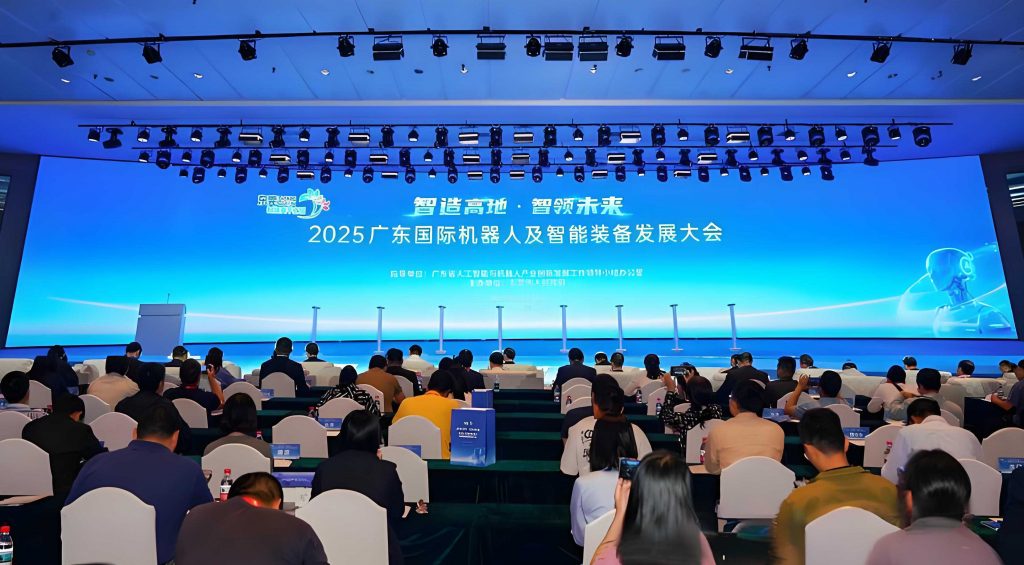
The data behind this growth narrative is compelling. From a modest base, the installed base of China robots has seen a compound annual growth rate that significantly outpaces global averages in many years. The following table summarizes key metric progress, illustrating the tangible results of a coordinated national effort:
| Metric Category | Early-Stage Benchmark (Approx. 2013-2015) | Mid-Term Progress (Approx. 2018-2020) | Current Focus / Trend |
|---|---|---|---|
| Annual Installations (Industrial) | Rapid growth from a low base; heavy import reliance. | China becomes the world’s largest annual market; domestic share rising. | Sustained high volume with increasing share of mid-to-high-end China robots. |
| Domestic Brand Market Share | Below 30% in many segments. | Steady increase, surpassing 30%+ in overall volume. | Targeting >50% in key segments; competing in collaborative and SCARA segments. |
| Robot Density (per 10k workers) | Significantly below global advanced economy average. | Rapidly climbing, narrowing the gap. | Approaching and aiming to exceed global median; wide variance by region/industry. |
| Supply Chain Completeness | Critical gaps in reducers, servo systems, controllers. | Significant domestic entry and progress in all core component areas. | Focus on performance parity, reliability, and cost-competitiveness of domestic components. |
Core Technology Domains and Collaborative Innovation
The technological advancement of China robots is a multi-dimensional challenge. Our work involves mapping these dimensions and fostering collaboration within each. The overall technical capability \( T_{total} \) of the industry can be expressed as a weighted function of capabilities across key domains:
$$ T_{total} = \alpha_m \cdot C_{mech} + \alpha_c \cdot C_{ctrl} + \alpha_s \cdot C_{AI} + \alpha_p \cdot C_{proc} + \alpha_i \cdot C_{int} $$
Where the coefficients \( \alpha \) represent the strategic importance of each domain, and \( C \) represents the collective capability level in:
\( C_{mech} \): Precision Mechanics & Actuation,
\( C_{ctrl} \): Motion Control & Servo Drive,
\( C_{AI} \): AI & Perception (Vision, Force Sensing),
\( C_{proc} \): Application Process Expertise (Welding, Assembly, etc.),
\( C_{int} \): Systems Integration & Digital Twin.
To build these capabilities, we orchestrate collaborative frameworks. A typical joint R&D project model, often between a research institute (\( R \)), a component manufacturer (\( P \)), and an end-user (\( U \)), aims to solve a specific technical bottleneck (\( B \)). The effectiveness \( E_{project} \) of such a collaboration can be modeled as:
$$ E_{project} = \beta_1 \cdot K_{share}(R,P,U) + \beta_2 \cdot A_{align}(R,P,U) – \gamma \cdot T_{comm}(R,P,U) $$
Where:
\( K_{share} \) = Degree of knowledge sharing,
\( A_{align} \) = Alignment of incentives and goals,
\( T_{comm} \) = Transaction/communication costs,
\( \beta, \gamma \) are coefficients. The alliance’s role is to maximize \( K_{share} \) and \( A_{align} \) while minimizing \( T_{comm} \) through trusted frameworks and regular interaction platforms.
Standards as the Bedrock for China Robots’ Global Integration
A fragmented industry cannot scale globally. Standardization is the bedrock upon which reliability, safety, and interoperability are built—essential qualities for China robots to gain widespread trust. Our standards committee works on a multi-layered framework:
- Safety and Fundamental Standards: Adopting and adapting international standards (ISO, IEC) to ensure baseline safety and performance.
- Performance Testing and Evaluation: Developing China-specific standards for testing accuracy, repeatability, durability, and dynamic performance under various conditions.
- Communication and Integration Standards: Promoting standards like OPC UA for Robotics Companion Specification to ensure China robots can seamlessly integrate into smart factories alongside equipment from other nations.
- Application-Specific Standards: Working with user industries to develop guidelines for robot application in specific environments, such as cleanrooms, hazardous areas, or in proximity to humans.
The adoption rate \( A_{std}(t) \) of a new standard across the China robots industry often follows a technology diffusion curve, which the alliance actively seeks to steepen through promotion and certification programs:
$$ A_{std}(t) = \frac{L}{1 + e^{-k(t – t_0)}} $$
Where:
\( L \) = Maximum adoption level (asymptote),
\( k \) = diffusion rate constant,
\( t_0 \) = the time of maximum growth rate.
By lowering the perceived risk and cost of adoption through collective action, the alliance effectively increases the diffusion rate \( k \).
Forging the Future: Talent, Intelligence, and Global Synergy
The trajectory of China robots is inextricably linked to three forward-looking vectors: talent development, technological convergence, and global engagement.
Talent Pipeline: The demand for robotics engineers, technicians, integrators, and data scientists far outpaces supply. We advocate for and help design vocational and university curricula that blend mechatronics, software, and domain-specific knowledge. Initiatives include national skill competitions, certified training programs, and industry-academia “base” projects where students work on real-world problems posed by member companies.
The Intelligent Leap: The future of China robots lies not in isolated arms but in connected, cognitive systems. Our focus is on facilitating the convergence of robotics with:
– Artificial Intelligence (AI) for adaptive control and decision-making.
– The Internet of Things (IoT) for real-time data exchange and fleet management.
– 5G and Edge Computing for low-latency, distributed control.
– Digital Twin technology for simulation, prediction, and remote maintenance.
The next-generation performance metric \( P_{next} \) for a China robot will be a function of its physical capability \( P_{phys} \) and its cognitive/connectivity quotient \( Q_{cog} \):
$$ P_{next} = P_{phys} \cdot \ln(1 + Q_{cog}) $$
Where \( Q_{cog} \) encompasses its data processing, learning, and network integration capabilities.
Global Synergy: Our vision is not insular. The development of a strong domestic ecosystem for China robots is a prerequisite for meaningful and equitable global partnership. We actively participate in international dialogues, exhibitions like our flagship CIROS (China International Robot Show), and joint research initiatives. The goal is to move from a dynamic of dependency to one of mutual interdependence, where China contributes foundational innovations and high-quality, intelligent robotic solutions to the global supply chain.
Conclusion: The Collective Engine of Progress
The journey of China robots is a testament to the power of coordinated action. From a scattered landscape of individual efforts, the formation of a national alliance provided the structure, voice, and collaborative engine needed to accelerate an entire industrial sector. By serving as the nexus for policy, technology, market, and standards, the alliance has helped transform China from the world’s largest consumer of robotics into one of its most dynamic and innovative producers. The challenges ahead—in core technology mastery, quality consistency, high-end application breakthroughs, and global brand building—remain substantial. Yet, the foundational work of building a cohesive, responsive, and ambitious industry platform ensures that the ecosystem of China robots is now poised to tackle these challenges not as isolated companies, but as a united front, driving forward the intelligent automation of tomorrow.