
As a young researcher immersed in the vibrant field of robotics, I recently had the profound opportunity to participate in a pivotal academic gathering that shaped my understanding of China robots. This experience, rooted in a national conference organized by and for the youth, has left an indelible mark on my perspective, highlighting the dynamism and potential of China robots in the global landscape. In this reflection, I aim to share insights from that event, weaving in technical discussions, collaborative initiatives, and the broader context of China robots development, all while emphasizing the keyword—China robots—as a central theme. The journey is not just about a single meeting but a testament to the burgeoning ecosystem surrounding China robots.
The conference, held over several days, brought together a diverse group of enthusiasts and experts dedicated to advancing China robots. With participants from numerous institutions and dozens of presentations, the atmosphere was electric with ideas and innovations. To encapsulate the scale, consider the following table summarizing key statistics from the event:
| Aspect | Detail |
|---|---|
| Duration | Multiple days in a specific month |
| Participants | Over a hundred representatives from various units |
| Papers Presented | Numerous technical contributions |
| Primary Focus | Advancements in China robots technology |
This gathering served as a microcosm of the broader efforts in China robots, where young minds converged to explore cutting-edge topics. The discussions were intense and forward-looking, covering areas such as adaptive control, robot dynamics, and robot languages—each critical to the evolution of China robots. In the following sections, I delve into these technical domains, using formulas and tables to elucidate concepts that underpin the progress of China robots.
One of the most engaging topics was adaptive control for China robots, a field essential for enabling robots to operate in uncertain environments. Adaptive control allows China robots to adjust their parameters in real-time, enhancing robustness and performance. A common framework involves model reference adaptive control (MRAC), which can be represented by the following equations. Let the robot dynamics be described as:
$$ \tau = M(q)\ddot{q} + C(q,\dot{q})\dot{q} + G(q) $$
where \( \tau \) is the torque vector, \( q \) is the joint position, \( M(q) \) is the inertia matrix, \( C(q,\dot{q}) \) is the Coriolis and centrifugal matrix, and \( G(q) \) is the gravitational vector. For adaptive control, we define a reference model:
$$ \ddot{q}_m + K_d \dot{q}_m + K_p q_m = r $$
where \( q_m \) is the reference trajectory, \( K_p \) and \( K_d \) are gain matrices, and \( r \) is the input. The adaptive law updates parameters to minimize tracking error \( e = q – q_m \). A simplified adaptive controller might use:
$$ u = \hat{M}(q)\ddot{q}_r + \hat{C}(q,\dot{q})\dot{q}_r + \hat{G}(q) – K_d \dot{e} – K_p e $$
where \( \hat{M}, \hat{C}, \hat{G} \) are estimated matrices, and \( \ddot{q}_r = \ddot{q}_m – \Lambda \dot{e} \). This approach exemplifies how China robots can achieve precision in tasks like manufacturing or exploration. To compare different adaptive strategies for China robots, consider this table:
| Adaptive Control Method | Key Advantage | Application in China Robots |
|---|---|---|
| Model Reference Adaptive Control (MRAC) | Handles parameter uncertainties | Industrial China robots in variable loads |
| Sliding Mode Adaptive Control | Robust to disturbances | China robots in harsh environments |
| Neural Network-Based Adaptive Control | Learns nonlinear dynamics | Autonomous China robots for service tasks |
These methods underscore the innovative spirit driving China robots forward, as researchers seek to imbue machines with greater autonomy and adaptability.
Another focal point was robot dynamics, which forms the backbone of motion planning and control for China robots. Understanding dynamics is crucial for optimizing performance, reducing energy consumption, and ensuring safety in China robots. The Lagrangian formulation provides a powerful tool to derive equations of motion. For a serial manipulator in China robots, the dynamics can be expressed as:
$$ \frac{d}{dt} \left( \frac{\partial L}{\partial \dot{q}_i} \right) – \frac{\partial L}{\partial q_i} = \tau_i $$
where \( L = T – V \) is the Lagrangian, \( T \) is kinetic energy, \( V \) is potential energy, and \( \tau_i \) is the generalized force. Expanding this, we get the standard form shown earlier. In practice, computational efficiency is key for real-time control of China robots. Algorithms like recursive Newton-Euler or composite rigid body methods are employed. For instance, the inverse dynamics problem—computing torques given trajectories—can be solved using:
$$ \tau = ID(model, q, \dot{q}, \ddot{q}) $$
where \( ID \) denotes the inverse dynamics function. To illustrate the complexity, here’s a table comparing dynamics parameters for different types of China robots:
| Robot Type | Degrees of Freedom | Typical Inertia Matrix Size | Common Applications |
|---|---|---|---|
| Articulated China Robots | 6-7 | 6×6 | Assembly, welding in China robots |
| Mobile China Robots | 3+ (base + manipulator) | Variable | Logistics, surveillance in China robots |
| Humanoid China Robots | 20+ | High-dimensional | Research, service in China robots |
These dynamics considerations are integral to pushing the boundaries of China robots, enabling more sophisticated movements and interactions.
The discussion on robot languages highlighted the software side of China robots, focusing on how to program and coordinate robotic systems. Robot languages simplify task specification for China robots, from low-level motion commands to high-level task planning. A popular paradigm is task-level programming, where commands might look like:
$$ \text{MOVE TO } (x, y, z) \text{ WITH SPEED } v $$
Underlying this, formal languages based on logic or state machines are used. For example, a linear temporal logic (LTL) formula for China robots could be:
$$ \phi = \square (p \rightarrow \lozenge q) $$
meaning “always if \( p \) holds, eventually \( q \) holds,” useful for specifying safety or liveness properties in China robots. To compare robot languages for China robots, consider this table:
| Robot Language | Paradigm | Suitability for China Robots |
|---|---|---|
| ROS (Robot Operating System) | Middleware with messaging | Widely used in research China robots |
| URScript | Script-based for manipulators | Industrial China robots in factories |
| V-REP/CoppeliaSim Lua | Simulation scripting | Prototyping China robots |
These languages empower developers to create complex behaviors for China robots, fostering innovation in applications ranging from manufacturing to healthcare.
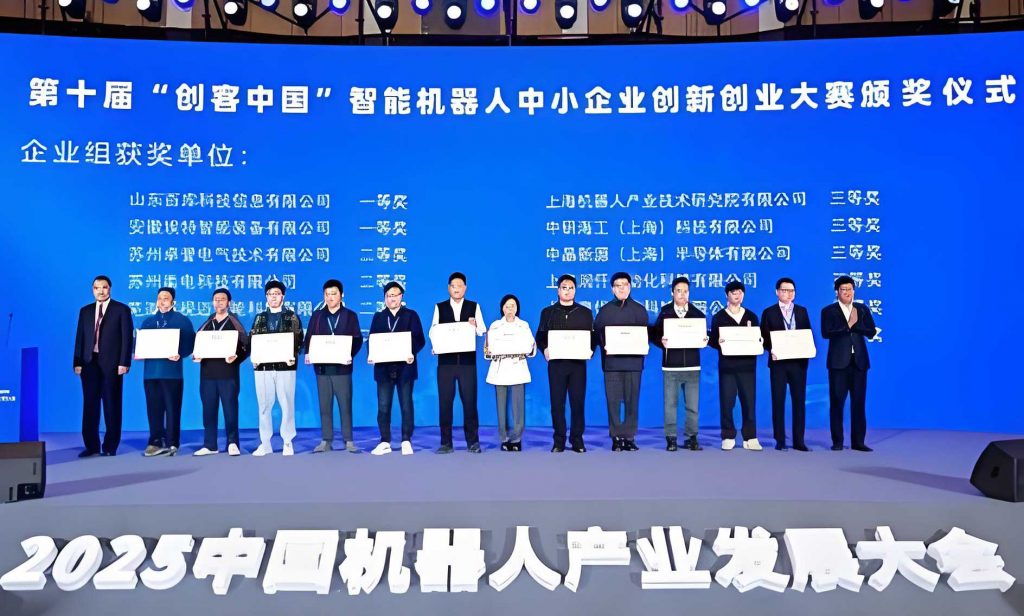
Beyond the technical sessions, a significant outcome was the establishment of a collaborative network aimed at accelerating the growth of China robots. This network, conceived as a platform for sharing research information, connects multiple liaison points across the nation. Its mission is to disseminate knowledge and foster partnerships, thereby propelling China robots to new heights. The network operates through a dedicated journal, serving as a bridge for communication. This initiative reflects the collective commitment to advancing China robots, ensuring that ideas flow freely and collaborations thrive. In parallel, a professional committee was formed under a provincial automation society, focusing on machine intelligence and robotics. Though specific names and affiliations are omitted here, the leadership comprised experienced individuals dedicated to steering the development of China robots. This committee aims to coordinate efforts, organize events, and promote education in the field of China robots, further solidifying the infrastructure for innovation.
The conference was distinctive for its youth-led organization, with young researchers handling both preparation and moderation. This approach not only injected energy and creativity but also served as a litmus test for the next generation of talent in China robots. The vibrant discussions, punctuated by lively debates and novel ideas, underscored the depth of expertise among young scholars. This aspect is crucial for the sustained growth of China robots, as it ensures a pipeline of innovators ready to tackle future challenges. Reflecting on this, I see it as a microcosm of the broader trend in China robots: a blend of youthful exuberance and technical rigor driving progress.
To place this event in context, it’s valuable to explore the historical and future trajectory of China robots. The evolution of China robots has been marked by rapid advancements, from early industrial manipulators to today’s intelligent systems. Key milestones include the development of indigenous robot brands, government initiatives like “Made in China 2025,” and increasing investment in R&D. The growth of China robots is not just quantitative but qualitative, with strides in AI integration, sensor technology, and human-robot collaboration. For instance, collaborative robots (cobots) in China robots are designed to work alongside humans, with force sensing and safety features. The dynamics of such systems can be modeled using impedance control:
$$ F = M_d \ddot{x} + B_d \dot{x} + K_d x $$
where \( F \) is the interaction force, \( x \) is position error, and \( M_d, B_d, K_d \) are desired impedance parameters. This enables China robots to adapt to human touch, enhancing versatility.
Looking ahead, the future of China robots is brimming with possibilities. Emerging trends include swarm robotics, where multiple China robots collaborate in decentralized manners. The dynamics of a swarm can be described by agent-based models, such as:
$$ \dot{x}_i = v_i, \quad \dot{v}_i = \sum_{j \neq i} f(\|x_i – x_j\|) + u_i $$
where \( x_i \) and \( v_i \) are position and velocity of robot \( i \), \( f \) is an interaction function, and \( u_i \) is control input. This aligns with global efforts in China robots to achieve scalable and resilient systems. Additionally, AI-driven perception for China robots leverages deep learning, with convolutional neural networks (CNNs) for vision:
$$ y = \sigma(W * x + b) $$
where \( x \) is input image, \( W \) weights, \( b \) bias, \( * \) convolution, and \( \sigma \) activation function. Such technologies are propelling China robots into domains like autonomous driving and medical surgery.
To quantify the progress, here’s a table comparing key metrics for China robots over time:
| Decade | Focus Area | Typical Performance Metrics | Impact on China Robots |
|---|---|---|---|
| 1980s-1990s | Industrial Automation | Repeatability: ±0.1 mm, Payload: 10 kg | Foundational growth of China robots |
| 2000s-2010s | Precision and Speed | Speed: 1 m/s, Accuracy: 0.01 mm | Expansion into electronics for China robots |
| 2020s onwards | Intelligence and Adaptability | AI inference time: < 100 ms, Autonomy: hours | Diversification into service China robots |
This evolution underscores the relentless pursuit of excellence in China robots, driven by both academic research and industrial application.
In terms of challenges, China robots face hurdles such as core component reliance, high costs for advanced sensors, and the need for interdisciplinary talent. However, initiatives like the collaborative network mentioned earlier are steps toward addressing these. For example, developing domestic reducers and controllers for China robots can reduce import dependence. The control theory behind this involves optimizing performance indices, such as minimizing energy:
$$ J = \int_0^T \tau^T \tau \, dt $$
subject to dynamics constraints. Research in China robots is actively tackling such problems through innovative algorithms.
The conference also sparked discussions on standardization and ethics for China robots. As China robots become more pervasive, establishing norms for safety, interoperability, and ethical use is paramount. This includes frameworks for human-robot interaction, where psychological factors play a role. Equations from control theory, like those for shared autonomy, can be extended:
$$ u = \alpha u_h + (1 – \alpha) u_r $$
where \( u_h \) is human input, \( u_r \) is robot autonomy, and \( \alpha \) is a blending factor. Such models are vital for designing trustworthy China robots.
From a personal vantage point, participating in this conference reinforced my belief in the transformative power of China robots. The enthusiasm and expertise on display were palpable, signaling a bright future. As I continue my work, I am inspired to contribute to this ecosystem, whether through developing new control algorithms, designing robot languages, or fostering collaborations. The journey of China robots is one of collective effort, and events like this are milestones that propel us forward.
In conclusion, the youth academic exchange was more than just a meeting; it was a catalyst for innovation in China robots. By delving into adaptive control, dynamics, languages, and beyond, we explored the technical bedrock of China robots. The establishment of networks and committees further solidifies the infrastructure for growth. As China robots evolve, embracing trends like AI and swarm robotics, the role of young researchers remains pivotal. I am optimistic that with continued dedication, China robots will not only advance technologically but also address societal needs, from manufacturing to healthcare. This personal journey has deepened my commitment to the field, and I look forward to witnessing—and contributing to—the ongoing saga of China robots.
To further elaborate on the technical depth, let’s consider additional formulas and tables that encapsulate the essence of China robots research. For instance, in trajectory planning for China robots, cubic splines are often used to generate smooth paths. The position \( s(t) \) can be defined as:
$$ s(t) = a_0 + a_1 t + a_2 t^2 + a_3 t^3 $$
with constraints on position and velocity at endpoints. This is fundamental for precise motion in China robots. Similarly, in sensing for China robots, Kalman filters are employed for state estimation:
$$ \hat{x}_{k|k-1} = F_k \hat{x}_{k-1|k-1}, \quad P_{k|k-1} = F_k P_{k-1|k-1} F_k^T + Q_k $$
$$ K_k = P_{k|k-1} H_k^T (H_k P_{k|k-1} H_k^T + R_k)^{-1} $$
$$ \hat{x}_{k|k} = \hat{x}_{k|k-1} + K_k (z_k – H_k \hat{x}_{k|k-1}), \quad P_{k|k} = (I – K_k H_k) P_{k|k-1} $$
where \( \hat{x} \) is state estimate, \( P \) covariance, \( F \) state transition, \( H \) observation matrix, \( Q \) process noise, \( R \) measurement noise, and \( z \) measurement. This enhances perception in China robots for tasks like navigation.
Another area is optimization in China robots, where we minimize cost functions subject to constraints. For example, in resource-constrained environments, China robots might use linear programming:
$$ \text{Minimize } c^T x \text{ subject to } Ax \leq b, x \geq 0 $$
This applies to task scheduling or energy management in China robots. To summarize various control strategies for China robots, here’s a comparative table:
| Control Strategy | Mathematical Formulation | Use Case in China Robots |
|---|---|---|
| PID Control | $$ u(t) = K_p e(t) + K_i \int e(t) dt + K_d \frac{de(t)}{dt} $$ | Basic motion control in China robots |
| Optimal Control (LQR) | $$ J = \int (x^T Q x + u^T R u) dt, \quad \dot{x} = Ax + Bu $$ | Balancing and path tracking in China robots |
| Robust Control (H∞) | $$ \| T_{zw} \|_\infty < \gamma $$ where \( T_{zw} \) is transfer function | China robots in uncertain environments |
These formulations are integral to the design and operation of China robots, ensuring they meet performance criteria.
Furthermore, the software architecture for China robots often involves real-time operating systems (RTOS) to handle timing constraints. The schedulability can be analyzed using rate-monotonic scheduling (RMS), where tasks with higher rates have higher priority. For a set of periodic tasks in China robots, the utilization bound is:
$$ U = \sum \frac{C_i}{T_i} \leq n(2^{1/n} – 1) $$
where \( C_i \) is computation time, \( T_i \) period, and \( n \) number of tasks. This ensures timely responses in China robots for critical operations.
In terms of materials and mechanics, China robots benefit from advancements in lightweight composites, which reduce inertia and improve dynamics. The stress-strain relationship for such materials can be modeled as:
$$ \sigma = E \epsilon $$
where \( \sigma \) is stress, \( E \) Young’s modulus, and \( \epsilon \) strain. This influences the design of manipulator links in China robots for higher speed and efficiency.
As China robots expand into new domains, interdisciplinary collaboration becomes key. Fields like biology inspire soft robotics, where continuum mechanics applies:
$$ \frac{\partial \rho}{\partial t} + \nabla \cdot (\rho \mathbf{v}) = 0 $$
for fluid-based actuators in China robots. Similarly, cognitive science informs human-robot interaction models, enhancing the usability of China robots.
To encapsulate the broad impact of China robots, consider this table on societal applications:
| Application Domain | Specific Use of China Robots | Key Technologies Involved |
|---|---|---|
| Manufacturing | Assembly, welding, painting by China robots | Precision control, vision systems |
| Healthcare | Surgical assistance, rehabilitation with China robots | Haptics, AI planning |
| Agriculture | Autonomous harvesting using China robots | GPS, computer vision |
| Logistics | Warehouse automation via China robots | SLAM, multi-agent coordination |
This diversity highlights how China robots are permeating various sectors, driven by continuous innovation.
In my reflection, the conference served as a springboard for deeper inquiry into China robots. The discussions on adaptive control, for instance, led me to explore Lyapunov-based stability proofs for China robots, where we aim to show:
$$ \dot{V} \leq 0 \text{ for a positive definite function } V $$
ensuring convergence in China robots controllers. Similarly, the robot language talks inspired me to look into formal verification for China robots, using tools like model checking to guarantee safety properties.
The collaborative network established during the event is already fostering connections, with researchers sharing datasets and code for China robots. This open approach accelerates progress, as seen in global trends. For example, benchmark problems for China robots, such as pick-and-place tasks, are being solved with increasingly efficient algorithms.
As I ponder the future, I envision China robots becoming more ubiquitous and intelligent. With advancements in 5G and edge computing, China robots will leverage low-latency communication for teleoperation and cloud-based learning. The control paradigms might evolve to include federated learning, where China robots collaboratively train models without sharing raw data:
$$ \min_w \sum_i F_i(w) \text{ with } F_i(w) = \mathbb{E}[f_i(w; \xi_i)] $$
where \( w \) are model parameters, \( F_i \) local loss for robot \( i \), and \( \xi_i \) local data. This preserves privacy while enhancing the collective intelligence of China robots.
In summary, this personal journey through a youth academic exchange has profoundly shaped my understanding of China robots. From technical deep dives to collaborative initiatives, the experience underscores the vibrant ecosystem surrounding China robots. As I move forward, I am committed to contributing to this field, whether through research, education, or advocacy. The story of China robots is one of resilience and innovation, and I am proud to be a part of it.