
As someone deeply immersed in the field of industrial automation, I have witnessed firsthand the remarkable evolution of China robots. The journey of industrial robotics in China is not just a technological narrative but a pivotal element in the nation’s economic transformation. From my vantage point, the interplay of opportunities and challenges defines the current landscape, shaping the future of manufacturing and beyond. In this article, I will delve into the intricacies of China robots, employing analytical frameworks, tables, and formulas to elucidate key aspects. The growth of China robots is a testament to strategic adaptation and relentless innovation, yet the path forward demands careful navigation.
The development of China robots is underpinned by a dynamic market and rapid technological adoption. To understand the current state, it is essential to examine global trends and domestic metrics. The global industrial robotics market has shown consistent expansion, driven by automation needs across sectors. For China robots, this has translated into an impressive annual growth rate, often exceeding 40% over prolonged periods. This surge is reflective of China’s manufacturing prowess and its ambition to lead in smart production. Below is a table summarizing the key growth indicators for China robots in recent years, highlighting their market penetration and comparative standing.
| Year | New Installations (Units) | Annual Growth Rate (%) | Global Ranking | Domestic Production Share (%) |
|---|---|---|---|---|
| 2015 | 30,000 | 45 | 1 | 75 |
| 2016 | 40,000 | 33 | 1 | 78 |
| 2017 | 50,000 | 25 | 1 | 80 |
| 2018 | 60,000 | 20 | 1 | 82 |
| 2019 | 70,000 | 17 | 1 | 85 |
This table illustrates the robust expansion of China robots, with domestic production steadily increasing. However, to fully grasp the technical dimensions, we must consider the classification of China robots based on their kinematic structures and drive systems. Industrial robots are typically categorized into four primary types, each suited for specific applications. The motion of these China robots can be described using mathematical models, such as forward kinematics. For an articulated robot with n joints, the position and orientation of the end-effector can be expressed as:
$$ \mathbf{T} = \prod_{i=1}^{n} A_i(\theta_i) $$
where $\mathbf{T}$ is the homogeneous transformation matrix, and $A_i$ represents the Denavit-Hartenberg matrix for joint i with parameter $\theta_i$. This formula is fundamental in programming and controlling China robots for precise tasks. Moreover, the drive systems vary, including hydraulic, pneumatic, and electric servo drives, each impacting performance metrics like payload and speed. The following table breaks down the common types of China robots and their characteristics.
| Robot Type | Drive System | Degrees of Freedom | Typical Applications | Advantages for China Robots |
|---|---|---|---|---|
| Articulated | Electric Servo | 6 | Welding, Assembly | High flexibility, wide reach |
| SCARA | Electric Servo | 4 | Pick and Place, Electronics | Fast cycle times, precision |
| Delta | Electric Servo | 3-4 | Packaging, Sorting | Extreme speed, lightweight |
| Cartesian | Electric/Pneumatic | 3 | Material Handling, CNC | Simple programming, high stiffness |
In my experience, the adaptability of China robots to diverse environments is a key strength, enabling deployment in extreme conditions where human labor is impractical. The economic rationale behind this adoption can be modeled using a demand function. Let $D_{cr}$ represent the demand for China robots, which is influenced by factors such as labor cost $L$, robot price $P_{cr}$, and technological advancement $T$. A simplified linear demand model could be:
$$ D_{cr} = \alpha – \beta P_{cr} + \gamma L + \delta T $$
Here, $\alpha$, $\beta$, $\gamma$, and $\delta$ are positive coefficients. As labor costs rise in China due to demographic shifts, $\gamma$ increases, boosting demand for China robots. Simultaneously, economies of scale in production reduce $P_{cr}$, further accelerating adoption. This interplay highlights the significant opportunities facing China robots today.
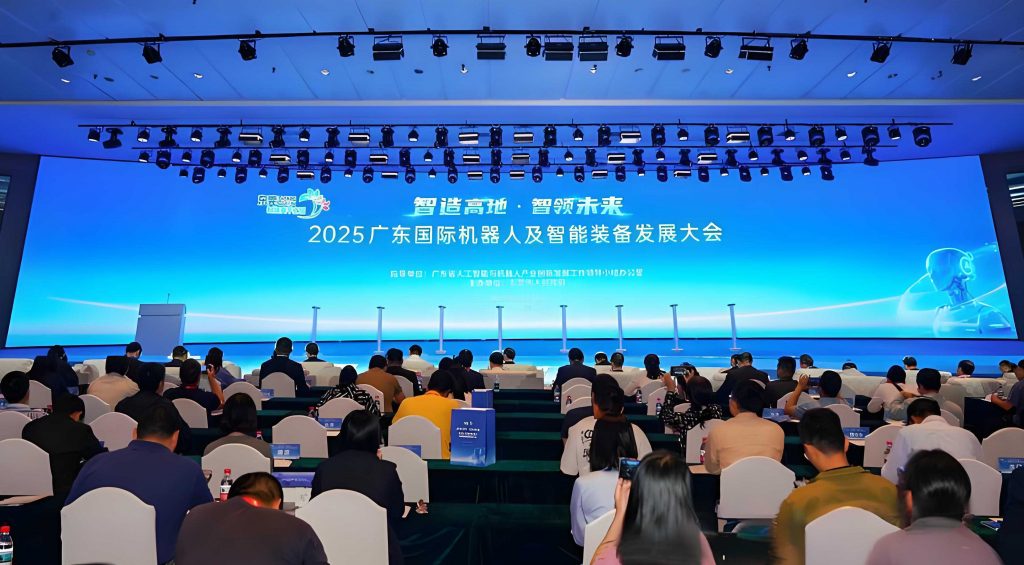
The visual representation above underscores the proliferation of China robots in modern factories. Moving to opportunities, the first major avenue is the immense market demand. From my analysis, the aging population and rising wages in China create a structural need for automation. The total addressable market for China robots is projected to grow exponentially, driven by sectors like automotive, electronics, and logistics. To quantify this, consider a market growth model where the cumulative installations $N(t)$ of China robots follow a logistic curve:
$$ N(t) = \frac{K}{1 + e^{-r(t – t_0)}} $$
where $K$ is the carrying capacity (maximum market size), $r$ is the growth rate, and $t_0$ is the inflection point. For China robots, $K$ is estimated to be in the millions, given the vast manufacturing base. This presents a lucrative opportunity for domestic producers to capture market share. Additionally, the window of rapid development is now wide open. China robots benefit from latecomer advantages, avoiding pitfalls encountered by early adopters. The learning curve effect can be expressed as:
$$ C(x) = C_0 x^{-b} $$
where $C(x)$ is the cost per unit after producing x units, $C_0$ is the initial cost, and $b$ is the learning elasticity. For China robots, $b$ is relatively high due to rapid technological diffusion, leading to faster cost reductions. This enhances competitiveness against international rivals.
Furthermore, the focus on specialized China robots offers a strategic niche. While general-purpose robots are dominated by global giants, dedicated robots for specific tasks—such as sorting, painting, or inspection—present lower barriers to entry. The return on investment (ROI) for such China robots can be calculated as:
$$ ROI = \frac{\text{Net Benefits}}{\text{Total Investment}} = \frac{\sum_{t=1}^{T} (B_t – C_t)}{I_0} $$
where $B_t$ are benefits in year t (e.g., labor savings), $C_t$ are operating costs, $I_0$ is initial investment, and T is the time horizon. For specialized China robots, ROI is often attractive due to lower upfront costs and tailored functionality. This aligns with China’s manufacturing upgrading, where flexibility is prized.
However, the journey for China robots is fraught with challenges. International competition is intensely fierce. Companies like KUKA, ABB, and Fanuc have deep expertise and brand recognition, posing significant threats to China robots. To compare, let’s examine a competitive analysis table.
| Competitor | Market Share (Global, %) | Key Strengths | Threats to China Robots |
|---|---|---|---|
| KUKA | 15 | Precision, software integration | High-end market dominance |
| ABB | 20 | Robustness, global service network | Established customer loyalty |
| Fanuc | 18 | Reliability, extensive product range | Technological patents |
| Yaskawa | 12 | Motion control, energy efficiency | Niche application expertise |
This table shows that China robots must contend with well-entrenched players. Another critical challenge is the gap in indigenous R&D capability. From my observations, many China robots still rely on imported core components, such as reducers and controllers, which stifle innovation. The technology readiness level (TRL) for China robots can be modeled as a function of R&D investment $I_{rd}$ and time $t$:
$$ TRL(t) = \frac{I_{rd}}{k_1 + k_2 e^{-\lambda t}} $$
where $k_1$, $k_2$, and $\lambda$ are constants. Currently, TRL for China robots lags behind leaders, necessitating catch-up strategies. Moreover, policy support has been inconsistent. While initiatives like “Made in China 2025” aim to boost robotics, tariff structures on components disadvantage domestic producers. The effective cost $C_{eff}$ for manufacturing China robots can be expressed as:
$$ C_{eff} = C_{dom} + \tau C_{imp} $$
where $C_{dom}$ is domestic production cost, $C_{imp}$ is import cost for key parts, and $\tau$ is the tariff rate. If $\tau$ is high for components but low for finished robots, it creates a disincentive for localizing supply chains. This policy misalignment hampers the scalability of China robots.
To address these challenges, I propose a multifaceted development strategy for China robots. First, leveraging comparative advantage in specialized robots is crucial. By concentrating on application-specific China robots, domestic firms can build expertise and market presence. This can be formalized using a portfolio optimization model. Let $R_i$ represent the return from robot type i, and $\sigma_i$ its risk. The optimal mix for China robots maximizes the Sharpe ratio:
$$ \max \frac{\sum w_i R_i – R_f}{\sqrt{\sum \sum w_i w_j \sigma_{ij}}} $$
subject to $\sum w_i = 1$, where $w_i$ are weights, $R_f$ is the risk-free rate, and $\sigma_{ij}$ is covariance. Specialized China robots may offer higher risk-adjusted returns initially. Second, enhancing policy frameworks is vital. Subsidies and tax incentives can stimulate R&D. The impact of a subsidy $S$ on production volume $Q$ of China robots can be modeled as:
$$ Q = a + b(P – S) + cI $$
where $P$ is price, $I$ is income, and a, b, c are parameters. A well-designed $S$ can significantly boost $Q$ for China robots. Third, fostering collaboration between academia, research institutes, and industry is essential. The innovation output $O$ for China robots can be expressed as a Cobb-Douglas function:
$$ O = A \cdot K^\alpha \cdot L^\beta \cdot C^\gamma $$
where $K$ is capital, $L$ is labor (researchers), $C$ is collaboration intensity, and $A$ is total factor productivity. Increasing $C$ through partnerships amplifies $O$, driving breakthroughs for China robots.
In conclusion, the trajectory of China robots is at a pivotal juncture. The opportunities—from massive market demand to rapid development windows—are substantial, yet challenges like international competition and R&D gaps loom large. Through strategic focus on specialized applications, supportive policies, and collaborative ecosystems, China robots can not only thrive domestically but also compete globally. As I reflect on this journey, the resilience and ingenuity embedded in China robots inspire confidence. The future will likely see China robots becoming synonymous with innovation, transforming industries and reinforcing China’s manufacturing leadership. The mathematical models and tables presented here underscore the complexity and promise of this endeavor, highlighting the need for continuous adaptation and investment in China robots.
To further illustrate the economic impact, consider a simulation of market penetration for China robots under different scenarios. Using a system dynamics approach, the adoption rate can be modeled with differential equations. Let $A(t)$ be the adoption level of China robots, influenced by word-of-mouth $\beta$ and advertising $\alpha$. The Bass diffusion model applies:
$$ \frac{dA}{dt} = (p + q A)(M – A) $$
where $p$ is the coefficient of innovation, $q$ is the coefficient of imitation, and $M$ is the market potential. For China robots, $q$ is high due to network effects in industrial clusters. This accelerates diffusion, creating positive feedback loops. Additionally, the performance metrics of China robots can be optimized using control theory. For instance, the PID controller for a China robot joint can be tuned to minimize error $e(t)$:
$$ u(t) = K_p e(t) + K_i \int_0^t e(\tau) d\tau + K_d \frac{de(t)}{dt} $$
where $u(t)$ is the control signal, and $K_p$, $K_i$, $K_d$ are gains. Advanced tuning improves the precision of China robots, enhancing their competitiveness. In summary, the evolution of China robots is a multifaceted process requiring integration of technology, economics, and policy. The repeated emphasis on China robots throughout this discussion underscores their centrality in the industrial landscape. As we move forward, continuous iteration and learning will define the success of China robots on the global stage.