
In a series of strategic moves, China has reinforced its position as a global leader in technological innovation and industrial modernization, with recent policy rollouts, enterprise actions, and breakthrough achievements highlighting a concerted push toward smart manufacturing, automation, and sustainable development. Central to this progress is the rapid expansion of the China robot ecosystem, underscored by record-breaking deployment of industrial robots and supportive frameworks that integrate artificial intelligence, IoT, and digital solutions across sectors. These developments not only enhance productivity and efficiency but also align with broader national goals such as carbon neutrality, urban renewal, and healthcare improvement, setting the stage for sustained economic resilience and global competitiveness.
-
Tri-Ministry Action Plan for Smart Health and Elderly Care Industry (2021-2025)
On a recent date, the Ministry of Industry and Information Technology (MIIT), in collaboration with the Ministry of Civil Affairs and the National Health Commission, promulgated the “Smart Health and Elderly Care Industry Development Action Plan (2021-2025)”. This initiative targets significant enhancements in technological support capabilities, product and service supply, pilot demonstration effectiveness, and industrial ecosystem optimization by 2025. It aims to narrow the “digital divide” for the elderly and elevate public satisfaction in health and elderly care services. Enterprises are encouraged to develop management systems and information platforms for home, community, and institutional scenarios, leveraging IoT and artificial intelligence to interconnect cloud, network, edge, and endpoint devices. This fosters standardized, high-quality services, indirectly promoting automation and robotics in care settings—a testament to how China robot integrations are permeating service industries to address demographic challenges.
-
State Council’s Carbon Peak Action Plan by 2030
The State Council unveiled the “Carbon Peak Action Plan Before 2030”, outlining ambitious targets to drive China’s green transition. By 2025, non-fossil energy consumption is projected to reach around 20%, with energy consumption per unit of GDP dropping by 13.5% and carbon dioxide emissions per unit of GDP falling by 18% compared to 2020. By 2030, these metrics aim for non-fossil energy at 25% and a reduction of over 65% in carbon dioxide emissions per unit of GDP from 2005 levels, ensuring a carbon peak before 2030. This policy incentivizes energy-efficient manufacturing processes and smart automation, spurring demand for China robot solutions that optimize resource use and reduce emissions in industrial operations, thereby aligning robotics growth with environmental sustainability.
-
Quad-Ministry Initiative on Smart Manufacturing Pilot Demonstration for 2021
MIIT, the National Development and Reform Commission, the Ministry of Finance, and the State Administration for Market Regulation jointly issued a notice to launch the 2021 Smart Manufacturing Pilot Demonstration Action. The initiative aims to establish advanced smart manufacturing demonstration factories by 2025, cultivate pioneering zones, summarize exemplary scenarios, and breakthrough key technologies, equipment, software, standards, and solutions. It emphasizes the pilot application of smart manufacturing standards and the exploration of industry-specific transformation paths. This effort directly accelerates the adoption of automation and robotics, with China robot deployments playing a pivotal role in achieving high-tech, efficient production lines, thereby bolstering the nation’s manufacturing prowess.
-
Ministry of Housing and Urban-Rural Development’s First Batch of Urban Renewal Pilot Projects
The Ministry of Housing and Urban-Rural Development initiated the first batch of urban renewal pilot projects, starting in November 2021 for a two-year duration, with cities like Beijing among the selected. The pilot focuses on exploring mechanisms for coordinated urban planning, sustainable renewal models, and supporting policy systems. Urban renewal projects often incorporate smart infrastructure and automated systems, creating opportunities for China robot applications in construction, maintenance, and public services, further integrating robotics into urban development strategies.
-
MIIT Approval for Four National Manufacturing Innovation Centers
MIIT recently approved the establishment of four national manufacturing innovation centers: the National 5G Mid-to-High Frequency Device Innovation Center, the National Glass New Material Innovation Center, the National High-End Intelligent Home Appliance Innovation Center, and the National Intelligent Voice Innovation Center. Authorities in Guangdong, Anhui, and Shandong provinces are tasked with supporting construction conditions for technology development, testing, incubation, and talent cultivation. These centers drive innovation in core technologies, including those underlying automation and robotics, fostering a robust ecosystem for China robot advancements in sectors like telecommunications, materials, and consumer electronics.
-
Shandong Industrial Design Research Institute Recognized as Sole National Institute in Smart Manufacturing Field
At the 2021 World Industrial Design Conference, MIIT officially announced and awarded the first batch of national industrial design research institutes. The Shandong Industrial Design Research Institute was included, and per the principle of one national institute per industry sector, it becomes the sole national institute in the smart manufacturing domain. This designation highlights China’s focus on design-driven innovation in automation, enhancing the competitiveness of China robot products and systems through improved usability, efficiency, and integration.
-
Breakthrough in Quantum Computing with “Jiuzhang 2”
Researchers from the University of Science and Technology of China, in partnership with the Shanghai Institute of Microsystem and Information Technology and the National Parallel Computer Engineering Technology Research Center, successfully developed the “Jiuzhang 2” quantum computing prototype. It utilizes 113 photons and 144 modes to solve Gaussian boson sampling problems, outperforming the world’s fastest supercomputer by a factor of 10 to the 24th power (sextillion times) and is 100 billion times faster than its predecessor, “Jiuzhang”. This milestone in computational power supports complex simulations and optimizations for smart manufacturing and robotics, potentially accelerating China robot algorithm development and system design.
-
Enterprise-Led Initiatives in Digital Transformation and Automation
Several enterprises have launched significant projects that contribute to China’s industrial landscape. Schneider Electric inaugurated its Green Intelligent Manufacturing Innovation Demonstration Park in Wuxi, leveraging its “Lighthouse Factory” to promote digital, integrated, and low-carbon industry development in the Yangtze River Delta region, incorporating automation solutions that align with China robot trends. Dahua Technology unveiled its Dahua Think# strategy, focusing on AIoT and data intelligence platforms to drive urban and enterprise digital transformation, which often relies on robotic and automated systems for surveillance and operations. Meikong KONG held a strategic launch event, emphasizing building control systems that enhance user experience and system performance, indirectly supporting the integration of China robot technologies in smart buildings. Huawei, in collaboration with China Unicom Qinghai, deployed the world’s first outdoor F5G super site, revolutionizing network deployment speeds and enabling high-quality connectivity for industrial automation and robotics applications, facilitating faster adoption of China robot networks.
-
Record-Setting Growth of Industrial Robots in China: A Focus on China Robot Expansion
The International Federation of Robotics (IFR) released the “World Robotics 2021 Industrial Robots Report”, revealing that the number of industrial robots operating in Chinese factories has reached a historic high of 943,000 units, marking a 21% growth. Sales of new robots remain robust, with shipments in 2020 approximately 168,000 units, a 20% increase from 2019 and the highest ever recorded for a single country. This surge underscores the rapid maturation of the China robot market, driven by automation demands across manufacturing sectors such as automotive, electronics, and machinery. The proliferation of China robot installations is a direct outcome of supportive policies like the Smart Manufacturing Pilot Demonstration Action, which encourages factories to adopt automated systems for enhanced productivity and quality.
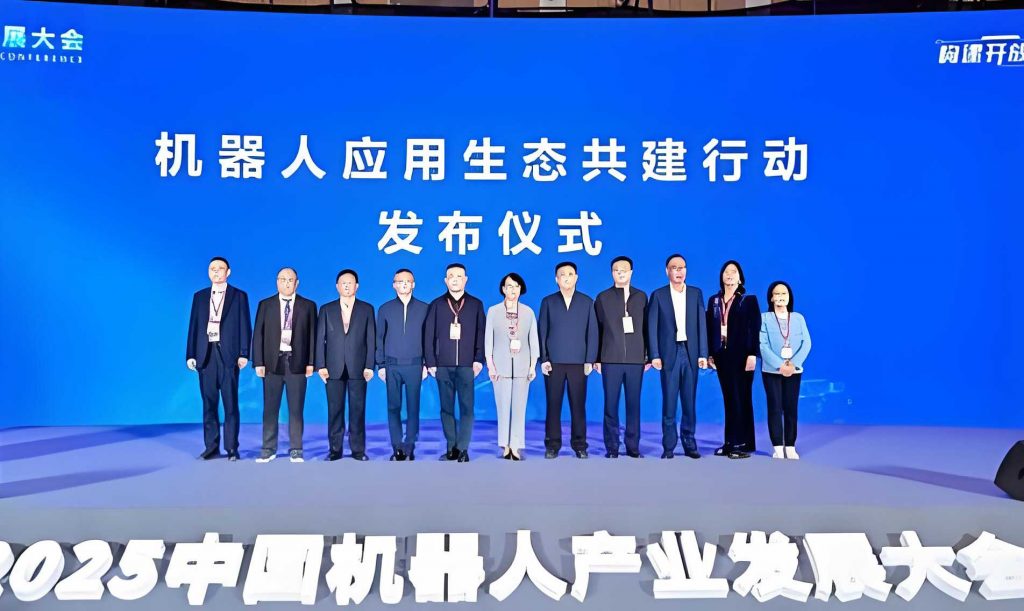
To quantify this growth, the following table summarizes key data points related to China robot deployments, highlighting the scale and momentum of automation adoption in the country:
Year Metric Value Growth Rate 2021 Operational Industrial Robots in China 943,000 units 21% increase 2020 Shipments of New Industrial Robots in China 168,000 units 20% increase from 2019 The data reflects a sustained upward trajectory for China robot adoption, fueled by factors such as labor cost dynamics, technological advancements, and government incentives. As China continues to innovate in robotics—evidenced by initiatives like the national manufacturing innovation centers—the China robot ecosystem is poised for further expansion, with applications extending into healthcare, logistics, and agriculture. This growth not only boosts domestic manufacturing but also positions China as a key player in the global robotics industry, influencing standards and supply chains worldwide.
In conclusion, China’s multifaceted approach—spanning policy frameworks, technological breakthroughs, and enterprise actions—demonstrates a clear commitment to advancing smart manufacturing and robotics. The emphasis on China robot integration across sectors, from elderly care to carbon reduction, highlights its strategic importance in driving economic transformation. With record numbers of industrial robots and supportive ecosystems, China is set to maintain its leadership in automation, fostering innovation that resonates globally. As these initiatives unfold, the China robot landscape will likely evolve, offering new opportunities for collaboration and growth in the high-tech arena.