
The global technological landscape is witnessing a fierce new competition, with the humanoid robot emerging as a central arena. As a physical embodiment of advanced artificial intelligence (AI), the humanoid robot represents the convergence of mechanics, electronics, materials science, and cognitive computing. Its potential to augment human capabilities in manufacturing, healthcare, logistics, and domestic services positions it as a transformative technology with profound socioeconomic implications. China, recognizing this strategic imperative, has mobilized significant industrial and policy resources to establish leadership in this nascent field. This analysis examines the current state of China’s humanoid robot industry, articulates a theoretical framework for its commercialization, benchmarks its progress against international leaders, and proposes strategic pathways for consolidating its competitive advantage.
The State of Play: China’s Humanoid Robot Ecosystem in Motion
China’s foray into the humanoid robot sector is characterized by vigorous top-down policy support and bottom-up entrepreneurial dynamism. The industry is currently in a critical “window period,” transitioning from foundational research towards initial commercialization.
1. Policy Catalysis and Regional Competition
The central government has issued pivotal guidance documents, framing the humanoid robot as a priority for future industrial development. This national impetus has triggered a wave of supportive policies at the local level, as major economic hubs vie to cultivate their own clusters. The table below summarizes key local initiatives.
| Region | Key Policy Document | Primary Objectives |
|---|---|---|
| Shanghai | Action Plan for High-Quality Innovation Development of the Smart Robot Industry (2023-2025) | Cultivate 10 leading brands, 100 benchmark application scenarios, and reach ¥100 billion in related industry scale. |
| Beijing | Action Plan for Embodied AI Technology Innovation and Industry Cultivation (2025-2027) | Develop over 50 mass-production products, nurture 50 core enterprises, achieve 100 large-scale applications, and foster a trillion-yuan cluster. |
| Shenzhen | High-Quality Development Action Plan for Intelligent Robot Industrial Clusters (2024-2026) | Achieve breakthroughs in core technologies, scale the industry to over ¥100 billion, and host more than 1,200 related enterprises. |
| Hangzhou | Humanoid Robot Industry Development Plan (2024-2029) | Establish an innovation system by 2027 and grow the industry scale to ¥50 billion by 2029. |
2. Systemic Breakthroughs and Ecosystem Synergy
To accelerate technological maturation and industrial integration, China has established several state-and-local joint innovation centers dedicated to humanoid robot and embodied intelligence. These centers, located in Beijing, Shanghai, Zhejiang, and Guangdong, aim to pool resources from leading companies, universities, and research institutes. Their mission is to overcome key common technological challenges—such as intelligent perception, motion control, and AI integration—and to propel the industry from isolated “point breakthroughs” towards synergistic “ecosystem resonance.” This coordinated approach is critical for developing standardized platforms and reducing duplication of effort across the numerous market entrants.
3. Diverse Market Entrants and Investment Influx
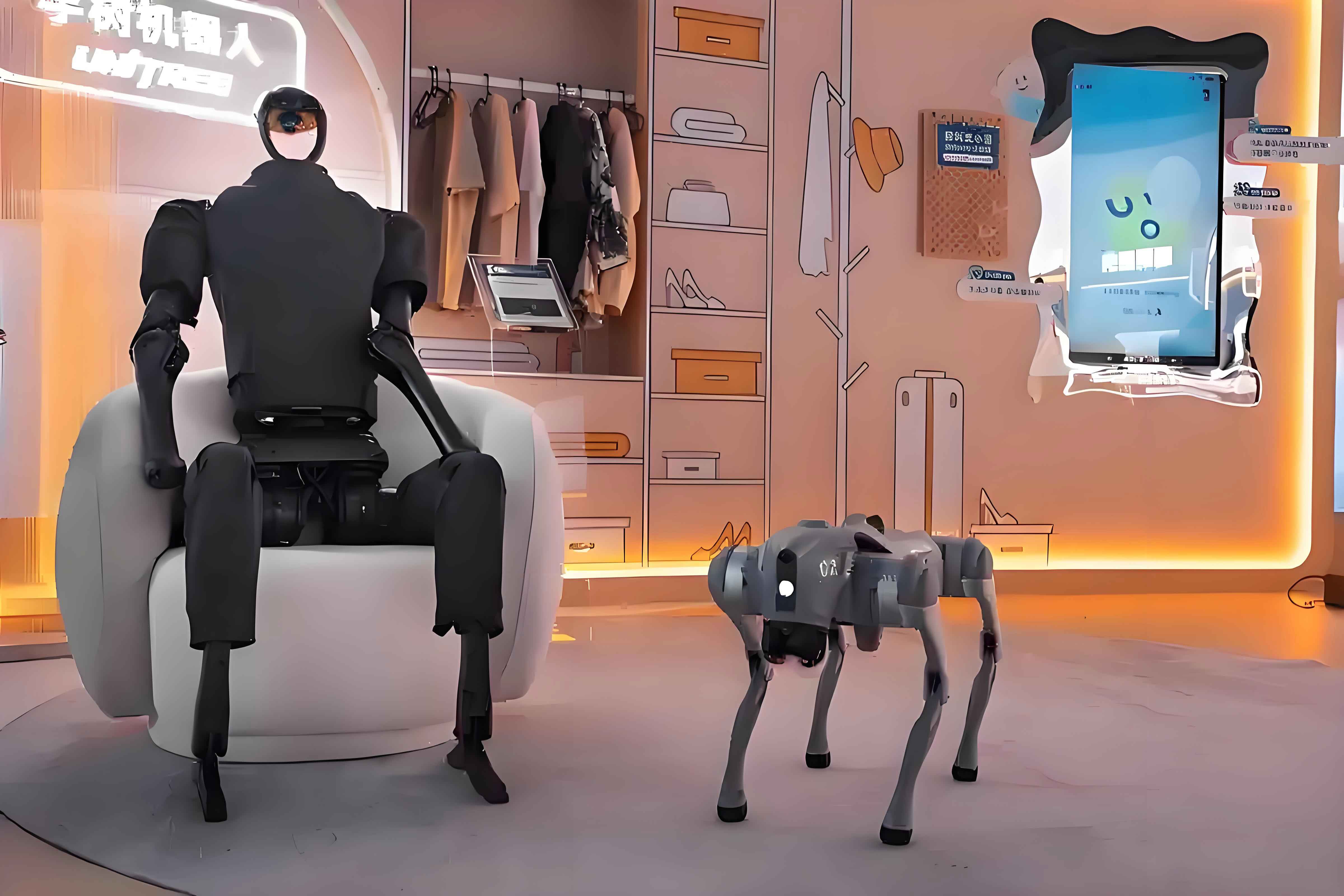
The market landscape is highly dynamic. Established technology giants like Huawei, Xiaomi, and DJI have entered the fray, leveraging their expertise in consumer electronics, communications, and drones. Incumbent robotics leaders such as Ubtech and Unitree are rapidly iterating their humanoid robot platforms. Simultaneously, a vibrant cohort of startups—including Zhiyuan Robotics, Star Dynamics, and Galaxy General—has emerged, often originating from university research labs. While total investment in Chinese humanoid robot startups is growing, it remains overshadowed by the capital flowing into their American counterparts. Most Chinese companies are in the R&D and product validation phase, with only a handful beginning small-batch production for research institutions or early-adopter industries.
The “Critical Triangle”: A Framework for Humanoid Robot Commercialization in China
The journey from prototype to pervasive commercial application for the humanoid robot is governed by three interdependent forces: technological breakthroughs, application-driven iteration, and enabling policy supply. This “Critical Triangle” forms the foundational logic for industrialization.
1. Technological Breakthrough: The Core Driver
The technical architecture of a humanoid robot can be conceptualized as an integrated system of “Brain,” “Cerebellum,” and “Body.”
- The “Brain” (Perception, Cognition, Interaction): This constitutes the embodied AI system, enabling the robot to understand and interact with the physical world. It relies on breakthroughs in multimodal large language models (LLMs) that integrate vision, language, and action (VLA), as well as world models for simulating and understanding physical dynamics. The performance of the “Brain” is paramount for task generalization and adaptive learning. The complexity of training these models is immense, as expressed by the data requirement function:
$$ \mathcal{D}_{\text{robot}} = \int (\mathcal{D}_{\text{real}} + \alpha \mathcal{D}_{\text{sim}} + \beta \mathcal{D}_{\text{web}}) \, dt $$
where $\mathcal{D}_{\text{real}}$ is costly real-world data, $\mathcal{D}_{\text{sim}}$ is synthetic simulation data, and $\mathcal{D}_{\text{web}}$ is annotated web video data, with $\alpha$ and $\beta$ being scaling coefficients. - The “Cerebellum” (Motion Control & Coordination): This refers to the real-time, on-board control system that translates high-level commands from the “Brain” into stable, precise, and agile physical movements. It involves advanced algorithms for balance, gait, and manipulator control.
- The “Body” (Hardware Actuation): This encompasses the mechanical structure and core components that enable movement. Performance depends on precision components like servo motors, harmonic reducers, torque sensors, and ball screws. The cost structure of a humanoid robot is heavily skewed towards these components, often representing up to 70% of the total Bill of Materials (BOM).
2. Application-Driven Iteration: The Market Pull
Technology cannot evolve in a vacuum. Real-world application scenarios provide the essential feedback loop for iterative improvement and validation. For the humanoid robot, two primary markets exist:
| Market Segment | Key Scenarios | Characteristics & Challenges |
|---|---|---|
| Industrial (B2B) | Manufacturing (e.g., auto assembly, material handling), logistics, hazardous inspection. | Structured or semi-structured environments, repetitive tasks. Lower tolerance for error due to production line implications. Likely early adoption path. |
| Consumer/Service (B2C) | Domestic assistance, elderly care, education, entertainment. | Highly unstructured, diverse environments. Requires exceptional safety, reliability, and user interaction. Higher complexity, likely later adoption. |
A critical step before deployment is Proof of Concept (PoC) testing in controlled, simulated environments. This phase is vital for de-risking deployment, especially given the near-zero error tolerance in many potential applications.
3. Policy Supply: The Essential Enabler
Given the industry’s early stage, high capital intensity, and strategic importance, proactive government policy is indispensable. Effective policy supply must be multifaceted, as summarized below:
| Policy Domain | Key Interventions |
|---|---|
| R&D & Core Tech | Funding for “Brain”/”Cerebellum” research; subsidies for compute power; support for domestic component (motor, reducer) R&D. |
| Ecosystem & Standards | Fostering regional clusters; developing unified technical and safety standards for hardware/software interfaces and data. |
| Application & Validation | Funding PoC centers and pilot “super scenarios”; providing first-purchase subsidies for commercial adoption. |
| Talent & Capital | Reforming education for AI-robotics interdisciplinary talent; creating government guidance funds to attract patient capital into the sector. |
Benchmarking Against the Global Frontier: Identifying Critical Gaps
Despite rapid progress, China’s humanoid robot ecosystem faces significant gaps when compared to the United States, the other leading contender, and established players like Japan.
1. The “Brain” Gap: Lag in Embodied AI Foundation Models
The U.S. holds a commanding lead in the foundational AI research underpinning the humanoid robot “Brain.” Companies like Google (with Gemini Robotics), Tesla (leveraging FSD neural networks), and startups like Figure AI are pioneering advanced VLA and end-to-end control models. NVIDIA is building a full-stack embodied AI ecosystem through its GEAR lab and GR00T foundation model. While Chinese companies excel in motion control (“Cerebellum”), breakthroughs in world models and robust multimodal AI for physical interaction remain works in progress. Furthermore, reliance on imported high-end AI training and inference chips adds a layer of supply chain vulnerability.
2. The Hardware Gap: Dependence on Imported Precision Components
Although China hosts a significant portion of the global humanoid robot supply chain, the most critical and high-value motion control components are dominated by American, Japanese, and European firms. The performance, durability, and precision of key components like harmonic drives (dominated by Japan’s Hamana-cio), high-torque-density servo motors, and force sensors often surpass that of domestic alternatives. Chinese manufacturers are making strides with cost-effective, customized solutions, but catching up in the high-performance segment requires deeper fundamental research in materials science and precision engineering.
3. The Talent & Research Gap: From Academic Output to Industrial Transformation
A nation’s AI capability is fundamentally rooted in its talent pool and basic research. Metrics reveal a substantial gap:
$$ \text{AI Top 2000 Scholars}_{\text{USA}} \approx 3.4 \times \text{AI Top 2000 Scholars}_{\text{China}} $$
Moreover, a majority of top U.S. AI researchers are employed in industry (e.g., at Google, Meta), creating a tight feedback loop between research and product development. In contrast, a larger proportion of China’s top AI talent remains within academia. The mechanism for translating cutting-edge research from institutions like Tsinghua and Peking University into industrial-grade technology for the humanoid robot needs strengthening.
4. The Capital Gap: Scale and Patience of Risk Investment
Venture capital in the U.S. is flowing into AI and robotics at an unprecedented scale, with billions allocated to both foundational AI companies and humanoid robot startups like Figure AI and Agility Robotics, creating multiple “unicorns.” While investment in China’s humanoid robot sector is active, it is of a smaller magnitude and often shorter-term orientation. The scarcity of “patient capital” willing to fund the long, expensive R&D cycle of a general-purpose humanoid robot poses a constraint on ambitious, long-horizon projects.
Strategic Pathways for Forming International Competitive Advantage
To navigate these gaps and solidify its position, China must leverage its unique strengths while systematically addressing its weaknesses. The following strategic pathways are proposed:
1. Launch Targeted “Moonshot” Programs for Foundational AI. Establish national research consortia focused on overcoming bottlenecks in embodied AI, specifically world models and robust VLA architectures. Utilize “reveal the list and take command” mechanisms to incentivize breakthroughs in environmental reasoning and dynamic task generation. Create open-source platforms for simulation and data to lower entry barriers for startups.
2. Pursue a Dual Strategy in Core Hardware. For critical components like reducers and servo motors, combine sustained fundamental research with strategic overseas Mergers and Acquisitions (M&A) of specialized European or Japanese firms to accelerate capability acquisition. The goal should be not only import substitution but also becoming a global supplier of choice.
3. Design Sophisticated Capital and Ecosystem Policy. Augment government guidance funds to de-risk early-stage investments and attract long-term capital. Foster regional specialization to avoid redundant, cutthroat competition between cities. Implement a “discovery and cultivation” mechanism for potential humanoid robot unicorns.
4. Lead in Standardization and Safety Frameworks. Proactively develop and promote national and, ultimately, international standards for humanoid robot interoperability, safety, and evaluation. This will reduce market fragmentation and build trust, facilitating faster commercial adoption.
5. Bridge the Talent Translation Gap. Reform engineering education to produce more interdisciplinary AI-robotics experts. Enhance incentives and platforms to channel top research talent from academia into industrial R&D for the humanoid robot. Capitalize on global mobility trends to attract overseas Chinese and international experts.
6. Exploit China’s Systemic Advantage in Integration and Manufacturing. Accelerate the feedback loop between development and application by leveraging China’s vast manufacturing base. Establish national PoC centers and encourage pilot deployments in structured settings like automotive factories and logistics hubs. Use rapid, cost-sensitive iteration based on real-world data to drive down costs and improve robustness, turning manufacturing scale into a key competitive edge.
In conclusion, the race to develop and commercialize the humanoid robot is a marathon, not a sprint. China has demonstrated formidable momentum through policy alignment and entrepreneurial energy. Its success will hinge on a balanced strategy that addresses foundational AI and hardware gaps while fully leveraging its unparalleled capabilities in rapid manufacturing integration and scale. By effectively managing the interplay of technology, application, and policy—the “Critical Triangle”—China is poised to be a defining force in shaping the era of embodied intelligence and the future global humanoid robot industry.