
Beijing, December 23, 2015 – In a series of significant developments underscoring its technological ascent, China has announced major progress across its advanced manufacturing and high-tech sectors. Key announcements from government and industry leaders reveal accelerating plans for the domestic robotics industry, a landmark nuclear energy export deal, and the successful validation of its next-generation satellite navigation system. These moves collectively signal a strategic push to transform the nation’s industrial base and expand its global technological footprint.
-
China Robot Industry “13th Five-Year Plan” Imminent, Aiming for a Trillion-Yuan Ecosystem
Dubbed the “pearl at the top of the manufacturing crown,” the robotics sector is poised for a substantial state-backed boost. China is intensifying efforts to formulate the robotics industry “13th Five-Year Plan,” a development blueprint designed to propel domestic advancement in research, widespread application, and the establishment of standard systems. This initiative represents a cornerstone of the broader national manufacturing strategy.
Wang Jianyu, Director of the Machinery Division at the Ministry of Industry and Information Technology’s Equipment Industry Department, emphasized the importance of the plan during a recent press conference for the 2015 World Robot Conference. The forthcoming plan, alongside the technology roadmap for key sectors outlined in “Made in China 2025,” will chart the course for the China robot industry’s evolution.
Experts from the National Manufacturing Strategy Advisory Committee have outlined ambitious targets. By 2020, annual sales of industrial robots in China are projected to reach 150,000 units, with a total operational stock hitting 800,000 units. Looking further ahead to 2025, annual sales are expected to climb to 260,000 units, and the national stock of industrial robots is forecast to reach 1.8 million. By the end of the “13th Five-Year Plan” period, the total output value of China’s robot industry clusters is anticipated to surpass one trillion yuan.
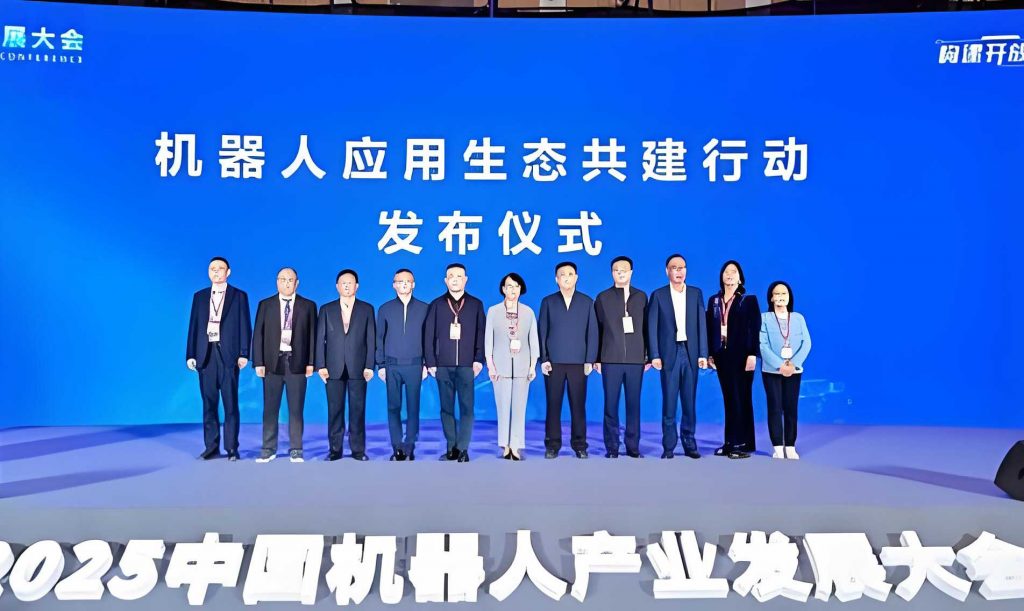
“Vigorously developing intelligent equipment manufacturing, represented by robots, will help improve the quality and efficiency of China’s manufacturing sector,” stated Lin Nianxiu, Vice Chairman of the National Development and Reform Commission. “It is of great significance for promoting the industrial upgrading of China’s equipment manufacturing industry, transforming from ‘Made in China’ to ‘Created in China,’ and injecting strong momentum into economic development.” The growth of the China robot market is seen as a critical lever for this national industrial transformation.
-
Nuclear Power “Going Global” Strategy Bears Fruit with Landmark $6 Billion Deal in Argentina
In a major victory for China’s high-tech exports, the nation’s nuclear industry has secured a landmark contract in South America. On the morning of November 15th local time in Antalya, Turkey, site of the G20 Leaders’ Summit, China National Nuclear Corporation (CNNC) and Argentina’s Nucleoeléctrica S.A. signed commercial contracts for the construction of Argentina’s fourth and fifth nuclear power plants.
The signing ceremony was witnessed by high-profile officials including China’s NDRC Chairman Xu Shaoshi and Argentine Ministers of Economy, Planning, and Foreign Affairs. Chairman Xu Shaoshi noted that the deal not only signifies the cooperative construction of the new plants but also marks the entry of China’s Hualong One (HPR1000) reactor technology into the Argentine market, adding “nuclear power” to the development of the comprehensive strategic partnership between the two nations.
The project involves the construction of the Atucha 3 nuclear power plant, Argentina’s fourth, using heavy water reactor technology. Furthermore, the framework contract stipulates that the fifth unit, Atucha 4, will utilize the Chinese-designed Hualong One pressurized water reactor technology. The total investment for the Atucha 3 project is approximately $5.994 billion. Chinese financial institutions are set to provide 85% of the project financing. In terms of equipment supply, 62% will be sourced from Argentina, with Chinese companies providing the remaining 38%, a supply share valued at over 30 billion RMB. Upon completion, the nuclear power plant will be operated by Nucleoeléctrica S.A.
-
New Generation BeiDou Navigation Satellites Pass Critical In-Orbit Validation
Complementing advancements in terrestrial industries, China’s space technology has also achieved a key milestone. The three new BeiDou navigation satellites launched earlier this year have successfully completed in-orbit testing and comprehensive verification of their core technologies. The performance indicators of their navigation signals have shown significant improvement over the previous generation of BeiDou satellites, now reaching internationally advanced levels.
“This is a brand-new signal format with independent intellectual property rights,” said Xie Jun, Chief Designer of the BeiDou navigation satellites. “Within the same time frame, the navigation satellites can transmit more signals, better and faster meeting user demands.” The development team successfully resolved challenges related to high power and miniaturization, resulting in higher signal utilization efficiency and signal quality that ranks among the world’s best.
The satellite design team innovatively adopted a truss structure, which increased the available area for payload installation while reducing the satellite’s overall size and weight, thereby enhancing platform functionality. The new platform’s output power is greater than that of previous BeiDou satellites, yet its mass is less than half, giving it a leading power-to-mass ratio among international peers in its class.
Conclusion: A Coordinated Push for Technological Leadership
The simultaneous progress in robotics, nuclear energy, and satellite navigation illustrates a multifaceted national strategy. The imminent China robot industry plan aims to automate and upgrade the domestic manufacturing base. The Argentine nuclear deal demonstrates the international competitiveness and export readiness of China’s complex engineering projects. Meanwhile, the BeiDou system’s advancement ensures greater technological autonomy in critical global infrastructure. Together, these developments paint a picture of a nation actively and systematically building competence across the entire spectrum of modern industry, from smart factory floors to orbital space and international energy markets. The success of these initiatives, particularly the cultivation of a world-class China robot ecosystem, will be a key determinant in the pace and scale of China’s broader industrial transformation in the coming decade.