
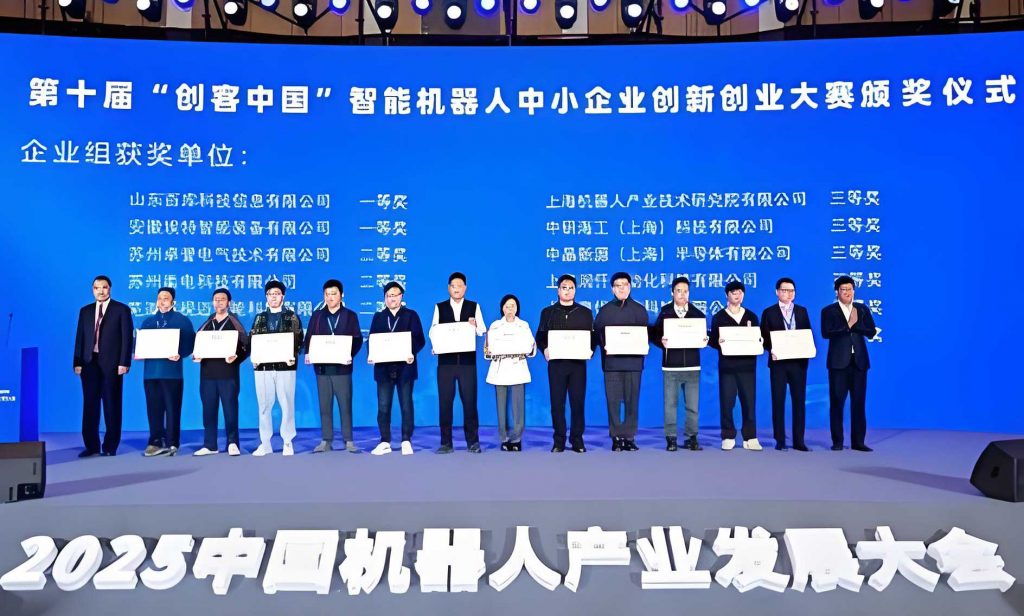
The landscape of the China robot industry continues to evolve, marked by significant shifts in market share, technological advancement, and industry structure. According to data released by the China Robot Industry Alliance (CRIA) during the 2020 China Robot Industry Development Conference, the year 2019 saw the China industrial robot market maintain its position as the world’s largest for the seventh consecutive year, despite a continued decline in overall sales. Within this context, domestic brands achieved modest growth, signaling a gradual reshaping of the competitive arena. This report synthesizes key statistics and analysis, primarily drawn from CRIA, the International Federation of Robotics (IFR), and research by the Qianzhan Industry Research Institute, to provide a comprehensive overview of the current state and trajectory of the industrial robot sector in China.
The performance of the China robot market in 2019 reflects broader industrial trends and policy impacts. While external pressures and cyclical downturns in key sectors like automotive contributed to an overall sales contraction, the underlying momentum for automation and intelligent manufacturing, as championed by initiatives like “Made in China 2025,” remains robust. This analysis will explore the dual narratives of domestic brand advancement and industry maturation, highlighting how the China robot ecosystem is navigating this pivotal phase.
-
Further Improvement in Domestic Brand Market Share
Statistical data for 2019 reveals a nuanced picture for the China robot market. The total sales volume of industrial robots in China reached approximately 144,000 units, representing an 8.6% year-on-year decrease. This decline was more pronounced than the previous year, deepening by 7.7 percentage points. A critical breakdown shows that foreign-brand robots accounted for about 99,000 units, declining by 12.2% and constituting 68.75% of the total market. In contrast, domestically-branded industrial robots sold nearly 45,000 units, experiencing a slight increase of 0.8% and raising their market share to 31.25%. Although the growth rate for domestic China robot brands slowed compared to 2018, it remained positive amidst a broader market contraction, while foreign brands faced a steeper and sustained decline.
This trend underscores a gradual but consistent narrowing of the gap between local and international players in the China robot sphere. The market share of domestic industrial robots increased by 3.37 percentage points from the previous year. Although foreign brands still dominate the China industrial robot market, the progressive rise of homegrown companies, fueled by rapid domestic development in robotics technology, is steadily altering the competitive dynamics. The advancement of the China robot sector is increasingly becoming a story of indigenous innovation and capability building.
- The Gap for Domestic Brands is Narrowing
The data from CRIA and IFR illustrates a pivotal moment. The resilience of domestic China robot manufacturers in a declining market highlights improved product competitiveness, supply chain integration, and possibly a greater alignment with the specific needs of local industries. This growth in share for China robot brands occurs even as the total addressable market shrank, suggesting they are capturing demand in segments or applications where they hold an advantage. The long-term trajectory points towards an increasingly balanced China robot market structure.
- Articulated Robots Remain the Mainstream
Analyzing the market by mechanical structure, articulated robots continued to lead sales in the China robot market during 2019. Sales of this type approached 96,000 units, accounting for 66.67% of the total annual sales. However, this segment witnessed a 2.3% year-on-year decrease, marking its first negative growth since 2013. SCARA robots, after years of rapid expansion, also saw a decline, with sales of 27,000 units (down 18.9%), representing 18.75% of the market. Cartesian (or coordinate) robots continued their downward trend with sales of nearly 14,000 units, making up 9.72% of total sales. The dominance of articulated robots underscores their versatility in the China robot application landscape, even as the market corrects.
- Handling and Welding are the Most Prevalent Applications
Amid the overall market downturn, sales across major application areas for industrial robots in China experienced varying degrees of decline. Material handling and machine tending (including loading/unloading) remained the primary application, with sales of 62,000 units in 2019 (a 4.4% decrease). This segment’s proportion of total sales actually increased to 43.06%. Welding and brazing robots followed as the second-largest application, with sales of 34,000 units (down 16%), accounting for 23.61% of the market. Assembly and disassembly robot sales were 20,000 units (down 16.7%), constituting 13.89%. Notably, robots used in processing applications (like machining) were the sole category to see growth, with sales surging by 105.5% year-on-year. Furthermore, domestic China robot brands improved their market share in several application fields, including processing, welding and brazing, assembly and disassembly, cleanroom operations, and coating/sealing.
From an industry perspective, the manufacture of electrical and electronic equipment and components solidified its position as the leading application sector for the fourth consecutive year. In 2019, this industry purchased over 42,000 robots, a decline of 8.9%, representing 29.17% of the total China robot market sales. The automotive manufacturing industry, while remaining critically important, saw its procurement drop to 33,000 units, a continued decline of 17.1% from the previous year. Consequently, its share of the total China robot market sales decreased to 22.92%. This shift indicates a diversification in the demand base for industrial robots in China beyond the traditional automotive stronghold.
- The Gap for Domestic Brands is Narrowing
-
The Industry is Gradually Transitioning from Growth to Maturity
The push for industrial intelligence and the strategic framework of “Made in China 2025” have significantly expanded the adoption of robots within manufacturing. This has fueled a period of explosive growth. Data shows that from 2016 to 2020, the output of industrial robots in China consistently increased. However, the pace of this expansion is now moderating, and the structure of the industry is consolidating, hallmarks of a sector moving into a more mature phase. The number of enterprises in the China robot industry initially swelled, driven by downstream demand, but new entrants have drastically reduced as competitive landscapes crystallize and barriers to entry rise.
- Industrial Robots Transitioning from Machine Intelligence to Artificial Intelligence
The development of robot technology and its applications is often categorized into three stages, driven by distinct advantages: demographic dividends, engineer dividends, and artificial intelligence (AI) technological superiority. The China robot industry rapidly progressed through the automation stage leveraging its vast labor force. Currently, numerous leading companies in China, such as Megvii and Hikvision, have matured their business in the machine intelligence stage, demonstrating exceptional prowess in areas like vision systems. Presently, China, alongside leading nations like Japan and South Korea, is in the transitional phase from machine intelligence towards AI integration. In terms of AI technology accumulation, China is also at the global forefront. This technological evolution is a key driver for the next wave of sophistication in the China robot ecosystem.
- Industrial Robot Market Size is Expanding Year by Year
The demand for industrial robots, spurred by the trend towards industrial intelligence, has led to a consistent annual increase in market size. In 2019, the market scale for industrial robots in China reached USD 5.73 billion. While the growth rate of this market size has fluctuated, rising initially and then tapering, it maintains an upward trajectory. This suggests significant future potential for further expansion as the China robot market penetrates deeper into traditional and emerging industries. The sustained growth in market value, even amid unit sales volatility, points to increasing robot sophistication and value-add.
- Industrial Robot Output Increases with Slowing Growth Rate, Trend Converging with Industrial Added Value
From 2015 to 2020, the output of industrial robots in China exhibited a steady upward trend. By November 2020, production had soared to 206,851 sets from 32,996 sets in 2015. However, a closer look at the growth rates reveals a significant deceleration. The growth rate plunged from 119.5% between 2015 and 2016 to 12.67% in the subsequent period. The most recent figures show a growth rate of around 10.65%. While still at a respectable level, this slowdown indicates the market is moving past its hyper-growth infancy. This moderation in output growth is beginning to align more closely with the overall growth rhythm of the nation’s industrial added value, a characteristic of a maturing industry.
Note: The following textual representation is based on the data trends described for output and new enterprise counts.
Representative Data Trends:
Year Period Key Metric Trend Description 2015-2020 Industrial Robot Output Steady increase from 32,996 sets to 206,851 sets (by Nov 2020). 2015-2016 Output Growth Rate Peaked at 119.5%. Recent Period Output Growth Rate Moderated to approximately 10.65%. 2010-2020 New Enterprise Count Rose initially, peaked at 77 in 2016, then fell sharply to 2 in 2020. - Decline in New Enterprise Numbers and Decreasing Proportion of Qualified Firms
The pattern of new enterprise formation in the China robot industry from 2010 to 2020 shows a distinct rise-and-fall cycle. The number of new companies grew until 2016, after which it entered a sustained decline through 2020, with the downward slope being steeper than the prior ascent. The peak was in 2016 with 77 new entrants, starkly contrasting with only two new companies in 2020. This sharp reduction is a strong indicator of market saturation and heightened entry barriers.
In 2016, China’s Ministry of Industry and Information Technology (MIIT) established the “Industrial Robot Industry Standard Conditions,” setting a formal benchmark for market entry. Subsequently, MIIT published three lists of compliant enterprises in 2018, 2019, and 2020, containing 15, 8, and 9 companies respectively. As a proportion of the total number of industrial robot enterprises in those years, these qualified firms represented only 0.179%, 0.08%, and 0.09%. These figures, all below 2% and on a declining trend, highlight that only a tiny fraction of players in the expansive China robot landscape currently meet the official standard criteria. This low compliance rate underscores the fragmentation in parts of the sector and anticipates potential future regulatory tightening to ensure industry quality and sustainable development for the China robot industry.
- Industrial Robots Transitioning from Machine Intelligence to Artificial Intelligence
The analysis of the China robot industry presents a clear narrative of evolution. The market is characterized by the steady ascent of domestic brands, which are incrementally closing the gap with foreign incumbents by leveraging local insights and technological progress. Concurrently, the industry itself is exhibiting classic signs of maturation: growth rates for output and new company formation are stabilizing or declining, the application base is diversifying, and regulatory frameworks are beginning to shape the competitive environment. The transition from machine intelligence to AI integration positions the China robot sector for its next phase of value creation. While challenges such as market cyclicality and the need for further consolidation remain, the foundational trends point towards a more mature, competitive, and technologically advanced future for industrial robotics in China. The resilience of domestic players in a down market, coupled with the strategic national focus on intelligent manufacturing, ensures that the China robot industry will remain a critical and dynamic component of the global automation landscape.
The development of the China robot market is intrinsically linked to national industrial policy and global technological trends. As the industry consolidates, leaders who can navigate the shift towards AI-driven solutions, meet higher quality standards, and cater to a broadening set of applications will be best positioned for success. The data from 2019 and early 2020s trends serve as a benchmark, indicating that the era of easy, volume-driven growth may be giving way to a period where sophistication, efficiency, and innovation will be the key differentiators in the China robot arena.