
In the rapidly evolving landscape of global manufacturing, China stands at a pivotal juncture, driven by initiatives like “Made in China 2025” and the pervasive trend of “machine replacement.” This transformation is not only reshaping production lines but also fueling growth in ancillary sectors such as robotics and precision engineering. To delve deeper into these developments, we conducted exclusive interviews with key executives from Harmonic Drive Systems (Shanghai) Co., Ltd. and Kurt Workholding, two companies at the forefront of motion control and manufacturing solutions. Their perspectives shed light on the opportunities, challenges, and future directions for the China robot industry and broader automation ecosystem.
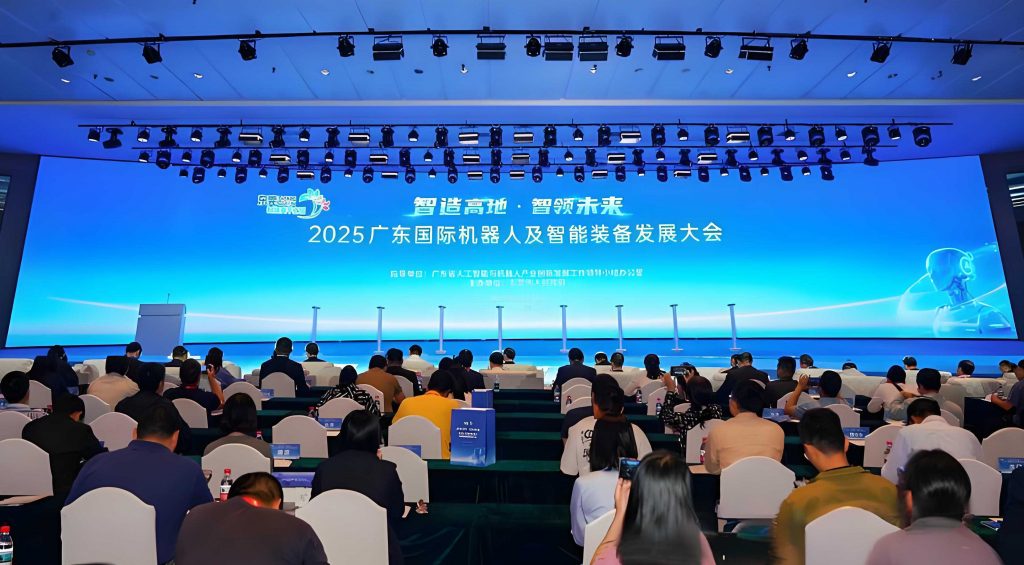
The China robot industry has witnessed exponential growth, with increasing adoption across automotive, electronics, and general manufacturing. According to industry analysts, China is now the world’s largest market for industrial robots, a testament to its manufacturing ambitions. However, the journey involves more than just deploying robots; it requires a holistic approach to automation, integrating advanced components, user-centric designs, and innovative technologies. In this context, insights from seasoned professionals like Mr. Tetsuaki Maruyama of Harmonic Drive Systems and Mr. Steve Kane of Kurt Workholding offer valuable guidance on navigating this complex terrain.
-
Harmonic Drive Systems: Pioneering Motion Control in the China Robot Industry
Harmonic Drive Systems (Shanghai) Co., Ltd., established in 2011, is a wholly-owned subsidiary of Japan’s Harmonic Drive Systems Inc., specializing in high-precision reduction gears and servo components. The company’s harmonic reducers are renowned for their lightweight, compact size, high transmission efficiency, wide reduction range, and superior accuracy, making them integral to various传动 systems, especially in robotics. During an interview on April 13, 2016, Mr. Tetsuaki Maruyama, the General Manager, shared his extensive experience and optimistic outlook for the China robot industry.
Mr. Maruyama joined Harmonic Drive Systems in 1982 and has held numerous leadership roles, including head of the Kyushu sales office, president of Harmonic Precision, and head of the manufacturing division. Since 2011, he has led the Shanghai subsidiary, witnessing firsthand the evolution of robotics in Japan and China. He emphasizes that robots are merely components within industrial automation lines, and enhancing overall productivity requires a systemic view rather than focusing on individual robots. This holistic perspective is crucial for the China robot industry as it scales up to meet diverse manufacturing demands.
-
Policy-Driven Transformation and Technological Shifts in China’s Manufacturing
The “machine replacement” wave in China has spurred the emergence of numerous robot industrial parks, reflecting a national push toward automation. Mr. Maruyama notes that while robots currently handle simple tasks, replacing humans in complex operations remains challenging. “The precision of robots on the market is already high, but much work is needed in application and integration,” he explains. This highlights the gap between hardware capabilities and practical implementation in the China robot industry, necessitating continued innovation and skill development.
Under the “Made in China 2025” framework, the manufacturing sector is undergoing a critical transition. New technologies are poised to bring significant changes, as seen in the automotive industry. Mr. Maruyama points to trends like autonomous driving and new energy vehicles in Japan, which China is likely to follow. As these trends evolve, robot development will adapt to the end products. For instance, if manufacturing shifts from steel to materials like glass or composites for car bodies, traditional welding robots may face market disruptions. This adaptability is key for the China robot industry to stay relevant in a dynamic environment.
-
The Role of 3D Printing and Emerging Technologies
3D printing represents another transformative trend, offering a new development契机 for manufacturing. Mr. Maruyama contrasts traditional “subtractive” methods with 3D printing’s “additive” approach, which builds shapes directly. However, he identifies material limitations as a constraint—high costs and inadequate strength for applications like automotive bodies. The commercialization of 3D printing in China may借鉴 U.S. models, but its success is uncertain. Nonetheless, the growing interest in 3D printing underscores the need for the China robot industry to embrace diverse technologies and foster cross-sector collaboration.
-
User-Centric Design and Product Offerings at Harmonic Drive
Harmonic Drive Systems focuses on three main product categories: harmonic reducers, planetary reducers, and servo components, supported by after-sales service and technical assistance. The company’s expertise spans every technical aspect of motion control products. A core philosophy is enhancing user experience by minimizing assembly steps for customers. “We aim for our products to be ready-to-use upon purchase, reducing the need for additional调试,” Mr. Maruyama states. This customer-centric approach is tailored to the needs of China robot industry users, with products designed for local demands. For example, Harmonic Drive has developed servo motors compatible with other brands, addressing communication issues and improving convenience.
As a leader in integrated motion control, Harmonic Drive’s harmonic reducers enable motion transmission in sealed spaces, suitable for high-vacuum or corrosive environments—a unique advantage over other传动 mechanisms. Mr. Maruyama analogizes motion control to the human nervous system: “We handle the nerves that conduct movement and the control over it, ensuring precise execution of commands from the ‘head.'” This precision is vital for the China robot industry, where accuracy and reliability drive automation efficiency.
-
Market Performance and Optimism for the China Robot Industry
Despite overall manufacturing sluggishness, Harmonic Drive reported stable first-quarter sales in 2016, with over 70% of its volume coming from the robotics sector. While customer numbers remained steady, order intake increased compared to previous years. Mr. Maruyama expresses confidence in the China robot market, anticipating rapid growth. “The China robot industry holds great promise, and we expect it to expand quickly in the coming years,” he says. This optimism is echoed by industry reports forecasting double-digit growth for robotics in China, fueled by government support and technological advancements.
-
Kurt Workholding: Enhancing Manufacturing Precision for the China Robot Ecosystem
Shifting focus to manufacturing tools, Kurt Workholding, a North American leader in machine tool fixtures, provides complementary insights into automation. In an interview at CCMT 2016, Mr. Steve Kane, Global Sales Director of the Industrial Products Division, discussed the company’s role in supporting the China robot industry through precision workholding solutions. Machine tool fixtures, essential for securing workpieces and guiding tools, are one of the four indispensable tools in manufacturing (alongside cutters, gauges, and dies). Though small relative to machines, they are critical for accuracy and efficiency.
Founded in 1946 by Kurt Kuban in Minnesota, USA, Kurt Workholding has evolved from a precision machining and gear加工 firm to a diversified enterprise offering disk drives, inspection instruments, and hydraulic products. Contrary to being a “hidden champion,” it is a large corporation with a significant footprint in夹具 systems. Its flexible automation production line—featuring 36 workstations, four Mazak horizontal machining centers, 350-tool magazines per center, and a robot—exemplifies advanced manufacturing capabilities that benefit the China robot industry by enabling high-volume, precise component production.
-
Integration of Fixture Technology with Robotics in China
As the top seller of vises in North America (vises are the most common通用夹具 in CNC machines), Kurt Workholding’s innovations contribute to automated production lines where robots are deployed. Mr. Kane highlights that flexible夹具 systems enhance robot utilization by ensuring stable workpiece positioning, reducing errors, and increasing throughput. This synergy between fixtures and robots is crucial for the China robot industry, as manufacturers seek integrated solutions to optimize automation. The company’s expansion into global markets, including China, underscores the interconnectedness of tooling and robotics in driving manufacturing efficiency.
-
Future Trends and Collaborative Opportunities
The convergence of robotics, motion control, and precision tooling points to a collaborative future for the China robot industry. Mr. Maruyama’s emphasis on holistic automation aligns with Mr. Kane’s focus on夹具 innovation, suggesting that success in China’s manufacturing transformation will depend on seamless integration across components. Emerging trends like IoT, AI, and smart factories will further reshape the landscape, requiring adaptability from companies like Harmonic Drive and Kurt Workholding.
For the China robot industry, challenges such as skill gaps, high implementation costs, and material limitations (as seen with 3D printing) must be addressed. However, the strong policy backing, growing domestic demand, and technological advancements provide a solid foundation. Industry stakeholders are encouraged to invest in R&D, user training, and cross-industry partnerships to harness the full potential of automation.
In conclusion, the China robot industry is poised for a bright future, driven by strategic initiatives, technological innovation, and a customer-centric approach. Insights from Harmonic Drive Systems and Kurt Workholding reveal that while robots are central to automation, supporting elements like motion control and precision tooling are equally vital. As China continues its manufacturing升级, the integration of these components will be key to achieving higher productivity, quality, and global competitiveness. The ongoing evolution promises exciting opportunities for growth and collaboration in the years ahead.
The China robot industry, with its dynamic market and supportive ecosystem, remains a focal point for global attention. By leveraging expertise from leaders in motion control and manufacturing tools, China can accelerate its journey toward advanced automation, setting a benchmark for the world. As Mr. Maruyama aptly summarized, the future is indeed promising, and the China robot industry is well-positioned to lead the charge in the next industrial revolution.