
In a pivotal era for technological advancement, China’s robot industry stands at the forefront of national strategic initiatives, driven by the ambitious “Made in China 2025” blueprint. The industry, encompassing both industrial and service robots, is recognized as a critical pillar for transforming manufacturing, enhancing economic competitiveness, and addressing societal needs. This comprehensive news analysis delves into the current landscape, strategic focuses, and future directives shaping the trajectory of China’s robot sector, drawing from authoritative insights and policy frameworks.
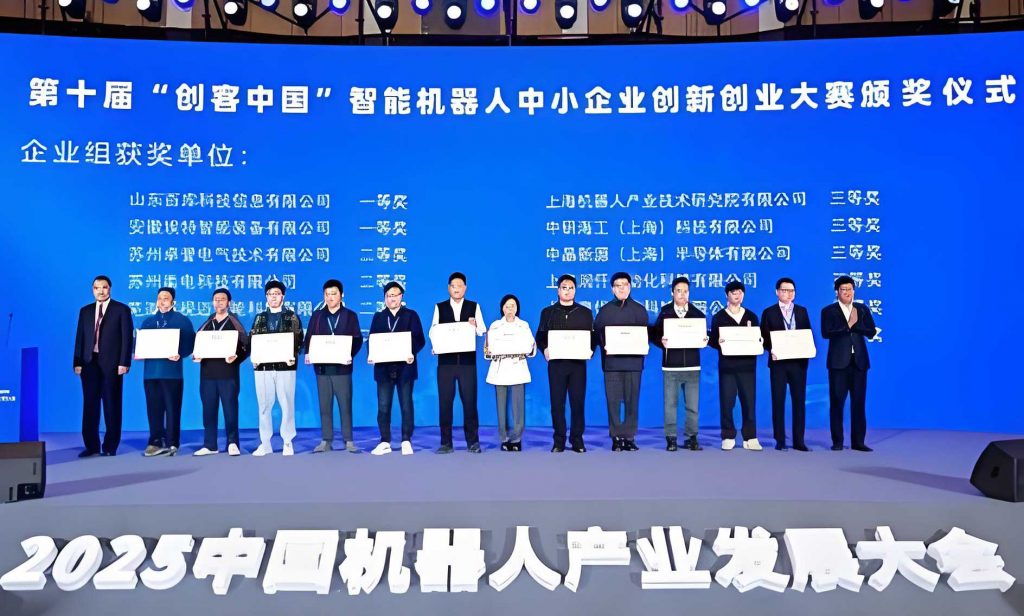
1. The Profound Significance of Developing Robot Industry in China
Robots are increasingly regarded as dual catalysts: they serve as key enabling equipment for advanced manufacturing and as transformative interfaces that reshape human lifestyles in an intelligent society. The development of China’s robot industry is not merely an industrial endeavor but a national imperative with far-reaching implications. Whether in manufacturing environments through industrial robots or in non-manufacturing settings via service robots, these technologies embody a country’s developmental prowess. Fostering a robust robot industry is essential for driving industrial upgrading, accelerating the construction of a manufacturing powerhouse, and improving the quality of life for citizens. Globally, since the birth of the world’s first robot in 1954, industrialized nations have established mature robot ecosystems, leading in core technologies, product applications, and nurturing dominant global players. Post-global financial crisis, countries like Germany, the European Union, Japan, and Korea have elevated robots to national strategic priorities, unveiling plans such as “Securing the Future of German Industry,” “EU Civil Robotics Research and Innovation Programme,” “Japan’s Robot Strategy,” and “Korea’s Robot Future Strategy 2022.” In this context, China’s proactive stance through policies like “Made in China 2025” underscores its commitment to securing a competitive edge in the global arena, with the robot industry being a central component of this vision.
The evolution of China’s robot industry dates back to the 1970s when research and development first commenced. In recent years, bolstered by a series of policy incentives, the sector has experienced rapid growth. For instance, in 2014, China produced 17,000 robots, marking a significant 78% increase from the previous year. Service robots have also seen notable progress, with representative products developed and deployed in fields such as scientific exploration, medical care, education, entertainment, and domestic services. This momentum highlights the expanding footprint of China’s robot capabilities, yet it also reveals the groundwork needed to match global leaders. The strategic importance of robots extends beyond economic metrics; they are pivotal in addressing challenges like rising labor costs, demographic shifts such as an aging population, and demands in public safety, disaster relief, and rehabilitation. Thus, advancing China’s robot industry is synonymous with fostering innovation, sustainability, and social resilience.
2. Current Status and Identified Gaps in China’s Robot Industry
Despite making steadfast strides, China’s robot industry faces considerable gaps when compared to developed nations. These disparities are multifaceted, impacting the core competitiveness and long-term sustainability of the sector. Key challenges include a heavy reliance on imports for high-precision components like reducers, weak innovation in core technologies, low reliability of high-end products, difficulties in promoting autonomous robot brands, and a fragmented industrial landscape characterized by small, scattered, and weak enterprises. Additionally, the lack of comprehensive standards and testing certification systems further hampers progress. As labor costs in China continue to rise and production systems transition toward flexibility and intelligence, the demand for industrial robots is poised for substantial growth. Concurrently, diverse needs are emerging in areas such as elderly care, medical rehabilitation, disaster response, public security, and education, where service robots can play transformative roles. This dual demand underscores both the opportunities and pressures for China’s robot industry to evolve rapidly while addressing foundational weaknesses.
The technological sophistication of robots, often hailed as the “pearl on the crown of manufacturing,” necessitates a nuanced approach. China’s robot industry remains in a nascent developmental phase, with a relatively thin foundation and limited strength. Therefore, it is crucial to avoid short-termism or expecting overnight success. The Fifth Plenary Session of the 18th Central Committee of the Communist Party of China emphasized open and shared development concepts, urging the cultivation of new growth drivers and the expansion of new spaces, with manufacturing moving toward refined division of labor and collaboration. Leveraging China’s position as the world’s largest robot market, along with initiatives like “Made in China 2025,” the industry must build a new industrial system through focused efforts. The upcoming “Robot Industry ’13th Five-Year’ Development Plan,” which has passed expert review, outlines strategic objectives centered on “two breakthroughs and three improvements”—aiming for major breakthroughs in key components and high-end products, alongside significant enhancements in quality reliability, market share, and the competitiveness of leading enterprises. This framework sets the stage for a concerted push over the next five years.
3. Key Focus Areas for Strategic Development: “Two Breakthroughs and Three Improvements”
To propel China’s robot industry forward, the “13th Five-Year” plan emphasizes targeted initiatives under the “two breakthroughs and three improvements” paradigm. These focus areas are designed to address core deficiencies while capitalizing on growth opportunities, ensuring a balanced and sustainable advancement.
3.1. Promoting Major Breakthroughs in Iconic Products
The plan identifies ten iconic products, with a particular emphasis on smart manufacturing and smart logistics to guide industrial robots toward mid-to-high-end development. However, it also cautions against neglecting service robots in favor of industrial ones. Efforts will be directed toward developing robots for disaster relief, rescue operations, surgical services, and other fields, thereby expanding the application spectrum of China’s robot solutions. This dual focus ensures that the industry caters to both economic and societal needs, fostering innovation across domains.
3.2. Comprehensively Breaking Through Key Components
A foundational challenge lies in the dependency on imported key components. To remedy this, the strategy calls for a multi-pronged approach involving design, materials, equipment, and industrialization to enhance the quality stability of critical parts such as reducers, servo systems, and controllers. Strengthening the domestic supply chain is vital for reducing external reliance and boosting the overall resilience of China’s robot industry.
3.3. Advancing the Construction of Robot Industry Innovation Centers
Innovation is the lifeblood of technological progress. The initiative aims to prevent a mere scale expansion while overlooking research, development, and talent cultivation. By integrating existing research resources and establishing a national robot innovation center accessible to the entire industry, the goal is to create an ecosystem that synergizes government, industry, academia, research, and application. This environment will nurture specialized design and R&D talent, accelerating the commercialization of scientific achievements and solidifying the innovation backbone of China’s robot sector.
3.4. Intensifying Application Demonstrations to Increase Market Share
Market adoption is critical for sustaining growth. The plan advocates for implementing exemplary demonstration projects in key manufacturing sectors—those with strong effects, driving force, and relevance. By promoting robot applications in labor-intensive areas through tiered approaches, the industry can showcase practical benefits, stimulate demand, and broaden the market space for China’s robot products, thereby enhancing their domestic and global footprint.
3.5. Actively Fostering Leading Enterprises to Elevate Industry Competitiveness
Learning from the experiences of advanced nations, the strategy encourages differentiated development and strategic integration through horizontal and vertical consolidation. By facilitating mergers, joint ventures, partnerships, and cross-border collaborations, the aim is to cultivate 3–5 robot industry leaders and over 5 robot industrial clusters. These entities will spearhead technological advancements and set benchmarks, elevating the overall competitiveness of China’s robot industry on the world stage.
4. Future Work Requirements and Strategic Measures
The successful realization of these objectives hinges on coordinated efforts across various stakeholders. Clear directives have been outlined for local governments, industry organizations, and leading enterprises to ensure a cohesive and effective implementation.
4.1. Role of Local Governments and Industrial Authorities
Local governments and industrial departments must exercise prudent guidance to prevent disorderly expansion and low-level redundancy—a concern repeatedly emphasized by State Council leadership. Regions should assess their unique conditions and comparative advantages before deciding to develop robot industries, avoiding a sole focus on investment attraction while neglecting innovation and talent development. This caution aims to avert the pitfalls seen in traditional sectors like steel and cement. Policies should be crafted to foster healthy, orderly growth, channeling resources toward superior industries, enterprises, and parks, and preventing the “low-endization of high-end industries.” Such measures will ensure that China’s robot industry evolves with quality and sustainability at its core.
4.2. Functions of Industry Organizations like the China Robot Industry Alliance
Industry associations play a pivotal role as bridges linking government and enterprises. They are urged to strengthen self-regulation, assist in establishing norms and standards, and create an environment conducive to innovation and orderly competition. By continuing work in information statistics, standardization, industrial matchmaking, and international cooperation, these bodies can serve as valuable advisors to government authorities. Additionally, they should safeguard the legitimate rights of domestic robot brands in global competition, promote fair play, monitor industry trends, voice enterprise concerns, and address emerging challenges, thereby underpinning the robust growth of China’s robot industry.
4.3. Leadership Responsibilities of Robot Industry Giants
Leading enterprises are called upon to exemplify leadership by concentrating on technological innovation and application promotion. They should deepen industry-research integration to drive overall technical proficiency in China’s robot sector. Moreover, these giants must leverage their influence to guide small and medium-sized enterprises toward specialized, refined, and innovative development, fostering a synergistic innovation chain across the entire industry. This collaborative approach will amplify strengths and mitigate weaknesses, ensuring that China’s robot industry progresses as a unified and dynamic force.
5. Conclusion: The Path Forward for China’s Robot Industry
As China’s robot industry navigates a critical juncture, the convergence of policy support, strategic planning, and stakeholder collaboration presents a transformative opportunity. The “Made in China 2025” initiative and the impending “13th Five-Year” robot plan provide a robust framework for addressing existing gaps while harnessing the potential of both industrial and service robots. By focusing on breakthroughs in key components and high-end products, enhancing quality and market presence, and cultivating a competitive landscape, China is poised to not only catch up with global leaders but also carve out a distinctive niche in the international robot arena. The emphasis on innovation centers, application demonstrations, and ecosystem building underscores a holistic vision—one that balances immediate gains with long-term sustainability. As labor dynamics and societal needs evolve, the role of robots will only expand, making the development of China’s robot industry a cornerstone of national progress. With concerted efforts, the coming years could witness the emergence of China as a powerhouse in robot technology, driving economic growth and improving quality of life worldwide.
The journey ahead demands persistence, innovation, and inclusivity. By adhering to the outlined strategies and learning from global best practices, China’s robot industry can overcome challenges and achieve the envisioned breakthroughs. This will not only bolster the manufacturing sector but also contribute to solving pressing social issues, reinforcing the integral role of robots in shaping a smarter, more resilient future. The world watches as China’s robot narrative unfolds, promising advancements that could redefine technological frontiers and inspire global collaboration in robotics.
| Focus Area | Strategic Objective | Expected Outcome |
|---|---|---|
| Iconic Products | Advance industrial robots in smart manufacturing/logistics; develop service robots for disaster relief, surgery, etc. | Diversified high-end robot applications; expanded market spaces. |
| Key Components | Achieve breakthroughs in reducers, servo systems, controllers via design, materials, and industrialization. | Reduced import dependency; enhanced supply chain stability for China’s robot industry. |
| Innovation Centers | Establish national robot innovation center; integrate R&D resources; foster talent. | Accelerated commercialization; strengthened innovation ecosystem in China’s robot sector. |
| Application Demonstrations | Implement demonstration projects in key manufacturing areas; promote tiered adoption. | Increased market share and visibility of China’s robot products. |
| Leading Enterprises | Cultivate 3–5 industry leaders and over 5 clusters through mergers and collaborations. | Enhanced global competitiveness; cohesive industry structure for China’s robot industry. |
The trajectory of China’s robot industry is intrinsically linked to broader national goals, reflecting a commitment to technological sovereignty and societal well-being. As initiatives unfold, continuous evaluation and adaptation will be essential to navigate complexities and seize opportunities. With a clear roadmap and collective action, China’s robot industry stands on the brink of a new era, ready to contribute significantly to the global robotics landscape while addressing domestic priorities. The emphasis on quality, innovation, and strategic partnerships will undoubtedly shape the future of China’s robot endeavors, making it a domain to watch in the years to come.