
In a significant address at the 2016 China Robotics Industry Promotion Conference, Qu Daokui, President of Siasun Robot & Automation Co., Ltd., articulated a pivotal transformation within the robotics sector. He posited that the core value proposition of robots is shifting fundamentally from pure mechanical automation to intelligent, cognitive functionality. This evolution presents both a monumental challenge and a strategic opportunity for the global and, more specifically, the China robot industry.
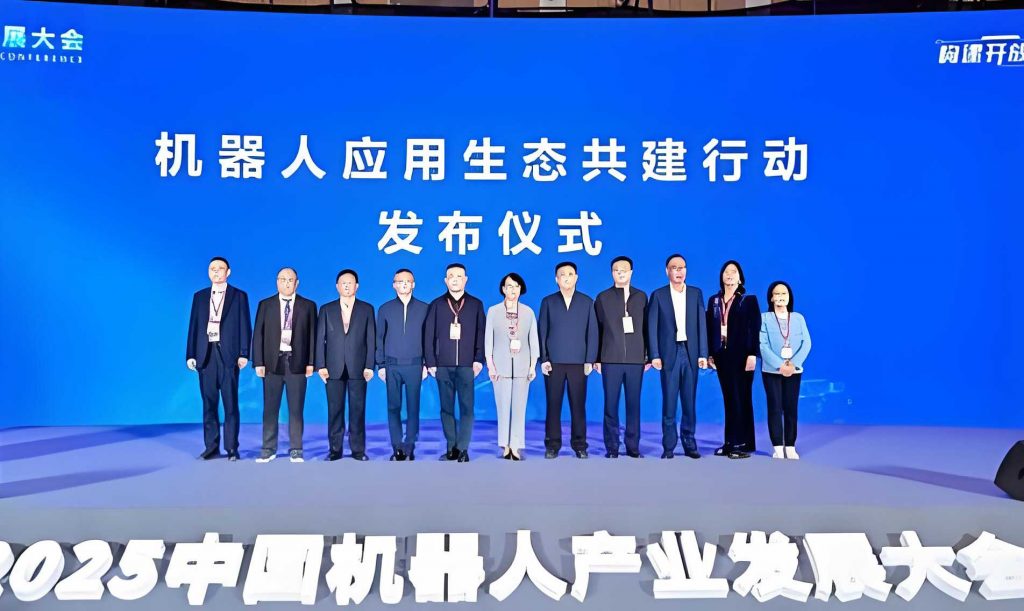
“The attributes of robots in the past were more reflected in their equipment nature. They could be described as machines with a high degree of automation, lacking a ‘heart’ and ‘brain,’ representing the embodiment of strength, such as palletizing robots,” stated Qu Daokui. “Now, the development is increasingly geared towards intelligence and smart capabilities.” This paradigm shift suggests that traditional components like reducers and servo motors, long considered the heart of robotic systems, may cede their position as the definitive core. The new frontier, and the future core, lies in sophisticated perception systems. “In this regard,” Qu emphasized, “China needs to plan its layout early.”
This strategic insight underscores a broader trend where the China robot sector is being compelled to innovate beyond hardware to integrate advanced software and sensory capabilities. The integration of perception technologies—enabling robots to see, hear, feel, and adapt—is becoming the critical differentiator in a competitive global market.
The Imperative for Advanced Perception Systems
The central thesis advanced by industry leaders like Qu Daokui is that future robotics will be defined by their ability to operate in unstructured, dynamic environments. This requires a move away from deterministic, pre-programmed motions to adaptive, sensor-driven behaviors. The challenge for the China robot industry, and indeed for all major robotics hubs, is to master and integrate these complex systems.
- Multi-Modal Sensory Integration: The future lies in combining data from vision systems (2D/3D cameras, LiDAR), tactile sensors (force/torque, tactile skins), auditory systems, and even olfactory sensors for specific applications. Fusing this data into a coherent, real-time understanding of the environment is the key technical hurdle.
- Processing and Intelligence: Raw sensor data is useless without the computational architecture to process it. This demands advancements in edge computing, machine learning algorithms, and AI models that can run efficiently on robotic platforms to enable immediate decision-making.
- Adaptive Control: The actuator systems (the traditional “brawn”) must now be governed by controllers that can dynamically adjust to sensory feedback. This closes the loop between perception and action, allowing for delicate manipulation, safe human-robot collaboration, and navigation in cluttered spaces.
Qu Daokui specifically highlighted this as the new课题: “Incorporating technologies for sound, vision, smell, and touch perception systems into future robots, enhancing their adaptability in non-structured environments, and forming a complete system from the data acquired by sensors—this is the new challenge facing the development of the future robotics industry.” This call to action is a clear roadmap for R&D priorities within the China robot ecosystem.
A Case in Point: Flexibility Through Mechanical Ingenuity
The principles of adaptability and smart system design are not exclusive to humanoid or mobile robots. They are equally vital in specialized industrial automation, a sector where the China robot and machinery industry has deep expertise. An illustrative example can be found in the redesign of a critical component for cigarette packaging machinery—the flexible stamping device for trademarks.
Traditional designs for applying batch codes and logos (steel stamps) onto packaging often coupled the stamping mechanism directly with the drive wheels that transport the material. This created rigidity: any change in the stamp’s required position, orientation, or content necessitated a complete mechanical recalibration or part changeover, leading to significant machine downtime during product changeovers.
The innovative solution, as detailed in engineering publications, was a modular, “flexible” design philosophy that conceptually aligns with the broader shift towards smarter systems. The key innovation was the decoupling of functions:
- Separation of Modules: The transport function (performed by left and right扇形轮盘) was mechanically separated from the stamping function.
- Creation of an Independent Stamping Module: This module, comprising an eccentric sleeve, stamp holder, stamp seat, and the alphanumeric stamp characters, was mounted independently on the main drive shaft.
- Designed for Rapid Adjustment: The module allowed for easy, tool-free adjustments:
- Axial Position (Left/Right): Adjusted via set screws on the eccentric sleeve.
- Circumferential Position: Adjusted by rotating the entire stamp holder.
- Stamp Orientation (Forward/Reverse): Changed by reversing the mounting direction of the eccentric sleeve.
- Stamp Content: Changed by simply replacing the individual character inserts.
- Stamp Impressure Depth: Controlled by adjusting the eccentric sleeve’s offset.
This mechanical “flexibility” effectively granted the machine a new form of “perception” and “adaptability”—not through sensors, but through a mechanical architecture designed for variability. It solved a very concrete industrial bottleneck by applying a systems-thinking approach that prioritizes rapid reconfiguration and operational agility. While not an AI-driven robot, this case exemplifies the kind of innovative, flexibility-focused engineering that underpins the broader evolution of the China robot and industrial automation sector towards more adaptive systems.
The Broader Landscape for China Robot Industry
The transition highlighted by Qu Daokui is occurring within a specific and dynamic context for the China robot industry. The sector has experienced tremendous growth, largely fueled by manufacturing automation, but now stands at an inflection point.
The following table outlines key focus areas and challenges in this evolution:
| Traditional Strength Area | Emerging Critical Focus | Implication for China Robot Development |
|---|---|---|
| High-volume manufacturing of robotic hardware. | Development of proprietary core perception sensors and software. | Moving up the value chain from assembly and integration to core technology innovation. |
| Cost-effective solutions for structured tasks (welding, palletizing). | Creating value in unstructured applications (logistics in dynamic warehouses, complex assembly, service robotics). | Addressing higher-margin market segments that demand advanced intelligence. |
| Integration of imported core components (e.g., high-precision reducers, servos). | Building a complete domestic ecosystem for smart robotics, including AI chips and algorithms. | Enhancing supply chain security and technological sovereignty. |
| Focus on industrial automation equipment. | Expanding into collaborative robots (cobots), mobile robots (AMRs), and specialized service robots. | Diversifying the product portfolio and tapping into new, fast-growing industries. |
The emphasis on perception systems is, therefore, a strategic necessity. It is the gateway to these new markets and higher-value applications. A China robot equipped with world-class perception can navigate a busy hospital corridor, sort irregular parcels, or assist in delicate surgical procedures—tasks far beyond the reach of traditional, “blind” automated arms.
Global Context and Competitive Dynamics
This shift is a global phenomenon. Leading international robotics corporations and research institutions are heavily investing in computer vision, tactile sensing, and machine learning. The race is on to create robots that are not just tools, but cooperative partners capable of understanding and reacting to their surroundings.
For the China robot industry, the mandate to “plan its layout early” in perception technology is crucial for maintaining and advancing its competitive position. Success in this endeavor would mean:
- Reducing Dependency: While progress has been made in domestic production of gears and motors, advanced perception sensors and the AI software stack have remained areas with significant foreign lead. Breaking through here is critical.
- Capturing New Markets: The domestic market in China for smart logistics, smart cities, and personalized services is vast. A capable domestic China robot industry, proficient in perception-driven solutions, is best positioned to serve these localized, complex needs.
- Setting International Standards: Early and significant contributions to perception technology could allow Chinese firms and consortia to influence global standards and architectural norms for next-generation robotics.
The journey from being a master of robotic “brawn” to a leader in robotic “brains” is complex. It requires deep collaboration across disciplines—mechanical engineering, electronics, computer science, and materials science. It demands sustained investment in fundamental research and a talent pipeline skilled in AI and systems integration.
Future Trajectory and Conclusion
The commentary from the China Robotics Industry Promotion Conference serves as a definitive marker of industry consensus. The future of robotics, and by extension the future of the China robot sector, is inextricably linked to the mastery of perception and intelligence. The “core components” of tomorrow are not merely physical actuators but the integrated systems that allow a machine to comprehend its world.
The practical example of the flexible stamping device, while mechanically focused, is a metaphor for this larger transition. It demonstrates the tangible benefits of designing for adaptability and reconfigurability—principles that are absolutely foundational for intelligent robots. As these principles are scaled up and merged with digital sensing and AI, the potential transforms.
Looking ahead, the trajectory for the China robot industry will likely involve:
- Hybrid Innovation: Leveraging existing strengths in manufacturing and system integration while aggressively layering on advanced perception and AI capabilities.
- Scenario-Driven Development: Focusing R&D on solving specific, high-value problems in key verticals like healthcare, agriculture, and logistics, where perception is the primary barrier.
- Ecosystem Building: Fostering stronger links between academic AI research, sensor hardware startups, and established robotics manufacturers to accelerate the innovation cycle.
In conclusion, the evolution of the China robot industry from a focus on automation equipment to intelligent systems represents one of the most significant industrial transformations of the decade. The challenge of perception, as clearly outlined by industry leaders, is the central battleground. Addressing this challenge requires more than incremental improvement; it demands a reimagining of the robot as an interactive, aware entity. The nation’s ability to “plan its layout early” and execute on this vision will fundamentally determine its role in the next era of global robotics, where success is measured not in kilograms lifted or cycles per minute, but in understanding, adaptability, and intelligent collaboration.