
In a significant development highlighting technological progress and regional economic strategies, two major reports were recently released, shedding light on the robust growth of China’s robotics sector and the critical role of innovation ecosystems in fostering synergy within the Beijing-Tianjin-Hebei urban cluster. These insights underscore a transformative phase where intelligent machines are set to revolutionize various industries, supported by coordinated regional policies.
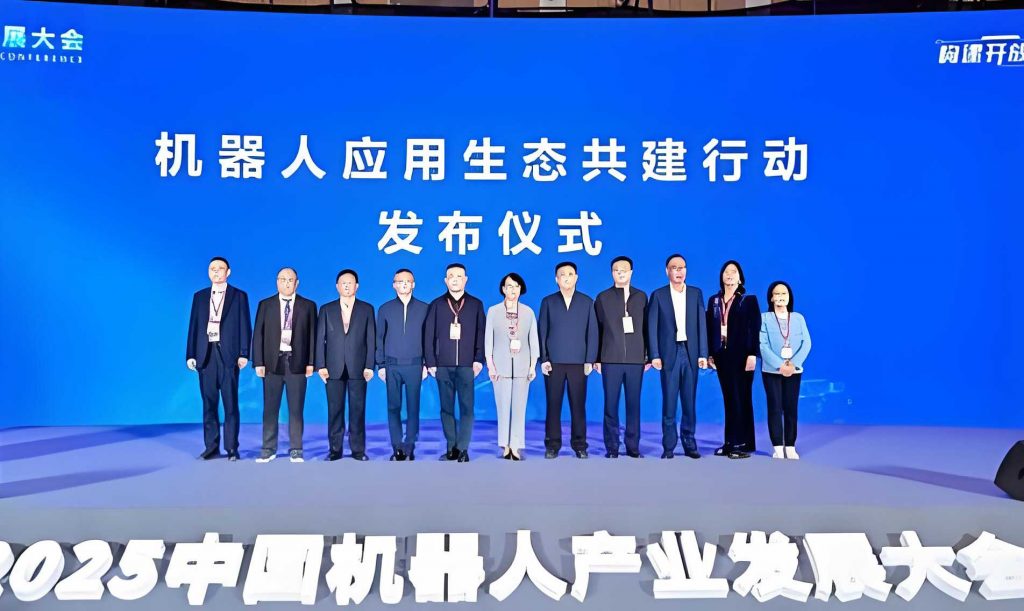
The “China Robot Technology and Industry Development Report (2023)” was unveiled on August 17 at the 2023 World Robot Conference. Concurrently, the “Beijing-Tianjin-Hebei Blue Book: Beijing-Tianjin-Hebei Development Report (2023)” was published on August 20 by Capital University of Economics and Business and Social Sciences Academic Press. Together, these documents paint a comprehensive picture of how China’s robot industry is expanding rapidly while emphasizing the need for integrated innovation networks to sustain this momentum, particularly in key regions like Beijing, Tianjin, and Hebei.
1. China’s Robot Industry Enters a New Era of Opportunities
According to the report on China robot technology, the current wave of scientific and industrial revolution is deepening, propelling the robotics sector into a period of密集活跃的技术创新 (intensive innovation) and extensive application exploration. The convergence of robotics with information technology, biotechnology, and materials science is fostering a deep integration of humans, machines, and objects. This synergy is paving the way for an intelligent era where smart robots will lead transformations across countless industries, including agriculture, industrial operations, healthcare, daily services, and national defense. Essentially, every field is on the brink of a new stage where robots serve as a crucial支撑 (key支撑).
The China robot market benefits from vast application potential, with the “Robot Plus” initiative being steadily implemented. This has accelerated the expansion of robot applications into diverse sectors, driving digital transformation and intelligent upgrades. The following areas exemplify this trend:
- New Energy Vehicles: Robots are increasingly used in charging and maintenance processes, enhancing efficiency and safety in this rapidly growing industry.
- Medical Surgery: Robotic-assisted surgical systems have significantly improved operational capabilities, allowing for more precise and less invasive procedures.
- Power Inspection: Robots are being rapidly deployed throughout the smart grid lifecycle, from monitoring to maintenance, ensuring reliability and reducing human risk.
- Photovoltaic Components: In solar power stations, robots are unlocking value in运维 (operation and maintenance)环节, boosting productivity and longevity of installations.
- Logistics and Warehousing: Robotic clusters are automating warehouse systems, streamlining storage, retrieval, and distribution tasks.
- Outdoor Delivery: Unmanned delivery vehicles have achieved safe operations in designated areas, revolutionizing last-mile logistics.
- Fire Rescue: Robotic functions are upgrading toward intelligent emergency response, aiding in hazardous environments and saving lives.
- Commercial Services: Cloud platforms are大幅提升 (significantly enhancing) the quality of robot services, from customer assistance to data management.
This widespread adoption underscores how China’s robot industry is not just growing but becoming integral to modernizing the economy.
2. Geographic Distribution of China’s Robot Enterprises
The report provides a detailed analysis of the distribution of leading robot enterprises in China. National-level专精特新 “小巨人” (specialized, refined, characteristic, and innovative “little giant”) firms and listed companies in the robotics field are predominantly clustered in three major regions: the Beijing-Tianjin-Hebei area, the Yangtze River Delta, and the Pearl River Delta. These hubs have given rise to industrial clusters represented by cities such as Beijing, Shenzhen, Shanghai, Dongguan, Hangzhou, Tianjin, Suzhou, Foshan, Guangzhou, and Qingdao.
Under the leadership of high-quality local enterprises, these clusters have nurtured a batch of emerging companies with strong competitiveness in niche segments. Notably, Beijing, Shenzhen, and Shanghai possess the most robust robot industries, while Dongguan, Hangzhou, Tianjin, Suzhou, and Foshan are seeing their robotics sectors gradually expand and mature. Meanwhile, Guangzhou and Qingdao exhibit considerable late-development potential, indicating a dynamic and evolving landscape for China’s robot industry.
To illustrate the concentration of activity, consider the following conceptual representation of key clusters (note: based on report descriptions, not虚构数据):
| Region | Representative Cities | Industry Status |
|---|---|---|
| Beijing-Tianjin-Hebei | Beijing, Tianjin | Most雄厚 (robust), with innovation leadership |
| Yangtze River Delta | Shanghai, Suzhou, Hangzhou | Highly developed, with strong enterprise presence |
| Pearl River Delta | Shenzhen, Dongguan, Foshan, Guangzhou | Rapid growth and manufacturing prowess |
| Other Emerging Hubs | Qingdao | Showing后发潜力 (late-mover potential) |
This geographic spread highlights how China’s robot industry is leveraging regional strengths to foster innovation and production.
3. Future Trends and Technological Drivers for China’s Robot Development
The report emphasizes that common and cutting-edge technologies in robotics are advancing rapidly. Disciplines such as electronics, mechanics, and materials science are互相促进 (mutually promoting) each other through融合创新 (integrated innovation). The future of China’s robot industry can be summarized with keywords like fusion innovation, high-end development, intelligence, and ecosystem构建 (building). Key展望 (prospects) include:
- Accelerated Breakthroughs in Fusion Innovation: New technologies will continue to merge, leading to more sophisticated and versatile robots.
- Continuous Expansion of Application Scenarios: Robots will penetrate even more industries, from traditional manufacturing to新兴领域 (emerging fields).
- Large Models as the Robot’s Intelligent “Brain”: AI models will enhance robotic cognition and decision-making, making them more autonomous and adaptive.
- Robots Driving Industry Digital Transformation: As key enablers, robots will support businesses in transitioning to digital and智能 (smart) operations.
- Accelerated Coexistence and Integration of Robot Ecosystems: Collaborative networks among enterprises, research institutions, and governments will strengthen, fostering a holistic development environment for China’s robot sector.
These trends indicate that the China robot industry is poised for sustained growth, driven by technological convergence and broad-based adoption.
4. Challenges and Strategies in the Beijing-Tianjin-Hebei Region
Turning to regional dynamics, the Beijing-Tianjin-Hebei Blue皮书 (Blue Book) points out that the area still faces pressing issues, such as insufficient对接融合 (对接融合) between regional industrial chains and innovation chains, as well as limited产业辐射带动能力 (industrial辐射带动能力). In response, the蓝皮书 (Blue Book) highlights the importance of innovation clusters—critical organizational forms within regional innovation ecosystems—as key载体 (carriers) for achieving collaborative innovation in the Beijing-Tianjin-Hebei urban群 (cluster).
The report advocates for a dual approach: using innovation to “grow the pie” and coordination to “share the pie” effectively. By leveraging their respective innovation strengths, optimizing分工布局 (division of labor and layout), and fostering synergistic development, Beijing, Tianjin, and Hebei can enhance regional innovation capabilities. This is particularly relevant for the China robot industry, as many top enterprises are based in this region, and their success can spur wider economic benefits.
5. Cultivating Secondary Innovation Centers in the Beijing-Tianjin-Hebei Network
The Blue Book offers specific recommendations to bolster the innovation network. It suggests further cultivating secondary innovation centers within the Beijing-Tianjin-Hebei framework. The goal is to create a multi-hub structure that develops multiple innovation growth poles, forming a layered regional innovation network with Beijing and Tianjin at the core, and cities like Shijiazhuang and Baoding as secondary centers. This multi-center approach aims to释放创新辐射力 (release innovative辐射力), helping peripheral cities in the network提升创新能力 (enhance innovation capabilities).
Two key strategies are proposed:
- First, deepen innovation cooperation between Beijing, Tianjin, and secondary centers like Shijiazhuang and Baoding. Increase innovation investment in these cities to stimulate their动力与活力 (动力与活力) as network hubs.
- Second, enhance the ability of Shijiazhuang and Baoding to identify and transmit innovative knowledge and technologies. This will allow them to serve as effective抓手 (抓手) for other cities in Hebei, guiding the formation of紧密的创新互动联系 (tight innovation互动联系) among peripheral city nodes and between innovation sub-clusters.
By implementing these measures, the Beijing-Tianjin-Hebei region can strengthen its innovation ecosystem, which in turn supports the growth of high-tech sectors like the China robot industry. The integration of robotics advancements with regional policy efforts creates a virtuous cycle of development.
6. Synergy Between Robotics Growth and Regional Innovation: A Path Forward for China
The concurrent release of these reports underscores a strategic alignment between national technological advancement and regional economic planning. The China robot industry is not only expanding in terms of technology and applications but also benefiting from and contributing to coordinated innovation efforts in key geographic areas. As robots become more prevalent in sectors like新能源汽车 (new energy vehicles),医疗手术 (medical surgery), and电力巡检 (power inspection), their success relies on robust supply chains, talent pools, and research collaborations—all of which are enhanced through initiatives like those outlined in the Beijing-Tianjin-Hebei Blue Book.
Looking ahead, the fusion of robotics with AI, big data, and other emerging technologies will likely accelerate, further solidifying China’s position in the global robotics landscape. The emphasis on innovation clusters, particularly in regions like Beijing-Tianjin-Hebei, ensures that growth is not isolated but spread across interconnected hubs, fostering resilience and competitiveness. This holistic approach is essential for sustaining the momentum of the China robot industry while addressing regional disparities and promoting inclusive development.
In summary, the insights from these reports reveal a dynamic trajectory for China’s robotics sector, characterized by rapid technological integration, expanding applications, and strategic regional synergies. As the world moves toward an智能时代 (intelligent era), the developments in China’s robot industry and its supporting innovation networks will play a pivotal role in shaping the future of global technology and economy. Stakeholders from government, industry, and academia are encouraged to leverage these findings to drive further progress, ensuring that the benefits of robotic innovation are widely shared and effectively utilized across all sectors and regions.