
As I observe the global landscape of scientific and technological revolution, the convergence of artificial intelligence and advanced manufacturing has given rise to a pivotal frontier: humanoid robotics. These China robots, embodying the fusion of perception, cognition, and physical action, are rapidly transitioning from laboratory marvels to strategic industrial assets. They represent not merely a technological achievement but a critical benchmark for national innovation capability and future industrial competitiveness. In this transformative era, China has embarked on a determined path, aiming to shift from being a technology follower to an ecosystem leader. This journey is defined by a triad of interconnected processes: achieving technological autonomy, driving application scenarization, and fostering ecosystem integration. The development of China robots is a microcosm of the nation’s broader ambition to cultivate “new quality productive forces” and transition from a manufacturing powerhouse to an intelligent manufacturing leader.
The core technological architecture of humanoid robots is a symphony of multidisciplinary engineering. We can break it down into four synergistic systems:
| System | Key Components | Technical Focus for China Robots |
|---|---|---|
| Ontology & Structure | High-DOF joints, lightweight materials (CFRP, alloys), modular design. | Optimizing power-to-weight ratio, structural rigidity, and cost-effective modularity. |
| Perception & Decision | Multi-modal sensors (vision, force/torque, audio), AI algorithms (LLMs, GNNs). | Developing robust sensor fusion and context-aware decision-making under real-world conditions. |
| Control | Servo drivers, harmonic drives, kinematics/dynamics algorithms, IMU feedback. | Mastering dynamic balance control, whole-body motion coordination, and precise force control. |
| Human-Robot Interaction (HRI) | Natural Language Processing, emotion recognition, gesture mimicry. | Creating natural, trustworthy, and culturally attuned interactive experiences. |
The progress in these areas for China robots can be quantified through a composite Technology Readiness Index (TRI). We can model it as a weighted function of subsystem maturity:
$$ TRI_{China} = \sum_{i=1}^{n} w_i \cdot M_i $$
Where \( M_i \) represents the maturity score (0-1) of subsystem \( i \) (e.g., actuation, perception), and \( w_i \) is its strategic weight. Currently, the index shows promising growth in system integration and perception, but highlights critical gaps in core components.
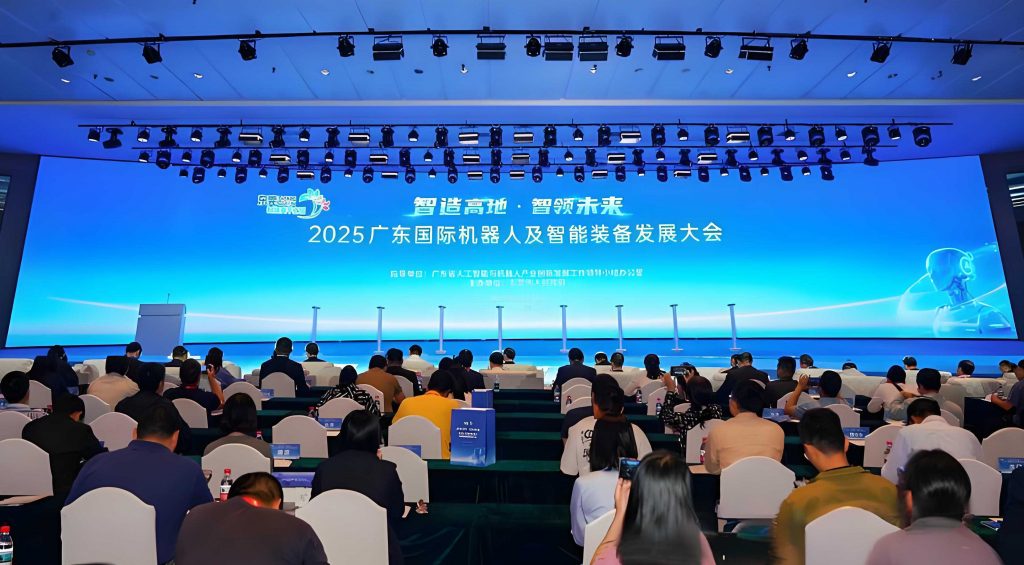
The global arena presents diverse models. The U.S. leads in high-performance dynamics and system integration (e.g., Boston Dynamics), Japan excels in service-oriented and emotionally intelligent robots, while Europe focuses on medical and safe collaborative machines. For China robots, the strategic imperative is clear: to forge a distinctive path marked by technological self-reliance. While significant strides have been made—such as improvements in multi-modal perception, proprietary control algorithms, and system integration—structural bottlenecks remain. The most pressing challenges include dependency on imported high-precision components (e.g., ultra-precision reducers, high-end servo systems), a relative scarcity of foundational original innovation, and a nascent industry standard framework. This creates a “innovation paradox” where rapid application development outpaces the maturity of the underlying core technology stack.
To overcome this, a tripartite mechanism for technological autonomy is essential for the future of China robots:
$$ Autonomy = f(National Strategy, Corporate R&D, Academic Research) $$
1. National Strategic Guidance: This involves top-down planning through major S&T projects, funding for foundational research, and creating a long-term innovation roadmap.
2. Corporate-Led Industrial攻关: Enterprises must drive the “R&D-iteration-application” cycle, focusing on proprietary IP creation and platform-based development to reduce costs.
3. Academic & Research Underpinning: Universities and institutes provide the bedrock for theoretical breakthroughs in areas like bionics, advanced control theory, and AI ethics.
The true test of China robots lies not in the lab, but in their utility across diverse real-world scenarios. Application scenarization is the critical bridge between technological capability and commercial/social value. The evolution follows a structured, three-tiered logic:
| Scenario Tier | Evolutionary Path | Key Requirements for China Robots |
|---|---|---|
| Industrial | From “Human Replacement” to “Human-Robot Collaboration”. | High precision, safety in shared spaces, adaptability to unstructured tasks (e.g., complex assembly). |
| Service | From “Functional Support” to “Contextual Interaction”. | Natural HRI, emotional intelligence, task personalization (e.g., elderly care, education). |
| Public & Specialized | From “Auxiliary Role” to “Mission-Critical Entity”. | Extreme environment robustness, high reliability, autonomous decision-making (e.g., emergency response, security). |
We can model the economic viability of a robot application scenario using a simplified potential index:
$$ P_{scenario} = \frac{(Market Size \times Task Fit) \times Policy Support}{Deployment Cost \times Technological Risk} $$
Where Task Fit measures how well a robot’s capabilities match the scenario’s needs. Currently, structured industrial logistics and specific service roles show high near-term potential for China robots. This scenarization drives product evolution from hardware-defined to software-defined platforms, enabling one hardware base to serve multiple uses through different algorithm packages. The business model consequently innovates, shifting from a one-time sale to a hybrid of “Robot-as-a-Service” (RaaS) subscriptions, data-driven value-added services, and platform-centric ecosystem revenue.
An individual robot is merely a node; its transformative power is unleashed within a robust ecosystem. The industrial ecosystem for China robots is a complex, multi-layered construct. Its systematic development is non-negotiable for global leadership.
| Ecosystem Layer | Core Function | Current State & Focus for China Robots |
|---|---|---|
| Upstream (Supply) | Core components, advanced materials. | Accelerating国产化 of reducers, servos, chips; developing lightweight, high-strength materials. |
| Midstream (Integration) | 整机制造, software platforms, system integration. | Building open, modular platforms; mastering full-stack integration from hardware to AI algorithms. |
| Downstream (Application) | Scenario deployment, operational services. | Creating viable business models and lifecycle management (maintenance, updates, data services). |
| Supporting Systems | Standards, talent, finance, regulations, ethics. | Establishing comprehensive standards; fostering interdisciplinary talent; providing patient capital; formulating ethical guidelines. |
The Chinese approach to building this ecosystem exhibits distinct characteristics. It leverages a “policy guidance + market entity + platform support” organizational model. Spatially, it fosters synergistic regional clusters: the Greater Bay Area as a hardware and manufacturing hub, the Yangtze River Delta focusing on high-end applications and R&D, and the Beijing-Tianjin-Hebei region leading in fundamental AI and algorithm research. Most importantly, the ecosystem thrives on cross-domain integration, where China robots converge with other sectors like healthcare (rehabilitation robots), education (interactive tutors), and cultural tourism (experience guides), creating entirely new value chains.
The institutional underpinnings are vital. For China robots to be trusted and widely adopted, a robust institutional support system must be built in parallel:
$$ Institutional\ Maturity = \int (Standardization + Ethics + Talent + Finance)\ dt $$
This involves: 1) Developing national and international standards for safety, performance, and interoperability; 2) Establishing ethical governance frameworks for privacy, safety, and human-robot relations; 3) Reforming education to produce interdisciplinary talent combining mechanical engineering, AI, and cognitive science; and 4) Creating targeted financial instruments (e.g., venture capital, specialized funds) to de-risk innovation and support scaling.
Looking ahead, the systemic evolution of the China robots industry points toward several dominant trends that will define the next decade:
| Trend Dimension | Evolutionary Leap | Implication for China Robots Strategy |
|---|---|---|
| Cognitive Intelligence | From Rule-Based Execution to Human-Like Cognition. | Integrating multimodal LLMs for true contextual understanding and autonomous task reasoning. |
| Physical Adaptability | From Lab Prototypes to Ruggedized Field Systems. | Investing in novel materials, robust mechanical design, and algorithms for extreme environment operation. |
| Economic Viability | From Costly Prototypes to Scalable Platforms. | Leveraging manufacturing scale, modular design, and supply chain efficiency to drive costs down. |
| Value Creation | From Product Sales to Ecosystem Value Capture. | Monetizing through data, services, and platform effects, not just hardware. |
The strategic policy path to support this leap must be systemic and forward-looking. I believe it should focus on four pillars:
1. Fortify the Foundation: Double down on foundational research in “bottleneck” areas like novel actuators, embodied AI, and bionic control through state-guided “megaprojects” and open innovation platforms.
2. Architect the Ecosystem: Actively shape the industrial chain by nurturing “chain master” enterprises and specialized SMEs, promoting standardized interfaces, and fostering dense regional innovation clusters.
3. Activate Scenario Pull: Launch national demonstration projects in priority areas (e.g., advanced manufacturing, elderly care), using public procurement and regulatory sandboxes to de-risk adoption and generate real-world feedback loops.
4. Perfect Institutional Support: Fast-track the development of a coherent policy framework that seamlessly integrates standards, ethics, capital, and talent cultivation into a unified support system for the industry.
In conclusion, the journey of China robots is a compelling narrative of technological ambition and strategic industrial policy. It transcends mere technical imitation, aiming instead to construct a holistic, self-reinforcing innovation ecosystem. The ultimate goal is a strategic transition: from assembling components to defining architectures, from solving isolated tasks to enabling new socio-economic paradigms, and from participating in global chains to leading them. Success will be measured not just by the sophistication of a single robot, but by the resilience, creativity, and global integration of the entire ecosystem built around it. This path demands persistent investment in core technologies, a keen focus on solving real human and industrial challenges, and the wisdom to develop the ethical and governance frameworks that will ensure these powerful robots serve as harmonious partners in China’s and the world’s future.