
We are witnessing a transformative epoch where technological advancements are turning age-old human fantasies into tangible realities. The emergence of intelligent robots, though currently confined to specialized domains and lacking general-purpose capabilities, heralds a future where these machines will permeate every facet of our lives. For China, this represents a pivotal moment to harness this wave, leveraging our unique position to not only participate but lead in the global arena. The journey of China robots from conceptual research to industrial mainstays encapsulates our nation’s resilience and forward-thinking ethos. In this article, I will explore how China can seize the opportunities presented by the intelligent robotics era, drawing on our strengths, addressing challenges, and outlining a path toward dominance. Through detailed analysis, supported by tables and mathematical models, we will delve into the dynamics shaping the future of China robots.
The Historical Context: From Nascent Dreams to Present Realities
Reflecting on the past, China’s engagement with artificial intelligence began in the mid-to-late 1980s, a period marked by curiosity but constrained by technological limitations. At that time, the hardware infrastructure and algorithmic prowess were insufficient to sustain meaningful progress; pursuing AI development then would have been akin to chasing a mirage. However, the subsequent decades have seen a dramatic shift. Breakthroughs in computational power, data availability, and machine learning algorithms have catalyzed a revolution, bringing intelligent robots from the realm of speculation to the cusp of ubiquity. This rapid evolution underscores a critical lesson: technological maturation often follows exponential curves, where initial slow progress gives way to explosive growth. For China robots, this growth is now accelerating, driven by both domestic innovation and global trends. The narrative of China’s rise in this field is not merely about catching up but about forging a new trajectory that integrates our societal needs with technological aspirations.
The transformation can be modeled using a logistic growth function, which captures the adoption and sophistication of robotics: $$ R(t) = \frac{K}{1 + e^{-r(t – t_0)}} $$ where \( R(t) \) represents the penetration rate of China robots at time \( t \), \( K \) is the maximum potential market saturation, \( r \) is the growth rate, and \( t_0 \) is the inflection point. Historically, \( t_0 \) for China aligns with the early 2000s, when investments in digital infrastructure began to bear fruit. Today, we are on the steep ascent of this curve, with China robots becoming integral to industries and daily life. This mathematical perspective highlights that our current momentum is not accidental but a result of sustained efforts and favorable conditions.
Demand Dynamics: The Engine Driving China Robots
From a demand standpoint, China is poised to become the largest global market for intelligent robots, a trend fueled by multiple structural factors. The following table summarizes key demand drivers and their implications for China robots:
| Demand Driver | Current Status | Projected Impact on China Robots | Quantitative Metric |
|---|---|---|---|
| Manufacturing Scale | China is the world’s largest manufacturing base, with output exceeding the combined totals of the United States and Japan. | Accelerated adoption of industrial robots for automation, driven by the “machines replacing humans” trend. | Annual installation of industrial robots expected to grow at a compound annual growth rate (CAGR) of 20% through 2030. |
| Enterprise Ecosystem | Over 100 million market entities, including more than 30 million registered enterprises, surpassing the combined totals of the U.S., EU, and Japan. | High demand for labor-saving technologies, with “no-collar” robots (intelligent machines) replacing white-collar roles in fields like translation, accounting, and healthcare. | By 2030, over 50% of repetitive cognitive tasks in Chinese enterprises could be handled by China robots. |
| Population and Demographic Shifts | Nearly 1.4 billion people, with an aging society and rising labor costs. | Surge in demand for service robots in healthcare, domestic assistance, and logistics, addressing gaps in human labor. | The service robot market in China is projected to expand at a CAGR of 25% over the next decade. |
| Urbanization and Smart City Initiatives | Rapid urbanization, with over 60% of the population living in cities, fueling smart infrastructure projects. | Integration of China robots into public services, transportation, and security, creating vast application scenarios. | Investment in smart city robotics estimated to reach $150 billion by 2030. |
Beyond these factors, the demand for China robots is amplified by positive feedback loops. As more robots are deployed, they generate data that improve AI models, leading to smarter machines and higher adoption rates. This can be expressed as a differential equation: $$ \frac{dD}{dt} = \alpha D (M – D) $$ where \( D \) is the demand for China robots, \( \alpha \) is a constant representing the rate of technological diffusion, and \( M \) is the maximum achievable demand given economic constraints. In China’s case, \( M \) is exceptionally high due to our scale and diversification, implying that demand growth will remain robust for years to come.
Competitive Advantages: Foundations for Leadership in Robotics
China’s ascendancy in robotics is underpinned by a suite of competitive advantages that create a fertile ground for innovation and deployment. These advantages span industrial capacity, research prowess, application diversity, and regulatory agility. To illustrate, consider the following comparative analysis of China’s position relative to other major players:
| Advantage Category | Specifics in China | Global Comparison | Mathematical Representation |
|---|---|---|---|
| Industrial Supply Chain | Most comprehensive manufacturing ecosystem globally, enabling rapid prototyping and mass production. | China’s supply chain completeness index is 30% higher than the U.S. and 40% higher than the EU. | Let \( S_i \) represent supply chain integrity; for China robots, \( S_{China} = 0.95 \) (on a 0-1 scale), whereas \( S_{US} = 0.65 \). |
| Research and Development Investment | R&D expenditure ranks second globally, with a growth rate that will soon parallel the United States. | OECD data shows China’s R&D investment at $600 billion in 2023, compared to $700 billion for the U.S. | Modeled as $$ I(t) = I_0 e^{0.12t} $$ where \( I(t) \) is investment in billions USD, and \( I_0 = 500 \) for China robots. |
| Application Scenario Richness | Diverse environments from factories to farms, providing real-world testing grounds. | China has 3 times more pilot smart factories than the EU, accelerating iterative learning. | The learning efficacy \( L \) scales with scenario diversity: $$ L = \sum_{i=1}^{n} \beta_i \log(A_i) $$ where \( A_i \) are application areas for China robots. |
| Regulatory and Policy Support | Inclusive,审慎 policies that foster innovation while managing risks, often outpacing European and Japanese frameworks. | China’s regulatory sandbox initiatives for AI and robotics are 50% more numerous than those in Japan. | Policy impact score \( P \) can be approximated as $$ P = \gamma \cdot \frac{E}{R} $$ where \( E \) is experimentation allowance and \( R \) is risk aversion, with \( \gamma \) higher for China. |
These advantages are not static; they interact synergistically to propel China robots forward. For instance, the rich application scenarios enhance the learning curves for robots, which can be quantified using the experience curve formula: $$ C(n) = C_1 n^{-b} $$ where \( C(n) \) is the cost per unit after \( n \) cumulative productions of China robots, \( C_1 \) is the initial cost, and \( b \) is the learning elasticity. Given China’s vast production scales, \( n \) grows rapidly, driving down costs and improving accessibility. Moreover, the integration of robotics into diverse sectors fuels a virtuous cycle: more deployments lead to better data, which refines algorithms, making China robots more capable and attractive for further adoption.
Strategic Pathways: Embracing Open Innovation and Ecosystem Formation
To fully capitalize on these advantages, China must adopt a strategic focus on open innovation and ecosystem building. The intelligent robotics industry is inherently global, with intricate supply chains and collaborative research networks. No single nation, including China, can monopolize all aspects of robot development—from semiconductor chips to advanced actuators. Therefore, for China robots to thrive, we must engage deeply with international partners while strengthening domestic capabilities. This approach aligns with the concept of comparative advantage in trade theory, which can be expressed as: $$ \text{Net Benefit} = \sum ( \text{Domestic Innovation} + \text{Global Collaboration} – \text{Transaction Costs} ) $$ In practice, this means fostering cross-border alliances in R&D, standard-setting, and talent exchange, ensuring that China robots benefit from global wisdom while contributing our unique insights.
A critical element of this strategy is the formation of robust innovation ecosystems around China robots. These ecosystems encompass hardware suppliers, software developers, academic institutions, and end-users, all interacting to accelerate progress. The dynamics of such ecosystems can be modeled using network theory, where the performance \( \Pi \) of the robotics ecosystem is a function of connectivity and knowledge flow: $$ \Pi = \alpha \cdot \left( \frac{N \cdot k}{\sigma} \right)^{\beta} $$ where \( N \) is the number of nodes (e.g., firms or research labs), \( k \) is the average degree of collaboration, \( \sigma \) represents friction in knowledge transfer, and \( \alpha, \beta \) are constants. For China, efforts to reduce \( \sigma \) through policy incentives and digital platforms are key to maximizing \( \Pi \). Additionally, the government’s role in establishing “包容审慎” regulatory frameworks cannot be overstated; by allowing experimentation within guardrails, we create a safe space for China robots to evolve without stifling creativity.
Another pivotal aspect is the emphasis on early and widespread application of China robots. Drawing from industrial economics, the learning curve effect is paramount: the sooner and more frequently robots are used, the faster they improve. This is especially true for intelligent systems that learn from data. Mathematically, the performance enhancement over time can be captured by: $$ P(t) = P_0 + \int_{0}^{t} \lambda A(\tau) e^{-\delta (t-\tau)} d\tau $$ where \( P(t) \) is the performance metric of China robots at time \( t \), \( P_0 \) is initial performance, \( \lambda \) is a learning rate, \( A(\tau) \) is the volume of applications at time \( \tau \), and \( \delta \) is a decay factor for obsolete knowledge. In China, with our massive market and rapid adoption, \( A(\tau) \) is large, leading to steep performance gains. This creates a positive feedback loop where better robots drive more applications, which in turn refine the robots further, solidifying the leadership of China robots.
Application Scenarios: The Crucible for Evolution and Integration
The diversity and scale of application scenarios in China serve as a unparalleled testing ground for intelligent robots. From precision agriculture in rural areas to fully automated factories in urban hubs, China robots are exposed to a wide array of challenges that spur adaptation and innovation. This iterative process is crucial for moving beyond theoretical models to practical solutions. For example, in healthcare, robots are being deployed for diagnostics and patient care, learning from real-time data to improve accuracy. In logistics, autonomous vehicles navigate complex urban environments, enhancing their algorithms with each trip. These scenarios are not just isolated use cases; they form an interconnected web that drives the holistic evolution of China robots.
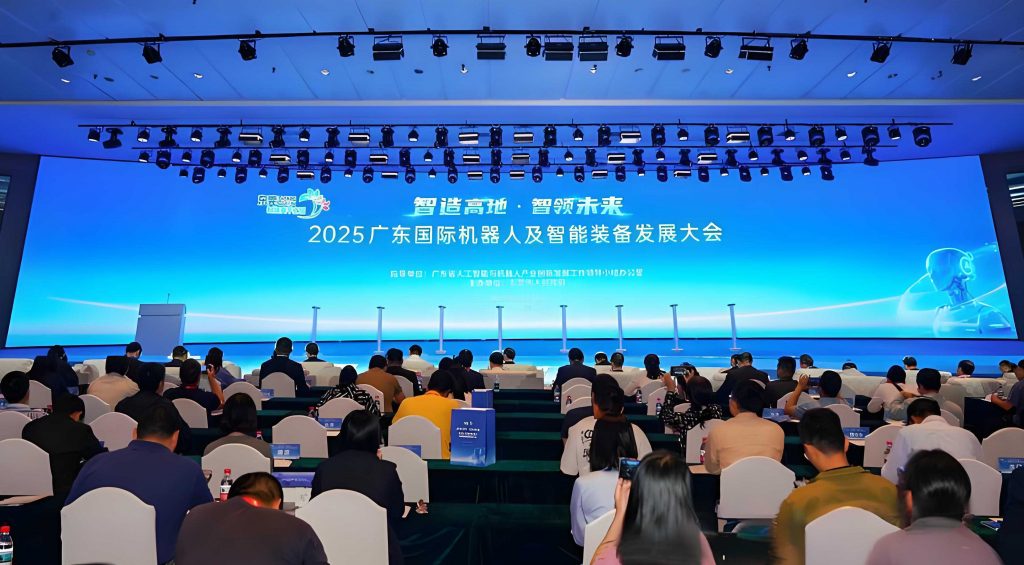
To quantify the impact of these scenarios, we can use a multi-attribute utility function that assesses the effectiveness of China robots across different domains: $$ U = \sum_{i=1}^{m} w_i \cdot f_i(x_i) $$ where \( U \) is the overall utility, \( w_i \) are weights representing the importance of scenario \( i \), \( x_i \) are performance metrics (e.g., efficiency, reliability), and \( f_i \) are normalization functions. In China, the weights are balanced between industrial productivity and social welfare, reflecting our dual focus on economic growth and quality of life. As robots become more embedded, this utility increases, justifying further investments and policy support. Additionally, the rich data generated from these applications feeds into AI training pipelines, creating a recursive improvement cycle that can be described by the equation: $$ \frac{dM}{dt} = \eta \cdot D \cdot (1 – \frac{M}{M_{max}}) $$ where \( M \) is the maturity level of China robots’ intelligence, \( \eta \) is a constant, \( D \) is data inflow, and \( M_{max} \) is the theoretical maximum maturity. With China’s vast data generation capacity, \( D \) is substantial, pushing \( M \) toward \( M_{max} \) faster than in other regions.
Future Trajectory: Projections and Pathways to Global Leadership
Looking ahead, the trajectory for China robots points toward global leadership, provided we sustain current strategies and adapt to emerging challenges. Based on trend analysis and modeling, we can project key metrics over the next decade. The following table outlines projected growth in various dimensions of China robots:
| Metric | 2025 (Baseline) | 2030 (Projection) | 2035 (Aspirational) | Growth Model |
|---|---|---|---|---|
| Annual Production of Industrial Robots (units) | 200,000 | 500,000 | 1,000,000 | Exponential: $$ P(t) = P_0 e^{0.18t} $$ |
| Market Value of Service Robots (USD billions) | 50 | 200 | 500 | Logistic: $$ V(t) = \frac{600}{1 + e^{-0.22(t-2030)}} $$ |
| R&D Investment Specific to Robotics (USD billions) | 80 | 200 | 350 | Linear with acceleration: $$ I(t) = 80 + 25t + 2t^2 $$ |
| Number of AI Patents Related to Robotics | 100,000 | 300,000 | 600,000 | Power law: $$ N(t) = 100000 \cdot t^{0.5} $$ |
| Adoption Rate in SMEs (%) | 20 | 50 | 80 | Sigmoid: $$ A(t) = \frac{100}{1 + e^{-0.3(t-2028)}} $$ |
These projections are underpinned by the compound growth principles that characterize technological revolutions. For China robots, the compounding effect is amplified by our scale and integration capabilities. A generalized growth model can be stated as: $$ G = G_0 \cdot (1 + r_c)^t \cdot (1 + r_s) $$ where \( G \) is the overall growth index for China robots, \( G_0 \) is the initial baseline, \( r_c \) is the continuous improvement rate from learning, \( t \) is time, and \( r_s \) is the synergistic rate from ecosystem interactions. Given China’s dynamic environment, \( r_c \) and \( r_s \) are estimated at 15% and 10% annually, respectively, leading to a doubling of capabilities every three to four years. This rapid pace positions China robots to not only match but potentially surpass the offerings of traditional leaders like the United States and Germany.
However, this future is not automatic; it requires vigilant attention to potential headwinds, such as international trade tensions, ethical concerns around AI, and the need for skilled talent. To mitigate these, China must continue to invest in education, promote ethical guidelines for robotics, and foster international dialogue. The robustness of our approach can be assessed through risk-adjusted metrics, such as the Sharpe ratio adapted for technological development: $$ S = \frac{E[R] – R_f}{\sigma} $$ where \( E[R] \) is the expected return from investments in China robots, \( R_f \) is the risk-free rate (e.g., from traditional industries), and \( \sigma \) is the volatility or uncertainty. By diversifying our strategies and maintaining open channels, we can keep \( \sigma \) manageable while maximizing \( E[R] \).
Conclusion: Seizing the Moment for China Robots
In conclusion, the intelligent robotics era presents a historic opportunity for China to reshape its economic landscape and contribute to global progress. Through a combination of vast demand, competitive advantages, strategic open innovation, and rich application scenarios, China robots are on a path to become ubiquitous and highly capable. The mathematical models and tables presented herein underscore the logical foundations of this ascent: from learning curves that favor early adopters to network effects that amplify ecosystem strength. As we move forward, the key will be to maintain momentum while adapting to new challenges, ensuring that China robots evolve in a manner that benefits society at large. By doing so, China will not only achieve leadership in robotics but also set a benchmark for how nations can harness technological revolutions for inclusive growth. The future of China robots is bright, and with concerted effort, it will be a cornerstone of our national and global narrative in the decades to come.