
In a landmark announcement at the 2025 GITEX Global technology exhibition in the United Arab Emirates, China Telecom officially launched its innovative Robot-as-a-Service (RaaS) product, marking a significant stride in the commercialization of humanoid robots. This groundbreaking service leverages the massive computing power of Tianyi Cloud, advanced big data analytics, and sophisticated artificial intelligence algorithms to provide comprehensive support for various offline robot terminals. Under the empowerment of AI large models, China Telecom is deepening its expertise in core robotics technologies, driving widespread adoption across industries and enhancing public welfare.
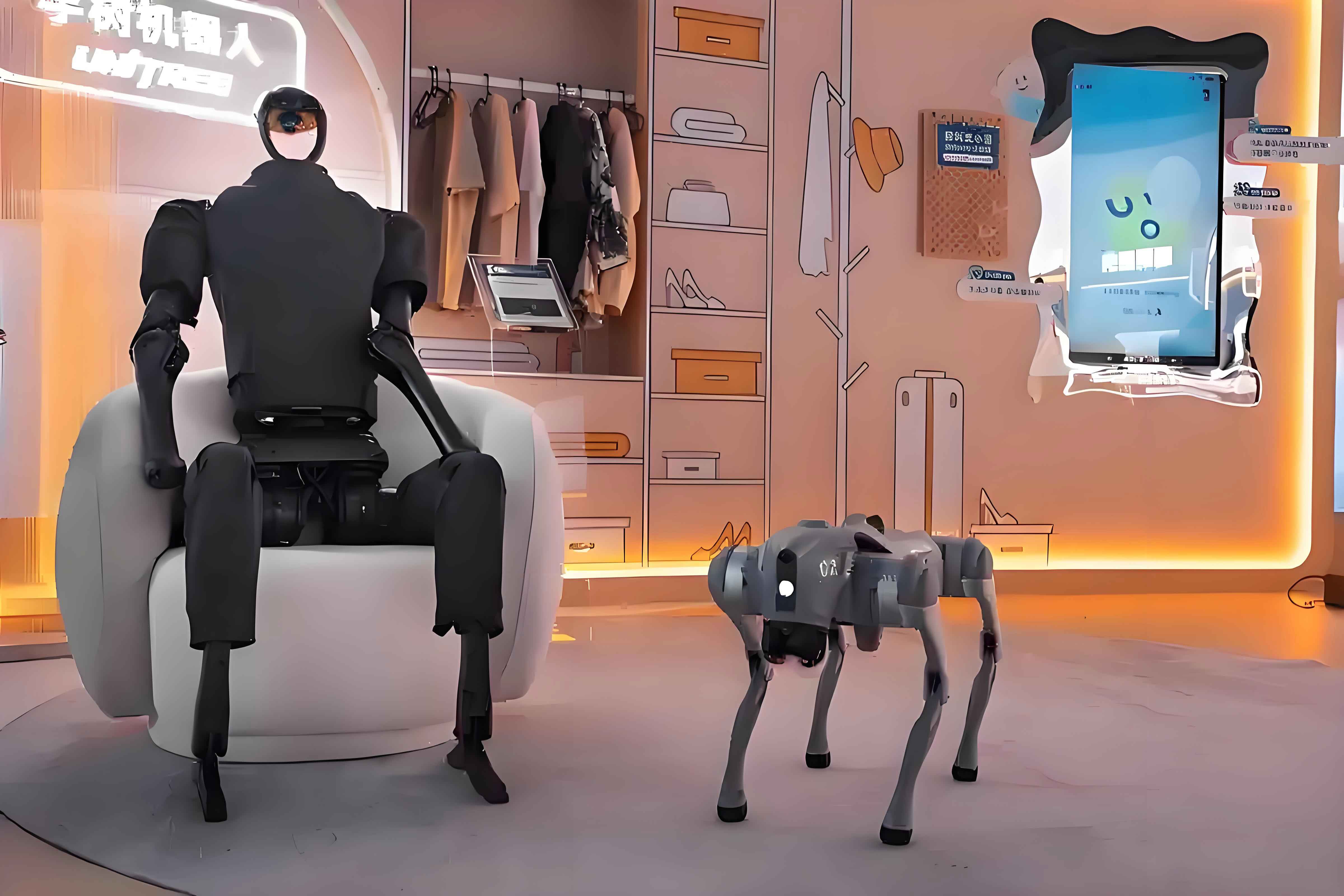
The global landscape for humanoid robots is rapidly evolving, with the “14th Five-Year Plan” period in China presenting unprecedented opportunities for leapfrog development in the humanoid robot industry. Technological breakthroughs and robust policy support are jointly propelling the sector from exploratory stages toward maturity. According to the “2025 Humanoid Robots and Embodied Intelligence Industry Research Report,” the global embodied intelligence market is experiencing explosive growth, with projections indicating a market size of RMB 19.525 billion by 2025. Notably, China demonstrates strong growth potential in this domain, accounting for nearly half of the global market share and emerging as a pivotal growth engine for the worldwide humanoid robot industry. Today, bolstered by AI large models, humanoid robots are accelerating their integration into diverse scenarios such as factories, hospitals, and households, igniting a new wave of intelligent transformation in physical industries.
-
The Dawn of Large-Scale Commercialization for Humanoid Robots
The humanoid robot industry is entering a critical window for规模化商用, characterized by rapid advancements in AI, sensor technologies, and mechanical engineering. This phase is marked by increased investment from both public and private sectors, aiming to overcome previous limitations in mobility, dexterity, and cognitive capabilities. Humanoid robots are no longer confined to research labs; they are progressively deployed in real-world environments, addressing labor shortages, enhancing productivity, and improving quality of life. The convergence of 5G connectivity, edge computing, and cloud-based AI services has created an ideal ecosystem for the scalable deployment of humanoid robots. China’s strategic focus on innovation-driven development has positioned it as a frontrunner in this race, with companies like China Telecom pioneering integrated solutions that bridge the gap between cutting-edge technology and practical applications.
Market analysts highlight that the demand for humanoid robots is fueled by their versatility in mimicking human actions and interactions, making them suitable for complex tasks across multiple sectors. In manufacturing, humanoid robots can perform assembly, quality inspection, and logistics with high precision; in healthcare, they assist in patient care and surgical procedures; in domestic settings, they offer companionship and household management. The projected market growth underscores the increasing confidence in the commercial viability of humanoid robots, with China’s substantial contribution reflecting its robust manufacturing base and technological prowess. As these humanoid robots become more affordable and efficient, their adoption is expected to surge, transforming traditional operational models and setting new benchmarks for automation.
-
China Telecom’s Technological Innovations Driving Humanoid Robot Advancements
As the humanoid robot industry approaches large-scale commercialization, China Telecom is playing a crucial role through comprehensive services encompassing technological breakthroughs, scenario implementation, and ecosystem collaboration. In the realm of artificial intelligence, the company’s self-developed Xingchen large model serves as a powerful intelligent core, achieving top-tier rankings in international authoritative evaluations. This model enables household desktop AI robots to transition from passive response to proactive service, enhancing user experience through predictive assistance and personalized interactions. For instance, in smart home environments, humanoid robots equipped with Xingchen can learn user preferences, anticipate needs, and execute tasks autonomously, thereby reducing human intervention and increasing efficiency.
On the network technology front, 5G-A networks establish low-latency, high-reliability communication channels that are essential for the real-time operation of humanoid robots. These networks ensure seamless data transmission between robots and cloud platforms, enabling swift decision-making and coordination in dynamic environments. Additionally, China Telecom’s proposed “Adversarial Motion and Behavior Imitation (ALMI)” framework lays the groundwork for applications in complex scenarios, such as navigating crowded spaces or performing delicate manipulations. This framework leverages advanced algorithms to simulate human-like movements and behaviors, improving the adaptability and safety of humanoid robots in unstructured settings.
Ecosystem collaboration further unleashes industrial vitality. China Telecom’s partnership with Huawei, exemplified by the joint release of the “Mobile AI” white paper, introduces key solutions like the communication-computation integration architecture. This architecture addresses the stringent requirements of intelligent robots for high bandwidth and low latency, facilitating efficient resource allocation and task execution. Through such alliances, China Telecom is fostering an open innovation environment where stakeholders from academia, industry, and government can co-create standards, share resources, and accelerate the development of humanoid robots. These efforts are instrumental in building a sustainable ecosystem that supports the continuous evolution and deployment of humanoid robots across various domains.
-
Expanding Applications: Humanoid Robots in Industrial, Medical, and Household Scenarios
In the wave of large-scale commercialization, China Telecom is persistently promoting the extension of humanoid robots from industrial endpoints to民生applications, ensuring that the benefits of automation reach everyday life. In the industrial sector, the collaboration with ZTE in establishing the Nanjing Binjiang Smart Factory serves as a benchmark for intelligent manufacturing. The facility has deployed 24 categories of 5G+ industrial integration innovations, including the “Inspection, Diagnosis, Inquiry, and Treatment” robot. This humanoid robot is equipped with robotic arms, high-definition cameras, and remote conferencing systems, enabling real-time equipment status inspections, precise anomaly identification, and early warnings. Integrated with 5G cloud-based PLCs, it coordinates equipment operations, reducing production line adjustment cycles by over 20%. The implementation of such humanoid robots not only enhances operational efficiency but also minimizes downtime and maintenance costs, contributing to the overall resilience of manufacturing ecosystems.
In medical scenarios, humanoid robots are协同with AI to alleviate resource pressures. Assisted by China Telecom, the Kashi Prefecture Hospital of Traditional Chinese Medicine has implemented an intelligent service system integrated with the DeepSeek V3 medical large model. Paired with service robots deployed in the hospital, this system performs fundamental tasks such as medicine delivery and patient guidance. These humanoid robots can navigate hospital corridors, interact with patients through natural language processing, and provide timely assistance to healthcare professionals. By handling routine duties, they free up medical staff to focus on complex cases, thereby improving patient care quality and reducing wait times. The integration of humanoid robots in healthcare settings is particularly vital in remote or underserved areas, where they can bridge gaps in medical resources and ensure equitable access to services.
In the household domain, China Telecom’s “Beautiful Home” robot family has formed a diverse product matrix. The child-companion desktop robot, for example, actively asks questions to stimulate thinking and generates growth logs synchronized to Tianyi Cloud Drive, allowing parents to monitor their children’s development remotely. Wheeled companion robots provide daily care for the elderly, assisting with mobility, medication reminders, and emergency alerts. Meanwhile, wheel-arm robots can interconnect with home appliances to achieve scenario-based control, such as adjusting lighting, temperature, and security systems. These humanoid robots are designed to blend seamlessly into home environments, offering personalized support that enhances safety, convenience, and emotional well-being. From factory floors to hospital wards and ordinary households, China Telecom is breaking application boundaries through technological innovation, allowing intelligent services to permeate every corner of daily life.
-
Global Trends and Future Prospects for Humanoid Robots
The rapid expansion of the humanoid robot market is intertwined with global trends in automation, aging populations, and digital transformation. Countries worldwide are investing heavily in robotics research and development, with initiatives like the European Union’s Horizon Europe and Japan’s Robot Strategy aiming to strengthen competitiveness in this field. Humanoid robots are poised to address societal challenges such as labor shortages in aging societies, where they can assist in caregiving and rehabilitation. In education, humanoid robots serve as interactive tutors, adapting to individual learning paces and styles. The entertainment industry is also exploring their use in immersive experiences and performances, highlighting their versatility beyond utilitarian functions.
Looking ahead, the future of humanoid robots will be shaped by advancements in AI ethics, energy efficiency, and human-robot collaboration. As these robots become more autonomous, ensuring transparency, fairness, and safety in their decision-making processes is paramount. Regulations and standards are being developed to govern the deployment of humanoid robots, particularly in sensitive areas like healthcare and public safety. Moreover, improvements in battery technology and power management will extend the operational duration of humanoid robots, making them more practical for continuous use. The integration of swarm intelligence could enable multiple humanoid robots to work collectively on complex tasks, such as disaster response or large-scale construction projects.
China Telecom’s initiatives align with these global directions, emphasizing the importance of scalable, ethical, and user-centric solutions. By continuously refining its RaaS offering, the company aims to lower entry barriers for businesses and individuals seeking to adopt humanoid robots. Through partnerships with international organizations and local communities, China Telecom is facilitating knowledge exchange and capacity building, ensuring that the benefits of humanoid robots are shared broadly. As technology evolves, humanoid robots are expected to become more affordable, intuitive, and integrated into the fabric of society, ultimately contributing to sustainable development and improved quality of life worldwide.
In conclusion, the launch of China Telecom’s Humanoid Robot-as-a-Service product at GITEX Global 2025 underscores a pivotal moment in the evolution of intelligent automation. By harnessing cloud computing, AI, and advanced networking, the company is not only advancing the capabilities of humanoid robots but also making them accessible across industries and households. The emphasis on real-world applications—from smart factories and hospitals to family homes—demonstrates a commitment to practical innovation that addresses pressing needs. As the global market for humanoid robots continues to grow, China Telecom’s holistic approach, combining technology, ecosystem collaboration, and民生focus, positions it as a key enabler of this transformative journey. The ongoing integration of humanoid robots into daily life promises to redefine human-machine interactions, foster economic resilience, and create a more connected, intelligent future for all.
| Region | Market Size (in RMB billions) | Key Drivers |
|---|---|---|
| Global Total | 195.25 | AI advancements, policy support, labor automation |
| China | Approx. 97.63 (50% of global) | Strong manufacturing base, government initiatives, tech innovation |
| North America | Approx. 39.05 (20% of global) | High R&D investment, healthcare and defense applications |
| Europe | Approx. 29.29 (15% of global) | Focus on industrial automation and aging population solutions |
| Other Regions | Approx. 29.29 (15% of global) | Growing adoption in emerging economies, education, and services |
The proliferation of humanoid robots is not merely a technological trend but a societal shift that demands careful consideration of ethical, economic, and environmental implications. As these machines become more prevalent, stakeholders must collaborate to establish guidelines that ensure responsible development and deployment. China Telecom’s efforts in promoting open ecosystems and practical applications set a positive example for the industry, highlighting the potential of humanoid robots to augment human capabilities rather than replace them. With continued innovation and inclusive policies, the era of humanoid robots holds the promise of a more efficient, equitable, and sustainable world.