
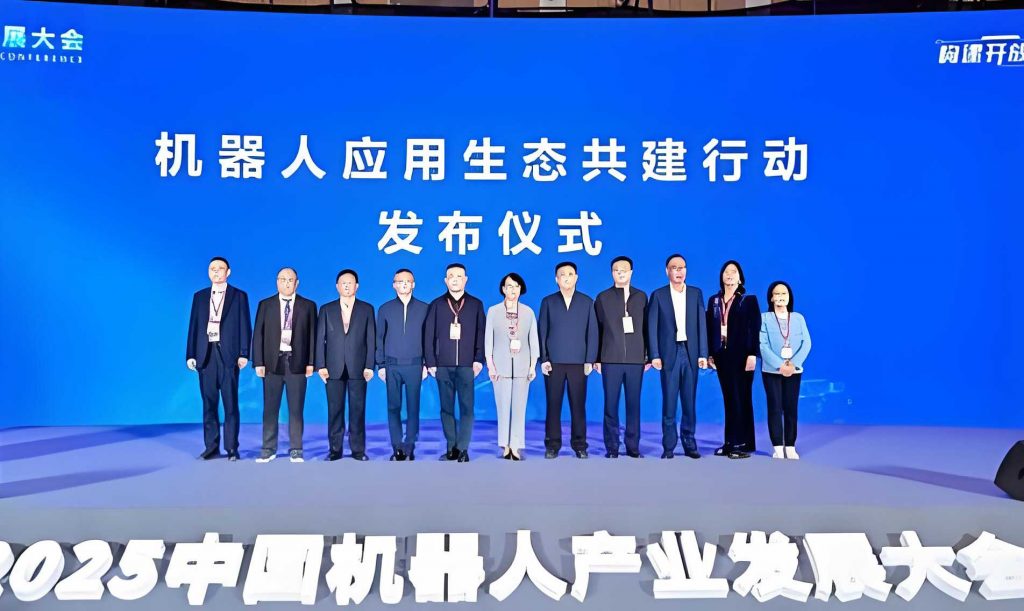
In a historic move signaling a new phase of collective responsibility, the leaders of China’s foremost robot enterprises have united to voice a common vision for the future. During a pivotal industry gathering, these pioneers jointly issued the “Qingdao Initiative,” a comprehensive pledge aimed at steering the rapid yet sometimes turbulent growth of the China robot sector onto a path of sustainable, high-quality development. This marks the first time such a broad coalition of key players in the Chinese robotics landscape has collectively articulated a set of core principles for the entire ecosystem.
The initiative emerges at a critical juncture. The China robot market has achieved a dominant global position, becoming the world’s largest market for industrial robots for two consecutive years. Simultaneously, service robots for elderly care, disability assistance, household chores, medical rehabilitation, and education are demonstrating vast potential, indicating that the China robot industry’s expansion is far from over. However, this breakneck growth has surfaced significant challenges. Industry insiders and analysts point to persistent issues such as inadequate innovation capability, lagging core technology development, and tendencies toward “hollowing out,” low-end manufacturing, and marginalization in the global value chain. Alarmingly, signs of overheating and low-level, redundant construction are beginning to appear, threatening the long-term health of the entire China robot industry.
The “Qingdao Initiative” is therefore a proactive, self-regulatory effort by the industry’s leading forces to address these vulnerabilities head-on. It calls for a united front to foster a mature, competitive, and innovative environment for the China robot sector. The document was formally read by Qu Daokui, Chairman of the China Robot Industry Alliance (CRIA), at the conference, symbolizing the full endorsement of the industry’s principal representative body. The collective action underscores a shared recognition that the future success of the China robot industry hinges not just on market size, but on quality, integrity, and technological sovereignty.
1. The Dual Reality of the China Robot Industry: Global Leadership Amidst Internal Challenges
The ascent of the China robot market is a well-documented economic narrative. Fueled by massive manufacturing demand, governmental support under initiatives like “Made in China 2025,” and an accelerating automation drive across sectors, China has cemented its status as the epicenter of industrial robotics adoption. This momentum is now extending powerfully into the service and specialist robot domains, suggesting that the China robot ecosystem is diversifying and deepening. The “13th Five-Year Plan” period is widely regarded as a crucial strategic window for solidifying this position and transitioning from a volume leader to a value and innovation leader in global robotics.
Yet, beneath this impressive growth trajectory lie structural concerns that the “Qingdao Initiative” explicitly acknowledges. The reliance on imported core components, such as high-precision reducers, controllers, and servo systems, remains a key bottleneck, contributing to the “hollowing out” risk. Many companies within the China robot industry compete primarily on cost in the low-to-mid-range market segments, leading to thin profit margins and limited resources for research and development. This, coupled with reported instances of intellectual property infringement and a fragmented landscape with numerous small players engaging in repetitive, low-tech projects, poses a threat to the sector’s sustainability and global reputation. The initiative represents a clear-eyed admission from within that for the China robot industry to thrive in the long term, a fundamental shift in approach is necessary.
2. Decoding the Qingdao Initiative: A Multi-Point Action Plan for a Healthy China Robot Ecosystem
The “Qingdao Initiative” is not merely a statement of intent but a concrete action plan comprising several interconnected pillars. These principles are designed to guide corporate behavior, shape industry norms, and influence policy dialogues. The following points encapsulate the core commitments made by the signatory enterprises:
- Commitment to Indigenous Brands and Intellectual Property: The leaders pledged to vigorously promote Chinese robot brands with independent intellectual property rights. This involves a firm commitment to respect IP, safeguard brand reputation, and move away from practices that undermine innovation. The goal is to build a China robot industry known for its own reliable, high-quality brands rather than imitation or assembly.
- Promotion of International Cooperation on Mutual Benefits: While advocating for self-reliance, the initiative equally emphasizes openness. It calls for advancing international collaboration based on reciprocity and shared development, recognizing that global knowledge exchange and partnerships are vital for the advancement of the China robot sector.
- Establishment of Robust Standards and Certification Systems: A major focus is on improving the industry’s foundational framework. The enterprises advocate for accelerating the establishment and adoption of unified standards, testing protocols, and certification systems for robots in China. This is seen as critical for ensuring product quality, safety, and interoperability, thereby fostering consumer trust and orderly market development.
- Fostering Ethical Competition and a Healthy Market Order: The signatories vow not to engage in malicious competition that harms peers. They commit to working together to create a fair competitive landscape and a positive, upward-striving market environment for the entire China robot industry. This includes avoiding cut-throat pricing wars that sacrifice quality and innovation.
- Strengthening Collaboration Across the Industrial Chain: The initiative promotes the concept of mutual benefit and win-win development across the entire robotics value chain. It encourages closer collaboration between upstream component suppliers, mid-stream robot integrators and manufacturers, and downstream end-users to enhance overall system efficiency and innovation capability within the China robot ecosystem.
- Breakthroughs in Core Technologies and Key Components: A central tenet is the resolve to dedicate resources to pioneering core technologies and key components that carry independent intellectual property. Reducing dependence on foreign sources for critical parts is identified as a strategic imperative for the security and competitiveness of the China robot industry.
- Continuous Improvement in Product Quality and Service: Finally, the companies pledge to relentlessly improve the quality, reliability, and service levels of their robot products and solutions. Building a strong reputation for excellence is considered fundamental to winning lasting customer trust both domestically and internationally for the China robot brand.
3. The Architects of Change: A Coalition of China Robot Industry Leaders
The weight and credibility of the “Qingdao Initiative” stem from the stature of the enterprises behind it. This is not a declaration by a single entity but a consensus forged among competitors who recognize their common destiny. The coalition includes a mix of state-backed champions, private innovators, and joint ventures, representing the broad spectrum of the China robot industry. The following table lists the prominent companies whose leaders endorsed this collective call to action, highlighting the diverse segments they operate in.
| Company Name (English) | Primary Focus Area | Significance in China Robot Industry |
|---|---|---|
| SIASUN Robot & Automation Co., Ltd. | Industrial Robots, Mobile Robots, Automation Solutions | A leading national champion and one of the largest robot companies in China. |
| Guangzhou CNC Equipment Co., Ltd. (GSK) | CNC Systems, Industrial Robots | A major player in motion control and a significant domestic industrial robot manufacturer. |
| Shanghai-FANUC Robotics Co., Ltd. | Industrial Robots (Joint Venture) | Represents a key international partnership channel within the China robot market. |
| Yaskawa Electric (China) Co., Ltd. | Industrial Robots, Servo Systems | Another crucial international entity with deep manufacturing roots in China. |
| Tangshan Kaiyuan Electric Group | Welding Equipment, Robot Integration | Illustrates the integration of traditional manufacturing expertise with robotics. |
| RISONG Technology Co., Ltd. | Robotic Automation, Intelligent Manufacturing | A growing force in providing customized automation solutions for various industries. |
| Qingdao Kejie Automation Equipment Co., Ltd. | Logistics Robots, Automation | Highlights the growth of material handling and logistics robotics within China. |
| Guangzhou Mechanical Engineering Research Institute Robot Co., Ltd. | Research, Specialized Robots | Represents the important bridge between academic research and industrial application in China robot development. |
| Shengshi Robot Technology Co., Ltd. | Service Robots, Educational Robots | Part of the vibrant and innovative segment of service-oriented robotics in China. |
| Beijing Tinavi Medical Technologies Co., Ltd. | Medical Robotics (Orthopedic Surgery) | Showcases the advancement of the China robot industry into high-tech medical applications. |
| Canbot Robot Technology Co., Ltd. (Canny Unibrow) | Consumer Service Robots, Humanoid Robots | A prominent name in the field of intelligent companion and service robots for the Chinese market. |
| Zhejiang Hengfengtai Reducer Manufacturing Co., Ltd. | Precision Reducers, Core Components | A critical upstream supplier, emphasizing the push for domestic core component production for the China robot supply chain. |
This alliance demonstrates that the push for a healthier China robot industry is a cross-cutting concern, uniting manufacturers, integrators, component suppliers, and specialists from both industrial and service robotics fields.
4. Implications and the Road Ahead for the China Robot Sector
The issuance of the “Qingdao Initiative” is more than a symbolic gesture; it is likely to have tangible repercussions for the China robot industry’s trajectory. First, it sets a new benchmark for corporate governance and ethical conduct within the sector. By publicly committing to fair competition and IP respect, these leaders are raising the bar for all market participants, potentially pressuring smaller or less scrupulous players to align with these norms or risk marginalization.
Second, the collective emphasis on indigenous innovation and core technology is a clear signal to the government, financial institutions, and the capital market. It indicates where the industry believes strategic investment and policy support should be directed—toward basic research, core component breakthroughs, and high-value-added system integration. This could help channel resources more efficiently and curb the wasteful, redundant low-end investments that have been a concern. The future growth of the China robot industry, as envisioned by its leaders, is qualitatively different from its past.
Third, the initiative strengthens the collective bargaining power and voice of the China robot industry on the global stage. By presenting a united front on issues like standards and international cooperation, Chinese companies may find it easier to engage in dialogues with foreign counterparts, standard-setting bodies, and global customers. This could facilitate smoother technology transfers, joint ventures, and market access, ultimately benefiting the entire China robot ecosystem.
However, the true test lies in implementation. The “Qingdao Initiative” is a voluntary pledge. Its success will depend on the sustained commitment of the signatory companies to translate these words into daily business practices, investment decisions, and R&D strategies. It will also require supportive regulatory frameworks from the government to enforce IP laws, promote standards adoption, and provide guidance for healthy industrial planning. The China Robot Industry Alliance (CRIA) is expected to play a pivotal monitoring and facilitative role in this process.
In conclusion, the collective voice of China’s robot enterprise leaders marks a maturing moment for the sector. The “Qingdao Initiative” acknowledges the growing pains accompanying the explosive rise of the China robot market while charting a deliberate course toward resilience, quality, and innovation. If the principles of the initiative are diligently upheld, they could fundamentally reshape the China robot industry, transforming it from a volume-driven market into a global hub of robotics excellence and sustainable development. The world will be watching closely as the China robot industry embarks on this ambitious journey of self-improvement and collective advancement.