
The success of service design is multifaceted. A fundamental pillar, however, rests on achieving a high degree of consensus between designers and users. A service, no matter how technologically sophisticated, can falter if a cognitive gap exists between its creators and its intended beneficiaries. Misunderstandings regarding needs, priorities, and interaction logic can create significant barriers to user adoption, potentially undermining the service’s effectiveness or leading to outright failure. Therefore, identifying and reconciling cognitive differences is a critical, yet often underexplored, phase in the design process. This is particularly true for complex service systems like those embodied by elderly companion robots, where the stakes involve well-being, independence, and emotional connection.
This discourse outlines a methodological approach I employ to make these cognitive differences visible and actionable. The core of the method lies in the fusion of a structured service element analysis with Interactive Qualitative Analysis (IQA). IQA is a participatory research framework that excels at translating tacit knowledge and subjective perceptions into explicit, visual models of cause-and-effect relationships within a system. By applying IQA within the context of service design, my aim is to systematically map how different stakeholders—specifically designers and elderly users—perceive the components of a service and, more importantly, how they believe these components influence one another. The ultimate goal is to leverage this understanding to guide the design of companion robot services that align more closely with the users’ mental models and lived experiences.
The process I follow is iterative and collaborative, moving from broad ideation to structured analysis and finally to visual synthesis. It begins with assembling focused groups for different stakeholder perspectives. For a companion robot project, this typically involves a group of design professionals (engineers, interaction designers, service designers) and a group of potential elderly users who live independently and express interest in robotic assistance. The initial phase is one of open exploration. Through facilitated brainstorming sessions, each group generates a wide array of factors they believe are important for the service. These raw ideas are then clustered through discussion and consensus-building. It is here that initial cognitive differences surface, as designers and users often categorize and label core service elements differently.
| Stakeholder Group | Category | Service Element | Description (Paraphrased from Group Discussion) |
|---|---|---|---|
| Designer Group | Touchpoint | Self-Consciousness (SC) | The designer’s own preconceptions, experiences, and heuristic biases. |
| Design Habit (DH) | Established professional routines and prior design knowledge. | ||
| Process | Process Analysis (PA) | The formal workflow used to structure the robot service design. | |
| System | Sustainable Development (DC) | The system’s capacity for future upgrades and compatibility. | |
| Architecture Design (SP) | The underlying technical and structural logic of the system. | ||
| User Group | Touchpoint | User Habit (UH) | Personal routines, preferences, and ways of interacting with technology. |
| Service Environment (SN) | How well the service adapts to different home contexts and situations. | ||
| Service Technology (ST) | The intelligence of the system and its ability to minimize required user input. | ||
| Process | Service Process (SP) | The sequence of operations and whether it feels natural to the individual. | |
| System | Added Value (AV) | The potential for personalization and bespoke service features. |
As illustrated in the table, while some concepts overlap (e.g., “User Habit”), the framing differs significantly. Designers view elements like their own “Self-Consciousness” and formal “Process Analysis” as distinct, influential categories. Users, conversely, explicitly highlight the importance of environmental compatibility (“Service Environment”) and the desire for personalized “Added Value”—elements that may be implicit or secondary in a designer’s initial framework. This initial clustering and naming exercise is the first crucial step in externalizing internal cognitive structures.
The next phase involves moving from isolated elements to understanding their perceived interrelationships. For each stakeholder group, we construct an Affinity Relationship Table (ART). Group members systematically evaluate whether and how one service element influences another. For example, does “User Habit (UH)” influence “Service Process (SP),” or vice-versa? These pairwise judgments, collected from all group members, are compiled. The frequency with which a specific directional relationship is cited indicates its perceived strength within that group’s mental model.
Not all identified relationships carry equal weight for design decision-making. To focus on the most salient connections, I apply a Pareto power analysis. This technique helps distinguish the “vital few” relationships from the “trivial many.” The process involves ranking all identified relationships by their frequency of mention and then calculating a power value for each. The power value $$P_i$$ for the i-th relationship (when sorted in descending frequency order) is given by:
$$P_i = \sum_{j=1}^{i} F_j / N_{vote} – \sum_{j=1}^{i} j / N_{relation} \quad (i=1,2,…,N_{relation})$$
Where $$F_j$$ is the frequency of the j-th relationship, $$N_{vote}$$ is the total number of relationship votes cast by the group, and $$N_{relation}$$ is the total number of unique relationship pairs identified. The point at which the power value $$P_i$$ peaks signifies the optimal cutoff—the set of relationships that exert the greatest systemic influence according to that group’s cognition. Relationships up to this cutoff are used to populate the finalized ART. In a practical case with designers and users, this analysis might reveal that the top 36 relationships for designers and the top 29 for users constitute the core of their respective cognitive models, accounting for a majority of the perceived systemic influence.
| Element (Designer View) | Outputs | Inputs | Δ (Output – Input) | Interpreted Role |
|---|---|---|---|---|
| Self-Consciousness (SC) | 5 | 0 | +5 | Primary Driver |
| Design Habit (DH) | 6 | 1 | +5 | Primary Driver |
| User Habit (UH) | 5 | 1 | +4 | Secondary Driver |
| Service Function (SF) | 4 | 4 | 0 | Mediating Factor |
| Interaction Design (ID) | 3 | 5 | -2 | Secondary Outcome |
| Service Efficiency (SE) | 1 | 6 | -5 | Primary Outcome |
The ART allows for the calculation of a simple metric for each element: Δ, the difference between the number of elements it is perceived to influence (Outputs) and the number perceived to influence it (Inputs). A strongly positive Δ marks a “Driver” factor—a cause or antecedent in the system. A strongly negative Δ marks an “Outcome” factor—a result or consequent. A Δ near zero suggests a “Mediating” factor, which translates and transmits influences within the system. For instance, in a designer ART, “Self-Consciousness” and “Design Habit” often emerge as strong Drivers, while “Service Efficiency” is a key Outcome. In the user ART, “Service Function” and “Service Technology” might be primary Drivers, with “Added Value” as a key Outcome. This quantitative differentiation is pivotal for understanding the perceived causality within each group’s mental model.
The final, and perhaps most revealing, step is the synthesis of the ART data into a System Influence Diagram (SID). The SID is a directed graph that visually maps the cognitive structure. Elements are positioned from left to right based on their Δ value (Drivers -> Mediators -> Outcomes). Arrows indicate the direction of perceived influence. Closed loops of arrows, known as “affinity-relationship loops,” are particularly significant; they indicate a tightly coupled subsystem of elements that mutually reinforce or define each other in the stakeholders’ minds.
Comparing the SIDs generated from designer and user groups reveals the heart of the cognitive差异. For a companion robot service, several critical patterns consistently emerge. Both groups invariably place “Service Efficiency”—encompassing speed, accuracy, and ease of use—as a central, ultimate Outcome. Everything else in the service is perceived to feed into this final metric of success. This is a vital point of alignment.
The differences, however, are more instructive. Designers’ SIDs frequently show “User Habit (UH)” as a Driver that influences, and is influenced by, more abstract, process-oriented elements like “Process Analysis (PA)” and system “Architecture (SP).” This reveals a designer’s cognitive path: they start from observations of user behavior to define formal processes and system logic, aiming ultimately for efficiency and sustainable development. Notably, designers’ own “Self-Consciousness (SC)” and “Design Habit (DH)” often appear as powerful primary Drivers. This is a crucial insight: the design is consciously or subconsciously shaped by the designers’ professional biases and prior experiences.
In stark contrast, the user SID presents a different core logic. For users, “Service Function (SF)”—what the companion robot actually *does*—is the paramount Driver. This is closely linked with “Service Technology (ST)” (its smartness) and “Service Environment (SN)” (its adaptability to their home). Crucially, users often form a strong affinity-relationship loop between “User Habit (UH),” “Interaction Design (ID),” and “Service Environment (SN).” This loop signifies that, in the user’s mind, their personal habits, the robot’s mode of interaction (voice, touch, gesture), and the specific home environment are inseparable and mutually defining. They don’t think in terms of abstracted processes or system architecture; they think in terms of a functional tool that must seamlessly integrate into their personal habitat and daily rituals. Elements entirely absent from the designer’s initial model, like “Added Value (AV)” (personalization), appear as significant Outcomes for users.
The analysis of these cognitive差异 yields direct, actionable principles for the service design of an elderly companion robot. First, the primacy of “Service Function” in the user model dictates that functional definition must be the unambiguous starting point, grounded in observable elderly user behaviors such as health management, medication, social connection, leisure, and home control. The robot’s function set should be organized around these behavioral domains: a Health Module (fall detection, medication reminders, vital signs monitoring), a Social & Leisure Module (conversation, news, games, virtual pet care), a Smart Home Control Module (acting as a central hub for lights, appliances), and a crucial Personalization Module for customization. This structure directly mirrors the user’s driver-centric cognition.
Second, the powerful user-identified loop linking Habit, Interaction, and Environment demands a design philosophy of adaptive minimalism. The companion robot must excel at learning and conforming to the user’s established routines, not vice-versa. Interaction must be multi-modal (voice being primary, but supplemented by simple tactile interfaces or gesture) and context-aware. The robot should sense environmental changes (time of day, location in home, presence of guests) and adjust its behavior proactively. This focus on environmental intelligence and habit compatibility addresses a gap often present in the designer-led model.
Third, the presence of designer-centric Drivers like “Self-Consciousness” serves as a constant reminder to employ empathy tools and user-validation checkpoints throughout the design process. Techniques like role-playing, empathy mapping, and iterative prototyping with real elderly users are essential to counterbalance professional bias and ensure the service evolves according to the user’s cognitive model, not the designer’s assumptions.
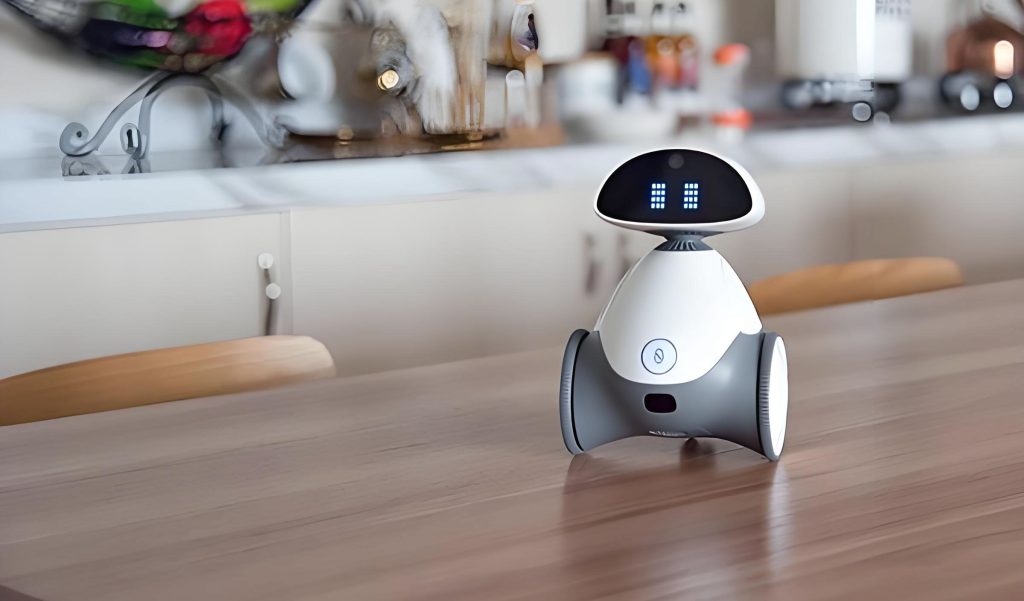
The final design manifestations of this cognitively-informed process are tangible. The外观设计 of the companion robot should prioritize approachability and gentle signaling over complex or intimidating tech aesthetics. Soft forms, warm but neutral colors, and subtle, non-intrusive status indicators are key. While full humanoid forms can be complex, incorporating simple anthropomorphic cues (a friendly face-like screen, gentle nodding movements) can foster emotional connection, aligning with the user’s need for relatable interaction.
The interaction system’s interface must be the epitome of clarity, employing large, high-contrast elements, intuitive iconography, and a hierarchical information structure that gives primacy to core, frequently used functions like emergency call or medication status. The voice personality should be respectful, patient, and reassuring. Crucially, the personalization module—that “Added Value” outcome from the user model—must be easily accessible, allowing users to tailor aspects like the robot’s call name, reminder tones, or preferred news topics, thereby fulfilling their desire for a service that feels uniquely theirs.
In conclusion, the integration of Interactive Qualitative Analysis with service element modeling provides a robust, structured methodology for externalizing and contrasting the cognitive frameworks of designers and users. By moving from brainstorming to affinity mapping, through Pareto-based refinement, and culminating in comparative System Influence Diagrams, this approach transforms subjective perceptions into visual, analyzable models of causality. For the domain of elderly companion robot design, it starkly reveals critical差异: designers often operate from a paradigm of process and systemic capability, influenced by their own expertise, while users center their cognition on core functionality, seamless environmental integration, and personal relevance. A successful service design must consciously bridge this gap, using the user’s cognitive model as the true blueprint. This involves prioritizing user-derived functional clusters, designing for adaptive minimalism within the user’s habit-environment-interaction loop, and rigorously validating designs to mitigate designer bias. The outcome is a companion robot service that is not just technically sound, but cognitively resonant, fostering acceptance, trust, and ultimately, a more effective and meaningful support for independent aging.