
Force sensing is a critical capability for intelligent robots interacting with external environments, particularly in applications such as grasping, contour detection, obstacle avoidance, human-robot interaction, and force feedback control. The integration of force sensors, especially six-axis force/torque sensors, into robotic systems has become increasingly prevalent. For instance, in industrial automation, these sensors facilitate collision detection and feedback control, while in dexterous manipulators and surgical robots, they enable tactile perception and safety assurance. Collision detection and position localization are fundamental components of force sensing, with the latter being particularly challenging due to the inherent ambiguity in solving contact points solely from force and torque measurements.
Traditional methods for collision position detection rely heavily on geometric constraints of the collision surface, such as assuming a spherical or planar contact model. These approaches require prior knowledge of the object’s shape, limiting their applicability in unstructured environments where collisions may involve deformable or irregular surfaces. For example, prior work has utilized structured probes with known geometries to resolve the multi-solution problem inherent in the force-torque relationship. However, these methods fail when the collision surface is unknown, non-rigid, or subject to deformation. To address these limitations, we propose a novel self-constrained collision localization model that leverages dynamic force and torque data over time, eliminating the dependency on geometric priors. Our approach utilizes multiple sequential force/torque measurements to mutually constrain the solution space, coupled with a minimum-error search strategy to identify the optimal contact point. This method significantly enhances robustness, extends application scope, and improves detection accuracy compared to conventional techniques.
The core challenge in collision position detection using a six-axis force sensor lies in solving the underdetermined system derived from the force-torque equilibrium equation. Let $\mathbf{F} = [F_x, F_y, F_z]^T$ and $\mathbf{M} = [M_x, M_y, M_z]^T$ represent the measured force and torque vectors at the sensor frame, respectively. The relationship between the contact point position $\mathbf{L} = [x, y, z]^T$ and the force/torque data is given by:
$$ \mathbf{M} = \mathbf{L} \times \mathbf{F} $$
Expanding this into matrix form yields:
$$ \begin{bmatrix} 0 & -F_z & F_y \\ F_z & 0 & -F_x \\ -F_y & F_x & 0 \end{bmatrix} \begin{bmatrix} x \\ y \\ z \end{bmatrix} = \begin{bmatrix} M_x \\ M_y \\ M_z \end{bmatrix} $$
This system has infinitely many solutions, as the coefficient matrix is rank-deficient. Traditional methods resolve this by incorporating a geometric constraint $S(x, y, z) = 0$, such as a known surface model. However, in unstructured environments, such constraints are unavailable. Our key insight is that during a collision event, the time-varying nature of force and torque data provides inherent constraints. By analyzing the trajectory of the external force vector line over multiple time instances, we can uniquely determine the contact point without geometric assumptions.
The external force vector line, denoted as $L_c(\mathbf{P})$, represents the locus of possible contact points for a given force-torque pair. Its parametric form is derived from the force-torque equilibrium:
$$ \frac{x}{F_x} = \frac{y + M_z / F_x}{F_y} = \frac{z + M_y / F_x}{F_z} $$
For two distinct time instances $t_1$ and $t_2$ with non-parallel force vectors $\mathbf{F}_1$ and $\mathbf{F}_2$, the corresponding external force vector lines $L_{c1}$ and $L_{c2}$ intersect at the true contact point. However, due to sensor noise and dynamic effects, these lines may not intersect perfectly in three-dimensional space. To mitigate this, we introduce a projection-based method that computes the contact point by analyzing the intersections of projected lines onto coordinate planes.
Data preprocessing is crucial to isolate the collision-induced external forces from internal forces (e.g., gravitational and dynamic components). The total force measured by the six-axis force sensor is:
$$ \mathbf{F}_{\text{sensor}} = \mathbf{F}_{\text{contact}} + \mathbf{F}_{\text{inter}} + \mathbf{F}_{\text{dynamic}} $$
where $\mathbf{F}_{\text{inter}}$ represents internal forces from tool assembly, and $\mathbf{F}_{\text{dynamic}}$ accounts for inertial effects. The contact force is obtained through:
$$ \mathbf{F}_{\text{contact}}(t) = \mathbf{F}_{\text{sensor}}(t) – \mathbf{F}_{\text{inter}} – \mathbf{F}_{\text{gravity}} \mathbf{R}_{g \to s} $$
where $\mathbf{R}_{g \to s}$ is the rotation matrix from the global frame to the sensor frame. To focus on the collision dynamics, we use the derivative of the contact force, $\Delta \mathbf{F}_{\text{contact}} = \Delta \mathbf{F}_{\text{sensor}}$, which satisfies the same force-torque relationship.
The projection method operates by projecting the external force vector lines onto the $XOY$, $XOZ$, and $YOZ$ planes. The projected lines are given by:
$$ \begin{aligned} L’_{XOY}: &\quad F_y F_z x – F_x F_z y = -F_x M_x – F_y M_y \\ L’_{XOZ}: &\quad F_y F_z x – F_x F_y z = F_x M_x + F_z M_z \\ L’_{YOZ}: &\quad F_x F_z y – F_x F_y z = -F_y M_y – F_z M_z \end{aligned} $$
For two time instances, the intersection point $P'(x, y)$ of the projected lines $L’_{XOY,1}$ and $L’_{XOY,2}$ on the $XOY$ plane is computed. The corresponding points $P_1$ and $P_2$ on the original force vector lines $L_{c1}$ and $L_{c2}$ are then determined. The preliminary contact point is taken as the midpoint $P = \frac{1}{2}(P_1 + P_2)$. The selection of the optimal projection plane is based on the maximum angle between the projected lines, computed as:
$$ \theta_{XOY} = \left| \frac{F_{y1}}{F_{x1}} – \frac{F_{y2}}{F_{x2}} \right|, \quad \theta_{XOZ} = \left| \frac{F_{z1}}{F_{x1}} – \frac{F_{z2}}{F_{x2}} \right|, \quad \theta_{YOZ} = \left| \frac{F_{y1}}{F_{z1}} – \frac{F_{y2}}{F_{z2}} \right| $$
The plane with the maximum $\theta$ is chosen to enhance numerical stability.
To further refine the contact point estimation, we employ a minimum-error search strategy over multiple force-torque pairs acquired during the collision process. For a candidate point $\mathbf{P}” = [x”, y”, z”]^T$, the residual error vector $\delta = [\delta_{M_x}, \delta_{M_y}, \delta_{M_z}]^T$ is computed as:
$$ \begin{aligned} \delta_{M_x} &= F_z y” – F_y z” – M_x \\ \delta_{M_y} &= F_x z” – F_z x” – M_y \\ \delta_{M_z} &= F_y x” – F_x y” – M_z \end{aligned} $$
The magnitude of the error is $|\delta| = \sqrt{\delta_{M_x}^2 + \delta_{M_y}^2 + \delta_{M_z}^2}$. The optimal contact point is selected as the one that minimizes $|\delta|$ across all candidate points generated from sequential data pairs. This exhaustive search ensures robustness against noise and transient effects.
Our experimental validation involved a robotic system comprising a six-degree-of-freedom manipulator, a six-axis force/torque sensor mounted at the wrist, and a stereo vision system for ground truth measurement. The vision system, with an accuracy of 0.2 mm, provided reference contact positions. The force sensor was calibrated to compensate for gravitational and dynamic effects. We conducted two sets of experiments: random point detection and deformation-involved collision tests.
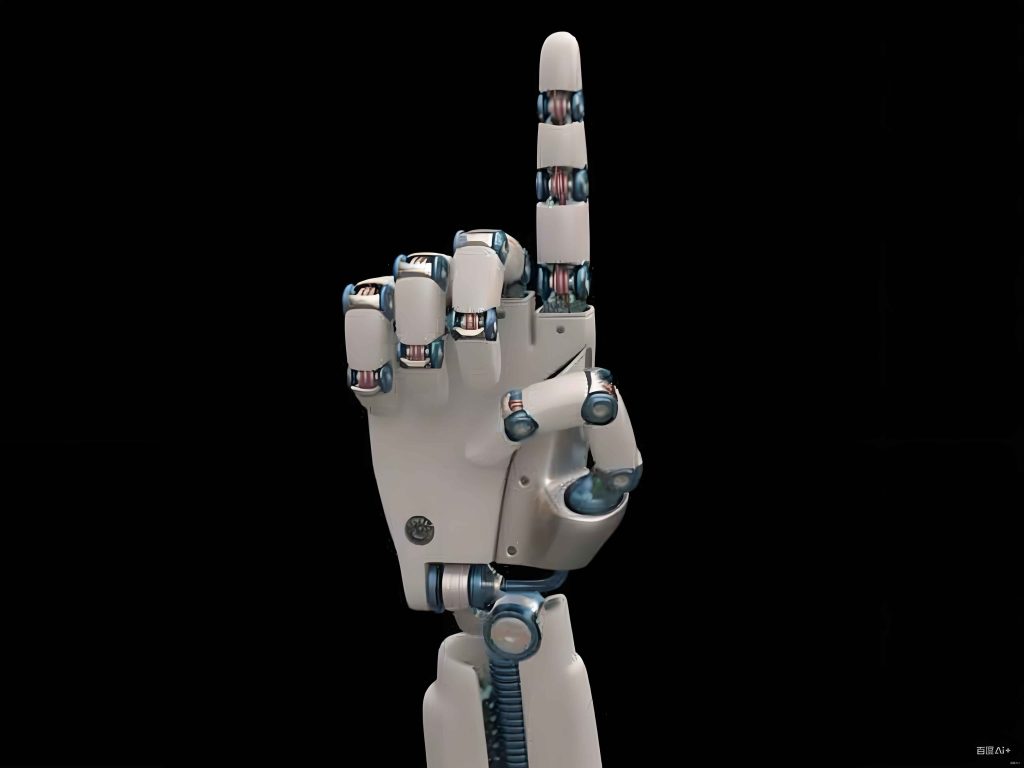
In the random point experiments, we selected 10 arbitrary points on a cubic workpiece. The robotic end-effector, equipped with a probe, was guided to each point using vision feedback. Force and torque data during collision were recorded. We compared our method against a traditional geometric-constraint approach that assumed a known probe length. The results demonstrated superior accuracy and consistency of our method, as summarized in Table 1.
| Point ID | Traditional Method Error | Proposed Method Error |
|---|---|---|
| 1 | 2.34 | 0.45 |
| 2 | 1.89 | 0.38 |
| 3 | 3.12 | 0.51 |
| 4 | 2.67 | 0.42 |
| 5 | 1.95 | 0.39 |
| 6 | 2.81 | 0.47 |
| 7 | 3.04 | 0.53 |
| 8 | 2.18 | 0.41 |
| 9 | 2.76 | 0.48 |
| 10 | 1.97 | 0.36 |
For repeatability analysis, we performed 10 trials on 6 selected points across different faces of the cube. The results, shown in Table 2, confirm that our method maintains consistent performance regardless of the robot’s pose or contact force magnitude.
| Point ID | X-axis | Y-axis | Z-axis | Overall |
|---|---|---|---|---|
| A | 0.08 | 0.07 | 0.09 | 0.08 |
| B | 0.06 | 0.09 | 0.07 | 0.07 |
| C | 0.09 | 0.08 | 0.06 | 0.08 |
| D | 0.07 | 0.06 | 0.08 | 0.07 |
| E | 0.08 | 0.07 | 0.07 | 0.07 |
| F | 0.06 | 0.08 | 0.06 | 0.07 |
In the deformation experiments, we investigated scenarios where the collision involved significant surface deformation. The probe was pressed against the workpiece until visible deformation occurred. Despite the altered contact geometry, our method successfully localized the contact points with high accuracy, as evidenced by the error metrics in Table 3. This highlights the method’s resilience to shape variations and its suitability for real-world applications involving soft or compliant materials.
| Trial Set | Max Error | Mean Error | Std Deviation |
|---|---|---|---|
| 1 | 0.62 | 0.48 | 0.11 |
| 2 | 0.59 | 0.45 | 0.09 |
| 3 | 0.64 | 0.50 | 0.12 |
| 4 | 0.61 | 0.47 | 0.10 |
| 5 | 0.58 | 0.46 | 0.08 |
The superiority of our approach stems from its ability to leverage temporal force-torque sequences without relying on explicit surface models. The six-axis force sensor captures rich dynamic information that, when processed through our self-constrained model, yields precise contact localization. The minimum-error search effectively filters out outliers and noise, ensuring robust performance. Furthermore, the method’s computational efficiency allows real-time implementation, making it practical for interactive robotic tasks.
In conclusion, we have developed a novel collision position detection method for robotic end-effectors using a six-axis force sensor. By exploiting the dynamic nature of collision forces and employing a projection-based intersection technique coupled with error minimization, our method overcomes the limitations of geometry-dependent approaches. Experimental results validate its accuracy, repeatability, and robustness in both structured and unstructured environments, including cases with surface deformation. This advancement enhances the capabilities of force sensing in robotics, paving the way for more reliable human-robot collaboration and complex manipulation tasks. Future work will focus on extending the method to multi-contact scenarios and integrating it with adaptive control strategies for enhanced interaction dynamics.