
In recent years, with advancements in key areas such as power systems, high-torque servo joints, and full-body coordination control algorithms, humanoid robots have seen continuous optimization in stability, flexibility, and cost control. This progress has ushered in a turning point, moving from laboratory settings to large-scale mass production. The year 2025 is widely regarded by the industry as the commercialization元年 for humanoid robots. In July, leading companies like Unitree Robotics, Astribot, and Ubtech announced securing substantial orders. Additionally, the startup Songyan Power, which gained attention through a humanoid robot half-marathon, reported that its total order volume for this year has exceeded 2,500 units, with contract values surpassing 100 million yuan, and July alone saw mass production deliveries of over 100 units.
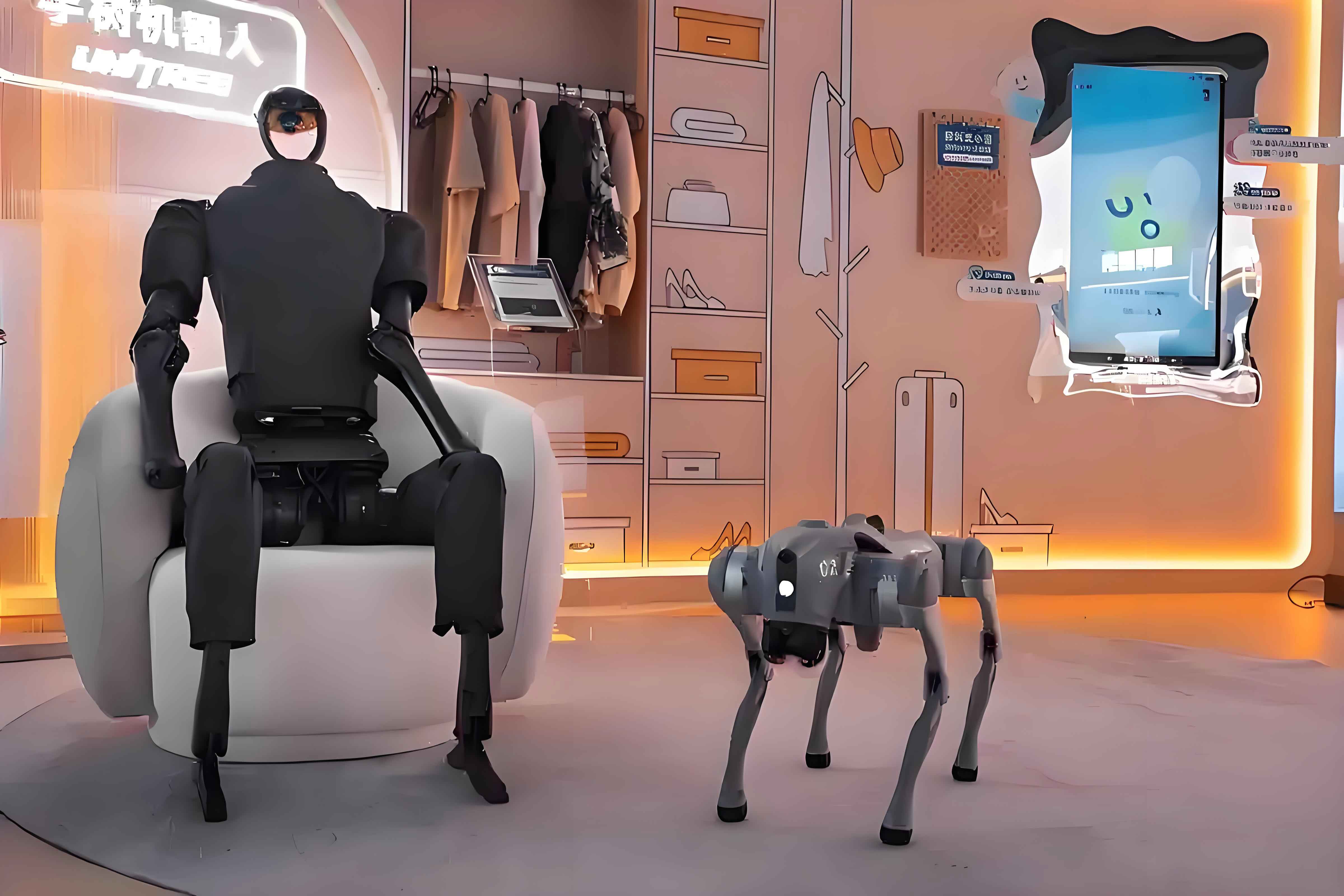
At the recently held 2025 World Robot Conference (WRC), interviews with numerous corporate executives, industry experts, and investors revealed that exhibition displays, scientific research and education, and competitive events are currently the core scenarios for the commercialization of humanoid robots. In contrast, industrial settings such as automotive and 3C manufacturing remain areas where companies are striving for further breakthroughs. “Different scenarios impose varying requirements on robot capabilities; outstanding teams will explore these scenarios simultaneously, seizing commercial opportunities at different stages,” said Cao Wei, Partner at BlueRun Ventures, in an interview. BlueRun Ventures has been investing in the robotics sector since 2016, backing innovative firms like Gausium, Astribot, Galaxy General Robotics, Wanxun Technology, and Tashizhihang.
According to Cao Wei, in scenarios like exhibition displays and research education, users exhibit higher tolerance and are willing to pay for products even if they are not perfect. However, in industrial environments such as automotive and 3C manufacturing, demands for algorithm model robustness and operational accuracy are extremely high. It may take one to two years to see humanoid robots gradually entering factories, representing a slow implementation process. As humanoid robots transition from “showcasing skills” to “engineering deployment,” the investment logic of venture capital and private equity firms is quietly shifting. Multiple investors noted that compared to last year, when they focused on demo performances and technical routes, they now pay closer attention to projects’ mass production capabilities and scenario implementation effectiveness.
From an investment heat perspective, financing rounds for companies like Unitree Robotics, Galaxy General Robotics, Xinghaitutu, and Yunchu Technology in June and July have sparked a new wave of robotics investments in the primary market. Some investors predict that this financing fervor may persist until the end of the year but will gradually diverge: manufacturers with genuine scenario closures and delivery capabilities, as well as core component suppliers that significantly reduce costs and improve efficiency, will be more sought after, while purely conceptual projects may face greater difficulty in securing capital.
Scenario Breakthroughs: Starting with Exhibition Displays and Exploring Further Possibilities
During the WRC exhibition, it was noted that the event attracted not only a large number of professional visitors but also a significant influx of general audiences and families, making it the WRC with the highest “child attendance rate” to date. “This is a very positive signal, indicating that market attention and tolerance are increasing. Even if current humanoid robots are not yet highly intelligent, as long as they are interesting and adorable, public acceptance will rise, laying the groundwork for future expansion into retail and B2C scenarios,” said Kang Yu, Board General Manager of Shoucheng Holdings.
- Accelerated Evolution showcased its Booster T1 humanoid robot interacting and playing soccer with children, drawing crowds of spectators and cheers. Previously, at the 2025 RoboCup Brazil Robot Soccer World Cup in the humanoid group, the adult team Tsinghua Vulcan and the domestically produced Accelerated Evolution T1 humanoid robot made history by winning the championship trophy for the Chinese team.
- Discussing the commercialization path for humanoid robots, Cheng Hao, Founder and CEO of Accelerated Evolution, believes that competitions and the education market are currently core scenarios. For instance, humanoid robot soccer matches can generate revenue from sponsorships, tickets, merchandise, and live streams. Over the next three to five years, the competition and education markets are expected to mutually reinforce each other.
- At the Songyan Power booth, humanoid robots delivered impressive performances including dancing, somersaults, human-like running, and multi-terrain walking. Jiang Zheyuan, Founder of Songyan Power, shared in a forum that the largest customer base in their current orders comes from the education sector, covering K-12, vocational education, undergraduate studies, graduate research, and scientific institutions, where humanoid robots are used as teaching tools.
The second-largest customer group by shipment volume is from the rental or commercial performance market. Although the daily rental price for humanoid robots has decreased from over 10,000 yuan initially to around 3,000 to 4,000 yuan currently, at this price point, robot rentals still demonstrate a favorable payback period. In highly consensus-driven scenarios like exhibition displays, competition among different manufacturers is common, and the market shows a concentration toward头部 players. For example, products from companies like Unitree Robotics and Songyan Power may be in high demand, while lesser-known manufacturers need to actively promote and deploy their offerings.
Kang Yu further commented that frequent displays of humanoid robots might partly stem from emotional factors, or what is termed as “novelty appeal.” Nonetheless, there is undeniable, sustained demand in the exhibition display scenario. Even with declining rental prices for humanoid robots in exhibitions, current rates range from 3,000 to 5,000 yuan per day, indicating substantial market value. “In terms of market scale, the exhibition display field does not exhibit intense ‘red ocean’ competition. We estimate its scale could reach tens of billions of yuan, providing ample space without rapid saturation due to homogenization,” Kang Yu added.
Moreover, none of the humanoid robot manufacturers invested in by Shoucheng Holdings are content with solely serving the exhibition display market. Most use exhibition displays as an entry point because this segment has clear demand and enables quick monetization. However, companies must delve deeper, achieving technological breakthroughs in R&D and laboratory phases to explore more business models in B2C or other application scenarios. Jiang Zheyuan also mentioned that the company will focus on two main aspects in future commercialization: first, increasing penetration by clarifying existing scenarios, such as exploring roles for humanoid robots as leaders in calisthenics or running drills in K-12 settings; second,开拓 new scenarios, like using humanoid robots for partial tour guide duties in cultural tourism, where memorizing lengthy scripts is challenging. “In the long run, humanoid robots can be applied in numerous scenarios, and the humanoid robot field is full of imagination, potentially accommodating many players,” Jiang Zheyuan stated.
Evolution of Investment Logic: From Demo Effects to Mass Production Delivery
As the commercialization of humanoid robots accelerates, the investment logic of VC/PE institutions has already changed. Reflecting on nearly a decade of experience in robotics investment, Cao Wei recalled that initially, when investing in robotics, few institutions paid attention to the sector. Now, the robotics investment market has become increasingly lively, benefiting industrial development. However, competition for shares in star projects has also intensified. “We do not follow the crowd in chasing projects; instead, we invest in teams we recognize with long-term growth potential, hoping they become category champions. For example, our investments in Astribot, Galaxy General Robotics, Lingchu Intelligence, and Tashizhihang are all teams with distinct characteristics in vertical fields,” Cao Wei said.
- Currently, BlueRun Ventures focuses on investment directions ranging from data and algorithms to本体 and scenario implementation. Cao Wei anticipates that more exceptional entrepreneurs will enter the robotics industry, bringing new investment opportunities.
- During the WRC, Zhu Fangwen, Managing Partner of Shoucheng Capital, stated at the “Robotics Venture Capital Theme Exchange” hosted by Shoucheng Holdings, “In 2024, when investing in the robotics sector, we prioritized team strength, technical routes, and demo effects. In 2025, mass production capability and delivery capacity have become new key metrics. This year, global shipments of humanoid robots are expected to exceed 10,000 units, with five to six companies each shipping over 1,000 units.”
It is reported that Shoucheng Holdings focuses on cutting-edge technological directions in robotics and participated in establishing and managing the “Beijing Robotics Industry Development Investment Fund” in 2024, with a total scale of 10 billion yuan. In the robotics-related field, Shoucheng Holdings has invested in leading companies such as Unitree Robotics, Galaxy General Robotics, Songyan Power, Xinghaitutu, and Accelerated Evolution. Currently, Shoucheng Holdings’布局 in robotics is concentrated in the midstream, specifically in本体 and host manufacturing. In the future, Shoucheng Holdings will shift more attention to downstream applications and upstream core components.
Regarding downstream applications, Shoucheng Holdings’ business primarily involves three aspects: first, sales agency, building a product matrix that includes本体 manufacturers and solution providers; second,融资租赁, addressing the fast technological iteration and high upfront costs for clients by allowing them to试用 before committing to long-term investments; third, secondary development and scenario-specific deployment, assisting companies in implementing products across different vertical scenarios. “The key constraint on robotics industry development currently lies not in the supply chain but in the lack of mature application scenarios,” Kang Yu said. Serious industrial adoption often occurs through “point breakthroughs”; once generality and solution capabilities mature, they will催生 star enterprises. In terms of industry trends, this year, the “cerebellum” (motion control) has趋于成熟,本体 enterprises are accelerating shipments, while the “cerebrum” (embodied intelligence) is still rapidly developing. Thus, in the short term, the focus is more on using “not yet intelligent but stable and usable” humanoid robot products.
In the upstream components sector, in the latter half of this year, Shoucheng Holdings has identified some component companies with横向迁移 capabilities and good qualifications, and will make corresponding布局. It is noteworthy that component companies face higher risks; if key clients change technical routes or teams, orders could plummet. Therefore, the investment logic for components differs from that for整机, placing greater emphasis on technological evolution trends and risk resistance.
Advancing Amid Bubbles: Elimination Contest Expected in the Second Half of Next Year
From the perspective of financing heat, the robotics sector has undoubtedly regained its momentum this year. Data shows that from January to July this year, investment deals in embodied intelligence and robotics exceeded 200, with total financing surpassing 24 billion yuan, already surpassing the full-year total of 2024. Amid this entrepreneurial and financing fervor, debates over “bubble theory” continue to emerge. In this regard, Zhou Zhifeng, Managing Partner of Qiming Venture Partners, believes that truly major tech waves inevitably involve bubbles, as any intelligent person can recognize the opportunities and value within. “Just like good beer has foam—it might be one-third foam and two-thirds real beer, which makes it taste better. For many investors, accepting one-third of projects with超额溢价 is feasible because they acknowledge the potential for high future value,” Zhou Zhifeng said.
- Zhu Fangwen pointed out that since last August’s World Robot Conference, the embodied intelligence and robotics赛道 have remained highly popular. In the short term, given the current commercialization pace, valuations appear somewhat inflated. Long-term, however, robotics is a trillion-yuan赛道, potentially giving rise to companies with千亿 or trillion-yuan market capitalizations.
- “The positive effect of massive capital inflow is that it enables companies to invest in R&D more quickly, accelerate industrial implementation, and speed up the industry’s优胜劣汰. Ultimately, value and price will gradually align,” Zhu Fangwen added.
Notably, in July, Unitree Robotics initiated上市辅导. Simultaneously, Astribot’s plan to enter the listed company Shangwei Xincai attracted widespread market attention. The industry anticipates that the上市 of leading companies will provide a “anchor point” for valuations of other humanoid robots. “With the上市 of Unitree and Astribot, optimism regarding humanoid robots will grow, and the financing heat may continue into the second half of this year, providing companies with some cash reserves. However, the大批量上市 of humanoid robot enterprises may require more time, as transitioning from having revenue to achieving substantial revenue volume is not easy,” Cao Wei stated.
Multiple investors indicated that as the industry matures and leading companies move toward上市, an elimination contest in the humanoid robot sector is expected to begin in the second half of next year. So, what qualities will enable certain enterprises to ultimately succeed? Wang Sheng, Partner at AngelCrunch Fund, expressed that the humanoid robot market is not yet mature, and in the short to medium term, it remains challenging for companies to generate profits solely through their capabilities. Therefore, enterprises still need capital support. First and foremost, companies must possess strong fundraising abilities; only teams whose capabilities, endeavors, and results gain investor recognition can secure continuous funding.
- Second, teams need to handle direction selection and operational pacing more effectively. Some companies, after raising funds, wisely retain a portion rather than spending it all. Wang Sheng considers this a rational approach because before the technical paradigm matures and converges, advancing aggressively in any direction might lead to running far in the wrong direction.
- Third, teams must maintain a degree of flexibility to grasp evolving technical paradigms, industrial demands, and various opportunities, which also poses a significant challenge for founders.
In summary, the humanoid robot industry is at a critical juncture of commercialization, with companies actively exploring diverse scenarios while investment logic shifts toward practical implementation. Despite concerns about bubbles, the long-term potential remains vast, driven by technological advancements and growing market acceptance. The coming years will likely see increased competition and consolidation, shaping the future landscape of humanoid robotics.