
In my research and design practice, I focus on developing innovative solutions for children with special needs, particularly those diagnosed with Angelman Syndrome. This genetic disorder, characterized by severe developmental challenges, necessitates a holistic approach to care. My goal is to create a companion robot that not only assists in daily living but also enhances therapeutic outcomes. This article elaborates on the design process, from understanding the syndrome to implementing a functional and empathetic companion robot. I will use tables and formulas to summarize key aspects, ensuring a comprehensive exploration of this critical topic.
Angelman Syndrome is caused by a genetic defect on chromosome 15, leading to a range of clinical manifestations. These include microcephaly, motor dysfunction, epilepsy, sleep disorders, and profound intellectual disability. The primary age of onset is between 3 and 15 years, with epilepsy posing a significant life-threatening risk. To address these issues, I have analyzed existing therapies and identified gaps where a companion robot can intervene. The core of my work is to design a robot that provides systematic assistance, improving the quality of life for patients and reducing the caregiving burden on families.
Characteristics of Angelman Syndrome and Therapeutic Approaches
Understanding the unique features of Angelman Syndrome is crucial for effective design. The syndrome presents with multiple symptoms that vary in severity. Below is a table summarizing the key characteristics:
| Symptom | Description | Impact on Daily Life |
|---|---|---|
| Epilepsy | Frequent seizures, often resistant to medication | High risk of injury; requires constant monitoring |
| Motor Issues | Hypotonia, ataxia, and delayed motor development | Difficulty in walking, crawling, and coordination |
| Sleep Disorders | Irregular sleep cycles and frequent awakenings | Fatigue for both child and caregivers; disrupted routines |
| Communication Barriers | Limited speech, reliance on non-verbal cues | Frustration and social isolation; challenges in expressing needs |
| Intellectual Disability | Severe cognitive impairment | Need for simplified interactions and repetitive learning |
Current therapeutic methods are categorized into three main types: stimulus-response, sensory integration, and language communication. In my design, I integrate these therapies into the companion robot’s functionality. For instance, stimulus-response therapy can be embedded through interactive games that encourage motor activities. The effectiveness of these therapies can be modeled using a formula that relates therapeutic input to developmental progress. Let \( T \) represent the therapeutic input, \( D \) the developmental outcome, and \( k \) a constant based on individual factors. The relationship can be expressed as:
$$ D = k \int T(t) \, dt $$
This integral formula signifies that cumulative therapeutic efforts over time lead to improved outcomes. The companion robot facilitates this by providing consistent and personalized therapy sessions.
Design Research and Market Analysis
To ensure the companion robot meets real-world needs, I conducted extensive research involving caregivers, therapists, and existing products. Customer needs were prioritized based on surveys and interviews. The table below highlights the top requirements identified:
| Requirement Category | Specific Needs | Priority Level (1-5) |
|---|---|---|
| Safety | Real-time monitoring for seizures and infections | 5 |
| Mobility Assistance | Support for walking, crawling, and posture correction | 4 |
| Emotional Support | Reduction of anxiety and promotion of social interaction | 4 |
| Ease of Use | Simple interfaces for both children and caregivers | 5 |
| Adaptability | Adjustable features for different age groups (3-15 years) | 4 |
Market analysis revealed several products aimed at children with disabilities, but none specifically tailored for Angelman Syndrome. For example, the CHD-4 arrhythmia drum machine uses cardiac data to create rhythmic feedback, while Alie system assists children with social anxiety through multi-sensory interactions. However, these products lack integration of multiple therapies. My companion robot aims to fill this gap by combining mobility aid, health monitoring, and emotional engagement. The design principles are derived from emotional design theory, which emphasizes usability, interactivity, and safety. To quantify interaction quality, I use a formula for emotional feedback efficiency \( E \), defined as:
$$ E = \frac{\sum_{i=1}^{n} w_i \cdot f_i}{t} $$
where \( w_i \) are weights for different interaction modes (e.g., visual, auditory), \( f_i \) are feedback frequencies, and \( t \) is time. This ensures the companion robot optimizes responses to user emotions.
Design Philosophy and Conceptual Framework
My design philosophy centers on creating a companion robot that evolves with the child. The robot’s morphology is inspired by biomimicry, specifically the octopus, symbolizing intelligence and flexibility. This choice reflects a hopeful metaphor for children to overcome their challenges. The robot can transform its shape to suit different age ranges: a stroller-like form for toddlers (3-5 years) and a walking aid for older children (5-15 years). This adaptability is governed by a morphological algorithm that considers age \( A \), motor ability \( M \), and therapeutic needs \( N \). The transformation function \( F \) is:
$$ F(A, M, N) = \begin{cases}
\text{Stroller Mode} & \text{if } A < 5 \\
\text{Walker Mode} & \text{if } A \geq 5 \text{ and } M < \text{threshold} \\
\text{Companion Mode} & \text{otherwise}
\end{cases} $$
The companion robot incorporates smart straps that provide massage and limb exercises, addressing spinal dysplasia and poor coordination. These straps adjust in number and tension based on growth, using sensors to detect muscle activity. The force \( F_s \) applied by a strap is calculated as:
$$ F_s = k_s \cdot \Delta x + c \cdot v $$
where \( k_s \) is the stiffness constant, \( \Delta x \) is displacement, \( c \) is damping coefficient, and \( v \) is velocity. This ensures gentle yet effective support.
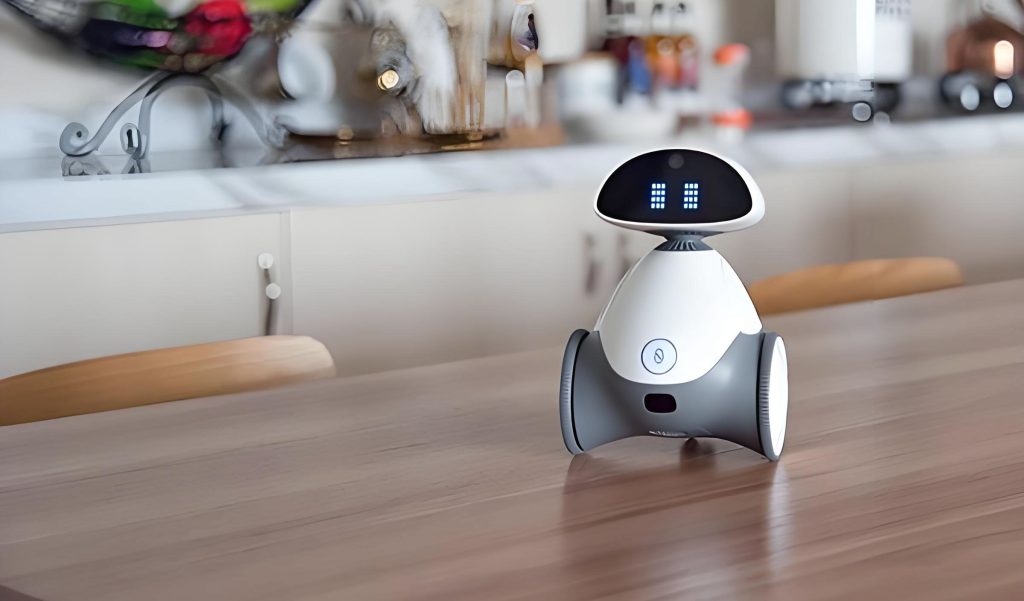
The companion robot’s functionality extends to health monitoring. It continuously tracks electroencephalogram (EEG) signals and heart rate to predict and prevent epileptic seizures. The seizure prediction model uses a machine learning algorithm based on anomaly detection. Let \( S(t) \) represent the seizure risk at time \( t \), derived from EEG features \( X \):
$$ S(t) = \sigma \left( \sum_{i=1}^{m} \alpha_i \cdot X_i(t) \right) $$
where \( \sigma \) is a sigmoid function, \( \alpha_i \) are learned weights, and \( X_i \) are normalized signal components. If \( S(t) \) exceeds a threshold, the companion robot alerts caregivers and initiates calming protocols, such as playing soothing sounds or activating vibration patterns.
Emotional and Interactive Design Elements
Emotional design is pivotal for the companion robot, as children with Angelman Syndrome often experience anxiety and communication difficulties. The robot employs multi-modal interactions—visual, auditory, and tactile—to foster emotional bonds. For example, its interface uses expressive lighting and soft sounds to mirror the child’s mood. The emotional state \( E_c \) of the child is inferred from sensor data (e.g., heart rate variability, vocal tones) and mapped to robot responses \( R \):
$$ R = g(E_c) = \begin{cases}
\text{Playful mode} & \text{if } E_c = \text{joy} \\
\text{Calming mode} & \text{if } E_c = \text{anxiety} \\
\text{Interactive mode} & \text{if } E_c = \text{curiosity}
\end{cases} $$
This dynamic response system enhances engagement and reduces behavioral issues. The companion robot also facilitates language development through repetitive exercises and alternative communication methods, such as picture exchange systems. The learning progress \( P \) in language skills can be modeled as:
$$ P = \beta \cdot \log(1 + n) $$
where \( \beta \) is a learning rate constant and \( n \) is the number of interactions with the companion robot. Regular practice with the robot accelerates this progress.
Implementation and User Experience
In practice, the companion robot is designed for ease of use. It includes a mobile app for caregivers to set therapy schedules, monitor health metrics, and communicate with other families. The app interface is intuitive, with features like emergency hospital routing and community forums. The table below summarizes the app’s key functionalities:
| Function | Description | Benefit |
|---|---|---|
| Health Dashboard | Real-time display of EEG, heart rate, and sleep data | Enables proactive care and early intervention |
| Therapy Planner | Customizable schedules for exercises and reminders | Ensures consistent therapeutic input |
| Emergency Assist | One-touch alert to nearby medical services | Reduces response time during crises |
| Social Connect | Platform for families to share experiences | Builds support networks and reduces isolation |
| Progress Tracking | Graphical reports on developmental milestones | Motivates caregivers and informs adjustments |
The companion robot’s physical design emphasizes safety and comfort. Rounded edges, hypoallergenic materials, and vibrant colors are used to appeal to children while ensuring durability. For instance, the color scheme is based on psychological studies that show blue and green promote calmness. The robot’s mobility is powered by silent motors, allowing it to navigate home environments without disruption. Its battery life is optimized for all-day use, with a charging time given by:
$$ t_c = \frac{C}{I \cdot V} $$
where \( C \) is battery capacity, \( I \) is charging current, and \( V \) is voltage. With fast-charging technology, the companion robot remains operational with minimal downtime.
Evaluation and Future Directions
To assess the companion robot’s impact, I propose a longitudinal study measuring outcomes in quality of life, caregiver stress, and developmental gains. Metrics such as the Angelman Syndrome Quality of Life (ASQoL) score can be tracked over time. The expected improvement \( \Delta Q \) is related to robot usage hours \( H \) and therapy adherence \( A \):
$$ \Delta Q = \gamma \cdot H \cdot A $$
where \( \gamma \) is an efficacy coefficient. Preliminary simulations indicate a positive correlation, supporting the robot’s value. Future iterations may incorporate advanced AI for more personalized interactions, or swarm robotics for multi-child settings. The ultimate aim is to make this companion robot a standard tool in managing Angelman Syndrome, fostering greater societal awareness and inclusion.
In conclusion, my design of a companion robot for children with Angelman Syndrome addresses critical gaps in current care. Through biomimetic morphology, adaptive functionality, and empathetic interactions, this robot offers a comprehensive solution. It not only aids in physical and cognitive development but also provides emotional companionship, reducing the isolation often felt by these children. The integration of health monitoring and therapeutic exercises ensures a holistic approach. By leveraging formulas for optimization and tables for clarity, I have outlined a robust framework. This companion robot represents a step toward inclusive technology, where every child, regardless of ability, can thrive with the support of intelligent, caring machines.