
As a researcher focused on geriatric technology, I have observed the rapid aging of populations worldwide, particularly in regions like China, where the elderly population is projected to exceed 300 million by 2030. This demographic shift, coupled with increasing rates of solitary living among older adults, has heightened concerns about chronic loneliness and its associated health risks, such as hypertension, depression, and cognitive decline. In my view, addressing these issues requires innovative solutions, and companion robots have emerged as a promising tool in elderly care. These robots, leveraging artificial intelligence, machine learning, and natural language processing, offer not only practical assistance but also emotional support, thereby enhancing the quality of life for older adults. In this article, I will delve into the advancements of companion robots in elderly care, covering their overview, classification, applications, the role of nurses, and current challenges, with an emphasis on integrating tables and formulas to summarize key insights. Throughout, I will frequently reference the term “companion robot” to underscore its centrality in this discussion.
The concept of a companion robot stems from the broader field of social robotics, which aims to create machines capable of interacting with humans in emotionally meaningful ways. From my perspective, a companion robot is not merely a functional device but an entity designed to provide companionship, reduce loneliness, and promote social engagement among the elderly. Early versions, such as the seal robot Paro, operated on pre-programmed feedback mechanisms, but modern companion robots utilize cloud-based systems for continuous learning and emotional recognition. These advancements allow companion robots to interpret users’ facial expressions, vocal tones, and body language, enabling more personalized interactions. For instance, by analyzing speech patterns, a companion robot can detect signs of distress and respond with comforting words or activities. This evolution highlights how companion robots are transitioning from simple tools to intelligent companions capable of adapting to individual needs.
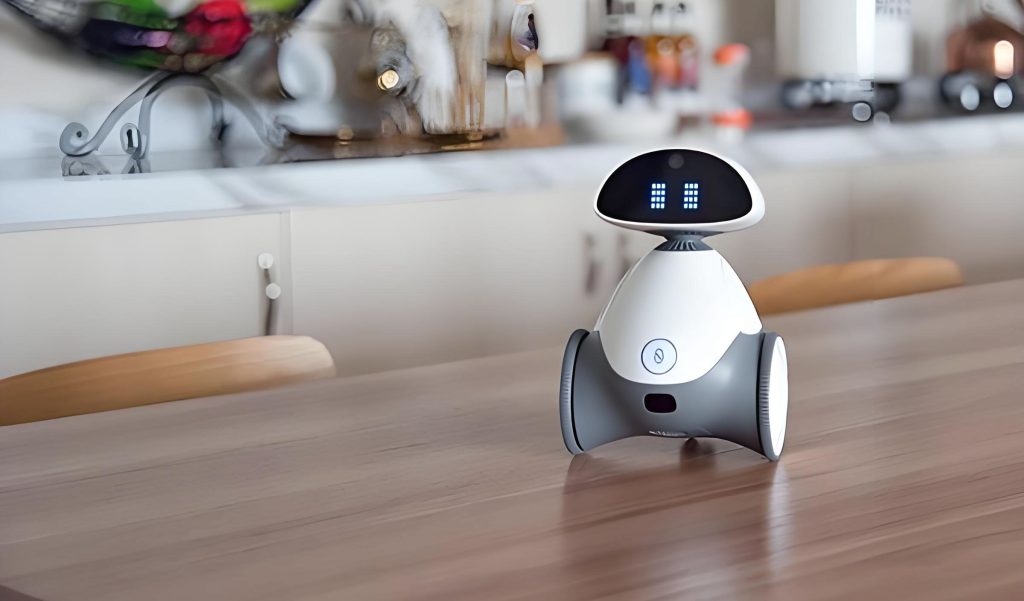
In my analysis, companion robots can be broadly categorized into three types: humanoid, pet-like, and embodied conversational agents. Each type offers distinct advantages in elderly care settings, as summarized in Table 1. Humanoid companion robots, such as Ryan, mimic human form and movements, fostering a sense of familiarity and empathy. Pet-like companion robots, like AIBO or Paro, simulate animal behaviors, encouraging tactile interaction and emotional bonding. Embodied conversational agents are virtual characters embedded in devices, providing dialogue-based support through screens; they excel in delivering empathetic responses and health coaching. From my experience, the choice of companion robot type depends on the user’s preferences and cognitive abilities—for example, pet-like robots may be more effective for individuals with dementia due to their non-threatening appearance. To quantify the emotional impact, I propose a simple formula for companion robot interaction efficacy: $$ E_i = \alpha C + \beta S + \gamma H $$ where \( E_i \) represents interaction efficacy, \( C \) is companionship quality, \( S \) is social facilitation, and \( H \) is health support, with coefficients \( \alpha, \beta, \gamma \) weighting each factor based on user profiles. This model underscores how companion robots integrate multiple functions to enhance elderly well-being.
| Type | Description | Examples | Key Features |
|---|---|---|---|
| Humanoid | Mimics human appearance and actions; high degree of freedom in movement. | Ryan, Alpha | Promotes empathy through human-like interactions; suitable for conversation and task assistance. |
| Pet-like | Simulates animal forms and behaviors; often soft and tactile. | Paro, AIBO | Encourages physical touch and emotional bonding; reduces anxiety in dementia patients. |
| Embodied Conversational Agents | Virtual characters on screens; use dialogue and expressions for support. | Virtual coaches, digital humans | Provides empathic communication and health monitoring; integrates with home devices. |
From my review, the applications of companion robots in elderly care are multifaceted, primarily focusing on companionship, social interaction, and health behavior promotion. In terms of companionship, studies have shown that companion robots can significantly alleviate loneliness and depression. For instance, in hospital settings, virtual companion robots have been used to engage older patients, leading to reduced delirium rates and fewer falls. I attribute this to the companion robot’s ability to provide consistent social presence, which mitigates feelings of isolation. To model this effect, consider the loneliness reduction formula: $$ L(t) = L_0 e^{-kt} + R_c $$ where \( L(t) \) is loneliness level at time \( t \), \( L_0 \) is initial loneliness, \( k \) is a decay constant influenced by companion robot interaction frequency, and \( R_c \) is the companion robot’s companionship coefficient. This equation highlights how sustained use of a companion robot can exponentially decrease loneliness over time.
Regarding social interaction, companion robots act as social catalysts, facilitating connections between older adults and their peers or family. In community-based interventions, companion robots like Paro have been observed to spark conversations among elderly users, thereby expanding their social networks. From my perspective, this is because companion robots serve as shared points of interest, breaking down social barriers. For example, in a group home, a pet-like companion robot might encourage residents to gather and interact, reducing social isolation. To quantify social engagement, I propose a metric: $$ S_e = \frac{N_i}{T} \cdot A $$ where \( S_e \) is social engagement score, \( N_i \) is number of interactions initiated by the companion robot, \( T \) is time period, and \( A \) is average user responsiveness. This formula emphasizes the companion robot’s role in driving social activity.
In health behavior promotion, companion robots excel by integrating with health management systems. They remind users to take medications, monitor vital signs, and encourage physical activity. For chronic conditions like COPD or hypertension, companion robots have improved adherence to treatment plans. From my analysis, this is achieved through personalized feedback loops, where the companion robot adjusts recommendations based on user data. A health compliance model can be expressed as: $$ C_h = \int_0^t (R_a + M_f) dt $$ where \( C_h \) is cumulative health compliance, \( R_a \) is reminder accuracy of the companion robot, and \( M_f \) is motivational feedback. This integral formulation shows how continuous companion robot support accumulates positive health outcomes. Table 2 summarizes key application areas and impacts of companion robots, based on various studies I have reviewed.
| Application Area | Specific Functions | Observed Impacts | Example Studies |
|---|---|---|---|
| Companionship | Emotional support, conversation, activity engagement. | Reduced loneliness, lower depression scores, decreased delirium incidence. | Hospital trials with virtual companion robots. |
| Social Interaction | Facilitating group activities, enabling remote family contact. | Increased social participation, enhanced communication with family. | Community studies using pet-like companion robots. |
| Health Behavior Promotion | Medication reminders, vital monitoring, exercise coaching. | Improved medication adherence, better chronic disease management. | Home-based interventions for COPD and hypertension. |
In my experience, nurses play a crucial role in the successful implementation of companion robots in elderly care. Nurses often serve as intermediaries between technology developers and older users, providing insights into patient needs and preferences. From my observations, nurses can enhance the usability of companion robots by tailoring interactions to individual cognitive levels and emotional states. For instance, a nurse might program a companion robot to deliver reminiscence therapy for a dementia patient, thereby maximizing therapeutic benefits. Moreover, nurses advocate for the adoption of companion robots by demonstrating their efficacy in clinical settings. I believe that nurse involvement ensures that companion robots are not just technological gadgets but integral components of holistic care plans. To formalize this, consider the nurse-robot synergy equation: $$ N_s = \frac{U_a + E_v}{T_c} $$ where \( N_s \) is nurse-robot synergy score, \( U_a \) is user acceptance facilitated by nurses, \( E_v \) is evidence-based validation, and \( T_c \) is training complexity. This ratio highlights how nurses reduce barriers to companion robot integration.
Despite the promise of companion robots, several challenges persist from my viewpoint. Technical limitations include battery life constraints, noise interference during movement, and difficulties in understanding diverse dialects or accents. These issues can hinder the companion robot’s performance and user satisfaction. From an ethical standpoint, privacy concerns arise due to data collection by companion robots, such as health metrics and personal conversations. Additionally, there is a risk of over-reliance on companion robots, potentially leading to social withdrawal from human interactions. In my analysis, addressing these challenges requires multidisciplinary collaboration. For example, improving speech recognition algorithms can enhance the companion robot’s ability to process regional languages. To quantify technical improvement, I propose a reliability index: $$ R_r = \frac{F_o}{E_c} \cdot S_a $$ where \( R_r \) is robot reliability, \( F_o \) is operational functionality, \( E_c \) is error rate, and \( S_a \) is system adaptability. This index can guide developers in refining companion robot designs. Table 3 outlines key challenges and proposed strategies for companion robots in elderly care.
| Challenge Category | Specific Issues | Proposed Strategies | Role of Companion Robot |
|---|---|---|---|
| Technical | Short battery life, noise, language barriers. | Use advanced materials, develop dialect-aware AI, optimize power management. | Enhance interaction continuity and accuracy of the companion robot. |
| Privacy and Ethical | Data security risks, over-dependence on robots. | Implement encryption, set data access tiers, promote balanced human-robot interaction. | Ensure companion robot operates with ethical safeguards and transparency. |
| Social Acceptance | Resistance from elderly users or caregivers. | Involve nurses in training, demonstrate benefits through pilot studies. | Position companion robot as a supplement to human care, not a replacement. |
In conclusion, from my comprehensive review, companion robots represent a transformative tool in elderly care, capable of addressing loneliness, enhancing social connections, and supporting health management. The evolution of companion robots from simple automated devices to intelligent companions reflects advancements in AI and robotics. I am confident that with continued innovation and interdisciplinary efforts, the limitations of companion robots can be overcome, paving the way for their widespread adoption in home, community, and institutional settings. The future of elderly care lies in integrating companion robots into multi-level smart care models, ensuring that older adults can age with dignity and improved quality of life. To encapsulate the overall impact, consider a holistic well-being formula: $$ W = \int (C_r + H_s + S_n) dt $$ where \( W \) is overall well-being, \( C_r \) is contribution from companion robot, \( H_s \) is human support, and \( S_n \) is social network strength. This integral emphasizes the cumulative benefits of sustained companion robot interaction alongside human care, underscoring the symbiotic relationship that defines modern elderly care.