
As I delve into the realm of robotics and artificial intelligence, I am consistently amazed by the transformative potential of companion robots in shaping our societal future. In recent years, with the surge of big data, cloud computing, the Internet of Things, and intelligent recognition, the robotics industry has flourished, leading to the emergence of intelligent machines that permeate our daily lives. Among these, companion robots designed for children have evolved from mere playthings to essential partners in growth and education. This shift reflects a broader trend where human-robot collaboration is becoming a mainstream direction in AI research and societal development. In this article, I will explore how companion robots are not just assistants but pivotal tools in addressing one of society’s most pressing issues: educational inequality. From my perspective, these robots hold the key to democratizing education, especially for underserved communities, by providing personalized, interactive, and emotionally intelligent support.
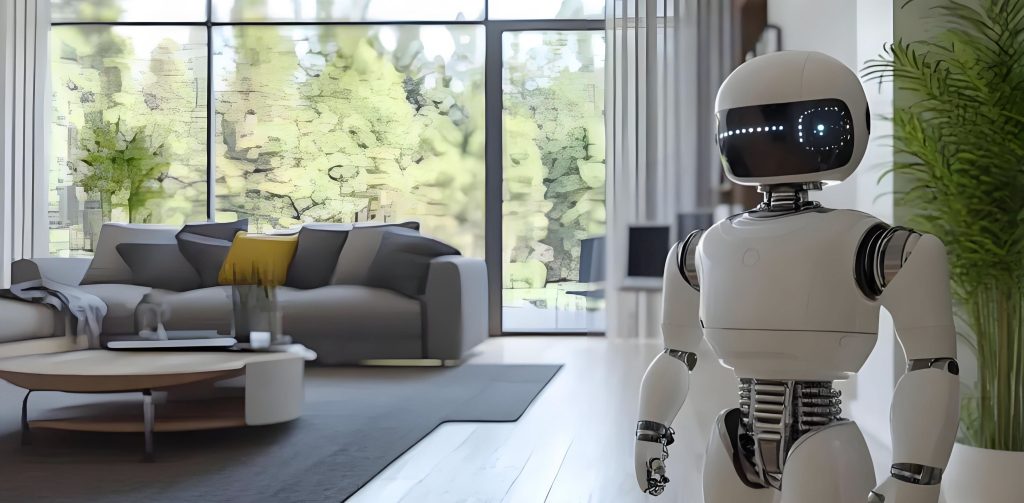
Reflecting on the journey from traditional toys to intelligent companions, I recall how toys have long been considered angels of childhood, as once noted by thinkers. However, in my observations, traditional functional toys like blocks or cars often lack interactivity and cannot adapt to a child’s emotional state. This leads to fleeting interest and loneliness, contradicting parents’ hopes for a joyful upbringing. In contrast, a companion robot embodies a paradigm shift. It serves as a true playmate, capable of human-like movements and interactions. Through advanced AI, a companion robot can engage in meaningful dialogue, recognize emotions, and provide feedback, thereby fostering a deeper connection. This evolution from passive toy to active partner is crucial, as it addresses the innate need for companionship in child development. As I analyze this transition, the companion robot emerges not as a replacement for human care but as a supplement that enhances emotional and cognitive growth.
From an educational standpoint, the value of a companion robot lies in its ability to act as an effective carrier for growth-oriented learning. In my experience, many parents struggle with time constraints, especially in dual-income households or among migrant workers, leaving children with limited guidance. Here, a companion robot steps in as a surrogate educator, offering structured lessons while maintaining a playful demeanor. The core technologies enabling this include motion control for humanoid robots, speech recognition, emotional analysis, and data mining. For instance, consider a companion robot equipped with English tutoring capabilities. It can assess a child’s proficiency through interactive sessions, adjust curriculum dynamically, and provide real-time feedback. This personalized approach is encapsulated in a closed-loop system, which I often model using the following formula for adaptive learning:
$$ L(t+1) = L(t) + \alpha \cdot (P(t) – L(t)) \cdot E(t) $$
Here, \( L(t) \) represents the learning level at time \( t \), \( P(t) \) is the performance metric, \( E(t) \) denotes emotional engagement measured by the companion robot, and \( \alpha \) is a learning rate parameter. This equation illustrates how a companion robot continuously refines its teaching strategy based on the child’s progress and mood, ensuring optimal educational outcomes.
To better understand the advantages of companion robots over traditional tools, I have compiled a comparative table. This highlights the multifaceted roles a companion robot can play in a child’s life, emphasizing its superiority in fostering holistic development.
| Aspect | Traditional Toys | Companion Robot |
|---|---|---|
| Interactivity | Limited or none | High, with real-time dialogue and response |
| Emotional Recognition | Absent | Present, using AI to detect joy, sadness, etc. |
| Educational Content | Static, pre-defined | Dynamic, personalized via cloud updates |
| Data Feedback to Parents | No data collection | Comprehensive analytics on learning and mood |
| Role in Child’s Life | Play object | Playmate and tutor |
In my research, I have found that the integration of companion robots into education systems can significantly mitigate resource disparities. Urban-rural divides often result in unequal access to quality teachers and materials, particularly in subjects like English. A companion robot, however, can bridge this gap by delivering standardized yet adaptable instruction. For example, in remote areas, a companion robot equipped with a robust knowledge base and internet connectivity can provide lessons comparable to those in urban centers. Moreover, through cloud computing, these robots can aggregate data from multiple users, enabling large-scale analysis of educational trends. I often use the following formula to quantify the impact of companion robots on educational equality:
$$ E_{eq} = \sum_{i=1}^{n} \frac{Q_i \cdot A_i}{D_i} $$
where \( E_{eq} \) is the educational equality index, \( Q_i \) represents the quality of education provided by the companion robot in region \( i \), \( A_i \) is accessibility (number of robots per child), and \( D_i \) denotes the digital divide factor. By maximizing \( Q_i \) and \( A_i \), companion robots can elevate \( E_{eq} \), promoting fairness across regions.
The technological backbone of companion robots is rooted in advanced AI algorithms. As I explore these, speech recognition and emotional analysis are particularly vital. A companion robot must accurately interpret a child’s words and feelings to respond appropriately. This involves natural language processing (NLP) models and computer vision techniques. For instance, emotion detection can be modeled using a neural network that classifies facial expressions or vocal tones. I often represent this with a softmax function for multi-class emotion prediction:
$$ P(y=k|x) = \frac{e^{z_k}}{\sum_{j=1}^{K} e^{z_j}} $$
Here, \( x \) is the input feature vector from sensors, \( z_k \) are the logits for emotion class \( k \), and \( K \) is the total number of emotions (e.g., happy, sad, angry). This allows the companion robot to adapt its behavior in real-time, enhancing the companionship experience.
Beyond individual learning, companion robots contribute to systemic change by enabling scalable educational solutions. In my view, policymakers can leverage these robots to implement centralized curricula while allowing for local customization. The data collected by companion robots—such as learning progress, engagement levels, and emotional states—can inform broader educational strategies. To illustrate, consider a table summarizing key metrics that companion robots monitor to optimize education delivery:
| Metric Category | Description | Impact on Education |
|---|---|---|
| Learning Velocity | Rate of skill acquisition measured through quizzes | Identifies areas needing reinforcement |
| Emotional Engagement Score | Derived from facial and vocal analysis during sessions | Ensures lessons are enjoyable and effective |
| Social Interaction Frequency | Number of interactive dialogues initiated by the child | Promotes communication skills |
| Parental Feedback Integration | Data shared with parents via apps for remote monitoring | Enhances home-school collaboration |
As I project into the future, the role of companion robots will only expand. With advancements in AI, we can expect these robots to become more empathetic and capable of handling complex educational tasks. For instance, a companion robot might soon tutor in multiple subjects, from mathematics to science, using adaptive algorithms that consider a child’s cognitive style. The potential for reducing educational inequality is immense, especially when combined with government initiatives aimed at digital inclusion. In my analysis, the cost-effectiveness of companion robots makes them viable for widespread deployment. A simple cost-benefit model can be expressed as:
$$ CBR = \frac{\sum_{t=0}^{T} \frac{B_t}{(1+r)^t}}{\sum_{t=0}^{T} \frac{C_t}{(1+r)^t}} $$
where \( CBR \) is the cost-benefit ratio, \( B_t \) are benefits like improved test scores and reduced dropout rates, \( C_t \) are costs including robot production and maintenance, \( r \) is the discount rate, and \( T \) is the time horizon. A \( CBR > 1 \) indicates that investing in companion robots yields positive societal returns.
In conclusion, from my first-person perspective as an advocate for technological integration in education, companion robots represent a groundbreaking tool for fostering equity. They transcend traditional toys by offering interactive companionship and personalized instruction, thereby addressing the dual challenges of parental time scarcity and regional resource gaps. By harnessing AI, data analytics, and cloud connectivity, these robots can deliver high-quality education to any child, anywhere. As we move forward, I believe that companion robots will become indispensable allies in creating a more balanced and inclusive educational landscape. Their ability to adapt, empathize, and teach positions them as catalysts for social progress, turning the vision of equal opportunity into a tangible reality for generations to come.