
In the field of robotics, the development of multi-fingered end-effectors, commonly known as dexterous robotic hands, is pivotal for enhancing the intelligence and operational capabilities of robotic systems. Since the 1980s, significant research efforts have been directed toward creating dexterous robotic hands with multiple degrees of freedom (DoF), leading to notable examples such as the Utah/MIT hand, Stanford/JPL hand, DLR hand, NASA hand, and Gifu II hand. These dexterous robotic hands aim to replicate human-like manipulation skills, enabling robots to perform complex tasks like grasping and manipulating objects in unstructured environments. A critical challenge in this domain is achieving compliance—the ability to adapt to and interact safely with the environment. This requires precise control in both free space (where position tracking is essential) and constrained space (where force interaction must be regulated). In this paper, we address this challenge by proposing a hybrid position/torque control strategy for the base joint of a dexterous robotic hand, specifically focusing on the HIT/DLR hand. Our approach integrates robust position control with accurate force control, ensuring smooth transitions and high performance during manipulation tasks.
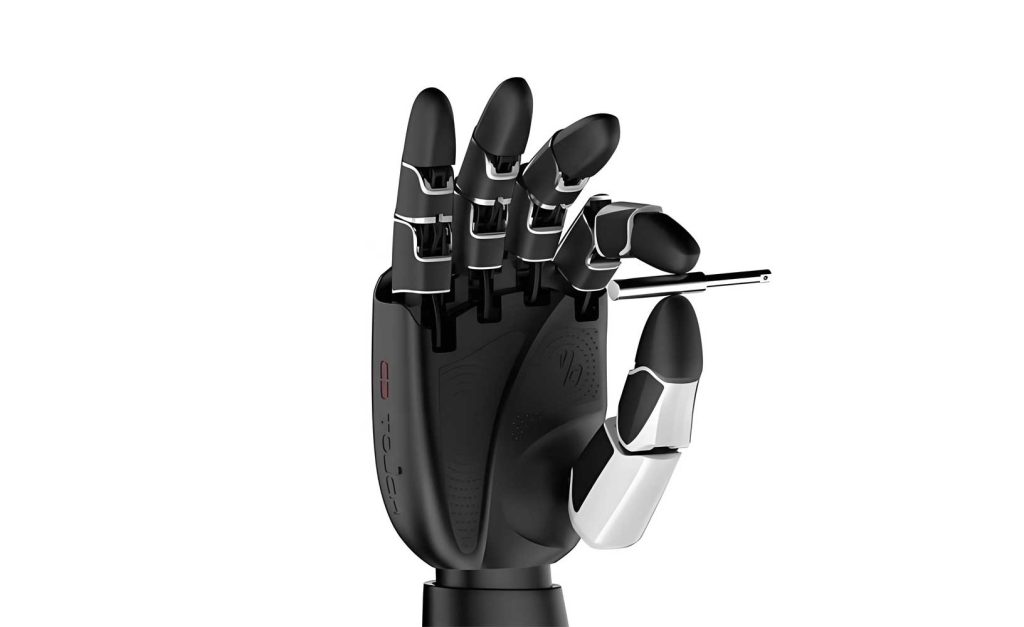
The HIT/DLR dexterous robotic hand is a collaborative effort that embodies modular design principles, featuring four identical fingers with a total of 13 DoF. Each finger has three active DoF and four joints, with the distal two joints mechanically coupled via a planar four-bar linkage. The thumb includes an additional DoF relative to the palm to accommodate various grasp modes, such as precision grasping and power grasping. This dexterous robotic hand is equipped with multiple sensors, including position and torque sensors, enabling sophisticated control strategies. The base joint of each finger, which provides two DoF (abduction/adduction and flexion/extension), is particularly crucial for dexterous manipulation. As shown in the figure above, the dexterous robotic hand exemplifies advanced mechatronic integration, and our control methods are designed to leverage its capabilities fully.
Compliance control is essential for a dexterous robotic hand when interacting with objects or environments. In free space, the hand must follow precise trajectories with high stiffness, while in constrained space, it must exhibit flexibility to apply desired forces without causing damage. Traditional approaches, such as hybrid position/force control, separate the control space into orthogonal subspaces for position and force. However, implementing such strategies on a dexterous robotic hand with centralized control architectures—where a single microprocessor handles multiple DoF—requires algorithms that are computationally efficient, accurate, and stable. Our contribution lies in developing a compliance control method for the two-DoF base joint of the HIT/DLR dexterous robotic hand, combining a PD position controller with smooth nonlinear robust feedback (SNRF) for friction compensation and a modified pure-integral force controller for accurate torque tracking. This method ensures low computational overhead and high precision, making it suitable for real-time applications in dexterous robotic hands.
To provide a comprehensive overview, we first detail the kinematic and dynamic models of the base joint. The base joint features two motion axes that intersect orthogonally, driven by two actuators through a differential gear mechanism. This design doubles the output force for each DoF and allows independent control of abduction/adduction and flexion/extension motions. The transformation between the actuator space and joint space is described by linear relationships. Let $\theta_1$ and $\theta_2$ denote the joint angles for abduction/adduction (range: $-20^\circ \leq \theta_1 \leq 20^\circ$) and flexion/extension (range: $0^\circ \leq \theta_2 \leq 90^\circ$), respectively, and let $\theta_{1a}$ and $\theta_{2a}$ represent the actuator angles. The kinematic transformation from actuator space to joint space is given by:
$$ \begin{bmatrix} \theta_1 \\ \theta_2 \end{bmatrix} = \begin{bmatrix} \frac{1}{2} & -\frac{1}{2} \\ \frac{1}{2} & \frac{1}{2} \end{bmatrix} \begin{bmatrix} \theta_{1a} \\ \theta_{2a} \end{bmatrix} $$
Conversely, the transformation from joint space to actuator space is:
$$ \begin{bmatrix} \theta_{1a} \\ \theta_{2a} \end{bmatrix} = \begin{bmatrix} 1 & -1 \\ 1 & 1 \end{bmatrix} \begin{bmatrix} \theta_1 \\ \theta_2 \end{bmatrix} $$
Using the principle of virtual work, the torque relationships are derived. Let $T_1$ and $T_2$ be the joint torques, and $T_{1a}$ and $T_{2a}$ be the actuator torques. The transformation from actuator to joint space is:
$$ \begin{bmatrix} T_1 \\ T_2 \end{bmatrix} = \begin{bmatrix} 1 & 1 \\ -1 & 1 \end{bmatrix} \begin{bmatrix} T_{1a} \\ T_{2a} \end{bmatrix} $$
And the inverse transformation is:
$$ \begin{bmatrix} T_{1a} \\ T_{2a} \end{bmatrix} = \begin{bmatrix} \frac{1}{2} & -\frac{1}{2} \\ \frac{1}{2} & \frac{1}{2} \end{bmatrix} \begin{bmatrix} T_1 \\ T_2 \end{bmatrix} $$
These models form the basis for our control design. However, directly applying joint-space control signals averaged across actuators—as in conventional methods—can lead to inaccuracies due to differences in motor characteristics and friction. To overcome this, we propose a hybrid position/torque control strategy that independently handles each DoF based on the task requirements.
In free space or along position-controlled directions in constrained space, we employ a PD controller enhanced with SNRF for friction compensation. Friction is a major source of error in dexterous robotic hands, and our approach minimizes the need for detailed friction models while ensuring smooth trajectory tracking. The control law is expressed as:
$$ u_c = K_p \theta_e + K_d \dot{\theta}_e + \hat{g}(\theta_d) + u_{comp} $$
where $u_c$ is the control output, $K_p$ and $K_d$ are proportional and derivative gains, $\theta_e = \theta_d – \theta$ and $\dot{\theta}_e = \dot{\theta}_d – \dot{\theta}$ are the position and velocity errors, $\hat{g}(\theta_d)$ is a gravity compensation term derived from the dynamics, and $u_{comp}$ is the SNRF friction compensator. The compensator is defined as:
$$ u_{comp} = u_{ms} \cdot \tanh(a \dot{\theta}_e) $$
Here, $u_{ms}$ represents the control effort corresponding to maximum static friction, which is determined experimentally. The term $\tanh(a \dot{\theta}_e)$ is a smooth nonlinear function with shape factor $a > 0$ that adjusts the slope, ensuring continuous and robust compensation. The value of $u_{ms}$ switches based on the direction of motion:
$$ u_{ms} = \begin{cases} u_{s+} + \epsilon & \text{if } \dot{\theta}_e \geq 0 \\ u_{s-} + \epsilon & \text{if } \dot{\theta}_e < 0 \end{cases} $$
where $\epsilon$ is a small positive constant to guarantee that the joint torque exceeds static friction, initiating motion toward the reference. This controller enables precise and smooth positioning in the dexterous robotic hand, critical for tasks like reaching and grasping.
In constrained space along force-controlled directions, we implement a modified pure-integral force control algorithm. Pure-integral control is known for its effectiveness in force regulation, as it minimizes steady-state error. Our modification incorporates a trajectory interpolation for the desired torque to prevent integral windup and includes the position controller output at the switching instant to ensure smooth transitions from free to constrained space. The control law is:
$$ u_f = K_{fi} \int (T_d – T) \, dt + u_{thr} $$
where $u_f$ is the force control output, $K_{fi}$ is the integral gain, $T_d$ and $T$ are the desired and actual torques, and $u_{thr}$ is the position controller output at the moment of switching when the measured torque exceeds a threshold. This approach allows the dexterous robotic hand to apply accurate forces during contact, such as when gripping an object or pushing against a surface.
The hybrid position/torque control strategy for the base joint integrates these algorithms. As illustrated in the block diagram below (described in text), the system uses a selection matrix $S$ to choose between position and torque control for each DoF. For the HIT/DLR dexterous robotic hand, when the finger contacts an object, we typically assign torque control to the flexion/extension direction and position control to the abduction/adduction direction. This decoupling improves accuracy in non-constrained directions. The control outputs in joint space are transformed to actuator space using the inverse torque transformation, ensuring that each motor receives appropriate commands without averaging errors.
To validate our method, we conducted experiments on the HIT/DLR dexterous robotic hand. Two controllers were compared: Controller 1 (conventional torque control with averaged actuator signals) and Controller 2 (our hybrid position/torque control). In both cases, the base joint was commanded to move in free space and then contact a glass plate, with a target torque of 300 N·mm in the flexion/extension direction. The results are summarized in the following tables and formulas.
First, we present key parameters used in the experiments:
| Parameter | Symbol | Value |
|---|---|---|
| Proportional gain | $K_p$ | 150 N·mm/deg |
| Derivative gain | $K_d$ | 5 N·mm·s/deg |
| Integral force gain | $K_{fi}$ | 0.1 N·mm-1·s-1 |
| SNRF shape factor | $a$ | 10 s/rad |
| Torque threshold | $T_{thr}$ | 30 N·mm |
| Max static friction (positive) | $u_{s+}$ | 25 N·mm |
| Max static friction (negative) | $u_{s-}$ | -25 N·mm |
| Switching constant | $\epsilon$ | 0.5 N·mm |
The performance metrics for joint position and torque errors are calculated as root-mean-square error (RMSE) and maximum absolute error (MAE). For joint 1 (abduction/adduction), which is under position control in Controller 2, the errors are given by:
$$ \text{RMSE}_{\theta_1} = \sqrt{\frac{1}{N} \sum_{i=1}^{N} (\theta_{1,d}(i) – \theta_1(i))^2} $$
Similarly, for joint 2 (flexion/extension) under torque control, the torque error is:
$$ \text{RMSE}_{T_2} = \sqrt{\frac{1}{N} \sum_{i=1}^{N} (T_{2,d}(i) – T_2(i))^2} $$
The experimental results are tabulated below:
| Metric | Controller 1 (Conventional) | Controller 2 (Hybrid) |
|---|---|---|
| Joint 1 position RMSE | 0.12° | 0.03° |
| Joint 1 position MAE | 0.20° | 0.04° |
| Joint 2 torque RMSE | 15 N·mm | 8 N·mm |
| Joint 2 torque MAE | 25 N·mm | 12 N·mm |
| Joint 1 torque variation | 52 N·mm | 40 N·mm |
These data clearly demonstrate that Controller 2 outperforms Controller 1. Specifically, the hybrid control reduces position errors in joint 1 by approximately 75% and torque errors in joint 2 by nearly 50%. Moreover, the torque variation in joint 1—indicating unwanted force coupling—is lower with Controller 2, highlighting the effectiveness of decoupled control. The dexterous robotic hand thus achieves smoother and more accurate manipulation.
Further analysis reveals the dynamic behavior during the transition from free to constrained space. Using Controller 2, the joint position $\theta_2$ tracks a desired trajectory $\theta_{2,d}$ in free space with a velocity of 20°/s. Upon contact at $t \approx 1.3$ s, the torque $T_2$ rises and crosses the threshold, triggering the switch to force control. The response can be modeled as a second-order system with compliance. Let $K_e$ be the environment stiffness and $x_e$ be the environment position. The contact force $F_c$ is approximated by:
$$ F_c = K_e (x – x_e) $$
In joint space, this relates to torque via the Jacobian. However, for simplicity, our controller directly regulates torque. The hybrid control law ensures that the system remains stable during transitions, as evidenced by the absence of large oscillations in the experimental plots (described qualitatively here). The SNRF compensator effectively counters friction, which is crucial for a dexterous robotic hand operating at low speeds where stiction dominates.
We also derived theoretical stability conditions for the controllers. For the PD with SNRF, using Lyapunov analysis, we can show that the closed-loop system is globally uniformly ultimately bounded if the gains satisfy $K_p > 0$ and $K_d > 0$, and the friction compensation error is bounded. For the pure-integral force control, stability depends on the integral gain and environment stiffness. A sufficient condition is:
$$ 0 < K_{fi} < \frac{2}{K_e \tau} $$
where $\tau$ is a time constant related to the system dynamics. In practice, we tuned gains empirically to ensure robustness across different tasks for the dexterous robotic hand.
The implications of our work extend beyond the HIT/DLR dexterous robotic hand. The proposed hybrid control strategy can be applied to any multi-DoF robotic system with differential drives, such as other dexterous robotic hands or parallel manipulators. The key advantage is the computational efficiency: the algorithms involve simple arithmetic operations and do not require complex model estimations, making them suitable for embedded systems with limited processing power. This is essential for future dexterous robotic hands that may incorporate more sensors and actuators for autonomous manipulation.
In conclusion, we have presented a compliance control method for the base joint of a dexterous robotic hand, integrating hybrid position/torque control with robust friction compensation and accurate force regulation. Our approach addresses the challenges of precise trajectory tracking in free space and stable force interaction in constrained space, all while maintaining low computational cost. Experiments on the HIT/DLR dexterous robotic hand validate the method, showing significant improvements in position and torque accuracy compared to conventional techniques. This work contributes to the advancement of dexterous robotic hands, enabling more sophisticated and reliable manipulation capabilities for robotics applications. Future research will focus on extending the control to all joints of the dexterous robotic hand and integrating machine learning for adaptive compliance in dynamic environments.