
In my perspective as an observer and participant in this rapidly evolving field, the advent of medical robots represents a transformative leap in healthcare. Supported by a series of national policies aimed at bolstering the robotics industry, the domain of medical robots, particularly surgical robots, has transitioned from nascent beginnings to a phase of accelerated growth. The unique demands of the medical sector impose certain regulatory and standard constraints, yet as an emerging interdisciplinary fusion of medicine and engineering, medical robots exhibit robust vitality and promise. Throughout this discussion, I will delve into the core technologies, industrial landscape, and future trajectories of medical robots, emphasizing their critical role in modern medicine. The integration of artificial intelligence with medical robots is not just an enhancement but a fundamental shift in how procedures are performed, making them more precise, less invasive, and increasingly accessible.
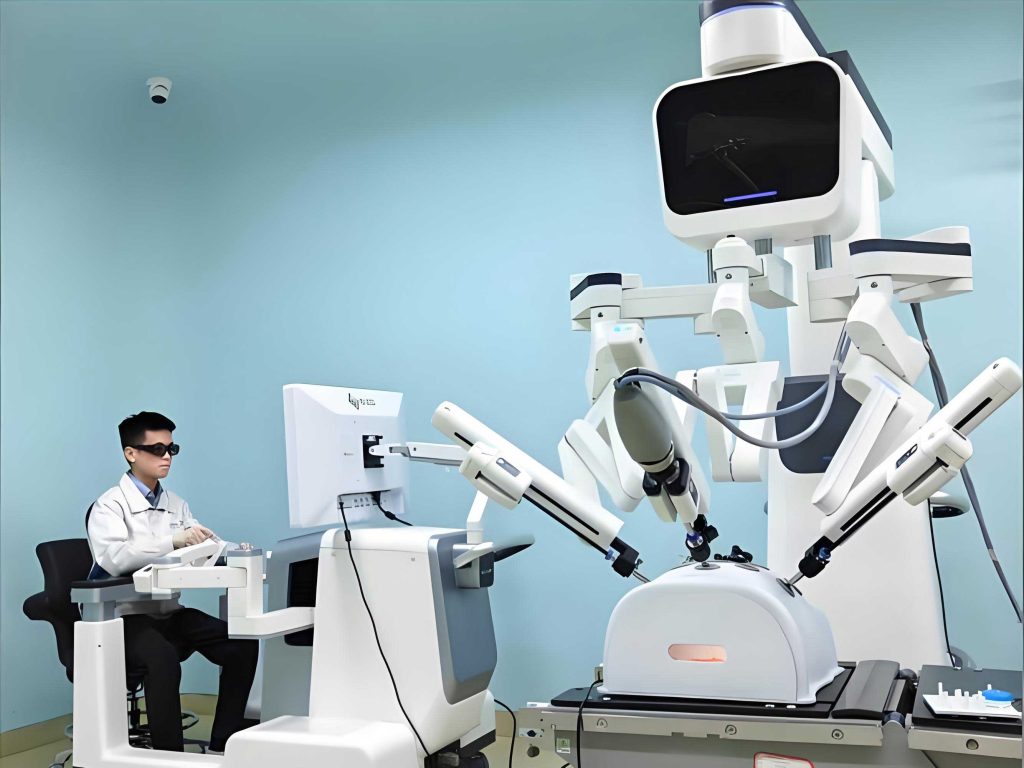
The journey of medical robots began with groundbreaking systems like the early laparoscopic robots, which set the stage for a diverse array of applications. Today, medical robots span from head to toe, addressing various anatomical regions with specialized systems. In my analysis, the core impetus behind this expansion lies in the recognition that intelligent robotic systems serve as the optimal entry point for AI in healthcare. This synergy drives innovation, leading to devices that can navigate complex human physiology with minimal intrusion. The evolution from research projects to commercial products underscores the dynamic nature of the medical robot industry, where technological advancements continuously push the boundaries of what is possible in surgery and therapy.
Fundamental Technologies Underpinning Medical Robots
At the heart of every medical robot are several key technologies that enable its functionality. In my experience, these include advanced sensing, precise actuation, intelligent control algorithms, and seamless human-robot interaction. The design of a medical robot must account for the delicate and often unpredictable nature of biological tissues, necessitating innovations in materials, mechanics, and computing. For instance, force sensing is crucial for providing haptic feedback to surgeons, allowing them to “feel” the tissue through the robotic interface. This can be modeled using equations that relate joint torques to external forces, such as:
$$ \tau = J^T F $$
where $\tau$ represents the joint torques, $J^T$ is the transpose of the Jacobian matrix mapping joint space to task space, and $F$ is the external force vector. This formula highlights how medical robots translate human intent into precise mechanical actions while maintaining safety.
Another critical aspect is image-guided navigation, which relies on medical imaging modalities like CT, MRI, or ultrasound. Reconstruction algorithms process these images to create 3D models of the surgical site. A common approach involves volumetric reconstruction using voxel-based methods, expressed as:
$$ V(x,y,z) = \sum_{i=1}^{N} w_i \cdot I_i(x,y,z) $$
where $V$ is the reconstructed volume, $I_i$ are the input images, and $w_i$ are weighting factors accounting for image quality and alignment. This enables medical robots to visualize internal structures in real-time, enhancing accuracy in targeting lesions or anatomical landmarks.
Furthermore, control systems for medical robots often employ adaptive and learning-based techniques to handle uncertainties. For example, a proportional-integral-derivative (PID) controller with adaptive gains can adjust to varying tissue stiffness, modeled as:
$$ u(t) = K_p e(t) + K_i \int_0^t e(\tau) d\tau + K_d \frac{de(t)}{dt} $$
where $u(t)$ is the control output, $e(t)$ is the error signal, and $K_p$, $K_i$, $K_d$ are tunable parameters. In medical robots, these parameters might be optimized online using machine learning algorithms, ensuring stable and responsive operation during procedures.
| Technology | Description | Application in Medical Robots |
|---|---|---|
| Force Sensing | Measures interaction forces between robot and tissue | Provides haptic feedback in surgical robots |
| Image Reconstruction | Creates 3D models from medical images | Guides navigation in laparoscopic and orthopedic robots |
| Adaptive Control | Adjusts control parameters in real-time | Enhances precision in soft tissue manipulation |
| Human-Robot Interaction | Facilitates intuitive communication between surgeon and robot | Used in master-slave systems like robotic-assisted surgery |
| Flexible Actuation | Enables movement in confined spaces | Crucial for natural orifice and vascular robots |
Industrial Landscape and Market Dynamics of Medical Robots
From my observation, the global market for medical robots has been expanding at a remarkable pace, driven by technological maturation and growing clinical acceptance. Surgical robots, a dominant subset of medical robots, have seen particularly strong growth. According to industry analyses, the market size escalated from approximately $3 billion in 2015 to over $8 billion in 2020, with projections suggesting it could exceed $30 billion by 2026, reflecting a compound annual growth rate (CAGR) of around 26%. This growth is fueled by the increasing adoption of robotic-assisted procedures across specialties, from general surgery to orthopedics. The medical robot industry benefits from continuous policy support, which accelerates research and commercialization efforts.
| Year | Market Size (USD Billion) | Growth Rate (%) | Key Drivers |
|---|---|---|---|
| 2015 | 3.0 | – | Early adoption of laparoscopic robots |
| 2020 | 8.32 | 22.5 | Expansion into new surgical domains |
| 2023 (Est.) | 12.5 | 20.0 | Increased regulatory approvals |
| 2026 (Proj.) | 33.59 | 26.2 | Rise of AI-integrated medical robots |
The market segmentation reveals that laparoscopic robots hold the largest share, accounting for about 75% of the surgical robot market as of recent years. This is followed by orthopedic robots at roughly 10%, with other categories like natural orifice and vascular robots gaining traction. In my assessment, this distribution reflects the historical precedence and clinical value of laparoscopic systems, which have demonstrated significant benefits in minimally invasive surgery. However, emerging types of medical robots are poised to capture larger segments as they prove their efficacy in diverse applications. The competitive landscape includes both international giants and domestic innovators, each contributing to the advancement of medical robot technologies. While specific companies are not named here, it is evident that collaborations and independent研发 are pushing the boundaries, leading to a proliferation of approved devices.
Diverse Categories of Medical Robots and Their Clinical Impact
In my exploration, medical robots can be classified based on their access pathways and surgical specialties. Each category addresses unique clinical challenges, leveraging tailored technologies to improve patient outcomes. The development trajectory often moves from open surgery to minimally invasive and, ideally, non-invasive approaches, with medical robots serving as key enablers of this transition.
Laparoscopic Surgical Robots
Laparoscopic robots represent the most established category of medical robots. These systems typically feature multiple robotic arms controlled by a surgeon from a console, offering enhanced dexterity and 3D visualization. The technical prowess of such medical robots lies in their mechanical design, force feedback capabilities, and integration with imaging systems. For example, the kinematic model of a robotic arm can be described using Denavit-Hartenberg parameters, which define the transformation between consecutive links:
$$ A_i = \begin{bmatrix} \cos\theta_i & -\sin\theta_i \cos\alpha_i & \sin\theta_i \sin\alpha_i & a_i \cos\theta_i \\ \sin\theta_i & \cos\theta_i \cos\alpha_i & -\cos\theta_i \sin\alpha_i & a_i \sin\theta_i \\ 0 & \sin\alpha_i & \cos\alpha_i & d_i \\ 0 & 0 & 0 & 1 \end{bmatrix} $$
where $\theta_i$, $d_i$, $a_i$, and $\alpha_i$ are joint angle, link offset, link length, and twist angle, respectively. This formulation allows precise control of the medical robot’s end-effector, critical for suturing or tissue manipulation in confined spaces.
Natural Orifice and Vascular Intervention Robots
These medical robots are designed to navigate through natural openings or blood vessels to reach target sites without external incisions. Flexible robotic systems are essential here, employing continuum or snake-like designs that can bend and twist through tortuous paths. The kinematics of a flexible robot can be modeled using piecewise constant curvature assumptions, where the shape is parameterized by arc length $s$ and curvature $\kappa(s)$:
$$ \mathbf{p}(s) = \int_0^s \begin{bmatrix} \cos(\kappa(\sigma)) \\ \sin(\kappa(\sigma)) \\ 0 \end{bmatrix} d\sigma $$
with $\mathbf{p}(s)$ being the position along the backbone. This enables medical robots to traverse the bronchial tree or gastrointestinal tract, performing biopsies or ablations with minimal trauma. In vascular applications, robotic catheters can be guided using magnetic navigation or mechanical steering, reducing radiation exposure for clinicians and improving accuracy in treating conditions like coronary artery disease.
Orthopedic and Neurosurgical Robots
Orthopedic medical robots excel in procedures involving bones and joints, where high precision is paramount. These systems often rely on preoperative planning based on CT scans, followed by intraoperative registration to align the robot with the patient’s anatomy. A common registration technique involves point-based matching, solved by minimizing the error function:
$$ E = \sum_{i=1}^{N} || \mathbf{q}_i – (R\mathbf{p}_i + \mathbf{t}) ||^2 $$
where $\mathbf{p}_i$ and $\mathbf{q}_i$ are corresponding points in the image and physical space, respectively, and $R$ and $\mathbf{t}$ are the rotation matrix and translation vector. This ensures that the medical robot accurately places implants or performs cuts according to plan. Neurosurgical robots similarly enhance accuracy in brain surgeries, leveraging stereotactic frames or frameless navigation to target tumors or functional areas with sub-millimeter precision.
| Category | Access Method | Key Technologies | Clinical Benefits |
|---|---|---|---|
| Laparoscopic Robots | Minimally invasive via small incisions | Multi-arm teleoperation, 3D vision, force feedback | Reduced blood loss, shorter recovery |
| Natural Orifice Robots | Through natural openings (e.g., mouth, rectum) | Flexible actuators, real-time imaging, navigation AI | No external scars, lower infection risk |
| Vascular Robots | Via blood vessels | Steerable catheters, electromagnetic guidance, hemodynamic monitoring | Minimized radiation, improved procedural accuracy |
| Orthopedic Robots | Percutaneous or open access to bones | CT-based planning, robotic milling, haptic boundaries | Precise implant placement, reduced outliers |
| Neurosurgical Robots | Skull-mounted or frameless | Stereotactic navigation, micro-positioning, laser ablation | Enhanced targeting in delicate brain regions |
Human-Robot Collaboration and Intelligent Operation in Medical Robots
In my view, the future of medical robots lies in advancing from mere tools to collaborative partners that understand and adapt to the surgical context. Human-robot collaboration encompasses various levels, from passive assistance where the medical robot follows predefined paths, to active cooperation where it interprets surgeon intent and environmental changes. Intelligent medical robots employ machine learning algorithms to perceive the operative field, plan actions, and execute tasks with a degree of autonomy. For instance, a reinforcement learning framework can optimize surgical trajectories by maximizing a reward function $R$ that accounts for safety and efficiency:
$$ R = \sum_{t=0}^{T} \gamma^t r(s_t, a_t) $$
where $s_t$ is the state (e.g., tissue position, vital signs), $a_t$ is the action taken by the medical robot, $r$ is the immediate reward, and $\gamma$ is a discount factor. Through trial in simulations or real data, the medical robot learns policies that minimize tissue damage and procedure time.
Moreover, shared control paradigms blend human expertise with robotic precision. In such systems, the combined input from surgeon and medical robot generates the final command, often modeled as:
$$ \mathbf{u}_{total} = \alpha \mathbf{u}_{human} + (1-\alpha) \mathbf{u}_{robot} $$
where $\mathbf{u}_{human}$ and $\mathbf{u}_{robot}$ are control vectors from the human and medical robot, respectively, and $\alpha$ is a dynamic weighting factor based on confidence levels or task complexity. This approach ensures that the medical robot can intervene to prevent errors, such as avoiding critical structures, while respecting the surgeon’s overarching decisions.
Current Challenges and Future Directions for Medical Robots
Despite the progress, several hurdles remain in the widespread adoption of medical robots. From my analysis, these include high costs, regulatory complexities, and the need for specialized training. Additionally, technical challenges like improving haptic fidelity, enhancing AI robustness, and miniaturizing components for broader accessibility are ongoing. The future of medical robots will likely be shaped by trends such as remote surgery, core component localization, and differentiated innovation.
Remote Surgery and Telemedicine
The integration of medical robots with high-speed networks like 5G and future 6G enables remote surgery, where a surgeon can operate on a patient kilometers away. The latency $\delta$ in teleoperation systems is critical, as it affects stability and performance. A simplified model of teleoperation dynamics can be expressed as:
$$ M \ddot{x} + B \dot{x} = F_h – F_e $$
where $M$ and $B$ are mass and damping matrices, $x$ is the position, $F_h$ is the force applied by the human, and $F_e$ is the environment force. With network delay $\delta$, the equation modifies to:
$$ M \ddot{x}(t) + B \dot{x}(t) = F_h(t-\delta) – F_e(t) $$
Advanced control strategies, such as wave variables or predictive algorithms, are employed to mitigate destabilizing effects, making remote medical robots viable for expanding healthcare access to underserved regions.
Localization of Core Components
For sustainable growth, the medical robot industry must prioritize the domestic production of key components like robotic arms, sensors, and controllers. This reduces dependency on imports and lowers costs. In my opinion, innovation in materials science and manufacturing techniques will drive this localization. For example, the development of compact harmonic drives for joint actuation involves optimizing gear ratios and stiffness, described by:
$$ \eta = \frac{T_{out}}{T_{in}} = \frac{1}{1 + \frac{\mu}{N}} $$
where $\eta$ is efficiency, $T_{out}$ and $T_{in}$ are output and input torques, $\mu$ is friction coefficient, and $N$ is the gear ratio. By refining such components, domestic suppliers can enhance the performance and affordability of medical robots.
Differentiated Innovation and Market Positioning
To compete globally, developers of medical robots should focus on niche applications where gaps exist, such as ophthalmology, dentistry, or maxillofacial surgery. These areas often require specialized instruments and finer scales, presenting opportunities for novel medical robot designs. For instance, a robot for retinal surgery might operate at sub-millimeter scales, governed by dynamics that account for fluid interactions in the eye:
$$ F_{drag} = 6\pi \mu r v $$
where $\mu$ is fluid viscosity, $r$ is tool radius, and $v$ is velocity. By addressing such specific needs, medical robots can carve out unique market segments and drive overall industry growth.
| Trend | Description | Impact on Medical Robots | Potential Timeline |
|---|---|---|---|
| AI Integration | Embedding machine learning for autonomous decision-making | Enables adaptive surgical planning and execution | Next 5-10 years |
| Miniaturization | Shrinking components for less invasive access | Facilitates natural orifice and micro-surgery robots | Ongoing, with breakthroughs in 3-7 years |
| Teleoperation Expansion | Leveraging 5G/6G for remote procedures | Democratizes access to expert surgery via medical robots | Gradual adoption over decade |
| Cost Reduction | Localizing supply chains and simplifying designs | Makes medical robots affordable for broader hospital networks | Medium-term (5-8 years) |
| Regulatory Harmonization | Aligning standards across regions | Accelerates global deployment of medical robots | Long-term, iterative process |
Conclusion: The Path Forward for Medical Robots
In my concluding thoughts, the trajectory of medical robots is one of immense promise and accelerating transformation. As core technologies mature and industries align with clinical needs, medical robots will become integral to standard care across numerous specialties. The convergence of AI, robotics, and medicine fosters an ecosystem where innovation thrives, ultimately benefiting patients through improved outcomes, reduced invasiveness, and expanded access. The medical robot revolution is not merely about automating tasks but augmenting human capabilities, creating a synergy that elevates the entire healthcare paradigm. With continued policy support, interdisciplinary collaboration, and a focus on value-driven design, medical robots will undoubtedly play a pivotal role in shaping the future of surgery and therapy, making precision medicine a tangible reality for all.
Reflecting on the evolution, I am optimistic that the next decade will witness unprecedented advancements in medical robots, from enhanced intelligence to broader affordability. The journey from conceptual frameworks to operating rooms exemplifies the power of engineering ingenuity applied to human health. As we move forward, it is imperative to maintain a patient-centric approach, ensuring that every innovation in medical robots translates to tangible benefits in safety, efficacy, and accessibility. The ongoing dialogue between clinicians, engineers, and regulators will be crucial in navigating challenges and seizing opportunities, solidifying the position of medical robots as cornerstone technologies in modern healthcare.