
The Fifth Plenary Session of the 20th CPC Central Committee emphasized the strategic importance of forward-looking industrial layout. Emerging sectors such as quantum technology, biomanufacturing, hydrogen and nuclear fusion energy, brain-computer interfaces, embodied AI, and 6G mobile communications are identified as new growth drivers. These frontier-driven industries hold immense potential and are poised to exert a profound, long-term impact on socioeconomic development. Successfully cultivating these industries is critical for China to secure strategic initiative amidst the ongoing technological revolution, industrial transformation, and reshaping of the global competitive landscape.
As a pivotal component of these future industries, embodied AI promises transformative effects across multiple economic and social spheres. Currently, China’s embodied AI sector is in its nascent stage, yet it possesses a solid foundation in large model development and product manufacturing. Projections suggest the domestic market could expand to approximately 400 billion yuan by 2030 and exceed 1 trillion yuan by 2035. For the upcoming “15th Five-Year Plan” period (2026-2030), we recommend prioritizing breakthroughs in common technological bottlenecks, categorically expanding application scenarios based on product maturity, iteratively strengthening safety protocols through practical feedback, and proactively formulating measures to address potential employment and ethical challenges. The overarching goal is to foster a virtuous cycle between high-quality industrial development and high-level safety assurance.
I. The Essence and Prospective Impact of Embodied AI
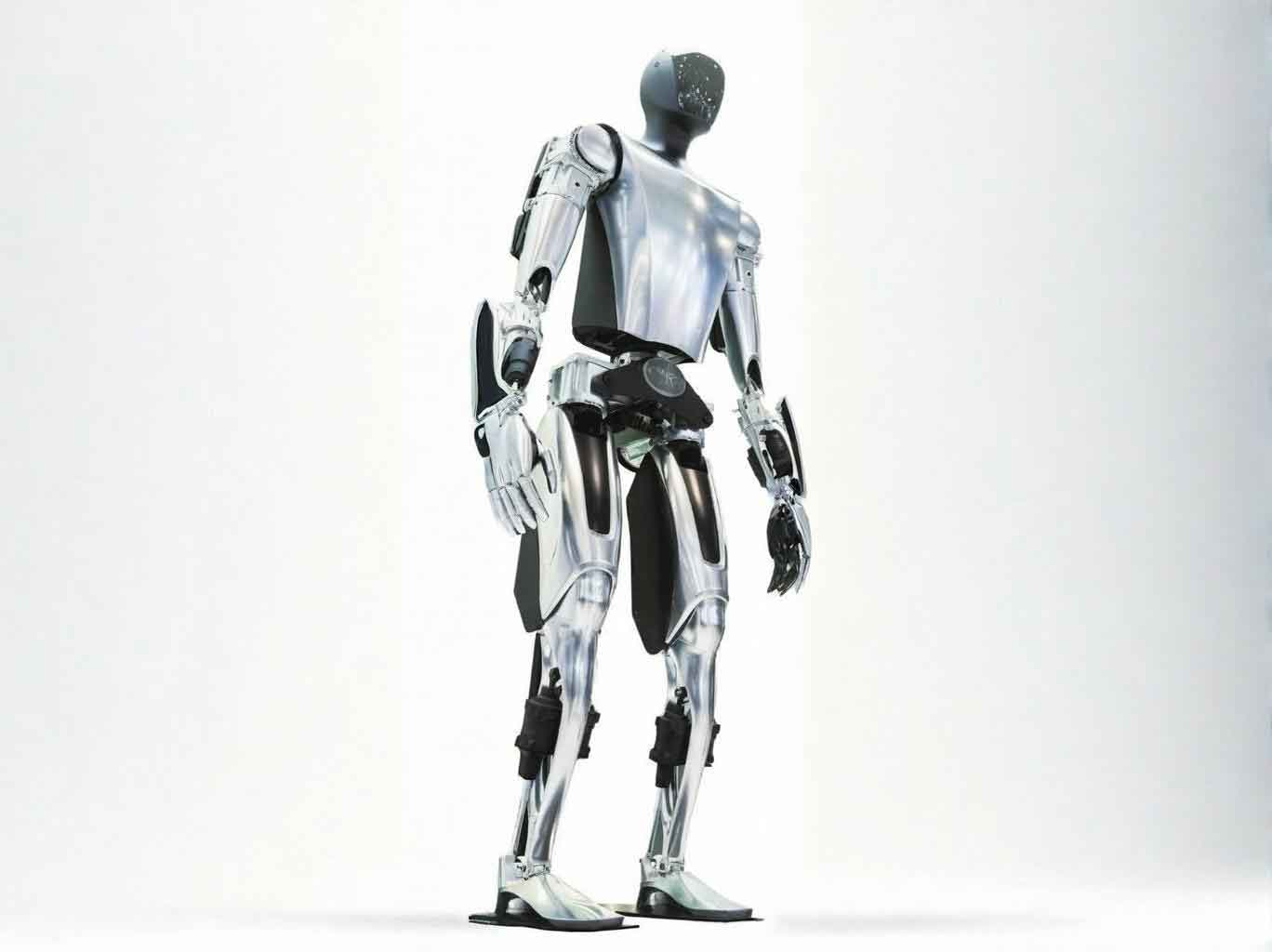
Embodied AI represents a synthesis of multidisciplinary advances in artificial intelligence, robotics, and cognitive science. It stands at the forefront of the new wave of technological revolution and industrial change. At its core, embodied AI is the organic integration of AI software (simulating the “brain”) with physical hardware (simulating the “body”), achieving a unified “perception-cognition-execution” capability. Its manifestations include intelligent robots, autonomous vehicles, and unmanned autonomous vessels—collectively termed embodied agents. These agents perceive the real world, form understanding and make decisions, and autonomously execute tasks within physical environments.
This distinguishes it from both “disembodied AI” like DeepSeek or ChatGPT, which operate in virtual cyberspace, and “embodied but not intelligent” physical entities such as traditional robotic arms or remotely piloted drones. Embodied AI combines and deeply integrates the cognitive prowess of the former with the physical actuation of the latter. If disembodied AI mimics the human brain, an embodied AI robot integrates the comprehensive capabilities of the “brain,” “cerebellum,” and “body.”
| Category | Core Definition | Exemplary Product Forms |
|---|---|---|
| Embodied AI | Possesses cognitive abilities for autonomous reasoning and task completion via observation/measurement, requiring minimal human intervention. Capable of complex judgment, decision-making, and execution. | Intelligent robots (humanoid, wheeled, robotic arms), L4+ autonomous vehicles, unmanned autonomous vessels, other bionic intelligent agents. |
| Disembodied AI | Possesses perception and cognitive capabilities for text, images, etc., and can output judgments, but cannot drive physical entities to execute tasks. | LLMs (e.g., ChatGPT), multimodal foundation models. |
| Non-Intelligent Embodied Systems | Lacks or has minimal intelligence; driven by human commands or performs only pre-programmed actions in simple environments. | Traditional industrial robotic arms, basic robots, teleoperated drones, driver-assistance vehicles. |
The conceptual roots of embodied AI trace back to the mid-20th century, but significant progress was hindered by limitations in AI technology. A pivotal shift occurred around 2022 with the widespread application of large AI models. These models dramatically enhanced robots’ multimodal perception, comprehension, logical reasoning, and iterative learning abilities. This enabled natural human-robot dialogue, acquisition of cross-domain knowledge for task planning, and autonomous execution of multi-step, precise, and complex tasks, making human-like “thinking and acting” a tangible prospect for the embodied AI robot.
The mature application of embodied AI will bring fundamental changes. In the economic domain, advanced industrial embodied AI robots will enable flexible, 24/7 production with high consistency, significantly boosting efficiency. In services, robots will find roles in performance, education, hospitality, and delivery. Agricultural robots for fruit picking or weeding will revolutionize manual farming practices; a laser-weeding embodied AI robot can reduce herbicide use by up to 80%. Autonomous vehicles are expected to drastically reduce traffic accidents—by over 90% according to some estimates—while improving logistics efficiency.
Societally, embodied AI offers solutions to pressing challenges. With a projected global shortage of 13 million nurses by 2030, domestic care robots can provide basic assistance and personalized companionship for the elderly, supporting aging societies and the “silver” economy. Robots like SoftBank’s Pepper can offer psychological support by adapting dialogue to subtle human expressions. Furthermore, embodied AI robots can operate in hazardous environments—fire, radiation, deep-sea, or space—mitigating risks to human workers.
II. Current Progress in the Global and Chinese Embodied AI Industry
The global embodied AI industry remains in its early stages, with truly intelligent, mass-produced agents not yet a reality. Industry consensus suggests humanoid robots may begin small-scale pilot integration around 2025, scaling by 2030. L4 autonomous vehicles could achieve commercial scale around 2030, with other autonomous agents growing substantially within five years. The global market is forecast to surpass $150 billion by 2030, reaching $400 billion by 2035. Initial applications will likely be in R&D and exhibition, followed by core adoption in logistics and industrial manufacturing. Home applications, demanding higher generality and safety, will scale later as technology matures.
Major economies are prioritizing embodied AI development with distinct focal points: the U.S. emphasizes defense and space; Europe focuses on medical and energy robotics; Japan integrates robots into social infrastructure and lunar exploration. Leading corporations are building ecosystems. NVIDIA is developing foundational models and simulation platforms, while Google advances multimodal “vision-language-action” models. Tesla’s Optimus and Figure AI’s Figure 02 lead in humanoid robotics, with Tesla targeting production of hundreds of thousands. OpenAI’s investment in 1X Technologies aims at the home robot market.
China’s comprehensive competitiveness in embodied AI places it within the global first tier, boasting strengths in both foundational model R&D and product manufacturing. This positions China to potentially achieve economies of scale first, driven by its vast domestic market. China possesses capabilities in multimodal model development and manufactures key components—servo systems, sensors, end-effectors—often at a significant cost advantage. For instance, estimates suggest Chinese-manufactured intelligent robots may cost half that of counterparts from other regions. China accounted for 51% of global industrial robot installations in 2023.
Our projections for the Chinese market are summarized below:
| Category | Forms Included | Primary Application Scenes | 2030 Market (Billion RMB) | 2035 Market (Billion RMB) |
|---|---|---|---|---|
| Intelligent Robots | Humanoid (legged/wheeled), Advanced Robotic Arms | R&D/Exhibition, Industrial Mfg., Agriculture, Logistics, Healthcare, Emergency Response, Home Service | 900 | 3000 |
| Autonomous Vehicles | L4 and Above Self-Driving Cars | Transportation, Logistics, Tourism | 2000 | 6000 |
| Autonomous Vessels | UAVs, USVs, UUVs, Spacecraft | Tourism, Logistics, Defense, Deep-sea/Space, Security, Emergency | 600 | 1500 |
| Other Bionic Agents | Robotic Dogs/Fish/Birds, etc. | Defense, Deep-sea/Space, Security, Medical, Home Service | 500 | 1000 |
| Total | 4000 | 11500 |
III. Challenges and Strategic Recommendations for China’s Embodied AI Development
The development path faces immediate and long-term challenges. Current hurdles involve unresolved technical bottlenecks and the economic feasibility of commercialization. Longer-term issues encompass safety, employment, and ethics arising from widespread adoption. Therefore, strategy must focus on concentrated technological攻关, orderly scenario deployment based on maturity, iterative safety enhancement, and proactive governance.
1. Concentrated Efforts on Critical and Common Technologies. Support should target:
- Foundational Software: Embodied foundation models, algorithms, secure operating systems, simulation platforms, and standardized software toolchains. Encouraging open-source development of models and OS, and fostering open-source communities, is vital.
- Core Hardware: High-performance sensors, precision reducers, and extended battery life.
- Next-Gen Technologies: Cross-disciplinary research in artificial muscles, cartilage, and neuroscience applied to embodied AI.
- Data Ecosystem: Industry consortia should lead in building high-quality, open, shared datasets and unified standards for data collection and application.
The learning process for an embodied AI robot can be framed as a reinforcement learning problem, maximizing the expected cumulative reward:
$$ \pi^* = \arg\max_{\pi} \mathbb{E}_{\tau \sim \pi} \left[ \sum_{t=0}^{T} \gamma^t R(s_t, a_t) \right] $$
where $\pi$ is the policy, $\tau$ is a trajectory of states $s_t$ and actions $a_t$, $R$ is the reward function, and $\gamma$ is a discount factor. The embodied system’s performance is a function of its integrated modules:
$$ \text{Performance} = f_{\text{integration}}(\text{Perception}(s), \text{Cognition}(s), \text{Execution}(a)) $$
2. Creating Application Scenes to Accelerate Iteration and Reduce Cost. Deployment must be phased:
- Phase 1 (Testing): Small-batch use in R&D and exhibition.
- Phase 2 (Demonstration): Apply more mature products in controlled, lower-risk public scenarios like emergency response, logistics, manufacturing, and commercial guides.
- Phase 3 (Scale): Expand to home service scenarios only after technology matures and safety is robust.
Public procurement in areas like emergency services, tourism, and patrols can provide early demand. Standardization in high-volume fields (e.g., security inspection, logistics) is key to driving down supply chain costs through economies of scale.
3. Establishing Mandatory Safety Standards and Regulatory Frameworks. A proactive safety regime is non-negotiable:
- Redundancy Requirements: Mandate redundant design for compute, power, and actuators to enhance reliability and fault tolerance.
- Identity & Lifecycle Management: Enforce unique device identification for full lifecycle oversight, including behavior norms, data security, and maintenance updates.
- Security Testing: Strengthen vulnerability detection and encourage joint R&D in anti-interference, secure communication, and privacy protection.
- Risk Mitigation: Consider mandatory liability insurance for commercial embodied AI robots and establish a systemic risk reserve fund for accident compensation.
4. Developing Human-Centric Ethical Guidelines, Laws, and Employment Response Mechanisms.
- Legal Status: Clearly define that embodied AI devices are tools, not entities with human-like social attributes. They must not be granted legal standing in political processes, asset distribution, or personal relationships.
- Human Autonomy: Ensure human-in-the-loop principles: respect for human意愿, and guarantee知情权, consent, and the right to disengage.
- Protection for Minors: Implement graded restrictions on the duration and functionality of embodied AI robot interaction for children to prevent unhealthy emotional dependency.
- Governance & Oversight: Encourage ethical self-regulation by firms and industry bodies regarding algorithms and data, with transparent public complaint channels.
- Employment Transition: Establish monitoring systems to track job displacement rates in manufacturing and services. Educational institutions should integrate embodied AI-related curricula to reskill and upskill the workforce.
In conclusion, embodied AI represents a monumental technological frontier with vast socioeconomic potential. For China, leveraging its dual strengths in AI software and hardware manufacturing presents a historic opportunity. A strategic, balanced approach—vigorously advancing innovation and application while conscientiously building the governance and safety infrastructure—will be essential to cultivate a robust, responsible, and globally competitive embodied AI industry.