
In recent years, the rapid advancement of industrial automation has positioned industrial robots as core components in modern manufacturing, particularly in China, where the demand for intelligent systems is growing exponentially. As a researcher focused on enhancing automation capabilities, I have explored the integration of deep learning technologies into vision systems for industrial robots, aiming to address challenges related to precision, real-time performance, and robustness. This article delves into the design and application of such systems, emphasizing their role in China’s push toward smart manufacturing. By leveraging deep learning models, we can enable robots to perceive and interact with their environments more effectively, thereby improving tasks like assembly, inspection, and sorting. The significance of this research lies in its potential to drive innovation in China’s industrial sector, where the adoption of advanced robotics is crucial for maintaining competitive advantage.
Deep learning, as a subset of machine learning, relies on neural networks with multiple layers to extract features from complex data. In my work, I utilize convolutional neural networks (CNNs) as the backbone for visual recognition, as they excel in processing image data through convolutional operations. The fundamental mathematical representation of a neural network layer involves linear transformations and activation functions. For instance, the output of a layer can be expressed as:
$$z^{(l)} = W^{(l)} \cdot a^{(l-1)} + b^{(l)}$$
where \( z^{(l)} \) denotes the linear output of layer \( l \), \( W^{(l)} \) is the weight matrix, \( a^{(l-1)} \) represents the activation from the previous layer, and \( b^{(l)} \) is the bias term. This is followed by a non-linear activation function \( f(\cdot) \), yielding:
$$a^{(l)} = f(z^{(l)})$$
To optimize these networks, I employ backpropagation algorithms that minimize loss functions, such as cross-entropy loss for classification tasks:
$$L = -\frac{1}{N} \sum_{i=1}^{N} \left[ y_i \log(\hat{y}_i) + (1 – y_i) \log(1 – \hat{y}_i) \right]$$
Here, \( y_i \) is the true label, \( \hat{y}_i \) is the predicted probability, and \( N \) is the number of samples. For CNNs, the convolutional operation is key, defined as:
$$y^{(k)}_{i,j} = \sum_{m=0}^{M-1} \sum_{n=0}^{N-1} x_{i+m,j+n} \cdot w^{(k)}_{m,n} + b^{(k)}$$
where \( x_{i+m,j+n} \) is the input pixel value, \( w^{(k)}_{m,n} \) is the kernel weight, and \( b^{(k)} \) is the bias for the \( k \)-th filter. These foundations allow us to build robust vision systems that can handle the dynamic conditions typical in China’s industrial settings, such as varying lighting and occlusions.
The requirements for vision systems in industrial robots, especially in China’s manufacturing hubs, revolve around high accuracy, real-time processing, and adaptability. For example, in tasks like part classification, the system must achieve minimal error to prevent production delays. This is quantified using metrics like classification accuracy, which can be represented as:
$$y = \arg\max(f(x; \theta))$$
where \( x \) is the input image, \( \theta \) represents model parameters, and \( f(x; \theta) \) outputs the probability distribution. Real-time performance is critical in applications like quality inspection, where the mean processing time (MPT) is used as an evaluation criterion:
$$\text{MPT} = \frac{1}{M} \sum_{i=1}^{M} T_i$$
with \( T_i \) being the processing time for the \( i \)-th frame and \( M \) the total frames. Additionally, in welding path recognition, the system must generate precise paths under noisy conditions, modeled as:
$$P = g(F(x); \phi)$$
where \( F(x) \) is the feature representation, \( \phi \) denotes path generation parameters, and \( P \) is the output path. These requirements highlight the need for systems that can integrate seamlessly into China’s automated factories, supporting the growth of China robot applications.
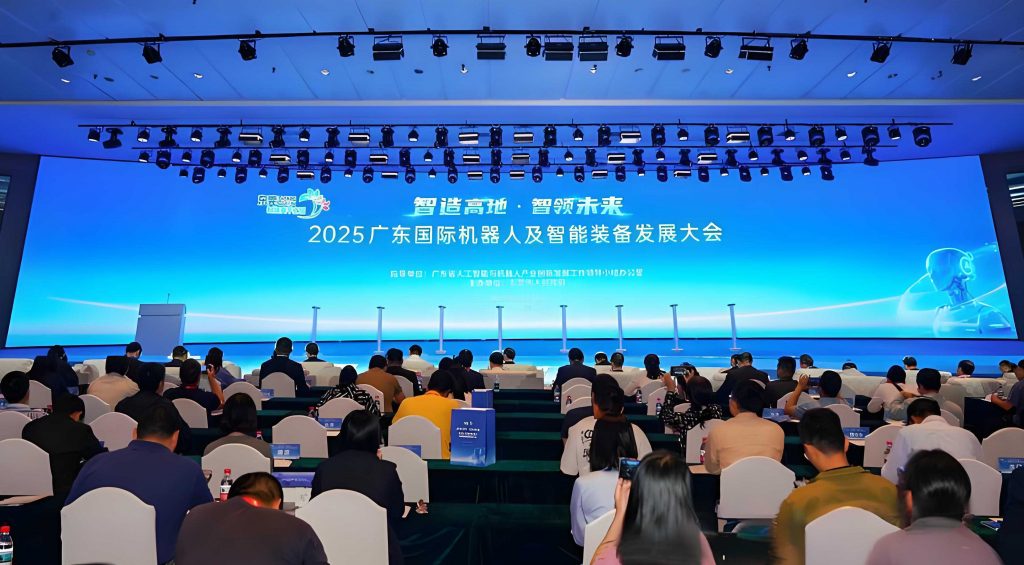
In designing the vision system, I focus on a holistic architecture that combines hardware and software components. The hardware architecture includes image acquisition modules, data transmission interfaces, and computational units. For instance, industrial cameras with high-resolution sensors capture visual data, which is then transmitted via GigE or USB 3.0 interfaces to GPUs for processing. This setup ensures low latency and high throughput, essential for real-time tasks in China robot environments. The software architecture, on the other hand, comprises data preprocessing, visual recognition algorithms, and control interfaces. Preprocessing steps like grayscale conversion and noise reduction are applied to enhance image quality, while CNN-based models handle feature extraction and object detection. To illustrate the system components, I summarize the key elements in the following table:
| Component | Description | Role in System |
|---|---|---|
| Image Acquisition | Industrial cameras with CMOS/CCD sensors | Captures high-quality visual data |
| Data Transmission | GigE, USB 3.0, or Camera Link interfaces | Ensures fast and reliable data transfer |
| Computational Unit | GPUs or AI accelerators | Processes data using deep learning models |
| Preprocessing Module | Filters and normalization techniques | Enhances input data for better recognition |
| Recognition Algorithm | CNN with transfer learning | Performs object classification and localization |
| Control Interface | Communication protocols with robot controllers | Translates results into actionable commands |
This integrated approach allows for efficient handling of complex scenarios, such as those encountered in China’s diverse industrial landscapes, where China robot systems must adapt to varying tasks and environments.
Algorithm design is a critical aspect of my research, emphasizing the use of CNNs optimized for industrial applications. I employ transfer learning to leverage pre-trained models on large datasets, fine-tuning them for specific tasks like part recognition. This reduces training time and improves accuracy. Additionally, model lightweighting techniques, such as pruning and quantization, are applied to enhance efficiency. Pruning removes redundant connections, reducing computational complexity, while quantization lowers the bit-width of parameters to save memory. The training process involves minimizing the cross-entropy loss using optimization algorithms like Adam, with the loss function defined as:
$$L = -\frac{1}{H} \sum_{i=1}^{H} \sum_{j=1}^{C} y_{ij} \log(\hat{y}_{ij})$$
where \( H \) is the number of samples, \( C \) is the number of classes, \( y_{ij} \) is the true label, and \( \hat{y}_{ij} \) is the predicted probability. To build a robust dataset, I incorporate data augmentation methods, such as rotation and noise addition, to simulate real-world conditions in China’s factories. For object detection, bounding box annotations are used, defined as:
$$B = (x_{\text{min}}, y_{\text{min}}, x_{\text{max}}, y_{\text{max}})$$
where the coordinates represent the bounding box corners. This ensures that the model generalizes well to unseen data, a key requirement for China robot deployments in dynamic settings.
In terms of performance evaluation, I use metrics like mean absolute error (MAE) and mean squared error (MSE) for localization tasks:
$$\text{MAE} = \frac{1}{N} \sum_{i=1}^{N} |y_i – \hat{y}_i|$$
$$\text{MSE} = \frac{1}{N} \sum_{i=1}^{N} (y_i – \hat{y}_i)^2$$
These help quantify the system’s accuracy and guide improvements. For instance, in a case study involving part sorting, the system achieved an MAE of less than 2 pixels, demonstrating its suitability for high-precision applications in China’s manufacturing sector. The following table summarizes key performance indicators for different vision tasks in China robot systems:
| Task | Metric | Typical Value | Importance for China Robot Applications |
|---|---|---|---|
| Part Classification | Accuracy | >95% | Ensures reliable sorting and assembly |
| Quality Inspection | Mean Processing Time (MPT) | <50 ms | Supports real-time monitoring in fast-paced environments |
| Welding Path Recognition | Localization Error (MAE) | <1 mm | Critical for precision welding in automotive and electronics |
| Object Detection | Intersection over Union (IoU) | >0.8 | Enables accurate robot grasping and manipulation |
Looking ahead, the future of deep learning-based vision systems for industrial robots in China is promising, with trends pointing toward model optimization and expanded applications. For example, Transformer architectures may replace CNNs in some scenarios due to their superior global feature modeling. Moreover, the integration of multi-modal sensors and edge computing will enhance system adaptability, allowing China robot systems to operate in more complex environments like smart logistics and collaborative robotics. As I continue my research, I aim to contribute to these advancements, fostering the development of intelligent, self-adaptive systems that align with China’s goals for industrial modernization.
In conclusion, my work on deep learning-based vision systems demonstrates their potential to revolutionize industrial robotics in China. By combining advanced algorithms with efficient hardware designs, we can achieve high levels of accuracy and real-time performance, essential for tasks in diverse manufacturing settings. The ongoing evolution of these systems, driven by innovations in lightweight models and sensor fusion, will further solidify the role of China robot technologies in global smart manufacturing. As we move forward, I believe that continued research and collaboration will unlock new possibilities, making industrial robots more intelligent and responsive to the needs of China’s evolving economy.