
In the era of Industry 4.0, I have observed that artificial intelligence (AI) applications are rapidly integrating into daily life and work, spanning fields such as intelligent recognition, tracking, control, and translation. This expansion demands higher-level training for students, particularly in innovative practical abilities. As an educator focused on engineering education, I believe that cultivating students’ innovation skills is a strategic priority. However, traditional teaching methods often emphasize theoretical knowledge over practical application, leading to a disconnect with real-world AI industry needs. To address this, I propose a composite comprehensive training platform centered on a legged intelligent robot. This platform leverages project tasks and disciplinary competitions as dual drivers to stimulate student interest and enhance experimental teaching outcomes. By integrating modular, hierarchical, and open-ended experiments, it aims to foster versatile talents capable of contributing to embedded AI, intelligent unmanned systems, and smart control technologies.
The core of this initiative is the intelligent robot, a sophisticated system merging mechanics, electronics, software, and IoT. It serves as a bridge from theoretical courses to practical engineering design,启蒙ing students in AI application development. My approach involves designing a platform that combines hardware robustness with AI-driven software, enabling hands-on exploration in a dynamic learning environment. Below, I detail the platform design, experimental content, simulations, and teaching practices, all from my firsthand experience in implementing this methodology.
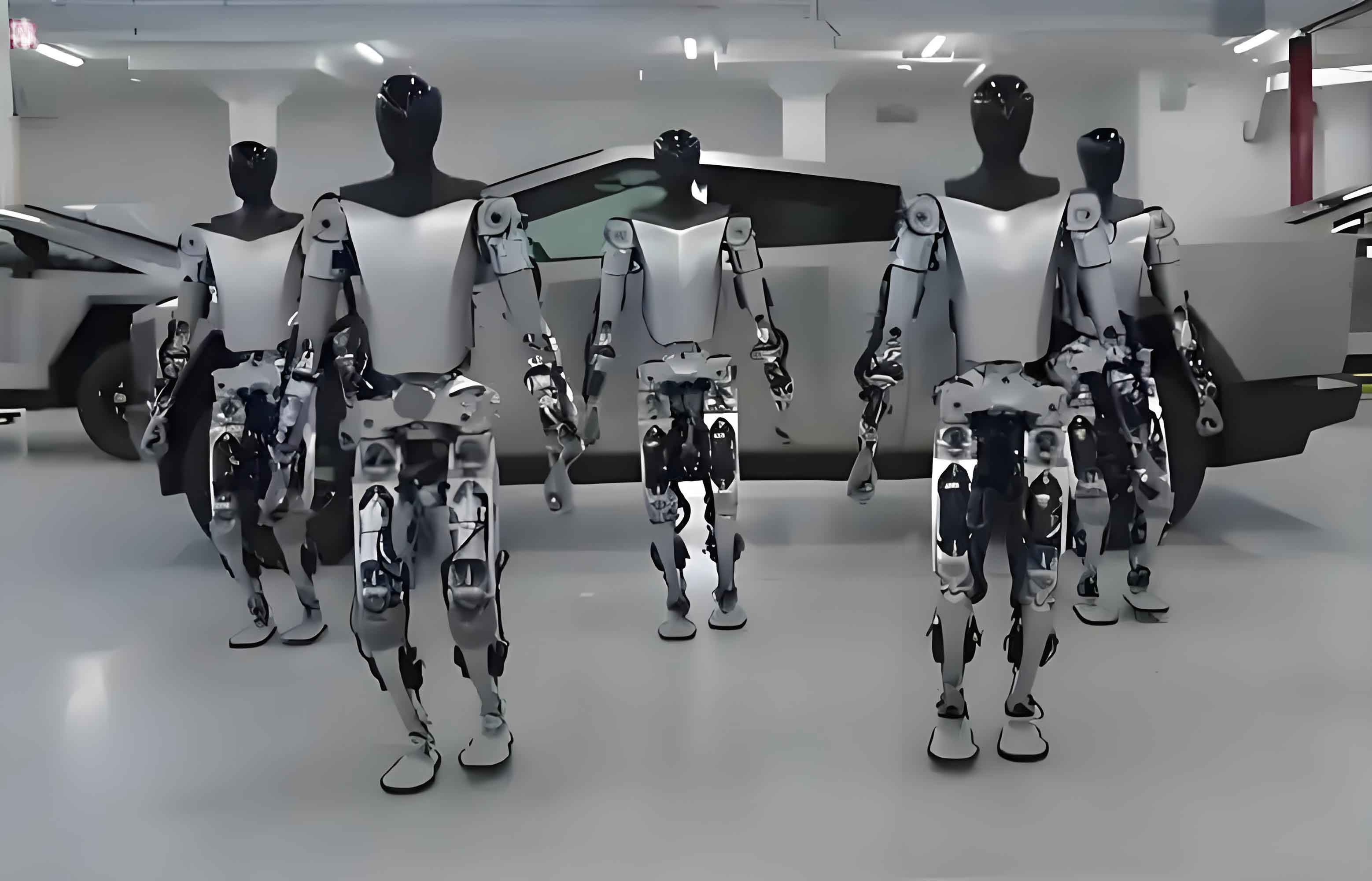
The intelligent robot platform I utilize is a quadrupedal biomimetic system running on Ubuntu 18.04 with ROS2. It features 12 degrees of freedom (three per leg), allowing adaptive movement across complex terrains such as slopes up to 20° and obstacles up to 20 cm. Powered by an NVIDIA NX board with 21 TOPS computing performance, it supports advanced AI processing. Sensors include depth cameras, monocular LiDAR, dual-laser sensors, ultrasonics, and geomagnetic units, facilitating environment perception and obstacle avoidance. The actuation system employs high-torque micro-motors (±12 N·m) for dynamic stability and fall protection. The software architecture follows a ROS-based modular design, structured into three layers for management, control, and execution units. This hierarchical design ensures scalability and ease of integration for various AI applications. The table below summarizes key hardware specifications of the intelligent robot platform.
| Component | Specification |
|---|---|
| Degrees of Freedom | 12 (3 per leg) |
| Processor | NVIDIA NX (21 TOPS) |
| Sensors | Depth camera, LiDAR, ultrasonic, geomagnetic |
| Max Slope Climb | 20° |
| Max Obstacle Clearance | 20 cm |
| Motor Torque | ±12 N·m |
| Connectivity | Wi-Fi, Bluetooth, GRPC |
In designing the experimental content, I adopt a modular and hierarchical approach to balance theory and practice. The curriculum is divided into foundational and innovative experiments, each comprising sub-projects that build upon one another. Foundational experiments cover the intelligent robot’s principles, communication technologies, gait control, and vision algorithms. For instance, gait control involves understanding locomotion dynamics, which can be modeled using kinematic equations. For a legged intelligent robot with joint angles $\theta_i$, the foot position $\mathbf{p}$ in Cartesian coordinates can be expressed as:
$$ \mathbf{p} = f(\theta_1, \theta_2, \theta_3) $$
where $f$ represents the forward kinematics function derived from the Denavit-Hartenberg parameters. Control algorithms like PID are introduced for joint regulation, with error $e(t)$ defined as:
$$ e(t) = \theta_{\text{desired}} – \theta_{\text{actual}} $$
and the control output $u(t)$ given by:
$$ u(t) = K_p e(t) + K_i \int e(t) dt + K_d \frac{de(t)}{dt} $$
Innovative experiments push students to develop integrated systems, such as edge-cloud collaborative monitoring or multi-modal perception for swarm intelligence. These projects require fusion of sensor data, often using Bayesian inference for decision-making:
$$ P(\text{state} | \text{data}) = \frac{P(\text{data} | \text{state}) P(\text{state})}{P(\text{data})} $$
The table below outlines the experimental structure, emphasizing how each module contributes to mastering the intelligent robot platform.
| Experiment Type | Sub-Projects | Key Learning Outcomes |
|---|---|---|
| Foundational | Robot Composition Principles | Understand hardware modularity and协同调用 |
| Communication Technologies | Master wired/wireless protocols (e.g., GRPC) | |
| Gait Design and Control | Apply kinematics and control algorithms | |
| Vision Algorithm Integration | Deploy ML models for recognition tasks | |
| Innovative | Edge-Cloud Smart Monitoring | Develop real-time data analysis systems |
| Multi-Modal Swarm Coordination | Implement sensor fusion and协同 control |
To simulate real-world scenarios, I incorporate Gazebo for virtual testing before physical deployment. Gazebo’s physics engine allows modeling of complex terrains like winding paths, speed bumps, and narrow bridges. Students program the intelligent robot to adjust gaits based on sensor inputs, optimizing parameters such as joint angles and motor power. For example, obstacle avoidance can be formulated as a path planning problem using A* algorithm, minimizing cost $C$:
$$ C = \sum \left( w_d \cdot d + w_r \cdot r \right) $$
where $d$ is distance, $r$ is risk, and $w$ are weights. In actual applications, the intelligent robot performs tasks like gesture interaction, voice control, and face recognition. For target tracking, computer vision algorithms like YOLO are used, with detection confidence $s$ computed as:
$$ s = \text{softmax}(\mathbf{z}) $$
where $\mathbf{z}$ are network logits. These simulations bridge theory and practice, enabling students to iterate designs efficiently. The table below compares simulation and real-world performance metrics for the intelligent robot in different terrains.
| Terrain Type | Simulation Success Rate (%) | Real-World Success Rate (%) | Key Challenges |
|---|---|---|---|
| Flat Surface | 100 | 98 | Minor sensor noise |
| 20° Slope | 95 | 90 | Torque limitations |
| Obstacle Course | 85 | 80 | Dynamic balance adjustments |
| Uneven Rubble | 80 | 75 | Foot slippage and perception delays |
In teaching practice, I employ a student-centered, project-driven methodology. Students work in groups to tackle tasks like staircase climbing, which decomposes into sub-problems: stair recognition using ML, image acquisition via ROS2 nodes, and gait design based on extracted parameters. This fosters teamwork and problem-solving skills. Assessment combines project demonstrations, reports, and presentations, aligning with competition criteria. Over two years, this approach has yielded positive outcomes; participants have excelled in national competitions like the China College Computer Competition and innovation contests, showcasing their proficiency with the intelligent robot platform. The table below lists sample project themes and their alignment with disciplinary competitions, highlighting how the intelligent robot serves as a versatile tool for innovation.
| Project Theme | Disciplinary Competition | Student Achievements |
|---|---|---|
| Autonomous Navigation | National University Computer System Capability Contest | Provincial awards |
| Multi-Robot Swarm | Internet+ Innovation Competition | National awards |
| AI-Powered Surveillance | AI Challenge Events | Top rankings |
| Human-Robot Interaction | Robotics Competitions | Innovation prizes |
Reflecting on this journey, I find that the legged intelligent robot platform effectively merges hardware control with AI applications. By emphasizing modular experiments and competition-driven motivation, it addresses gaps in traditional education. Students gain not only technical skills but also creativity and collaboration abilities. The platform’s flexibility supports over 20 experimental projects, catering to courses in computer science, embedded systems, and AIoT. As engineering education evolves, such composite training systems will be crucial for nurturing talents ready for Industry 4.0 challenges. Future work may involve integrating more advanced AI models and expanding swarm capabilities, but the core remains: hands-on engagement with intelligent robots transforms learning into an inspiring, innovative endeavor.