
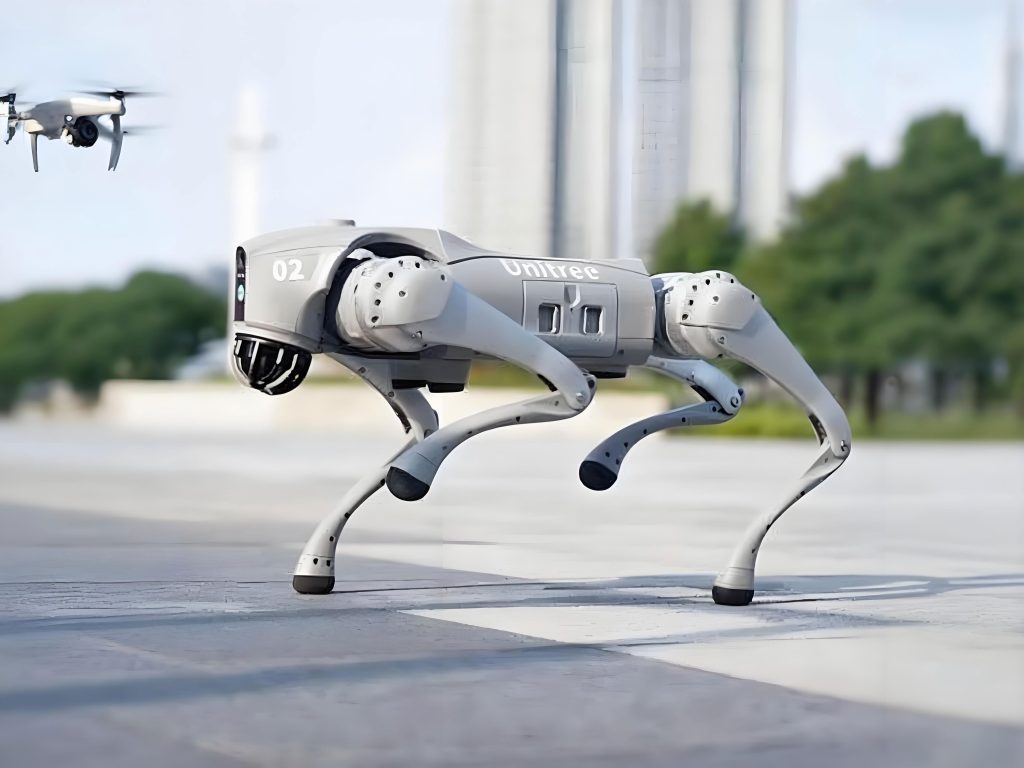
The field of robotics continually seeks inspiration from nature to solve complex engineering challenges. Among various bio-inspired designs, the bionic robot, particularly the hexapod type modeled after insects, stands out for its remarkable mobility and adaptability. As a quintessential example of a bionic robot, the hexapod design boasts rich gait possibilities and versatile limb structures. Its inherent advantages—superior maneuverability, high reliability, and exceptional stability—grant it tremendous application potential in critical fields such as disaster reconnaissance, search and rescue operations, and specialized services. With the increasing frequency of natural disasters like fires and earthquakes, efficient rescue methodologies have become paramount. In navigating the irregular, unpredictable terrain typical of disaster zones, a bionic hexapod robot demonstrates clear superiority over traditional wheeled or tracked platforms. It can traverse pitted, rocky ground and shallow积水 surfaces with minimal impedance, a capability where conventional robots often fail. The core design objective for such a bionic robot is to ensure robust operation in harsh environments, execute complex救援 tasks, and maintain strong locomotive performance under diverse conditions.
The fundamental working principle of a hexapod bionic robot is derived from insect morphology and locomotion. Insects possess three pairs of legs attached to the prothorax, mesothorax, and metathorax, designated as the fore, middle, and hind legs, respectively. Each leg comprises several segments: the coxa, trochanter, femur, tibia, tarsus, and pretarsus, often ending with claws for gripping. Insect walking is characterized by a highly stable “tripod gait.” This gait involves coordinating legs such that the front and hind legs on one side move in phase with the middle leg on the opposite side, forming a stable triangular support polygon. While this triangle of legs is on the ground in a power stroke, the other three legs are in the swing phase, lifted and moving forward to prepare for the next step. The front legs pull the body forward, the middle legs provide support and lift, and the hind legs propel and assist in turning. This mechanism allows the insect—and by analogy, the bionic robot—to stop instantly at any moment, as its center of mass always remains within the support polygon. Emulating this natural principle, the motion of a bionic hexapod robot is achieved by strategically controlling multiple actuators at each joint.
For a bionic robot to replicate this tripod gait, each leg typically requires a minimum of three Degrees of Freedom (DoF). In our design, this translates to using three servomotors (often called舵机) per leg. The coordinated angular control of these 18 servomotors via software enables the precise articulation needed to form and cycle through the stable tripod gait pattern.
Mechanical Architecture and Kinematic Design
The mechanical design is critical for the bionic robot’s functionality. The walking leg mechanism must ensure a sufficient workspace for stable locomotion and adequate ground clearance. Our design for a single leg is based on a three-DoF serial linkage, as conceptually modeled below. Let the robot’s main chassis be denoted as link L. The three servo motors are positioned at points A, B, and C. Links EF and FG represent the thigh (femur) and shank (tibia) of the leg, respectively. This configuration allows the foot endpoint (G) to cover a substantial volume of the three-dimensional workspace relative to the chassis.
The kinematic role of each servo is defined as follows: Servo A (coxal joint) is responsible for the protraction and retraction of the leg in the horizontal plane (forward/backward swing). Servos B (trochanteral/femoral joint) and C (femoral/tibial joint) control the elevation/depression and extension/flexion of the leg. When the foot (FG) is on the ground, the torque from servos B and C provides the primary supporting force against gravity, stabilizing the bionic robot’s body.
The forward kinematics for the position of the foot point G relative to the body frame can be derived using the Denavit-Hartenberg (D-H) convention or geometric analysis. For the planar linkage formed by joints B and C and links EF and FG, the coordinates \((X_G’, Z_G’)\) in the leg’s sagittal plane (assuming servo A angle is fixed for this calculation) are given by:
$$ X_G’ = L_{EF} \cos(\theta_B) + L_{FG} \cos(\theta_B + \theta_C) $$
$$ Z_G’ = L_{EF} \sin(\theta_B) + L_{FG} \sin(\theta_B + \theta_C) $$
where \(L_{EF}\) and \(L_{FG}\) are the lengths of the thigh and shank links, and \(\theta_B\) and \(\theta_C\) are the joint angles at servo B and C, respectively. The full 3D position is then adjusted by the rotation \(\theta_A\) from servo A.
| Parameter | Symbol | Value (mm) | Design Rationale |
|---|---|---|---|
| Thigh Length | \(L_{EF}\) | 86 | Optimized for workspace and torque requirement. |
| Shank Length | \(L_{FG}\) | 148 | Provides necessary stride length and ground clearance. |
| Coxa Height | \(H_{A}\) | 100 | Distance from chassis to servo A axis. |
| Nominal Body Height | \(H\) | 250 | Compromise between stability and obstacle clearance. |
| Chassis Length (CG to front) | \(L_{CG}\) | 300 | Ensures proper weight distribution and leg placement. |
| Inter-leg Clearance | \(D\) | 350 | Prevents leg collision during swing phase. |
The legs are fabricated from 5mm thick aluminum alloy plates with a uniform width of 8mm, offering a favorable strength-to-weight ratio—a crucial consideration for any energy-efficient bionic robot. Precision cutouts ensure tight fits with servo motor horns. The two lateral groups of three legs are mirror images. During locomotion, the bionic robot maintains static stability by keeping the center of mass within the triangle formed by the three legs in the support phase at all times.
Gait Planning and Trajectory Generation
Gait planning is the cornerstone of effective locomotion for a bionic robot. The tripod gait, inspired by insects, is our primary focus due to its inherent static stability. In this gait, the six legs are partitioned into two interlocking tripods: Tripod 1 (Left Front, Right Middle, Left Hind) and Tripod 2 (Right Front, Left Middle, Right Hind).
Let us define the gait cycle period as \(T\). The duty factor \(\beta\) is the fraction of the cycle time a given leg is in the support (stance) phase. For a stable, non-running tripod gait, \(\beta = 0.5\). This means each leg spends exactly half the cycle on the ground and half in the air. The phase offset \(\phi\) between the two tripods is 0.5 (or 180°). The phase \(\Phi_i\) for leg \(i\) can be represented as:
$$ \Phi_{LF} = 0, \quad \Phi_{RM} = 0, \quad \Phi_{LH} = 0 $$
$$ \Phi_{RF} = 0.5, \quad \Phi_{LM} = 0.5, \quad \Phi_{RH} = 0.5 $$
The foot trajectory during the swing phase must be carefully planned to avoid stubbing against the ground and to ensure smooth transfer. A common method is to use a parametric curve, such as a cycloid or a polynomial. For example, the vertical component \(Z_{swing}(t)\) of the foot during the swing phase (duration \(T_{swing} = (1-\beta)T\)) can follow a parabolic lift:
$$ Z_{swing}(t’) = H_{max} \cdot \left(1 – \left(\frac{2t’}{T_{swing}} – 1\right)^2 \right) $$
where \(t’\) is the time elapsed within the current swing phase (\(0 \le t’ \le T_{swing}\)), and \(H_{max}\) is the maximum foot lift height. The horizontal motion \(X_{swing}(t’)\) is typically a linear advance from the posterior extreme position (PEP) to the anterior extreme position (AEP).
During the stance phase, the foot moves backward relative to the body to propel the bionic robot forward. This trajectory is usually a straight line with a constant velocity profile. The relationship between stride length \(S\), body velocity \(V\), and cycle time \(T\) is given by:
$$ V = \frac{S}{T} $$
For turning maneuvers, the tripod gait can be modified by introducing a differential in stride length or AEP/PEP positions between the legs on the inner and outer sides of the turn. For instance, to execute a clockwise turn, the stride length of legs on the right side (inner side) can be reduced while those on the left side (outer side) are increased or maintained.
| Gait Mode | Phase Relationship (Tripod1, Tripod2) | Stability | Typical Use Case |
|---|---|---|---|
| Tripod Gait | 0°, 180° | Statically Stable | Standard walking on flat/rough terrain. |
| Wave Gait | Sequential lifting (e.g., 0°, 60°, 120°, 180°, 240°, 300°) | Statically Stable, Slower | Extreme precision or slippery surfaces. |
| Ripple Gait | Two wave sequences phase-shifted | Statically Stable | Smooth motion, lower peak power demand. |
The control system must translate these gait algorithms into precise angular commands for each of the 18 servos. This involves solving the inverse kinematics for each leg to find the required joint angles \((\theta_A, \theta_B, \theta_C)\) that place the foot at the desired \((X_G, Y_G, Z_G)\) coordinates at every time step \(t\). The joint angles for the stance leg are determined by the body’s intended motion, while for the swing leg, they follow the predefined swing trajectory. This decoupling of body trajectory from foot trajectory is a key feature that allows a bionic robot to maintain a level body posture while walking over uneven ground.
Integrated Control System Design
Overall System Architecture
The operational success of the bionic robot hinges on a robust and responsive control system. Our design employs a hierarchical architecture. The core is a central microcontroller responsible for high-level gait planning and decision-making. It communicates with a dedicated multi-channel servo controller, which handles the low-level pulse-width modulation (PWM) signal generation for all 18 servo motors. A wireless communication module enables remote teleoperation. The power system utilizes a 12V DC lithium polymer battery, with switching voltage regulators providing stable 5V and 6V lines for the logic circuits and servos, respectively.
Hardware Implementation
The main processing unit is an Arduino Mega 2560 microcontroller board. It was selected for its ample number of digital I/O pins (54) and multiple hardware serial ports, which are necessary for interfacing with other modules. Its role is to execute the gait algorithm, process sensor data (if any), and send high-level motion commands.
The critical task of driving the 18 high-torque digital servos is delegated to an SSC-32U (or similar) 32-channel serial servo controller. This dedicated controller receives compact position and timing commands from the main microcontroller via a serial (TTL UART) interface and generates the corresponding synchronized PWM signals. This offloads the timing-critical servo control from the main CPU, ensuring smooth and jitter-free motion for the bionic robot.
For wireless control, a HC-05 Bluetooth module is interfaced with another serial port on the Arduino Mega. This allows a smartphone or computer to send predefined movement commands (e.g., “forward,” “turn left,” “climb”) to the bionic robot in real-time.
| Component | Model/Specification | Primary Function |
|---|---|---|
| Main Controller | Arduino Mega 2560 (ATmega2560) | Gait algorithm execution, system coordination. |
| Servo Controller | SSC-32U Serial Servo Controller | Low-level PWM generation for up to 32 servos. |
| Servo Motors | Digital, Metal Gear, 20 kg-cm torque | Leg joint actuation. |
| Wireless Module | HC-05 Bluetooth 2.0+EDR | Remote command reception. |
| Power Source | 12V 5000mAh LiPo Battery | System power supply. |
| Voltage Regulator | DC-DC Buck Converters (12V to 5V/6V) | Providing stable logic and servo power rails. |
Software and Control Logic
The software is developed in the Arduino Integrated Development Environment (IDE). The program structure consists of:
- Initialization: Setting up serial communication with the SSC-32U and HC-05 modules. Moving all servos to a predefined “neutral” start position.
- Gait Engine: The core loop calculates the target foot positions for all six legs based on the current gait mode (e.g., tripod), speed, and direction. It solves the inverse kinematics in real-time to convert these Cartesian coordinates into joint angles.
- Command Generation: The joint angles are formatted into a compact serial command for the SSC-32U. The command structure allows specifying target positions and movement time for multiple servos simultaneously, ensuring coordinated motion. A typical command packet might look like:
#0 P1500 #1 P1200 #2 P1800 T1000. This instructs servo on channel 0 to move to pulse width 1500µs (neutral), servo 1 to 1200µs, and servo 2 to 1800µs, all within a 1000ms duration. - Command Interface: A simple protocol is established over Bluetooth. The main loop checks for incoming characters. Receiving an ‘F’ triggers the forward gait routine, ‘L’ triggers a left turn sequence, etc.
The kinematic control for each leg can be summarized as follows. Given the desired foot position \(\mathbf{p}_d = (x_d, y_d, z_d)^T\) in the leg’s local coordinate frame (originating at the coxa joint A), the inverse kinematics for the three rotary joints are calculated. The angle for Servo A (yaw) is simply: $$ \theta_A = \atan2(y_d, x_d) $$.
The distance from the coxa joint to the foot projected on the vertical plane is \(r = \sqrt{x_d’^2 + z_d^2}\), where \(x_d’ = \sqrt{x_d^2 + y_d^2}\). Using the law of cosines on the triangle formed by links \(L_{EF}\), \(L_{FG}\), and \(r\):
$$ \theta_C = \pi – \arccos\left(\frac{L_{EF}^2 + L_{FG}^2 – r^2}{2 \cdot L_{EF} \cdot L_{FG}}\right) $$
$$ \theta_B = \atan2(z_d, x_d’) – \arctan\left(\frac{L_{FG} \sin(\theta_C)}{L_{EF} + L_{FG} \cos(\theta_C)}\right) $$
These angles \(\theta_A, \theta_B, \theta_C\) are then converted into the corresponding servo pulse widths and sent to the servo controller.
System Integration and Testing
Integration begins with verifying all electrical connections and ensuring correct voltage levels. Each servo is calibrated to find its neutral (90°) position pulse width (typically ~1500µs). The mechanical assembly is checked for free movement without collisions. The gait software is then uploaded to the Arduino. Initial testing involves executing simple, slow motion sequences to verify the coordination of the two tripods and the stability of the bionic robot. Parameters like step height, stride length, and cycle time are tuned empirically to achieve smooth and stable locomotion on various surfaces. The wireless link is tested last, confirming that remote commands correctly alter the bionic robot’s operational state.
Structural Optimization and Functional Enhancement
Beyond basic locomotion, the practical utility of a救援-oriented bionic robot can be significantly enhanced through thoughtful structural optimization and added functionalities.
1. Payload and Tool Integration: The central chassis is designed as a platform. The top layer can be equipped with a small manipulator arm for clearing debris or a gripper for transporting essential supplies (e.g., first-aid kits, water, communication devices). This transforms the bionic robot from a mere scout into an active救援 agent.
2. Adaptive Suspension: While the tripod gait provides inherent stability, additional shock absorption can be integrated into the leg design. For example, incorporating a passive compliant element (like a spring) in series with the tibia servo (C) or using a flexible foot pad can help dampen impacts when stepping on uneven surfaces, protecting the gear trains and improving traction.
3. Sensor Fusion for Autonomy: To move beyond pure teleoperation, the bionic robot can be equipped with an array of sensors. An Inertial Measurement Unit (IMU) can help maintain body leveling. Ultrasonic or infrared distance sensors mounted on the front can enable simple obstacle detection and avoidance behaviors. A forward-facing camera could provide a video feed to the remote operator, crucial for navigating collapsed structures.
4. Structural Robustness and Weight Reduction: The use of lightweight yet strong materials like carbon fiber composites for links, and optimizing the topology of the chassis through finite element analysis (FEA) can further improve the strength-to-weight ratio. This allows the bionic robot to carry heavier payloads or operate longer on a single battery charge. All joint designs must ensure密封 to protect bearings and motors from dust and moisture, a necessity for a bionic robot operating in disaster zones.
Conclusion
This work presents the comprehensive design and development of a bionic hexapod robot, from its bio-inspired mechanical architecture to its sophisticated gait planning and control system. By meticulously emulating the insect tripod gait principle, we have engineered a platform capable of stable, omnidirectional locomotion across challenging terrain—a fundamental requirement for effective operation in搜索 and救援 scenarios. The hierarchical control architecture, combining a high-level planner (Arduino Mega) with a low-level servo driver (SSC-32U), provides a reliable framework for executing complex, coordinated leg movements. The integration of wireless control adds operational flexibility. Future work on this bionic robot platform will focus on implementing more adaptive gait controllers (e.g., using Central Pattern Generators), enhancing autonomy through advanced sensor fusion and machine learning algorithms, and rigorously field-testing the system in simulated disaster environments. The continued evolution of such bionic robot technology holds significant promise for mitigating human risk and improving outcomes in hazardous response operations.