
In the context of modern demographic structures, our society has entered an aging phase. By 2021, individuals aged 60 and above accounted for 18.7% of the total population, and it is projected that by 2050, this proportion will rise to 30%. With the increasing share of the elderly population and trends in economic development and urbanization, the number of empty-nest seniors is growing, drawing widespread social attention to elderly care issues. As a key integration achievement of the new wave of scientific and technological revolution, intelligent robots have seen tentative applications in many fields. Therefore, designing an elderly companion robot is particularly crucial.
From my perspective, the concept of “smart elderly care” has emerged in response to the growing elderly population and limited family support. A vital component of this is the use of companion robots, which can help bridge the gap in care services due to scarce resources like caregivers and institutions. Our goal is to develop a companion robot that meets the diverse intrinsic and extrinsic needs of the elderly, enabling communication and interaction to bring passion and spiritual comfort to their lives.
Based on an analysis of 2021 census data, our team has proposed a preliminary plan for an elderly companion robot. This article will first explain the design philosophy behind this companion robot, then analyze its business model and development prospects, and finally outline marketing strategies and post-launch operations. Throughout, I will emphasize the importance of innovation in companion robot technology to address aging society challenges.
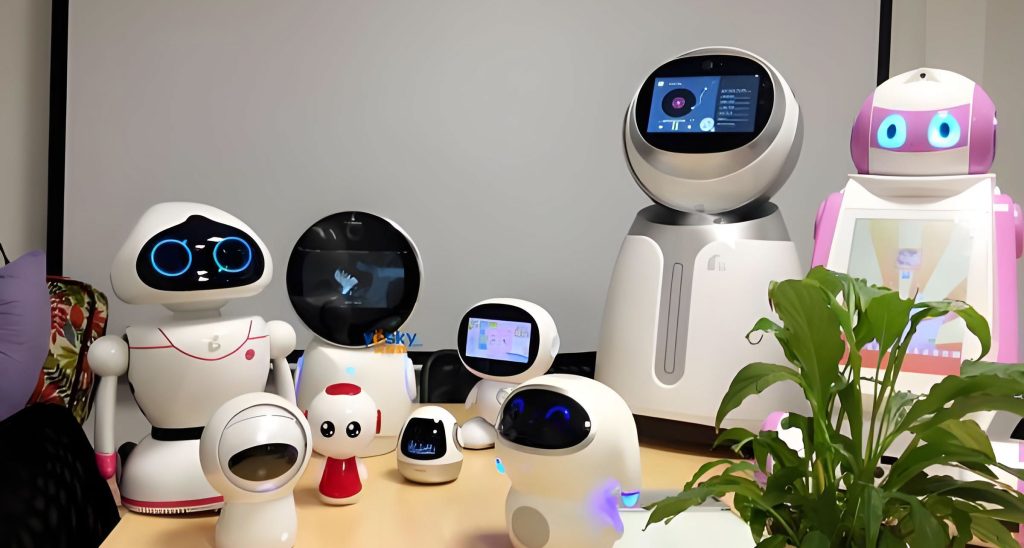
The market prospects for elderly companion robots are promising. On the demand side, the elderly population base continues to expand, increasing social burdens. By 2025, it is estimated that those aged 65 and above will exceed 210 million, about 15% of the total population. By 2035 and 2050, this number is projected to reach nearly 380 million, accounting for 27.9% of the population. According to international standards, China could have almost 500 million elderly by 2050. Statistics show that approximately 180 million seniors suffer from chronic diseases, with 75% of affected individuals having a lifespan about 10 years lower than expected, leading to an average of 8.3 years of living with illness. This poses challenges to healthcare services, pensions, and public services for the elderly.
Urbanization levels are rising, with the urban population share reaching 63.89% by 2021, exacerbating “rural hollowing” and weakening traditional family-based elderly care functions. As the urbanization rate hit 64.72% in 2021, family labor for elderly support has decreased, nearly “dissolving” the conventional care model. Additionally, elderly individuals have diverse needs due to personality differences and physical conditions. Reports indicate that besides medical and household services, 10.6% require psychological counseling, and 10.3% need health education, highlighting the urgency for precise demand assessment.
To summarize demand-side factors, I present the following table:
| Factor | Description | Impact on Companion Robot Demand |
|---|---|---|
| Aging Population | By 2050, 30% aged 60+; chronic diseases prevalent. | High demand for health monitoring and assistance. |
| Urbanization | Urbanization rate >64%, reducing family care capacity. | Increased need for automated companion robot support. |
| Diverse Needs | Varied requirements for psychological, health, and daily services. | Drives multifunctional companion robot design. |
On the supply side, national policies strongly support smart elderly care. In 2016, the State Council introduced the concept of “smart elderly care” in policy documents, and in 2020, guidelines were issued to promote the integration of technologies like AI and big data with healthcare. However, supply momentum remains insufficient. As of 2021, 43.2% of elderly are internet users, with 76.5% engaging in emotional content, yet the adoption of smart elderly care devices like companion robots is low. Market competition is favorable globally; for instance, professional service robot sales grew 32% in 2018, and personal service robots saw a 15% increase. In China, the service robot market is expanding rapidly, with home service robots dominating over 60% of the market. The elderly care robot market was around 21.5 billion yuan in 2020 and is forecasted to exceed 202.176 billion yuan by 2030. However, current products often lack differentiation, focusing on common features like positioning and health monitoring.
From my analysis, the supply-side dynamics can be expressed with a formula for market growth. Let $M_t$ represent the market size at time $t$, $g$ be the annual growth rate, and $D_t$ denote demand factors. Then:
$$ M_t = M_0 \cdot (1 + g)^t + \int D_t \, dt $$
Where $M_0$ is the initial market size, and $D_t$ incorporates policy support and technological advancements. For companion robots, $g$ is estimated at 10-15% annually based on current trends.
Our design concept for the elderly companion robot draws from extensive research and existing products. In terms of appearance, we focus on diversity to cater to different elderly needs. Colors are bright, such as red, blue, and gray, for easy visibility. Interactive designs are customized based on senior characteristics—for example, larger fonts for those with presbyopia or louder volumes for the hearing-impaired. The robot’s size and height are tailored to average elderly dimensions, and it includes storage space, like a retractable box. Color schemes reference familiar devices like TVs or radios to evoke a sense of security and acceptance.
Operation modes consider elderly habits. We incorporate modified elements from older electronics, such as buttons or interfaces, to make the companion robot feel familiar. Primary control methods include voice commands (supporting multiple languages and dialects), touchscreens with large fonts, and remote controls. This approach enhances usability and encourages adoption.
Functionality is comprehensive. The companion robot offers chatting, social interaction, voice and video calls, alarms, and internet connectivity. It reminds seniors to take medication, accompanies them shopping, enables smart payments, provides interactive videos, and features automatic safety alarms, smart navigation, obstacle avoidance, life reminders, one-touch rescue, autonomous movement, photo/video capture, and remote control. Additionally, it includes automatic fire detection and alert systems with location services.
Technologically, the system is based on “robot + smart terminal + mobile terminal + big data cloud platform.” Key modules include: (1) Smartwatches for health and safety data collection; (2) Mobile terminals for family members to monitor elderly status; and (3) Cloud platforms for data backup, analysis, habit tracking, and medical plan formulation. The navigation system, for instance, uses algorithms for path planning. The robot’s movement can be modeled with equations like:
$$ \vec{v}(t) = \int \vec{a}(t) \, dt $$
where $\vec{v}(t)$ is velocity and $\vec{a}(t)$ is acceleration, optimized for smooth interaction with the elderly.
To detail the functions, I provide a table:
| Function Category | Specific Features | Benefit for Elderly |
|---|---|---|
| Communication | Voice/video calls, chatting, social media integration. | Reduces loneliness, enhances connection with family. |
| Health Monitoring | Medication reminders, vital sign tracking via sensors. | Improves health management and emergency response. |
| Daily Assistance | Shopping companion, smart payments, navigation. | Supports independent living and safety. |
| Safety Features | Automatic alarms, obstacle avoidance, one-touch rescue. | Ensures security and quick aid in crises. |
For health monitoring, we use predictive models. Let $H(t)$ represent health status at time $t$, influenced by factors like medication adherence $M(t)$ and activity levels $A(t)$. A simple linear model could be:
$$ H(t) = \alpha \cdot M(t) + \beta \cdot A(t) + \gamma \cdot S(t) + \epsilon $$
where $\alpha, \beta, \gamma$ are coefficients, $S(t)$ is social interaction, and $\epsilon$ is error. The companion robot continuously updates these variables to provide personalized care.
Marketing expansion for the companion robot involves identifying market gaps and promoting differentiated products. We aim to capture market share by ensuring quality and quantity, increasing publicity, and building core competitiveness. In later stages, we plan to innovate and extend the product chain, creating an ecosystem. For example: (1) Companion robot + traditional elderly products = e-commerce platform for elderly goods; (2) Companion robot + service platforms = comprehensive smart elderly care service platform; (3) Companion robot + personalized needs = perfect smart companion robot.
Online promotion channels are diverse. We utilize corporate websites, short videos, search engines, and self-media ads. On search engines, we optimize for keywords like “elderly companion robot” and use pay-per-click advertising. E-commerce platforms like Taobao and Tmall (C2C) and JD.com (B2C) serve as primary sales avenues. B2B platforms such as Alibaba facilitate bulk transactions. Our strategy includes analyzing potential customer search behaviors and leveraging content-targeted ads.
Offline channels are equally important. Government policies supporting “internet + healthcare” may lead to insurance coverage for companion robots in care for disabled seniors. Smart integrators are expected to become key distributors, driven by growing societal demand. Live streaming sales offer new possibilities; we collaborate with influencers to promote companion robots. Online shopping remains a crucial method, and partnerships with reputable nursing homes can open offline markets, with commission-based incentives.
To compare marketing channels, I summarize:
| Channel Type | Examples | Advantages for Companion Robot |
|---|---|---|
| Online | Search engines, e-commerce, social media. | Broad reach, targeted ads, easy access for tech-savvy families. |
| Offline | Nursing home partnerships, government programs. | Direct elderly engagement, trust-building, policy support. |
| Hybrid | Live streaming, integrated service platforms. | Combines visibility with interactive demos for companion robots. |
The effectiveness of marketing can be quantified. Let $S$ be sales, $P$ be promotional effort, and $M$ be market awareness. A basic relation is:
$$ S = k \cdot P \cdot M $$
where $k$ is a constant. For companion robots, $P$ includes online ad spending and offline collaborations, while $M$ grows through word-of-mouth and media coverage.
In conclusion, the elderly companion robot addresses the issue of limited family陪伴 due to busy schedules. Through interactive behaviors, it provides companionship and support. We will continuously improve the design based on user feedback. As a frontier of technological revolution, this companion robot centers on user experience, capturing needs to guide conceptual design. The technology integrates robots, smart terminals, mobile devices, and cloud platforms, allowing families to stay updated on elderly well-being. This offers diverse services and provides valuable insights for future development. The companion robot represents a significant step toward sustainable elderly care in aging societies.
From my perspective, the journey of designing and marketing such a companion robot involves constant innovation. The potential market is vast, and with proper execution, companion robots can become indispensable in smart elderly care ecosystems. We anticipate that advancements in AI and robotics will further enhance the capabilities of companion robots, making them more empathetic and efficient. As we move forward, our focus remains on refining the companion robot to meet evolving elderly needs, ensuring it serves as a reliable partner in their daily lives.
To reiterate, the companion robot is not just a device but a holistic solution. Its success hinges on interdisciplinary collaboration—combining engineering, healthcare, and social sciences. By prioritizing the elderly’s emotional and physical well-being, the companion robot can transform elderly care paradigms. I believe that with continued effort, companion robots will gain widespread acceptance, contributing to a more connected and caring society for our aging population.