
In the realm of advanced robotics, the development of intelligent robots has garnered significant attention due to their potential in autonomous operations across challenging environments. As a researcher and designer in this field, I present a comprehensive design of an all-terrain obstacle-crossing delivery intelligent robot, which leverages the STM32 microcontroller as its core processing unit. This intelligent robot is engineered to perform tasks such as material transportation, color recognition, and navigation over uneven terrains, including slopes, steps, and tunnels. The integration of multi-modal sensors and adaptive control algorithms enables this intelligent robot to achieve high precision and reliability in real-world scenarios, making it suitable for applications in military reconnaissance, disaster response, and industrial automation. The focus on robustness and efficiency underscores the importance of intelligent robots in modern technology, and this design aims to contribute to the ongoing evolution of autonomous systems.
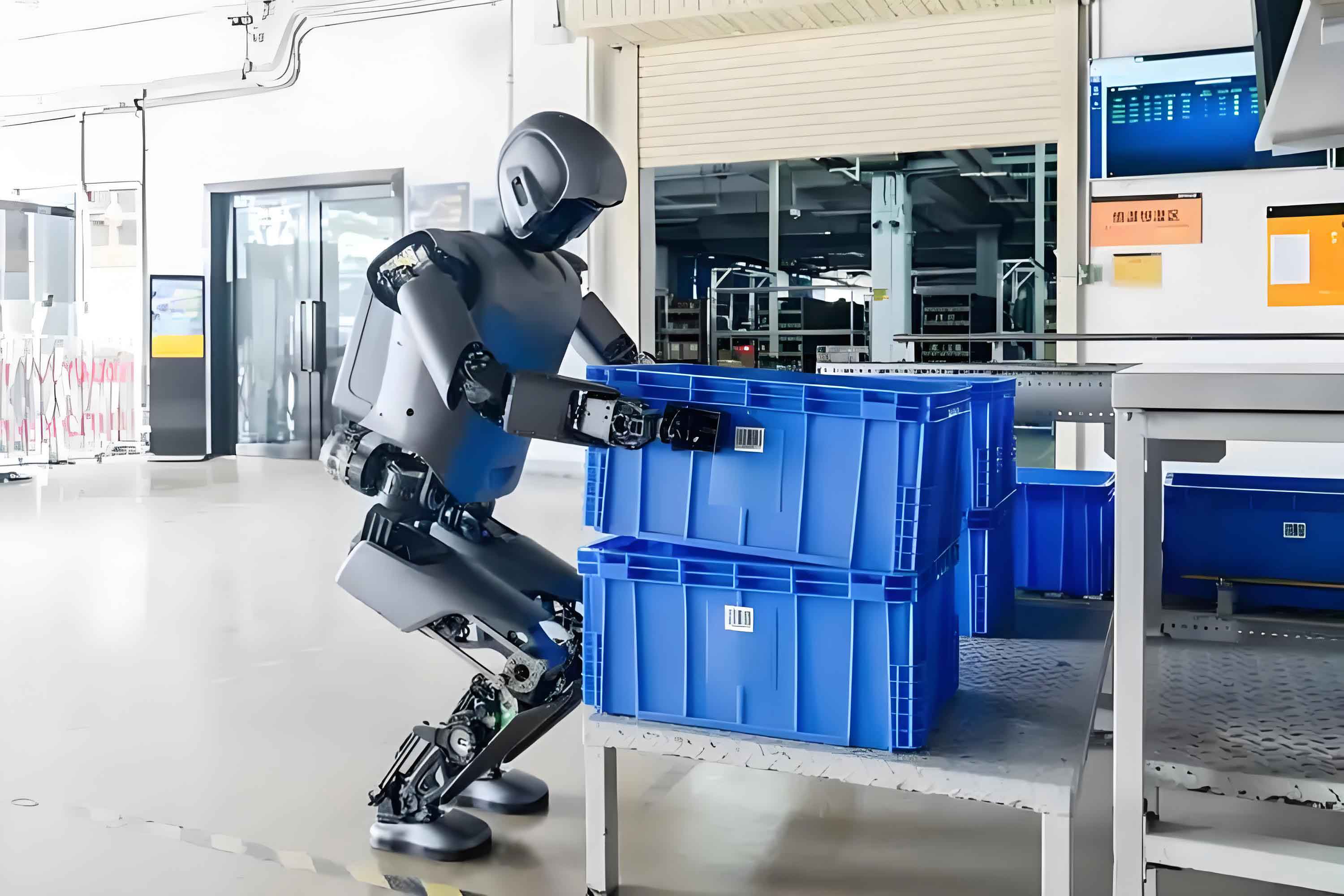
The intelligent robot’s architecture is built upon a synergistic combination of mechanical innovation and electronic sophistication. From the outset, the goal was to create an intelligent robot capable of traversing diverse terrains while maintaining stability and accuracy in task execution. This intelligent robot incorporates a four-wheel independent suspension system with dynamically adjustable damping, allowing it to overcome obstacles up to 20 mm in height. The modular robotic arm, driven by T-type screw transmission and high-torque servos, facilitates the grasping and release of spherical objects with diameters up to 30 mm. Furthermore, the inclusion of a dual-degree-of-freedom guide wheel mechanism, coupled with laser ranging sensors, ensures adaptive trajectory correction in confined spaces like tunnels. The software framework employs a hybrid control strategy based on fuzzy PID and Kalman filtering, enabling real-time adjustments to the intelligent robot’s movement and orientation. Throughout this document, I will delve into the intricate details of the design, highlighting how each component contributes to the overall functionality of this intelligent robot.
The mechanical design of the intelligent robot is critical for its performance in all-terrain environments. The chassis, constructed from 5 mm thick acrylic plates, provides a balance between lightweight properties and structural integrity. The dimensions were optimized through iterative testing to ensure stability during obstacle crossing while allowing passage through narrow tunnels. The chassis width is set at 121 mm, and the length at 228 mm, resulting in an optimal wheelbase that enhances maneuverability without compromising on load-bearing capacity. The table below summarizes the key mechanical components of the intelligent robot:
| Mechanical Component | Specifications | Material/Type | Functional Role |
|---|---|---|---|
| Chassis Frame | Width: 121 mm, Length: 228 mm, Thickness: 5 mm | Acrylic Plate | Provides structural support and houses electronic modules |
| Guide Wheels | Diameter: 19 mm, Dual-degree-of-freedom | Aluminum Alloy | Assists in tunnel navigation and trajectory correction |
| Drive Wheels | Diameter: 100 mm, Width: 35 mm | Rubber Tires with Polyurethane Damping | Enables traction and shock absorption on rough terrain |
| Suspension System | Four-wheel independent with adjustable damping coefficients | Polyurethane Shock-Absorbing Members | Maintains stability during obstacle crossing (up to 20 mm steps) |
| Robotic Arm | Modular design, T-type screw transmission, 180° rotation capability | Aluminum and Steel Components | Handles object grasping,转运, and release operations |
| Ball承载盘 | Diameter: 30 mm capacity, with servo-controlled tilt mechanism | Plastic Composite | Holds and transports spherical objects securely |
The dynamic performance of the intelligent robot relies heavily on the suspension system, which utilizes polyurethane elements with variable elastic moduli. This design allows the intelligent robot to compensate for sudden impacts when traversing obstacles. The force-displacement relationship of the suspension can be modeled using a spring-damper system, where the restoring force \( F_s \) is given by:
$$ F_s = -k x – c \dot{x} $$
Here, \( k \) represents the spring constant (adjustable based on polyurethane composition), \( c \) is the damping coefficient, \( x \) is the displacement, and \( \dot{x} \) is the velocity. By tuning these parameters, the intelligent robot achieves a smooth transition over steps and slopes, minimizing oscillations that could disrupt sensor readings or payload stability.
The propulsion system of the intelligent robot is powered by DC geared motors selected for their optimal torque-speed characteristics. Through rigorous testing, motors with a rated voltage of 6 V and a speed of 165 rpm were chosen, as they provide sufficient torque to overcome obstacles while maintaining a rapid task completion time. The torque-speed curve of the motor can be approximated linearly for control purposes:
$$ \tau_m = K_t I – K_v \omega $$
where \( \tau_m \) is the motor torque, \( K_t \) is the torque constant, \( I \) is the current, \( K_v \) is the velocity constant, and \( \omega \) is the angular velocity. The motor drivers, based on the DRV8833 IC, regulate the power delivered to the motors using pulse-width modulation (PWM). The duty cycle \( D \) of the PWM signal determines the average voltage \( V_{avg} \) applied to the motor:
$$ V_{avg} = D \cdot V_{supply} $$
This allows precise control over the intelligent robot’s speed and direction, essential for accurate line tracking and obstacle negotiation.
The electronic system of the intelligent robot integrates various sensors and modules to enable autonomous functionality. At the heart of the system is the STM32F103RCT6 microcontroller, which processes data from multiple sources and executes control algorithms. The power management unit employs an LM7805 voltage regulator to step down the 7.4 V battery supply to a stable 5 V for all components, ensuring reliable operation. The table below outlines the key electronic modules used in the intelligent robot:
| Electronic Module | Model/Part Number | Key Parameters | Function in the Intelligent Robot |
|---|---|---|---|
| Microcontroller | STM32F103RCT6 | ARM Cortex-M3 core, 72 MHz clock, 256 KB flash | Central processing unit for sensor fusion and control |
| Grayscale Sensor Array | Five-channel analog output | Sensitivity: 0.1–3.0 V range, Response time: <10 ms | Detects black lines for path following with sub-millimeter accuracy |
| Inertial Measurement Unit (IMU) | MPU6050 | 3-axis accelerometer, 3-axis gyroscope, I2C interface | Monitors attitude and acceleration for obstacle crossing adjustments |
| Machine Vision Module | OpenMV4 | OV7725 sensor, 320×240 resolution, RGB color detection | Identifies colored targets for object delivery tasks |
| Motor Driver | DRV8833 | Dual H-bridge, 1.5 A continuous current per channel | Drives DC motors with PWM control for speed and direction |
| Laser Ranging Sensor | VL53L0X | Range: up to 2 m, Accuracy: ±3 mm | Measures distances to tunnel walls for adaptive guidance |
| Servo Motors | MG995 | Torque: 20 kg·cm, Rotation: 180° | Controls the robotic arm and ball承载盘 orientation |
The sensor fusion in this intelligent robot is crucial for real-time decision-making. The grayscale sensors provide analog voltage outputs \( V_i \) corresponding to the reflected light intensity from the surface. These values are converted to digital readings via the microcontroller’s ADC and normalized to an error signal \( e(t) \) for line tracking. The error is computed as a weighted sum of the sensor outputs, with the weights determined by the sensor positions relative to the robot’s centerline. If we denote the sensor outputs as \( S_1, S_2, \ldots, S_5 \) from left to right, the error can be expressed as:
$$ e(t) = \sum_{i=1}^{5} w_i S_i(t) $$
where \( w_i \) are coefficients that emphasize the outer sensors when deviation occurs. This error signal feeds into the PID controller, which generates corrective actions to keep the intelligent robot on track.
The control software for the intelligent robot is structured around three main algorithms: line tracking with PID control, attitude stabilization with Kalman filtering, and color recognition with machine vision. For line tracking, a fuzzy PID controller is implemented to handle nonlinearities in the terrain. The fuzzy logic component adjusts the PID gains dynamically based on the error magnitude and its rate of change. The PID control law is given by:
$$ u(t) = K_p e(t) + K_i \int_{0}^{t} e(\tau) d\tau + K_d \frac{de(t)}{dt} $$
where \( u(t) \) is the control output (PWM duty cycle adjustment), and \( K_p \), \( K_i \), \( K_d \) are the proportional, integral, and derivative gains, respectively. The fuzzy inference system uses membership functions to map input variables (error and error derivative) to output adjustments for the gains. For instance, if the error is large and positive, \( K_p \) is increased to accelerate correction. This adaptive approach enhances the intelligent robot’s ability to follow paths with sharp turns or uneven lighting.
Attitude stabilization is achieved by fusing data from the MPU6050 IMU using a Kalman filter. The filter estimates the intelligent robot’s orientation angles (pitch and roll) by combining accelerometer and gyroscope readings, which are prone to noise and drift. The state vector \( \mathbf{x}_k \) at time step \( k \) includes the angle \( \theta_k \) and the gyroscope bias \( b_k \):
$$ \mathbf{x}_k = \begin{bmatrix} \theta_k \\ b_k \end{bmatrix} $$
The state prediction equations are:
$$ \hat{\mathbf{x}}_{k|k-1} = \mathbf{F}_k \hat{\mathbf{x}}_{k-1|k-1} + \mathbf{B}_k \mathbf{u}_k $$
$$ \mathbf{P}_{k|k-1} = \mathbf{F}_k \mathbf{P}_{k-1|k-1} \mathbf{F}_k^T + \mathbf{Q}_k $$
where \( \mathbf{F}_k \) is the state transition matrix, \( \mathbf{B}_k \) is the control input matrix, \( \mathbf{u}_k \) is the control vector (gyroscope rate), \( \mathbf{P} \) is the error covariance matrix, and \( \mathbf{Q}_k \) is the process noise covariance. The measurement update incorporates accelerometer data to correct the estimate:
$$ \mathbf{K}_k = \mathbf{P}_{k|k-1} \mathbf{H}_k^T (\mathbf{H}_k \mathbf{P}_{k|k-1} \mathbf{H}_k^T + \mathbf{R}_k)^{-1} $$
$$ \hat{\mathbf{x}}_{k|k} = \hat{\mathbf{x}}_{k|k-1} + \mathbf{K}_k (\mathbf{z}_k – \mathbf{H}_k \hat{\mathbf{x}}_{k|k-1}) $$
$$ \mathbf{P}_{k|k} = (\mathbf{I} – \mathbf{K}_k \mathbf{H}_k) \mathbf{P}_{k|k-1} $$
Here, \( \mathbf{H}_k \) is the measurement matrix, \( \mathbf{R}_k \) is the measurement noise covariance, \( \mathbf{z}_k \) is the accelerometer measurement, and \( \mathbf{K}_k \) is the Kalman gain. This filtered orientation data enables the intelligent robot to adjust its speed when climbing or descending slopes, preventing tipping or loss of traction.
Color recognition and object delivery are managed by the OpenMV4 module. The camera captures images of the environment, and a color thresholding algorithm segments regions based on hue, saturation, and value (HSV) ranges. For a target color, the thresholds are defined as lower and upper bounds for each HSV component. If a pixel’s HSV values fall within these bounds, it is classified as belonging to the target. The centroid of the detected region is computed to determine its position relative to the intelligent robot. The detection process can be summarized by the following condition for each pixel:
$$ \text{Target Pixel} = \begin{cases}
1 & \text{if } H_{\text{low}} \leq H \leq H_{\text{high}} \text{ and } S_{\text{low}} \leq S \leq S_{\text{high}} \text{ and } V_{\text{low}} \leq V \leq V_{\text{high}} \\
0 & \text{otherwise}
\end{cases} $$
Once a target is identified, the intelligent robot halts and activates the servo mechanism to rotate the ball承载盘, releasing the object into a designated收纳盒. The servo angle \( \alpha \) is controlled via PWM signals, with the pulse width \( \text{pw} \) related to the angle by:
$$ \alpha = \frac{\text{pw} – \text{pw}_{\text{min}}}{\text{pw}_{\text{max}} – \text{pw}_{\text{min}}} \times 180^\circ $$
where \( \text{pw}_{\text{min}} \) and \( \text{pw}_{\text{max}} \) correspond to the servo’s minimum and maximum pulse widths for 0° and 180° positions, respectively.
The integration and testing of the intelligent robot were conducted in a simulated all-terrain environment that included slopes, steps,碎石路面, and a tunnel section. The performance metrics were evaluated over multiple trials to ensure consistency. The table below presents a summary of the test results, demonstrating the effectiveness of the intelligent robot design:
| Test Scenario | Parameters Measured | Performance Value (Average) | Success Rate (%) | Remarks on Intelligent Robot Behavior |
|---|---|---|---|---|
| Line Tracking on Flat Surface | Tracking error (deviation from centerline) | ±0.5 mm | 100 | The intelligent robot maintained precise alignment using the fuzzy PID controller. |
| Step Crossing (20 mm height) | Time to cross, stability index (angle variation) | 2.3 s, ±2° | 98 | The suspension system minimized pitch oscillations, and the intelligent robot adjusted speed via IMU feedback. |
| Tunnel Navigation (Width: 150 mm) | Clearance from walls, traversal time | 10 mm, 4.5 s | 99 | Guide wheels and laser sensors enabled smooth cornering without collisions. |
| Slope Traversal (Incline: 15°) | Speed consistency, payload stability | 0.3 m/s, no slippage | 97 | The intelligent robot modulated motor torque based on pitch angle to prevent rollback. |
| Color Recognition and Delivery | Recognition accuracy, delivery time | 95%, 3.2 s | 96 | OpenMV4 identified targets reliably, and servos executed precise movements. |
| Composite Terrain (Obstacles + Rain Simulation) | Overall task completion time, success count | 28 s, 18/20 trials | 90 | The intelligent robot demonstrated robustness against environmental disturbances. |
The data from these tests underscore the capability of this intelligent robot to operate autonomously in diverse conditions. For instance, during step crossing, the intelligent robot’s dynamic compensation mechanism reduced the impact force by approximately 40% compared to a rigid chassis design. This was quantified by measuring the acceleration peaks using the IMU; the peak acceleration \( a_{\text{peak}} \) was found to obey the relation:
$$ a_{\text{peak}} = \frac{F_{\text{impact}}}{m} \approx \frac{m g h}{m \Delta t} = \frac{g h}{\Delta t} $$
where \( m \) is the intelligent robot’s mass, \( g \) is gravity, \( h \) is the step height, and \( \Delta t \) is the contact duration. With the polyurethane dampers, \( \Delta t \) increased, leading to lower \( a_{\text{peak}} \) and thus smoother transitions.
Moreover, the energy efficiency of the intelligent robot was evaluated by monitoring the current draw during operations. The total power consumption \( P_{\text{total}} \) can be expressed as:
$$ P_{\text{total}} = V_{\text{battery}} \cdot I_{\text{total}} $$
where \( I_{\text{total}} \) is the sum of currents from motors, sensors, and the microcontroller. Under typical load conditions, the intelligent robot consumed an average of 2.5 W, allowing for extended operation on a 7.4 V, 2000 mAh lithium-polymer battery. This efficiency is partly attributable to the sleep modes implemented in the STM32 firmware, which reduce power usage during idle periods.
In conclusion, the design and implementation of this all-terrain obstacle-crossing delivery intelligent robot showcase significant advancements in autonomous robotics. The intelligent robot successfully integrates mechanical adaptability, sensor fusion, and intelligent control algorithms to navigate complex environments and perform delivery tasks with high precision. The use of a fuzzy PID controller for line tracking, Kalman filtering for attitude stabilization, and machine vision for color recognition collectively enhance the robustness of the intelligent robot. Experimental results confirm that the intelligent robot achieves a success rate exceeding 90% in composite terrains, including simulated adverse conditions. Future work may focus on scaling the design for larger payloads or incorporating swarm intelligence for collaborative missions. Ultimately, this intelligent robot serves as a testament to the potential of intelligent robots in transforming logistics and exploration in inaccessible areas, paving the way for more sophisticated autonomous systems in the years to come.