
With the advent of the Industry 4.0 era, the application fields and service scenarios of intelligent robots have become increasingly diverse, driven by technologies such as smart algorithms, virtual simulation, and deep learning. The advantages of intelligent robots are more pronounced, and they have achieved significant results in areas like disaster relief, geological exploration, aerospace, transportation, and parcel sorting, effectively enhancing social production efficiency. The diversification and complexity of intelligent robot application scenarios impose stricter control requirements. Only through a more comprehensive and refined control system can the functional advantages of intelligent robots be fully exploited. This article explores the design of an intelligent robot control system based on ATmega microcontrollers, tailored to the operational needs of intelligent robots, and validates the control effectiveness through simulation environments.
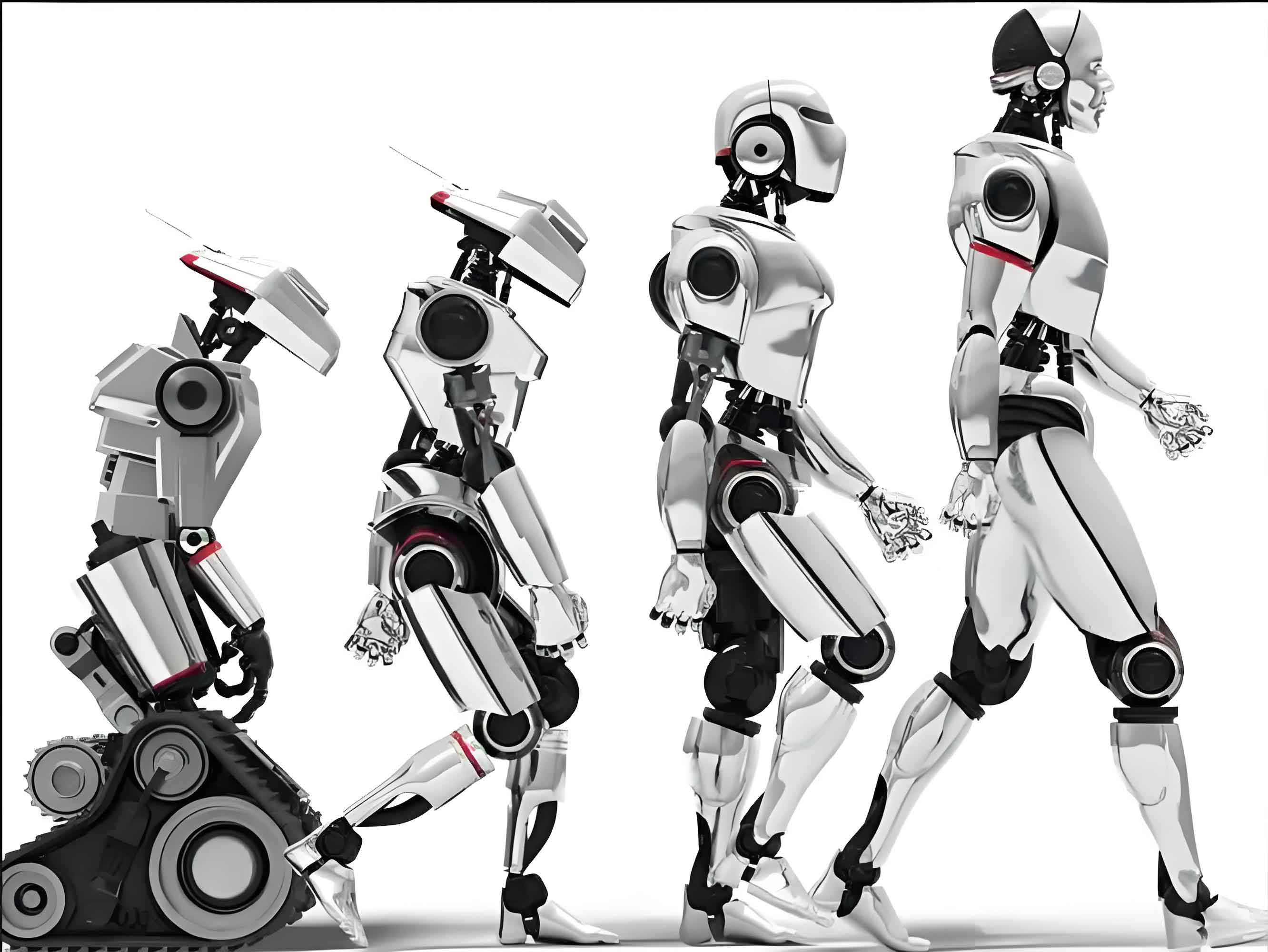
The development of intelligent robots is a cornerstone of modern automation, and their control systems are pivotal in ensuring stable operation and functional fulfillment. In this design, I focus on leveraging smart detection algorithms to enable effective obstacle avoidance and navigation for intelligent robots. By utilizing the AVR-series microcontroller ATmega as the control core, I develop the control system software and verify the motion capabilities and control proficiency of the intelligent robot through simulation tools.
Overall System Design of the Intelligent Robot
The design aims to achieve autonomous and intelligent operations for the intelligent robot, allowing it to efficiently perform tasks in complex ground environments. In terms of functionality, the intelligent robot must possess automated mobility, capable of path recognition and planning; human-machine interaction for efficient data transmission and real-time status monitoring; and environmental detection through sensors to dynamically probe surroundings and generate decision-making information via smart detection algorithms. The system structure is divided into mechanical components, drive systems, detection systems, and control systems. The overall architecture is summarized in Table 1.
| Component | Description | Function |
|---|---|---|
| Mechanical Structure | Physical framework and joints | Supports movement and task execution |
| Drive System | Motors and actuators | Provides motion and power |
| Detection System | Sensors (e.g., infrared, ultrasonic) | Collects environmental data |
| Control System | Microcontroller and software | Processes data and issues commands |
The intelligent robot’s performance hinges on the seamless integration of these components, with the control system acting as the brain that coordinates all operations. By emphasizing modularity, the design ensures scalability and adaptability for various applications of intelligent robots.
Hardware Design of the Intelligent Robot Control System
Hardware design is critical for the control system’s precision and effectiveness. It encompasses the microprocessing unit, servo and sensor module circuits, and PCB design. Each element must be optimized to support the robust functionality of the intelligent robot.
Microprocessor Module Design
The microprocessor serves as the core of the intelligent robot control system, determining control accuracy and feature implementation. Based on functional requirements, I selected the ATmega128 microcontroller as the control center. This choice is justified by its ability to handle complex circuit designs and interface circuits, including support for JTAG and ISP in-system programming. The ATmega128 offers high performance with low power consumption, making it ideal for embedded applications in intelligent robots. Key specifications are outlined in Table 2.
| Parameter | Value | Relevance to Intelligent Robot |
|---|---|---|
| CPU Speed | 16 MHz | Enables real-time processing for control tasks |
| Flash Memory | 128 KB | Stores control algorithms and program code |
| I/O Pins | 53 | Facilitates connectivity with sensors and actuators |
| Communication Interfaces | UART, SPI, I2C | Supports data exchange and peripheral integration |
The selection of this microcontroller ensures that the intelligent robot can execute complex algorithms, such as those for obstacle detection, without latency, thereby enhancing operational reliability.
Servo and Sensor Module Circuit Design
The servo and sensor modules act as the eyes and limbs of the intelligent robot. To achieve efficient control, I implemented a synchronous communication method. In this approach, the control system sends an instruction packet and waits for a response from the intelligent robot before proceeding with the next communication. This prevents issues like communication congestion and ensures precise command execution. The circuit design employs multi-channel series connections for servos and sensors, allowing shared power supply and continuous operation. For instance, the infrared obstacle detection sensors are connected in a daisy-chain configuration to minimize wiring complexity. The relationship between sensor data and servo response can be modeled mathematically. Let \( S \) represent the sensor output signal, and \( C \) denote the control command. The response time \( t_r \) is given by:
$$ t_r = \frac{S}{k} + \delta $$
where \( k \) is a proportionality constant dependent on the sensor sensitivity, and \( \delta \) accounts for communication delays. This formula highlights the importance of optimizing sensor-circuit interactions for the intelligent robot’s responsiveness.
PCB Design
PCB design impacts the stability and reliability of the intelligent robot control system. The requirements include accuracy, reliability, and cost-effectiveness. Accuracy ensures that the PCB faithfully implements the schematic diagram’s electrical connections, avoiding short circuits. Reliability is enhanced through careful material selection, trace routing, and component placement to mitigate interference. Cost-effectiveness is achieved by optimizing board size and material usage without compromising functionality.
In the design process, I began by generating a netlist from the schematic diagram. Using a PCB editor, I defined the board dimensions and contour, followed by component placement via automatic layout tools to ensure uniformity and minimize electromagnetic interference. Routing was performed with a combination of manual and automatic methods, prioritizing critical signals like clock lines. Key design rules are summarized in Table 3.
| Aspect | Rule | Rationale |
|---|---|---|
| Trace Width | Minimum 0.2 mm | Prevents overheating and ensures current capacity |
| Clearance | 0.3 mm between traces | Reduces risk of short circuits |
| Layer Stack-up | 2-layer with ground plane | Improves signal integrity and noise immunity |
| Component Spacing | ≥ 1 mm | Facilitates soldering and thermal management |
After routing, I added shielding and teardrops to enhance durability. Finally, I conducted design rule checks (DRC) and electrical rule checks (ERC) to validate the PCB layout. This meticulous approach ensures that the hardware foundation supports the advanced capabilities of the intelligent robot, from sensor data acquisition to motor control.
Software Design for the Intelligent Robot Control
Software design is key to realizing intelligent robot control, as it leverages hardware capabilities to execute complex tasks. The software architecture must exhibit real-time performance, reliability, maintainability, and portability. I structured it into modular components: initialization, human-machine interaction, obstacle detection and avoidance, communication, and motor control modules.
Software Architecture Design
The software architecture is modular to facilitate development and testing. Each module handles specific functions, and their integration forms the complete control system. The architecture is depicted in a flowchart-like structure, but here I summarize it in Table 4 to emphasize the interactions.
| Module | Function | Key Algorithms |
|---|---|---|
| Initialization | Sets up hardware states on power-up | Port, serial, and servo initialization routines |
| Human-Machine Interaction | Enables data exchange and command input | Data parsing and TSP platform integration |
| Obstacle Detection and Avoidance | Identifies and navigates around obstacles | Infrared pulse analysis and path planning |
| Communication | Manages data transfer between components | Synchronous communication protocols |
| Motor Control | Regulates speed and direction of movement | PWM signal generation and encoder feedback |
This modular design allows for independent testing and updates, which is crucial for adapting the intelligent robot to new environments or tasks. The use of smart detection algorithms permeates these modules, particularly in obstacle avoidance, where real-time data processing is essential.
Initialization Module Design
The initialization module executes when the intelligent robot is powered on, configuring hardware to a known state. It includes port initialization, where data and direction registers set pin modes and enable internal pull-up resistors; serial initialization for UART0 and UART1 to establish communication channels; and servo initialization, which supports infinite rotation mode for wheel servos and standard mode for steering and mechanical operations. Mathematically, the initialization process can be described as a sequence of operations \( I = \{I_1, I_2, \dots, I_n\} \), where each \( I_i \) represents an initialization step. For example, port initialization for a pin \( p \) involves setting its direction \( D_p \) and value \( V_p \):
$$ D_p = \text{INPUT}, \quad V_p = \text{HIGH} \quad \text{(with pull-up enabled)} $$
This ensures that the intelligent robot starts in a consistent state, ready for task execution.
Human-Machine Interaction Module Design
This module facilitates data collection, scene analysis, and service matching for the intelligent robot. The framework involves a control system terminal, a TSP platform, a big data platform, and robot sensors. Sensors upload data to the big data platform, where smart detection algorithms analyze it based on functional services. The results are sent to the TSP platform, which encodes and transmits commands to the control terminal. The decision-making process can be modeled using probability theory. Let \( D \) be the sensor data, and \( A \) be the action set for the intelligent robot. The optimal action \( a^* \) is selected by maximizing the utility function \( U \):
$$ a^* = \arg\max_{a \in A} P(a \mid D) \cdot U(a) $$
where \( P(a \mid D) \) is the probability of action \( a \) given data \( D \), derived from the smart detection algorithms. This highlights the role of artificial intelligence in enhancing the interactivity of intelligent robots.
Obstacle Detection and Avoidance Module Design
This module enables the intelligent robot to detect and avoid obstacles using infrared sensors. By emitting and receiving a specific number of pulses, the system determines obstacle presence and size. The workflow involves scanning the environment, processing pulse counts, and generating avoidance maneuvers. For instance, if an obstacle is detected within a threshold distance \( d_{\text{th}} \), the intelligent robot executes a turn. The turn angle \( \theta \) can be calculated based on sensor inputs \( x_1, x_2, \dots, x_n \) from multiple sensors:
$$ \theta = \alpha \cdot \sum_{i=1}^n w_i x_i $$
where \( \alpha \) is a scaling factor and \( w_i \) are weights assigned to each sensor. This linear combination allows for adaptive navigation. Code snippets for turning functions, such as robot_turn_left() and robot_turn_right(), are implemented using GPIO controls and PWM signals to adjust motor speeds. The integration of such algorithms ensures that the intelligent robot can operate safely in dynamic environments.
Communication Module Design
The communication module employs a synchronous protocol to ensure reliable data exchange. The process is cyclic: the control system sends an instruction packet to the intelligent robot’s servos, awaits a feedback packet from sensors and servos, and then proceeds to the next instruction. This prevents command overlap and data loss. The communication delay \( t_c \) can be expressed as:
$$ t_c = t_{\text{send}} + t_{\text{process}} + t_{\text{receive}} $$
where \( t_{\text{send}} \) is the transmission time, \( t_{\text{process}} \) is the intelligent robot’s processing time, and \( t_{\text{receive}} \) is the feedback reception time. Minimizing \( t_c \) is crucial for real-time control, and the use of efficient encoding schemes helps achieve this. The module also includes error-checking mechanisms to maintain data integrity, which is vital for the precise operation of the intelligent robot.
Motor Control Module Design
Motor control regulates the speed and stability of the intelligent robot. Speed adjustment is achieved through PWM signals, which vary the duty cycle to change the average voltage applied to the motors. If \( V_{\text{in}} \) is the input voltage and \( D_{\text{PWM}} \) is the duty cycle (0 to 1), the effective motor voltage \( V_{\text{eff}} \) is:
$$ V_{\text{eff}} = D_{\text{PWM}} \cdot V_{\text{in}} $$
Speed \( v \) is proportional to \( V_{\text{eff}} \), with a constant \( k_m \) accounting for motor characteristics: \( v = k_m \cdot V_{\text{eff}} \). For speed measurement, a reflective optical encoder is used. It generates pulses per revolution, and the distance traveled \( s \) in time \( T \) is calculated as:
$$ s = 2\pi r \cdot \frac{\text{cnt}}{N \cdot T} $$
where \( r \) is the wheel radius, cnt is the pulse count, and \( N \) is the number of stripes on the encoder disk. The speed \( v \) is then \( v = s / T \). This feedback loop allows for closed-loop control, enhancing the precision of the intelligent robot’s movements. Table 5 summarizes the motor control parameters.
| Parameter | Symbol | Typical Value | Description |
|---|---|---|---|
| Wheel Radius | \( r \) | 0.05 m | Affects distance per revolution |
| Encoder Stripes | \( N \) | 20 | Determines pulse resolution |
| PWM Frequency | \( f_{\text{PWM}} \) | 1 kHz | Influences motor smoothness |
| Motor Constant | \( k_m \) | 0.1 m/s/V | Relates voltage to speed |
By fine-tuning these parameters, the intelligent robot can achieve optimal performance in various tasks, from slow precision movements to fast traversals.
System Debugging for the Intelligent Robot Control
Debugging is essential to identify and rectify defects in both hardware and software. I adopted an incremental approach, testing components during installation to improve development efficiency.
Hardware Circuit Debugging
Hardware debugging involves several stages. First, I conducted circuit diagram inspections using multimeters to check for proper soldering, continuity, and short circuits. Second, voltage tests were performed before PCB assembly to verify power pin voltages on chips and components, preventing damage from overvoltage. Third, overall debugging was done by connecting a simulator to assess system functionality. If the system enters the simulation environment successfully, it indicates normal software operation. The debugging process can be formalized as a set of tests \( T = \{T_1, T_2, T_3\} \), where each test has a pass condition \( C_i \). For example, for voltage test \( T_2 \), the condition is that all voltages \( V_j \) are within specified ranges \( [V_{\text{min}, j}, V_{\text{max}, j}] \):
$$ C_2: \bigcap_{j} (V_{\text{min}, j} \leq V_j \leq V_{\text{max}, j}) $$
This rigorous testing ensures the reliability of the intelligent robot’s hardware foundation.
Software Debugging
Software debugging utilizes simulation tests to validate module functionality. Given the ATmega128’s JTAG interface, I employed chip-level simulation. JTAG operates through a Test Access Port (TAP), allowing internal node testing via a dedicated tool. Multiple devices can be daisy-chained via JTAG for individual testing. The interface also supports programming of flash memory. In the simulation, I focused on verifying the obstacle avoidance and motor control modules by injecting synthetic sensor data and observing the intelligent robot’s responses. The debugging efficiency \( \eta \) can be quantified as the ratio of resolved issues to total test cases:
$$ \eta = \frac{N_{\text{resolved}}}{N_{\text{total}}} \times 100\% $$
By aiming for high \( \eta \), the software becomes robust enough to handle real-world scenarios for the intelligent robot.
Conclusion
In the Industry 4.0 era, intelligent robots are poised to replace humans in high-frequency, hazardous, and complex tasks. The design of their control systems is thus increasingly important. This work presents a comprehensive control system for an intelligent robot based on the ATmega AVR microcontroller. Through detailed hardware and software design, including modules for initialization, human-machine interaction, obstacle detection and avoidance, communication, and motor control, the system achieves effective and accurate control. The integration of smart detection algorithms enhances the intelligent robot’s autonomy and adaptability. Future developments could involve incorporating machine learning for improved decision-making or expanding sensor suites for multi-environment operation. The modular approach ensures that the control system can evolve with advancing technologies, solidifying the role of intelligent robots in modern automation.