
As a researcher in robotics, I have always been fascinated by the complexity and versatility of the human hand. The pursuit of replicating its capabilities has led to the development of dexterous robotic hands, which are integrated systems combining mechanisms, actuation, sensing, and control. These systems offer high adaptability, rich perceptual abilities, and flexible manipulation, enabling them to perform tasks in environments where human hands cannot operate. In this article, I will delve into the structural design of multi-fingered dexterous robotic hands, exploring their applications, key technologies, design principles, transmission schemes, and future trends. The goal is to provide a comprehensive analysis that highlights the advancements and challenges in creating robotic hands that mimic human dexterity.
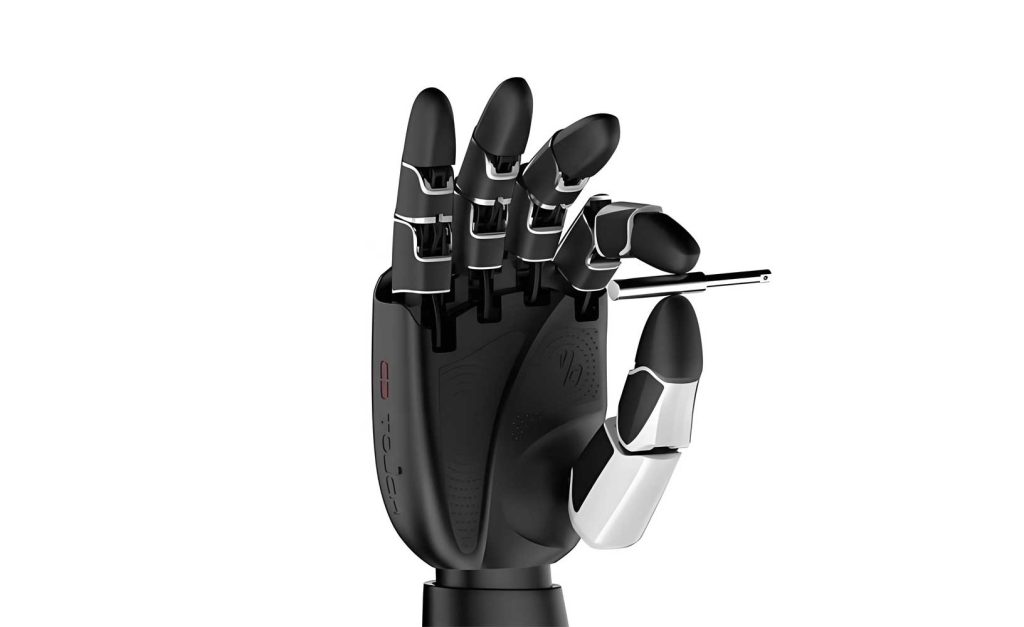
The concept of a dexterous robotic hand stems from biomimetics, where the human hand serves as a blueprint. A typical dexterous robotic hand consists of multiple fingers, each with two or three revolute joints that are independently controlled. This design allows for a wide range of motions, such as grasping, manipulating, and assembling objects with precision. The importance of dexterous robotic hands cannot be overstated; they are pivotal in fields like industrial automation, space exploration, healthcare, and hazardous environment handling. By analyzing existing research and my own experiences, I aim to outline the critical aspects that make these robotic hands functional and efficient.
One of the core motivations behind developing dexterous robotic hands is to extend human capabilities. In daily life, our hands perform intricate tasks effortlessly, but in extreme conditions—such as deep-sea exploration, outer space, or radioactive sites—human presence is risky or impossible. Here, a dexterous robotic hand can act as a surrogate, executing operations like sampling, repair, and assembly. Moreover, in manufacturing, repetitive tasks can be automated with dexterous robotic hands, boosting productivity and reducing labor costs. The versatility of a dexterous robotic hand lies in its ability to adapt to various objects and environments, much like a human hand, but with enhanced durability and precision.
To understand the design of a dexterous robotic hand, it is essential to break down its components. From a macroscopic view, the design revolves around several key technologies: finger design, sensor integration, and control systems. Each of these elements contributes to the overall performance of the dexterous robotic hand. In the following sections, I will elaborate on these aspects, supported by tables and mathematical formulations to summarize the principles. For instance, the kinematics of finger joints can be described using transformation matrices, while sensor characteristics can be tabulated for comparison. Let me start by discussing the applications in more detail.
Applications of Dexterous Robotic Hands
The applications of dexterous robotic hands are vast and growing. Based on my research, I have categorized them into several domains where these hands prove invaluable. Below is a table summarizing key application areas along with their specific tasks and benefits.
| Application Domain | Specific Tasks | Benefits of Dexterous Robotic Hand |
|---|---|---|
| Industrial Automation | Assembly, packaging, quality inspection | High precision, repeatability, reduced human error |
| Space Exploration | Extra-vehicular activities, sample collection | Operates in vacuum, handles delicate instruments |
| Hazardous Environments | Nuclear plant maintenance, chemical handling | Minimizes exposure to radiation or toxins |
| Healthcare | Surgical assistance, rehabilitation, prosthetics | Enhanced dexterity, customizable for patient needs |
| Deep-Sea Operations | Underwater exploration, pipeline repair | Withstands high pressure, performs precise manipulations |
In industrial settings, a dexterous robotic hand can handle small components with care, mimicking human dexterity to screw, insert, or adjust parts. For example, in electronics manufacturing, a dexterous robotic hand might place microchips on circuit boards with sub-millimeter accuracy. In space, the dexterous robotic hand attached to a robotic arm can perform repairs on satellites, leveraging its multi-fingered design to grip tools and materials. I have observed that the adaptability of a dexterous robotic hand allows it to switch between tasks seamlessly, making it a cost-effective solution for dynamic environments.
Moreover, in healthcare, dexterous robotic hands are revolutionizing prosthetics. By integrating sensors and advanced control algorithms, prosthetic hands can provide natural movement and tactile feedback to users. This application highlights the human-centric design of dexterous robotic hands, aiming to restore functionality for amputees. As I explore these applications, it becomes clear that the success of a dexterous robotic hand depends on its structural design, which I will analyze next.
Key Technologies in Dexterous Robotic Hand Design
Designing a dexterous robotic hand involves addressing several technological challenges. From my perspective, the three primary areas are finger design, sensor design, and control systems. Each area requires careful consideration to achieve a hand that is both functional and efficient.
Finger Design
The human hand has five fingers, with the thumb being particularly versatile due to its opposable nature. In designing a dexterous robotic hand, I advocate for a modular approach. By focusing on a single finger module, we can replicate it for other fingers with slight dimensional adjustments. This reduces complexity and cost. The thumb, however, demands special attention because it enables power and precision grips. The kinematics of a finger can be modeled using a series of revolute joints. For a finger with three joints (proximal, medial, and distal), the forward kinematics can be expressed using homogeneous transformation matrices. Let the joint angles be $\theta_1$, $\theta_2$, and $\theta_3$, and the link lengths be $l_1$, $l_2$, and $l_3$. The position of the fingertip relative to the base is given by:
$$ P = T_1(\theta_1) \cdot T_2(\theta_2) \cdot T_3(\theta_3) \cdot \begin{bmatrix} 0 \\ 0 \\ 0 \\ 1 \end{bmatrix} $$
where $T_i(\theta_i)$ is the transformation matrix for joint $i$. This mathematical representation helps in simulating finger movements and optimizing dimensions. In practice, the design of a dexterous robotic hand finger must balance strength, flexibility, and weight. Materials like carbon fiber or lightweight alloys are often used to mimic human bone structure while ensuring durability.
Sensor Design
Tactile sensing is crucial for a dexterous robotic hand to interact with its environment. Human skin contains numerous receptors that detect pressure, texture, and temperature. Similarly, a dexterous robotic hand requires integrated sensors to provide feedback for control. The main types of sensors include force sensors, tactile arrays, and proximity sensors. Below is a table comparing common sensor technologies used in dexterous robotic hands.
| Sensor Type | Principle | Advantages | Limitations |
|---|---|---|---|
| Force Sensing Resistors (FSR) | Resistance changes with applied force | Low cost, thin profile | Non-linear response, hysteresis |
| Piezoelectric Sensors | Generate voltage under deformation | High sensitivity, fast response | Require dynamic loading, drift over time |
| Optical Tactile Sensors | Light intensity changes due to contact | High resolution, immune to EMI | Complex design, sensitive to environment |
| Capacitive Sensors | Capacitance changes with proximity or force | Good accuracy, scalable | Susceptible to noise, need shielding |
In my work, I have found that combining multiple sensor types can enhance the perceptual capabilities of a dexterous robotic hand. For instance, force sensors can measure grip strength, while tactile arrays map contact patterns. The data from these sensors is fed into the control system, allowing the dexterous robotic hand to adjust its grasp in real-time. The design of sensors must consider factors like size, robustness, and integration with the hand structure. As miniaturization advances, embedding sensors within finger phalanges becomes feasible, leading to more anthropomorphic dexterous robotic hands.
Control Systems Research
Control systems are the brain of a dexterous robotic hand, translating sensor data into motor commands. To keep the hand compact and lightweight, the control system must be embedded within the hand structure. This involves optimizing algorithms and modeling techniques. One common approach is using PID controllers for joint position control, but more advanced methods like adaptive control or machine learning are gaining traction. For a dexterous robotic hand with multiple degrees of freedom (DOF), the dynamics can be complex. The equations of motion for a finger can be derived using the Lagrangian formulation:
$$ L = K – U $$
where $L$ is the Lagrangian, $K$ is the kinetic energy, and $U$ is the potential energy. The joint torques $\tau$ are given by:
$$ \tau = \frac{d}{dt} \left( \frac{\partial L}{\partial \dot{\theta}} \right) – \frac{\partial L}{\partial \theta} $$
Here, $\theta$ represents the joint angles. This model helps in designing controllers that account for inertial and gravitational effects. In practice, I have implemented embedded microcontrollers that run real-time operating systems to handle sensor fusion and actuator control. The trend is toward distributed control, where each finger has its own processor, communicating via a bus system. This modularity enhances the scalability and reliability of the dexterous robotic hand.
Design Principles for Dexterous Robotic Hands
When designing a dexterous robotic hand, it is essential to establish clear principles based on the intended application. From my experience, the design process should prioritize functionality, adaptability, and practicality. The following list outlines key design principles I adhere to:
- Functionality: The dexterous robotic hand must meet specific task requirements, such as load capacity, speed, and precision.
- Adaptability: It should handle a variety of objects and environments, possibly through reconfigurable fingers or soft materials.
- Compactness: Minimizing size and weight is crucial for integration into robotic systems or prosthetics.
- Robustness: The hand should withstand operational stresses, including impacts, temperature variations, and wear.
- Cost-effectiveness: Balancing performance with manufacturing costs ensures broader adoption.
These principles guide decisions on materials, actuation, and sensor placement. For instance, in a industrial dexterous robotic hand, robustness might outweigh compactness, whereas in a prosthetic hand, aesthetics and weight are paramount. I often use design matrices to evaluate trade-offs. Below is a simplified table comparing design priorities for different applications.
| Application | Priority 1 | Priority 2 | Priority 3 |
|---|---|---|---|
| Industrial Automation | Precision | Durability | Speed |
| Prosthetics | Weight | Natural Movement | Cosmesis |
| Space Robotics | Reliability | Radiation Hardness | Autonomy |
By aligning design choices with these principles, I can create a dexterous robotic hand that is both effective and efficient. The next step is to delve into the transmission schemes, which are critical for motion generation.
Transmission Scheme Design for Finger Mechanisms
The transmission scheme of a dexterous robotic hand determines how actuation is delivered to the joints. It encompasses both driving methods and transmission mechanisms. Based on my analysis, I will discuss the common approaches and their implications for dexterous robotic hand performance.
Joint Actuation Methods
Actuation methods can be broadly classified into rotary and linear drives. Each has its advantages and drawbacks, influencing the design of the dexterous robotic hand. The table below summarizes these methods.
| Actuation Method | Power Source | Advantages | Disadvantages |
|---|---|---|---|
| Rotary Drive | Motors, servos | Simple mechanics, high responsiveness | Limited force, bulky actuators |
| Linear Drive (Hydraulic) | Hydraulic systems | High force output, robust | Large size, slow response, complex maintenance |
| Linear Drive (Pneumatic) | Pneumatic systems | Compact, fast, clean operation | Lower force compared to hydraulic, requires air supply |
| Linear Drive (Linear Motors) | Electric linear actuators | Precise control, direct drive | High cost, limited stroke |
In my designs, I often prefer rotary drives for lightweight dexterous robotic hands where speed and dexterity are key. For example, using micro servos allows independent joint control with minimal backlash. However, for applications requiring strong grips, such as industrial manipulation, pneumatic drives offer a good balance of force and size. The choice of actuation method also affects the control complexity; for instance, hydraulic systems require pumps and valves, adding to the system weight. Mathematical modeling of actuation forces can help in selection. For a rotary motor, the torque $\tau_m$ at a joint is related to the force $F$ at the fingertip by:
$$ \tau_m = J \cdot F \cdot r $$
where $J$ is the Jacobian matrix of the finger kinematics, and $r$ is a radius factor. This equation highlights the trade-off between torque and speed in a dexterous robotic hand.
Transmission Mechanisms
Once actuation is chosen, the motion must be transmitted to the joints. Common mechanisms include tendon-driven systems, linkage-based systems, and gear trains. Each mechanism impacts the compactness and performance of the dexterous robotic hand. I have outlined three primary transmission methods below.
- Tendon-Driven Transmission: This method uses cables or tendons to pull on joints, similar to human tendons. It allows remote actuation, reducing weight at the hand. However, tendons can stretch or slip, introducing errors. The tension $T$ in a tendon can be modeled as:
$$ T = k \cdot \Delta l + b \cdot \dot{\Delta l} $$
where $k$ is the stiffness, $b$ is the damping coefficient, and $\Delta l$ is the elongation. This linear model simplifies control but may not capture non-linearities like friction.
- Linkage-Based Transmission: Closed-chain linkages, such as four-bar mechanisms, transmit motion through rigid links. They offer high stiffness and precision but increase mechanical complexity. For a four-bar linkage in a finger joint, the relationship between input and output angles can be derived using geometric constraints. Let $\alpha$ be the input angle and $\beta$ be the output angle; then:
$$ l_1 \cos \alpha + l_2 \cos \beta = l_3 + l_4 \cos \gamma $$
where $l_1, l_2, l_3, l_4$ are link lengths, and $\gamma$ is a coupling angle. This configuration is common in dexterous robotic hands for coupled joint motions, mimicking human finger synergies.
- Gear and Belt Transmission: Gears or timing belts provide direct drive with high torque transmission. They are reliable but can be bulky. For example, a planetary gearhead can reduce motor speed while increasing torque, suitable for compact dexterous robotic hand designs. The gear ratio $N$ relates input speed $\omega_{in}$ to output speed $\omega_{out}$:
$$ \omega_{out} = \frac{\omega_{in}}{N} $$
In practice, I often combine these mechanisms. For instance, a tendon-driven system might be used for distal joints, while linkages handle proximal joints. This hybrid approach optimizes the dexterous robotic hand for both range of motion and force. The table below compares transmission mechanisms based on key parameters.
| Transmission Mechanism | Stiffness | Backlash | Weight | Suitability for Dexterous Robotic Hand |
|---|---|---|---|---|
| Tendon-Driven | Low to Medium | High (if slack) | Low | High-DOF, lightweight designs |
| Linkage-Based | High | Low | Medium | Precision tasks, coupled motions |
| Gear/Belt | High | Medium (depending on quality) | High | High-torque applications |
Through iterative prototyping, I have found that the transmission scheme must be co-designed with the actuation method to achieve a balanced dexterous robotic hand. For example, in a prosthetic dexterous robotic hand, tendon-driven systems with servo motors can provide natural-looking movements while keeping the hand lightweight.
Future Trends in Dexterous Robotic Hand Development
The evolution of dexterous robotic hands is driven by advancements in robotics, materials science, and artificial intelligence. From my perspective, several trends will shape the future of dexterous robotic hands, making them more human-like and integrated into various sectors.
Towards Human-Like Dexterity
The ultimate goal is to create a dexterous robotic hand that matches the human hand in size, shape, and functionality. This involves achieving a 1:1 correspondence in dimensions, number of fingers, sensory capabilities, and grasping functions. Such a hand would seamlessly extend or replace human hands, enabling intuitive object manipulation. Progress in soft robotics and compliant mechanisms is pivotal here. For instance, using silicone-based skins with embedded sensors can mimic human tactile perception. The kinematics can be refined using biomimetic models, such as the Denavit-Hartenberg parameters for finger chains. The transformation for each joint $i$ is given by:
$$ A_i = \begin{bmatrix}
\cos \theta_i & -\sin \theta_i \cos \alpha_i & \sin \theta_i \sin \alpha_i & a_i \cos \theta_i \\
\sin \theta_i & \cos \theta_i \cos \alpha_i & -\cos \theta_i \sin \alpha_i & a_i \sin \theta_i \\
0 & \sin \alpha_i & \cos \alpha_i & d_i \\
0 & 0 & 0 & 1
\end{bmatrix} $$
where $\theta_i$ is the joint angle, $\alpha_i$ is the twist angle, $a_i$ is the link length, and $d_i$ is the offset. Optimizing these parameters through simulation can lead to more anthropomorphic dexterous robotic hands.
Bimanual Coordination
Just as human hands work together, future dexterous robotic hands will operate in pairs for complex tasks. Bimanual coordination requires advanced communication systems between hands, enabling synchronized actions like lifting large objects or assembling parts. Research in multi-agent robotics provides frameworks for this. For example, the coordination can be modeled as a constrained optimization problem:
$$ \min_{q_1, q_2} \| f_1(q_1) – f_2(q_2) \|^2 $$
subject to collision avoidance and torque limits, where $q_1$ and $q_2$ are the joint configurations of the two dexterous robotic hands, and $f_1, f_2$ are their forward kinematics. Implementing such models in real-time will enhance the utility of dexterous robotic hands in collaborative environments.
Industrial and Commercial Adoption
As technology matures, dexterous robotic hands will become more affordable and reliable, leading to widespread industrial use. This will drive further research into standardization and modularity. For instance, plug-and-play finger modules could allow quick customization for different tasks. The economic impact can be significant; a study might show that deploying dexterous robotic hands in manufacturing reduces costs by 20% while improving quality. I envision a future where dexterous robotic hands are as common as traditional grippers in factories.
Integration with AI and Learning
Artificial intelligence, particularly machine learning, will enable dexterous robotic hands to learn from experience. Reinforcement learning algorithms can optimize grasping strategies based on sensor feedback. The reward function $R$ for a grasping task might be:
$$ R = w_1 \cdot \text{stability} + w_2 \cdot \text{efficiency} – w_3 \cdot \text{energy} $$
where $w_i$ are weights. By training in simulation or real-world trials, the dexterous robotic hand can adapt to novel objects without explicit programming. This trend aligns with the broader move toward autonomous robotics.
Conclusion
In this article, I have explored the structural design of dexterous robotic hands from a first-person perspective. By examining applications, key technologies, design principles, transmission schemes, and future trends, I have highlighted the interdisciplinary nature of this field. The dexterous robotic hand is more than a mechanical device; it is a synergy of engineering, biology, and computer science. As research progresses, we will see dexterous robotic hands that are increasingly capable, affordable, and integrated into our daily lives. Whether in industry, space, or healthcare, the dexterous robotic hand stands as a testament to human ingenuity in replicating our own abilities. I look forward to contributing to this evolving domain, pushing the boundaries of what a dexterous robotic hand can achieve.
To summarize, the journey toward perfecting dexterous robotic hands involves continuous innovation in materials, sensors, actuators, and control algorithms. By leveraging mathematical models, such as those presented here, and empirical testing, we can overcome current limitations. The dexterous robotic hand will undoubtedly play a crucial role in the future of robotics, enhancing automation and improving human quality of life. As I reflect on my analysis, I am optimistic that the next generation of dexterous robotic hands will bring us closer to seamless human-robot collaboration.