
The accelerating pace of population aging, coupled with evolving family structures, presents a profound societal challenge globally. A significant number of seniors live alone, often grappling with loneliness and declining health. In this context, the question of how to provide meaningful companionship and enhance the quality of life for the elderly has become a critical issue demanding innovative solutions. The digital era, powered by advancements in artificial intelligence and robotics, offers a promising avenue. Senior care products are rapidly transitioning from non-intelligent to intelligent, with in-home companion robots emerging as a focal point of development. As the robotics market matures, companion robots characterized by ease of operation, learnability, and intuitive interaction hold immense potential to be embraced by the elderly. This necessitates a fundamental shift in design philosophy. This article explores the design of elderly companion robots from a user-centered perspective, arguing that deep integration of user experience principles is paramount to creating intelligent, modern solutions that truly meet the fundamental needs of the elderly and provide substantive assistance in their daily lives and emotional well-being.
Understanding the Multifaceted Needs of the Elderly User
The design of any successful product begins with a deep understanding of its intended user. For elderly companion robots, this understanding must be multidimensional, encompassing not just physical necessities but also profound psychological and social needs. A simplistic, feature-driven approach fails to address the complex realities of aging.
| Need Category | Specific Requirements | Potential Companion Robot Functions |
|---|---|---|
| Physiological & Safety | Health monitoring, medication adherence, fall detection, emergency assistance, assistance with daily tasks. | Vital sign sensors, automated medication dispensers with reminders, inertial measurement unit (IMU) for fall detection, one-touch emergency call, voice-controlled smart home integration. |
| Psychological & Emotional | Combating loneliness and isolation, cognitive stimulation, maintaining a sense of purpose and autonomy, emotional reassurance. | Conversational AI for social interaction, reminiscence therapy using AI-generated content, brain-training games, proactive emotional check-ins, personalized daily agenda reminders. |
| Social & Belonging | Easier connection with family and friends, fostering intergenerational bonds, reducing the digital divide. | Simplified video call interface, photo/video sharing platforms, story recording and sharing features for grandchildren, voice-first interaction to bypass complex GUIs. |
For instance, the profound need for connection can be addressed by designing a companion robot that acts as a seamless bridge to family. More advanced concepts could involve using AI to scan and digitize a user’s old photographs, employing algorithms to simulate three-dimensional scenes from their youth. Through integration with accessible VR or AR interfaces, the companion robot could facilitate “immersive” reminiscence experiences. Such interactive, memory-engaging activities are not only emotionally rewarding but also serve as cognitive exercises that may help in maintaining mental acuity and potentially delaying the onset of conditions like Alzheimer’s disease.
The cost of development and, consequently, the retail price is a significant barrier to adoption. Many current models attempt to be all-encompassing, integrating a wide but often superficial array of functions, which drives up cost without necessarily improving core user experience. A user-centered approach advocates for modular or targeted functionality. By focusing on one or two deeply developed core needs—such as exceptional communication or dedicated health monitoring—the companion robot can be made more affordable and effective. This benefits both manufacturers, by streamlining production, and consumers, by providing accessible, high-value solutions.
Core Principles for a User-Centered Companion Robot Design
Translating an understanding of user needs into a tangible product requires adherence to specific design principles across multiple domains: form, interaction, and architecture.
Form and Aesthetic Design
Aesthetic appeal is subjective and varies greatly across generations. Many current service or companion robots borrow aesthetics from toys or sleek tech aimed at younger audiences, which can feel alienating or patronizing to elderly users. The design must resonate with their preferences for stability, clarity, and warmth.
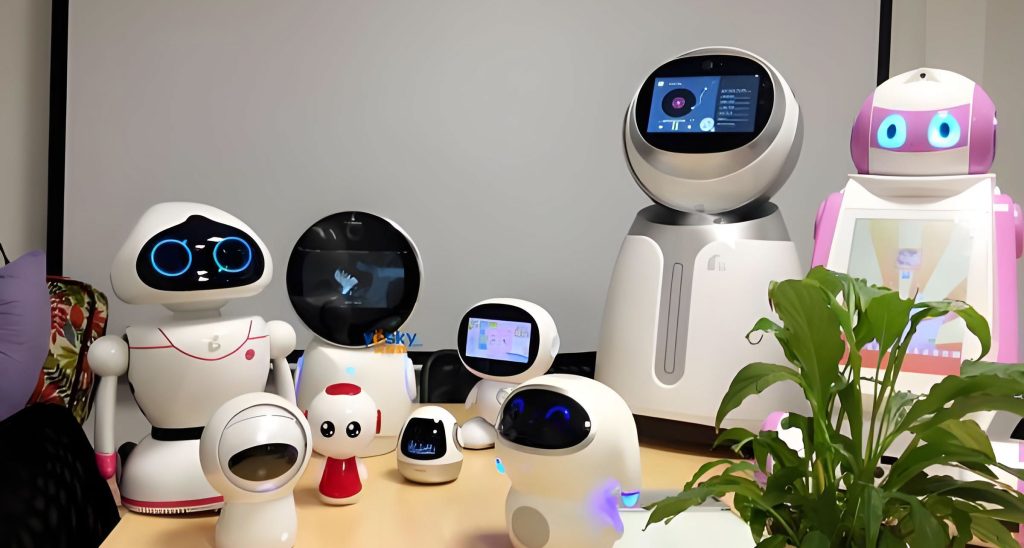
Color selection must account for age-related visual changes, such as the yellowing of the lens which reduces blue light transmission. A palette of warm, neutral, and high-contrast colors is preferable. The form factor should communicate stability and approachability. Materials should feel warm, soft, and safe to the touch, avoiding cold metals or slick plastics. Physical controls, if present, should be large, well-spaced, and logically grouped with clear, non-abstract icons. The overall silhouette should be simple and uncluttered to reduce cognitive load. The design of this companion robot should avoid an overly mechanistic appearance, instead opting for a friendly yet respectful demeanor that fits naturally into a home environment.
Human-Robot Interaction (HRI) Design
This is the cornerstone of the companion robot’s value proposition. The interaction must be natural, intuitive, and emotionally resonant. A robust HRI system operates on two interconnected layers: the cognitive layer and the affective layer.
The cognitive layer handles data processing, command recognition, and task execution. It relies on sensors (microphones, cameras, touch sensors) to gather user input and a backend system to process requests. For example, a voice command like “Remind me to take my heart medicine at 10 AM” is parsed, logged, and executed by this layer.
The affective layer is what transforms a machine into a companion. It imbues the robot with a consistent personality, emotional intelligence, and proactiveness. This layer analyzes tone of voice, speech patterns, and even facial expressions (where privacy-permitted) to infer the user’s emotional state. Based on this and historical interaction data, it triggers appropriate affective responses. The interaction can be modeled to prioritize empathetic engagement:
$$
E_{interaction} = \alpha \ln(1 + \beta R) + \gamma P
$$
Where \(E_{interaction}\) represents the quality of the emotional interaction, \(R\) is the responsiveness and relevance of the robot’s replies, \(P\) is the degree of personalization in the interaction, and \(\alpha, \beta, \gamma\) are weighting coefficients determined by user preference models.
Key interactive functional modules should include:
- Health & Wellness Module: For medication reminders, symptom logging, and facilitating telemedicine consultations.
- Communication Hub: A simplified interface for initiating voice/video calls, reading messages aloud, and sharing content.
- Smart Home Control: Voice-activated control of lights, thermostats, and appliances, reducing the need to interact with complex remote controls.
- Entertainment & Cognitive Stimulation: Access to music, audiobooks, news, and personalized brain games.
Structural and Functional Architecture
The internal and mechanical design must directly support the intended user experience. Size and mobility are critical. The companion robot must be dimensioned to fit comfortably in standard home environments, navigating through doorways and around furniture. A three-omnidirectional wheel base is often ideal for stability and smooth, precise movement in confined spaces.
The internal architecture should prioritize the key sensors and processors needed for its core functions, avoiding unnecessary hardware that adds cost and complexity. For example, if the primary mode of interaction is voice, then high-quality microphone arrays and noise-cancellation processors are essential investments, whereas a high-resolution screen might be secondary. This modular approach to functional architecture aligns with the principle of targeted development, allowing for different models tailored to specific needs (e.g., a health-focused companion robot versus a communication-focused one). The structural design must also ensure safety, with rounded edges, a low center of gravity to prevent tipping, and secure housing for any internal components like batteries.
| Design Element | User-Centered Considerations | Design Implementation Example |
|---|---|---|
| Visual Interface | Reduced visual acuity, sensitivity to glare, preference for simplicity. | Large, sans-serif fonts; high-contrast color schemes; dark mode option; minimalistic information hierarchy. |
| Auditory Interface | Potential hearing loss, need for clear speech. | Adjustable volume and pitch; noise-resistant microphones; clear, paced synthetic speech; visual feedback for all auditory outputs. |
| Haptic Interface | Reduced tactile sensitivity, need for confirmation. | Large, physical buttons with distinct shapes and clicks; vibrational feedback for touchscreen actions. |
| Interaction Logic | Potential cognitive decline, fear of technology, need for consistency. | Linear, predictable menu structures; “undo” and “home” functions always available; learning mode that introduces features gradually. |
Technological Framework and Implementation Challenges
Realizing a user-centered companion robot relies on a sophisticated yet reliable technological stack. Natural Language Processing (NLP) and speech recognition must be robust enough to understand diverse accents, speech patterns affected by age, and colloquial language. Computer vision, if used for gesture recognition or fall detection, must operate reliably in varying lighting conditions while strictly adhering to privacy norms—perhaps using low-resolution, on-device processing to analyze pose without recording identifiable imagery.
Affective computing, the engine of the affective layer, is particularly challenging. It involves algorithms that can detect subtle cues in speech prosody or text sentiment. The companion robot’s response generation must then select from a set of empathetic, context-appropriate responses. This requires vast and ethically sourced datasets of senior interactions to avoid bias and ensure cultural appropriateness. The system must learn and adapt to the individual user’s personality and preferences over time, a process that can be framed as:
$$
P_{adaptive}(t+1) = P_{adaptive}(t) + \eta [U_{feedback}(t) – P_{adaptive}(t)]
$$
Where \(P_{adaptive}\) represents the robot’s personalized interaction parameters, \(U_{feedback}\) is the implicit or explicit feedback from the user at time \(t\), and \(\eta\) is a learning rate that controls adaptation speed.
Furthermore, the “cold start” problem is significant. A new companion robot with no knowledge of its user must quickly build rapport. Design solutions include a guided onboarding process where the user (or a family member) teaches the robot about key preferences, family members, and schedules. Privacy and data security are non-negotiable. Transparent data policies, local processing where possible, and encrypted communications are essential to build trust, which is the foundation of any companion relationship.
Ethical Considerations and Future Directions
The development of companion robots for the elderly is fraught with ethical questions. There is a risk of replacing human contact with automated simulation, potentially exacerbating isolation. The design goal must be supplementation, not substitution—the companion robot should facilitate human connection, not replace it. Informed consent regarding data collection, the potential for emotional dependency on a machine, and ensuring the technology remains an assistive tool under the user’s control are critical issues.
The current market shows several shortcomings that a user-centered approach aims to correct: homogeneous, infantilizing aesthetics; poor, non-empathetic emotional interaction; and inaccurate feature bloat that increases cost and complexity without addressing core needs.
The future of elderly companion robots lies in hyper-personalization and greater contextual awareness. Advances in AI will allow the robot to understand daily routines, predict needs, and offer support before a request is made. Integration with the broader Internet of Things (IoT) ecosystem will solidify its role as a central hub for managing health and home. Crucially, interdisciplinary collaboration between gerontologists, psychologists, designers, and engineers will be vital to create solutions that are not only technologically advanced but also socially and emotionally intelligent.
| Design Approach | Characteristics | Potential Outcome for Elderly User |
|---|---|---|
| Technology-Centered | Focus on hardware specs, novel AI features, cost-driven component selection. Prioritizes what is technically possible. | Frustration, alienation, underutilization of features, perceived as a complex gadget rather than a helper. |
| User-Centered (Advocated here) | Focus on daily needs, emotional states, and physical/cognitive abilities. Prioritizes what is genuinely needed and usable. | Increased sense of autonomy, reduced loneliness, improved health adherence, overall enhanced well-being and acceptance of the technology. |
In conclusion, as societies worldwide grapple with demographic aging, technology must be harnessed with empathy and purpose. The companion robot represents a significant opportunity to improve the lives of millions of elderly individuals. However, its success is contingent upon a steadfast commitment to user-centered design. By grounding every decision—from aesthetic choices to interaction paradigms and functional architecture—in a deep understanding of the elderly user’s physical, psychological, and social realities, we can move beyond creating mere machines to developing true companions. These companions will not only provide practical assistance but also deliver the dignity, engagement, and emotional support that are fundamental to a high quality of life in later years. The path forward requires continued research, empathetic design iteration, and an unwavering focus on the human experience at the heart of the technology.