
In the field of precision motion control and power transmission, the strain wave gear, commonly known as the harmonic drive, represents a pivotal technology. Its unique operating principle, which relies on the controlled elastic deformation of a flexible spline, confers a set of remarkable characteristics including high reduction ratios, exceptional positional accuracy, compactness, and low operational backlash. These attributes have led to its widespread adoption in demanding applications such as aerospace actuation, robotic joints, precision machine tools, and satellite tracking systems. As the performance requirements for these systems become increasingly stringent, a deep understanding of the dynamic behavior of strain wave gear transmissions is paramount. Dynamic performance directly influences positioning stability, resonant excitation, and fatigue life. Consequently, the study of nonlinear torsional vibrations in strain wave gear systems has attracted significant research interest. This article details the development of a specialized simulation software tool designed to model, analyze, and visualize the complex nonlinear dynamics inherent in these transmissions.
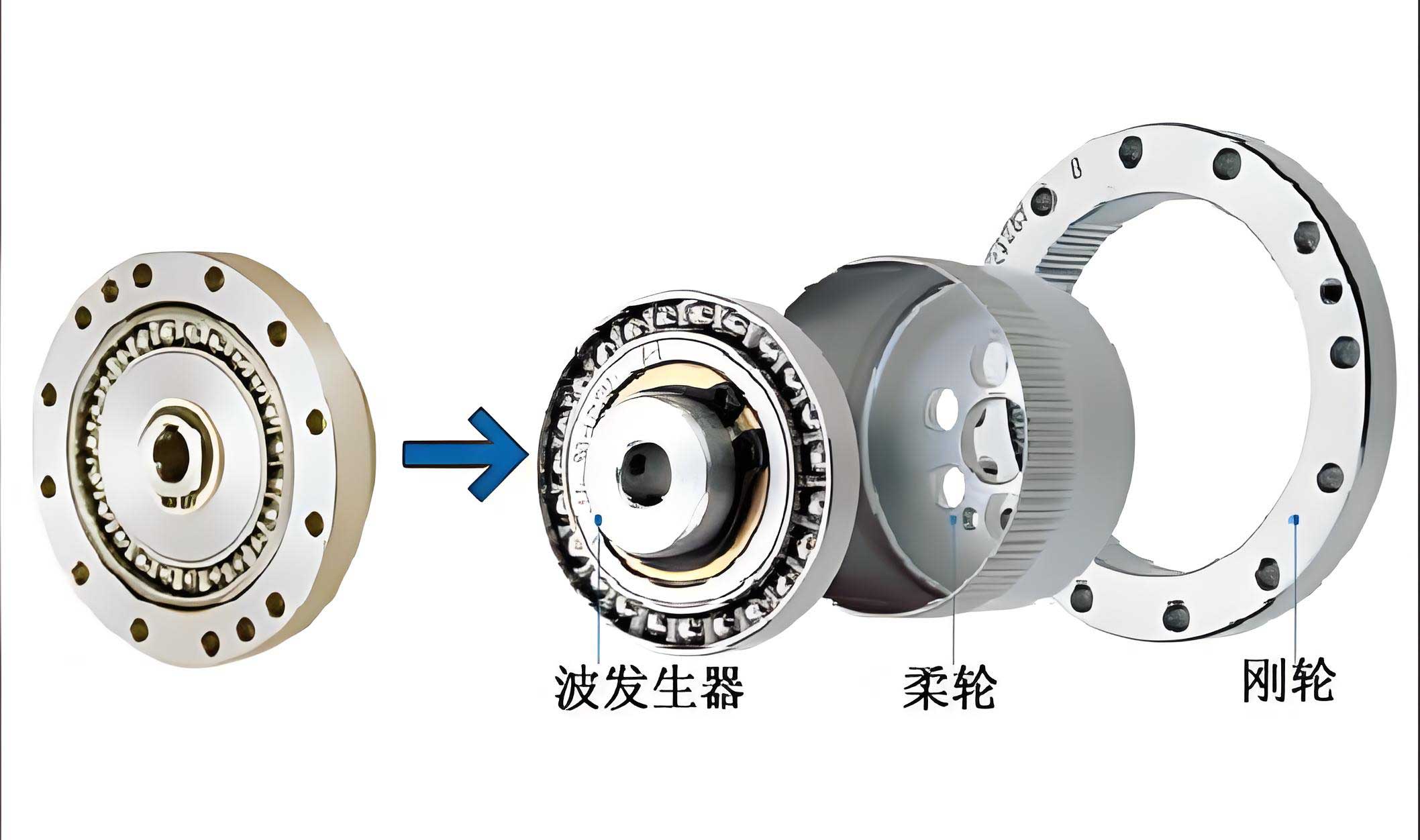
The core of analyzing any dynamic system lies in establishing an accurate mathematical model. For a strain wave gear system, this model must capture the essential nonlinearities that govern its torsional vibration response. Traditional linear models are insufficient as they fail to account for critical phenomena that significantly affect performance. The primary nonlinear factors considered in this modeling effort are:
- Transmission Error (TE): This is the deviation between the theoretical and actual output position of the strain wave gear. It arises from manufacturing inaccuracies (e.g., gear tooth profile errors, pitch deviations), assembly misalignments, and the elastic deformation of components under load. Transmission error is a primary source of vibration excitation within the gear mesh and is typically periodic with the rotation of the wave generator.
- Nonlinear Torsional Stiffness: The stiffness of the strain wave gear is not constant but varies with the angular position of the wave generator. This variation stems from the changing number of teeth in simultaneous contact between the flexspline and the circular spline, as well as the nonlinear load-deflection relationship of the flexspline itself. The stiffness function can be approximated as a periodic function with a mean value and harmonics.
- Backlash (Clearance): While strain wave gears are known for low backlash, a small amount of clearance inevitably exists in the tooth mesh and other connections. This dead-zone nonlinearity can lead to impacts during torque reversal, causing severe nonlinear phenomena such as subharmonic and chaotic vibrations.
Considering a two-inertia model representing the input (wave generator) and output (flexspline/circular spline) sides, the governing nonlinear differential equation of motion can be formulated. The model incorporates the aforementioned nonlinearities as functions of the angular displacement difference across the gear mesh. The general form of the equation is:
$$ J_1 \ddot{\theta}_1 + c(\dot{\theta}_1 – \dot{\theta}_2) + k(\theta_1, \theta_2) \cdot f(\theta_1, \theta_2, \delta) = T_{in} $$
$$ J_2 \ddot{\theta}_2 + c(\dot{\theta}_2 – \dot{\theta}_1) + k(\theta_1, \theta_2) \cdot f(\theta_1, \theta_2, \delta) = -T_{load} $$
Where:
– \( \theta_1, \theta_2 \) are the angular displacements of the input and output inertia, respectively.
– \( J_1, J_2 \) are the moments of inertia.
– \( c \) is the viscous damping coefficient.
– \( k(\theta_1, \theta_2) \) is the nonlinear, position-dependent torsional stiffness of the strain wave gear.
– \( f(\theta_1, \theta_2, \delta) \) is a nonlinear function representing the combined effect of transmission error \( e(\theta) \) and backlash \( \delta \). It typically takes a piecewise form such as:
$$ f(\Delta\theta) = \begin{cases}
\Delta\theta – \delta/2 – e(\theta), & \text{if } \Delta\theta > \delta/2 + e(\theta) \\
0, & \text{if } |\Delta\theta – e(\theta)| \le \delta/2 \\
\Delta\theta + \delta/2 – e(\theta), & \text{if } \Delta\theta < -\delta/2 + e(\theta)
\end{cases} $$
with \( \Delta\theta = \theta_1 / i – \theta_2 \), and \( i \) being the gear reduction ratio.
– \( T_{in} \) and \( T_{load} \) are the input and load torques.
The transmission error \( e(\theta) \) is often expanded as a Fourier series containing multiple harmonics related to the wave generator rotation frequency \( f_h \) and the tooth-meshing frequency \( 2z f_h \) (where \( z \) is the number of teeth on the circular spline):
$$ e(\theta_1) = \sum_{n} A_n \sin(2\pi n f_h t + \phi_n) + \sum_{m} B_m \sin(2\pi m (2z f_h) t + \psi_m) $$
Similarly, the nonlinear stiffness \( k \) can be modeled as:
$$ k(\theta_1) = k_0 + \sum_{p} k_p \cos(2\pi p f_h t + \varphi_p) $$
Given the strong nonlinearity of these coupled equations, analytical solutions are intractable except for trivial cases. Numerical integration methods are therefore essential. The fourth-order Runge-Kutta method is a robust and widely-used algorithm for solving such initial value problems, offering a good balance between computational accuracy and efficiency. The development of a dedicated simulation tool is thus a logical step to empower designers and researchers to investigate the dynamic performance of strain wave gear systems without writing complex code for each new configuration.
| Nonlinear Factor | Physical Origin | Mathematical Representation | Primary Dynamic Effect |
|---|---|---|---|
| Transmission Error (TE) | Manufacturing tolerances, assembly errors, elastic deflection. | Fourier series: $$ e(t)=\sum A_n \sin(n\omega t + \phi_n) $$ | Primary source of vibration excitation at mesh frequency and its harmonics. |
| Nonlinear Torsional Stiffness | Varying number of teeth in contact, nonlinear flexspline elasticity. | Periodic function: $$ k(t)=k_0 + \sum k_p \cos(p\omega t + \varphi_p) $$ | Parametric excitation, influencing natural frequency and causing instability regions. |
| Backlash / Clearance | Micro-clearances in tooth mesh and connections. | Piecewise linear dead-zone function. | Causes impacts, torque discontinuities, and can lead to chaotic response. |
| Damping | Material hysteresis, lubrication, structural damping. | Often modeled as viscous: \( c\dot{\theta} \) or more complex models. | Attenuates vibration amplitude, influences stability margins. |
Architecture and Functionality of the Simulation Software
The simulation software was conceived as an integrated, user-friendly platform to bridge the gap between theoretical nonlinear dynamics and practical engineering analysis of strain wave gear systems. It synthesizes knowledge from gear mechanics, nonlinear vibration theory, numerical analysis, and modern software engineering. The primary design goals were to provide a Windows-style graphical user interface (GUI) for intuitive operation, robust numerical solvers, and powerful visualization capabilities.
The software is architected in a modular fashion, comprising a main control module and several functional sub-modules. This design promotes maintainability and allows for future enhancements. The development was carried out using Microsoft Visual C++ for the core application logic and GUI development, leveraging its execution speed and rich functionality for data structures and graphical object manipulation. For advanced numerical computations and graphical plotting, the software interfaces with MATLAB, utilizing ActiveX/COM automation technology to seamlessly transfer data and execute commands. The overall system structure is outlined below:
| Module | Primary Responsibility | Key Features |
|---|---|---|
| Main Control Module | Orchestrates the entire application flow, manages the menu system, dialog boxes, and coordinates data flow between all sub-modules. | Provides the main application window, menu bar, toolbar, and status bar. Handles user navigation and module invocation. |
| File Management Module | Handles all file input/output operations. | Creates new project files, saves all user-input parameters and computed results to a designated file, and loads existing project files for review or modification. |
| Parameter Input Module | Accepts all necessary user inputs to define the strain wave gear system and its nonlinearities. | Provides tabbed dialog boxes for: Basic Parameters (inertias, gear ratio, speed), Transmission Error (Fourier coefficients), Nonlinear Stiffness (mean and harmonic coefficients), Backlash, and Damping. Each dialog can preview the corresponding nonlinear function curve. |
| Differential Equation Solver Module | Constructs and solves the nonlinear dynamics model. | Assembles the system differential equations using the user-provided parameters. Implements a 4th/5th order Runge-Kutta numerical integration routine with adaptive step-size control for accuracy and efficiency. |
| MATLAB Interface Module | Manages communication with MATLAB for post-processing and visualization. | Launches MATLAB in the background, writes time-domain solution data to a binary file, sends MATLAB commands to perform Fast Fourier Transform (FFT), and generates various plots. |
The user interacts with the software through a familiar GUI. The “Parameters Input” menu is the starting point, where all system characteristics are defined. For instance, the basic parameter dialog captures geometric and inertial properties, while separate dialogs allow the user to define the complex Fourier spectrum of the transmission error or the periodic variation of the torsional stiffness. Immediate graphical feedback is provided, plotting the user-defined error or stiffness function.
Once the model is fully parameterized, the “Data Processing” menu is used to initiate the numerical simulation. The software integrates the differential equations over a user-specified time interval. The computation time depends on the selected integration tolerance and the simulation duration (e.g., 2-3 minutes for a 2-second simulation with a tolerance of \( 5 \times 10^{-5} \)).
The final stage involves visualization and analysis via the “Plotting” menu, which is powered by the MATLAB interface. With a single click, users can generate comprehensive dynamic analysis charts directly within the MATLAB environment:
- Time-Domain Response: Plots of output angular displacement, velocity, or acceleration versus time.
- Phase Portrait: A plot of output velocity versus output displacement, revealing the system’s state-space trajectory. This is crucial for identifying periodic, quasi-periodic, or chaotic motion.
- Frequency Spectrum (FFT): The Fast Fourier Transform of the output response, identifying the dominant excitation frequencies and their amplitudes.
- Poincaré Map: A stroboscopic sampling of the phase portrait at the period of the primary excitation (e.g., wave generator rotation). This is an invaluable tool for diagnosing the periodicity of nonlinear systems; a single point indicates a periodic orbit, a finite set of points indicates subharmonic motion, and a cloud of points suggests chaotic behavior.
This integrated workflow—from parameter definition and model solving to advanced graphical analysis—provides a complete toolset for investigating the nonlinear torsional vibrations of any strain wave gear transmission.
Model Validation and Case Study: Identifying Critical Error Sources
To validate the effectiveness and accuracy of the simulation software, a detailed case study was performed on a commercial strain wave gear reducer (model analogous to XB-80-134H). The objective was to correlate simulation predictions with experimental measurements and to identify which components of the transmission error have the most significant impact on the dynamic output.
System Parameters: The reducer had a high reduction ratio of \( i = 134 \). The flexspline had \( z_1 = 268 \) teeth and the circular spline had \( z_2 = 270 \) teeth. The input wave generator speed was \( f_H = 2680 \, \text{rpm} \) ( \( \approx 44.667 \, \text{Hz} \) ). Key parameters entered into the software included measured moments of inertia, a damping ratio \( \zeta = 0.06 \), a backlash of \( 8′ \) (arc-minutes), and the Fourier coefficients for transmission error and nonlinear stiffness derived from design drawings and experimental characterization.
The simulation was run, and the output spectrum was analyzed alongside the spectrum obtained from a physical torsional vibration test on the actual reducer. The analysis focused on specific frequency bands predicted to contain energy from different transmission error (TE) harmonics. The correlation was striking, as summarized in the table below:
| Frequency Component & Source | Theoretical Freq. (Hz) | Simulation Result | Experimental Result | Conclusion & Design Implication |
|---|---|---|---|---|
| Wave Generator Rotational Frequency: TE terms at \( f_H \) (14 constituent error terms). |
44.667 | Negligible peak in spectrum (Fig. 9). The effect is divided by the gear ratio \( i \) at the output. | No significant peak observed (Fig. 13). | Low impact on final output dynamics. Not a primary control target. |
| Second Harmonic of Input: 2 significant TE terms at \( 2f_H \). |
89.33 | Clear peak observed in spectrum (Fig. 10). | Corresponding peak found (Fig. 14). | Significant contributor to output vibration. Requires control. |
| Sideband near \( 2f_H \): 8 major TE terms at \( 2(1+1/i)f_H \). |
~90.0 | The largest peak in the low-frequency spectrum (Fig. 11). | The largest peak found experimentally (Fig. 15). | The dominant source of dynamic excitation. Primary control target for improving performance. |
| Tooth-Meshing Frequency: TE terms at \( 2 z_2 f_H \). |
24120 | Small, distinct peak (Fig. 12). | Corresponding small peak found (Fig. 16). | Very high frequency, low contribution to torsional vibration amplitude. Low priority for low-speed dynamic control. |
The powerful agreement between the software’s predictions and the experimental data validates the underlying nonlinear model. More importantly, the simulation provides clear, causal insight. By tracing the large 90 Hz spectral peak back to its constituent error terms in the model, the software pinpoints the specific manufacturing and assembly errors that are most critical. This analysis revealed that to minimize the dynamic torsional response of this strain wave gear system, the following error sources should be prioritized during design, manufacturing, and assembly:
- Tangential composite error of the flexspline (\( \Delta F_{i1}’ \)).
- Tangential composite error of the output circular spline (\( \Delta F_{i3}’ \)).
- Radial runouts and fitting clearances related to the output shaft and its bearings (e.g., \( \Delta S_{fa1} \), \( \Delta C_{fa2} \), \( \Delta S_{obh1} \), \( \Delta E_{ob1} \)).
- Misalignment of the gearbox housing.
This targeted insight is invaluable. Instead of imposing universally tight and costly tolerances on all components, designers can use this simulation tool to perform a sensitivity analysis, allocating precision where it has the greatest effect on dynamic performance. This leads to more cost-effective and higher-performance strain wave gear designs.
Mathematical Formulation of Key Nonlinear Interactions
The dynamic complexity of the strain wave gear system arises from the interaction of the nonlinear terms. To further elucidate the model used in the software, let’s define the dynamic transmission error \( q(t) \), a common coordinate in gear dynamics, which incorporates the physical backlash \( \delta \) and the kinematic transmission error \( e(t) \):
$$ q(t) = \theta_1(t) / i – \theta_2(t) $$
The nonlinear mesh force \( F_m \) acting through the strain wave gear can then be modeled as a spring-damper system acting on the filtered dynamic transmission error:
$$ F_m(t) = k(t) \cdot g(q(t) – e(t)) + c \cdot \dot{q}(t) $$
Here, \( g(x) \) is the backlash function. A common continuous approximation to the piecewise linear dead-zone, which improves numerical stability, is a cubic polynomial:
$$
g(x) =
\begin{cases}
x – \delta/2, & \text{for } x \ge \delta/2 \\
\frac{1}{\delta^2} \left( x + \delta/2 \right)^3 – \frac{3}{2\delta} \left( x + \delta/2 \right)^2, & \text{for } -\delta/2 < x < \delta/2 \\
x + \delta/2, & \text{for } x \le -\delta/2
\end{cases}
$$
The equations of motion in terms of \( \theta_1 \) and \( \theta_2 \) become:
$$
J_1 \ddot{\theta}_1 + \frac{c}{i} \dot{q} + \frac{k(t)}{i} \cdot g(q – e(t)) = T_{in}(t)
$$
$$
J_2 \ddot{\theta}_2 – c \dot{q} – k(t) \cdot g(q – e(t)) = -T_{load}
$$
This formulation makes the coupled nature of the system clear. The software’s solver module discretizes these equations. The Runge-Kutta method requires evaluating the derivatives (accelerations) at several intermediate points within each time step. For a state vector \( \mathbf{Y} = [\theta_1, \dot{\theta}_1, \theta_2, \dot{\theta}_2]^T \), the derivative function \( \mathbf{F}(t, \mathbf{Y}) \) computed by the software is:
$$
\mathbf{F}(t, \mathbf{Y}) = \begin{bmatrix}
\dot{\theta}_1 \\
\left[ T_{in}(t) – \frac{c}{i} \dot{q} – \frac{k(t)}{i} g(q-e(t)) \right] / J_1 \\
\dot{\theta}_2 \\
\left[ -k(t) g(q-e(t)) + c \dot{q} – T_{load} \right] / J_2
\end{bmatrix}
$$
The accurate evaluation of \( k(t) \) and \( e(t) \) at any intermediate time \( t \) is crucial. Since these are defined by their Fourier series, the software calculates them on-the-fly as:
$$ k(t) = k_0 + \sum_{p=1}^{N_k} k_p \cos(p \omega_h t + \varphi_p) $$
$$ e(t) = \sum_{n=1}^{N_e} A_n \sin(n \omega_h t + \phi_n) + \sum_{m=1}^{M_e} B_m \sin(m (2 z_2 \omega_h) t + \psi_m) $$
where \( \omega_h = 2\pi f_H \). This comprehensive and rigorously implemented mathematical model is the engine behind the software’s predictive capability, enabling it to simulate the rich nonlinear behavior observed in real strain wave gear transmissions.
Conclusion
The development of this specialized nonlinear torsional vibration simulation software represents a significant tool for advancing the design and analysis of strain wave gear transmission systems. By integrating the fundamental mechanics of the strain wave gear with advanced nonlinear dynamics theory and robust numerical methods within an intuitive graphical interface, the software demystifies complex dynamic phenomena. It allows engineers to move beyond static load ratings and efficiency calculations to proactively assess and optimize dynamic performance.
The key strength of the tool lies in its holistic approach. It does not treat nonlinearities as minor perturbations but as central features of the model. The validation through direct comparison with experimental data on a commercial reducer confirms the software’s accuracy and its utility in translating simulation results into practical engineering guidance. The ability to identify the specific transmission error components that dominate the output spectrum transforms the design process from one of trial-and-error to one of targeted precision. Designers can use this software to perform virtual prototyping, testing the dynamic consequences of different tolerance stacks, stiffness profiles, and assembly conditions long before physical parts are manufactured.
In summary, this simulation software serves as a powerful and effective platform for the dynamic investigation of strain wave gear systems. It bridges the gap between theoretical research and practical design, enabling the development of quieter, more stable, and higher-performance transmissions for the most demanding robotic, aerospace, and precision industrial applications. Future work may involve extending the model to include three-dimensional vibrations, thermal effects on stiffness, and more sophisticated loss models, further solidifying its role as an indispensable tool in the evolution of strain wave gear technology.