
The quest to create machines capable of seamless operation across the dynamic boundary between land and water represents one of the most compelling challenges in robotics. Traditional engineering approaches often result in compromised, multi-system platforms that are inefficient and unreliable when transitioning between media. In contrast, nature offers a masterclass in trans-media locomotion, perfected over millennia of evolution. This article, informed by a comprehensive review of the field, presents an in-depth analysis of amphibious bionic robots. We explore the foundational principles of biomimicry, categorize and dissect the diverse array of robots inspired by aquatic, terrestrial, and amphibious organisms, and provide a critical comparison of their propulsion methods and technical specifications. Finally, we delve into the core challenges and future trajectories, arguing that the path forward lies in deeper, more holistic biomimicry—integrating advances in materials, structures, control, and intelligence to create a new generation of highly adaptive and efficient machines.
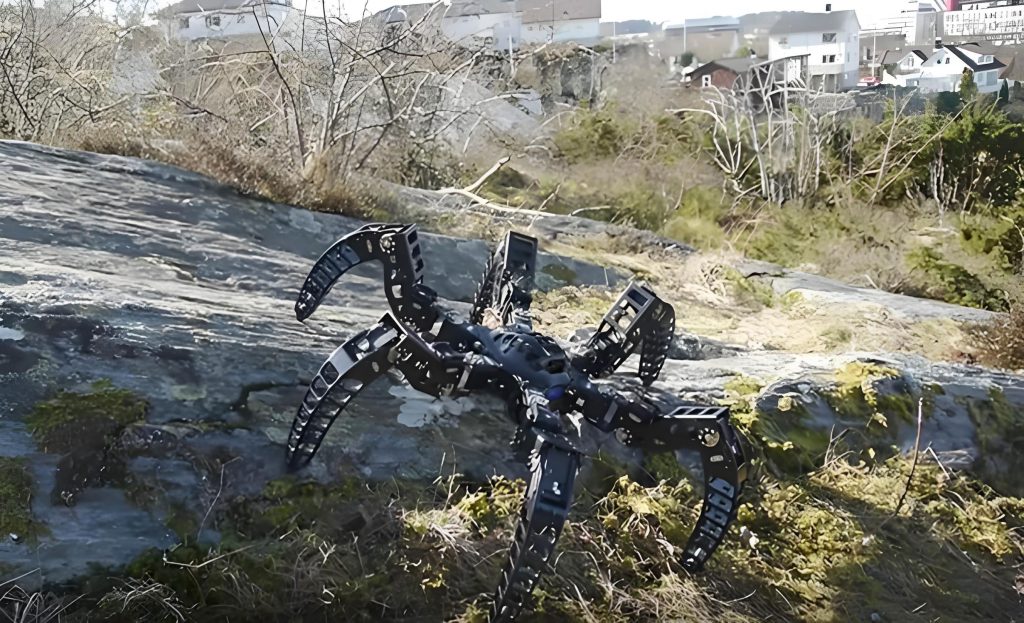
The intrinsic value of a bionic robot lies in its ability to solve engineering problems not through brute force complexity, but by emulating the elegant, efficient solutions found in living systems. For amphibious operations, this biomimetic approach is paramount. We define an amphibious bionic robot as a machine that consciously replicates the morphology, locomotion mechanisms, and/or control strategies of biological creatures adept at navigating both aquatic and terrestrial environments. The applications for such robots are vast and growing. In civilian domains, they are envisioned for disaster response in flooded areas, underwater pipeline inspection, environmental monitoring of fragile littoral zones, and scientific exploration. In military and security contexts, their covert, adaptable nature makes them ideal for reconnaissance, mine clearance, and harbor surveillance. The drive to develop these machines stems from the need to access hazardous or inaccessible areas where human presence is risky or impossible, and where conventional single-medium robots fail.
Bio-Inspiration: A Spectrum of Biological Blueprints
Nature’s portfolio of amphibious life is rich and varied, offering a spectrum of models for roboticists. We can categorize these biological inspirations based on their primary habitat, each offering distinct advantages for bionic design.
Robots Inspired by Aquatic Organisms
These designs focus on mastering aquatic propulsion, with terrestrial mobility as a secondary, often simpler capability. A prime example is the propulsion via undulating pectoral fins, inspired by rays and skates. The `Aqua-ray` and subsequent `Velox` robot employ this method, using flexible fins to generate efficient thrust in water. The `Velox` can rotate these fins to function as ground-contact points for land traversal. The key bionic principle here is the use of a single, morphing actuator for multi-environment propulsion, prioritizing hydrodynamic efficiency. Another successful aquatic inspiration is the sea turtle. Turtle-inspired bionic robots, such as the spherical robots developed by several institutions, utilize four flipper-like limbs. Their bionic contribution is a robust, sealed, and compact morphology that offers good stability and maneuverability in both media, though often at the cost of high-speed terrestrial locomotion. Perhaps the most radical aquatic inspiration comes from the octopus. Octopus-inspired robots are typically soft-bodied, using pneumatic or tendon-driven continuum arms to achieve remarkable dexterity underwater. The bionic leap here is the abandonment of rigid skeletons in favor of compliant, continuously deformable structures, enabling operation in extremely confined spaces and safe interaction with the environment.
Robots Inspired by Amphibious Animals
This category draws from nature’s true amphibians, creatures evolutionarily tuned for both worlds. Salamanders and newts are quintessential models, inspiring robots like `Salamandra Robotica II` and `Pleurobot`. These bionic robots masterfully combine axial body undulation (like a fish or snake) with articulated limbs. Their central pattern generator (CPG)-based control architectures are direct bionic mimics of spinal cord circuits, allowing smooth, automatic gait transitions from swimming to walking. This represents a deep form of biomimicry, copying not just the physical structure but the underlying neural control strategy. Crabs and lobsters offer a different template, emphasizing multi-legged, statically stable gaits. The `Crabster CR200` is a large-scale example, using multiple articulated legs for walking on complex seabeds and land. The bionic focus here is on limb coordination and force distribution across multiple contact points, providing exceptional stability on uneven terrain.
Robots Inspired by Terrestrial Organisms
Here, the primary bionic mimicry is directed at effective land locomotion, with aquatic mobility adapted from it. Cockroach-inspired robots, such as the `RHex` and its amphibious descendant `AQUA`, utilize a bio-inspired compliant leg design. The characteristic arched legs provide both running and climbing ability on land and can be used as paddles in water. The bionic insight is the use of passive compliance and simple rotational inputs to generate complex, adaptive foot trajectories. Snake-inspired robots form another major branch. By mimicking the serpentine body plan, robots like the `ACM-R` series achieve unparalleled flexibility and ability to traverse tight, complex terrains. In water, their undulatory body wave becomes an effective swimming stroke. The core bionic principle is hyper-redundancy—many simple actuated segments creating a complex overall motion—and the realization that a single locomotion strategy (body undulation) can be effective in multiple environments.
The following table summarizes the characteristics of representative robots from these categories:
| Biological Inspiration | Example Robot | Key Bionic Feature | Primary Propulsion (Water) | Primary Propulsion (Land) | Notable Advantage | Common Challenge |
|---|---|---|---|---|---|---|
| Ray (Aquatic) | Velox | Undulating pectoral fin morphing into ground contact. | Fin undulation (MPF mode) | Rotating fin/wheel | High hydrodynamic efficiency, simple mechanism. | Limited ground clearance, steering agility on land. |
| Turtle (Aquatic) | Spherical Turtle Robot | Compact, sealed spherical body with 4 flipper-actuators. | Flipper paddling | Flipper-walking/Rolling | Excellent sealing, stability, payload potential. | Slow speed on land, complex leg coordination. |
| Salamander (Amphibious) | Pleurobot | CPG-controlled spinal undulation combined with legged gait. | Body/Caudal Fin (BCF) undulation | Synchronized leg walking with body sway | Smooth media transition, biologically accurate motion. | Mechanical complexity, many degrees of freedom to control. |
| Crab (Amphibious) | Crabster CR200 | Multi-legged, statically stable posture and gait. | Leg paddling/Walking | Multi-legged walking | Superb stability on uneven terrain, high payload capacity. | Very slow, high energy consumption, complex control. |
| Cockroach (Terrestrial) | AQUA / AmphiHex | Compliant, arched legs for running and swimming. | Leg paddling (transformed arc) | Rotating arc-leg running | High speed and obstacle clearance on land, simple drive. | Manual or mechanical transformation needed between modes. |
| Snake (Terrestrial) | ACM-R5 | Hyper-redundant serial linkage for whole-body movement. | Body undulation (Anguilliform) | Lateral undulation / Sidewinding | Unmatched terrain flexibility, can enter narrow spaces. | Low speed, prone to entanglement, limited payload. |
Propulsion Paradigms and Performance Metrics
The locomotion strategy is the heart of any bionic robot’s design. We observe a clear evolution from single-mode to multi-mode or hybrid propulsion systems. Single-mode systems, like a pure undulating fin or a pure wheel, are efficient in their native environment but fail in the other. The most successful amphibious bionic robots employ hybrid strategies that creatively adapt one primary mechanism or combine two.
We can formalize some key performance metrics for comparison. A fundamental measure is the locomotion capability, which must account for both speed and the robot’s mass. We propose a Locomotion Capability index ($LCAR$) as a useful, though simplified, metric for initial comparison:
$$ LCAR = \frac{v}{m} $$
where $v$ is the maximum velocity (in m/s) in a specified environment (land or water) and $m$ is the robot’s mass (in kg). A higher $LCAR$ indicates a better power-to-weight efficiency for locomotion. However, this metric does not account for efficiency, terrain adaptability, or payload.
Another critical consideration is the hydrodynamic or terradynamic efficiency. For swimming, the Froude efficiency ($\eta$) is often used to evaluate propulsive systems like fins:
$$ \eta = \frac{\text{Useful Power Output}}{\text{Total Power Input}} = \frac{T \cdot U}{P_{in}}$$
where $T$ is thrust, $U$ is forward speed, and $P_{in}$ is input power. Bionic systems like undulating fins often achieve higher Froude efficiencies at low speeds compared to rotary propellers.
The following table contrasts the predominant propulsion paradigms found in amphibious bionic robots, analyzing their efficiency and applicability:
| Propulsion Paradigm | Description & Bionic Basis | Relative Efficiency (Water) | Relative Efficiency (Land) | Terrain Adaptability | Example |
|---|---|---|---|---|---|
| Undulating Fin (MPF) | Wave propagation along a flexible fin (Ray, Mudskipper). High thrust at low speed, quiet. | High (at low Re) | Very Low/Poor | Excellent in water, poor on most land. | Velox (in water) |
| Oscillating Foil (BCF) | Pitching/heaving of a tail or flipper (Tuna, Dolphin). Efficient for cruising. | Very High | None | Only for swimming. | RoboTuna |
| Articulated Leg (Paddling) | Discrete limb motions pushing against water (Frog, Turtle). Good for maneuverability. | Medium | Low (if used to walk) | Good for complex underwater terrain, moderate on land. | Turtle-inspired robots |
| Articulated Leg (Walking) | Intermittent ground contact for support and propulsion (Insect, Crab). | Very Low (if used to paddle) | Medium-High | Excellent on rough, uneven, or soft terrestrial terrain. | Crabster CR200 (on land) |
| Rotating Wheel/Leg | Continuous rolling contact (RHex’s compliant wheel-legs). | Low (as a paddle wheel) | High (on flat terrain) | Excellent on hard, flat ground; poor on soft or complex terrain. | RHex, AQUA (on land) |
| Body Undulation (Serpentine) | Whole-body traveling wave pushing against ground/water (Snake, Eel). | Medium (Anguilliform) | Medium (on smooth surfaces) | Excellent in confined spaces, both media; poor on loose soil. | ACM-R5, AmphiBot |
| Hybrid Fin/Leg | Structure morphs between fin for swimming and leg for walking (AmphiHex). | Medium (as a fin) | Medium (as a leg) | Good in both media, but often a compromise in each. | AmphiHex |
| Hybrid Undulation+Limbs | Body undulation coordinated with limb motions (Salamander). | High (undulation dominates) | Medium (limb-dominated walking) | Excellent; enables smooth transition and adapts to both. | Pleurobot, Salamandra |
Our analysis of performance data from numerous bionic robots reveals clear trends. Aquatic speed for most amphibious robots clusters around 0.5 m/s, with specialized swimmers like tuna-inspired models reaching over 2 m/s. Land speed is typically lower, around 0.3-0.6 m/s for walking/running robots, with wheel-leg hybrids like AQUA achieving over 2 m/s on flat ground. Mass varies enormously, from gram-scale soft robots to the hundreds of kilograms of work-class platforms like Crabster. The $LCAR$ metric for land locomotion tends to be highest for lightweight, wheel/leg-based runners, while in water, efficient undulatory swimmers score well. The overarching lesson is that there is no single optimal design; the bionic blueprint must be chosen based on the primary mission requirements—speed, stability, payload, or stealth.
Core Challenges and Multidisciplinary Frontiers
The development of next-generation amphibious bionic robots is not merely an exercise in mechanical copying. It requires confronting fundamental challenges at the intersection of biology, materials science, mechanics, and computer science. We identify several key frontiers.
1. From Morphological Mimicry to Functional Biomimicry
Early bionic robots often stopped at mimicking shape. The future lies in mimicking function, which requires deeper integration of materials and structure. This involves developing and employing soft actuators—like pneumatic artificial muscles, dielectric elastomers, or shape memory alloys—that more closely resemble biological muscle’s contractile properties. A robot’s skeleton should not be merely a rigid frame but a compliant, variable-stiffness structure that can store and release energy like tendons and ligaments, improving efficiency and shock absorption. The ultimate goal is a rigid-soft hybrid system that captures the best of both: the support and force transmission of a skeleton with the adaptability and resilience of soft tissue. This approach will lead to bionic robots that are not only more lifelike in motion but also more robust and energy-efficient.
2. The Energy and Endurance Bottleneck
Power remains the Achilles’ heel of mobile robotics, especially for amphibious systems where drag and weight are critical. Bionic design can contribute to solutions. Firstly, improving locomotion efficiency through bio-inspired kinematics directly reduces energy draw. Secondly, the development of energy-aware gait controllers that can dynamically switch between efficient cruising gaits and high-power maneuvering gaits is crucial. Looking forward, we must integrate energy harvesting directly into the bionic robot’s operation. This could include solar cells on exposed surfaces, regenerative mechanisms that capture energy from joint damping during walking, or even novel ideas like miniaturized microbial fuel cells for long-term underwater deployment. The bionic principle here is to emulate an organism’s metabolic efficiency and opportunistic energy intake.
3. Perception, Intelligence, and Autonomous Adaptation
A truly capable amphibious bionic robot must perceive and understand its hybrid environment. This requires multi-modal sensor fusion that goes beyond traditional cameras and sonar. Future systems may incorporate artificial lateral lines for flow sensing, whisker-like tactile sensors for contact perception in murky water, and chemical sensors for environmental monitoring. Processing this data demands embedded intelligence capable of real-time terrain identification and gait selection. Here, bio-inspired control architectures like Central Pattern Generators (CPGs), enhanced with sensory feedback loops, offer a robust framework for generating adaptive, stable locomotion without requiring exhaustive computation. Furthermore, the concept of swarm intelligence, inspired by insect or fish schools, points to a future where multiple, simpler amphibious bionic robots cooperate to achieve complex tasks, offering redundancy and parallel operation.
4. The Challenge of Trans-Media Transition
The moment of transition—exiting or entering the water—is a uniquely difficult phase involving changing buoyancy, adhesion, and traction forces. The most elegant bionic solutions are those that require no active reconfiguration, where the same motion sequence works in both media (e.g., salamander-like undulation). For others, passive morphological adaptation is key. Research into superhydrophobic or gecko-inspired adhesive surfaces on feet or tracks could improve exit traction on slippery banks. Buoyancy control systems inspired by fish swim bladders, using minimal energy, are needed for precise depth keeping during the transition. Solving this seamlessly is the hallmark of a mature amphibious bionic robot design.
5. Manufacturing and Scalability
To move beyond laboratory prototypes, we need manufacturing techniques that can produce complex, multi-material bionic structures reliably and at scale. Additive manufacturing (3D/4D printing) is a transformative tool here, allowing the creation of graded stiffness parts, embedded actuators and sensors, and intricate geometries that mimic bone trabeculae or plant structures. 4D printing—creating materials that change shape over time in response to stimuli—could lead to bionic robots whose form adapts autonomously to the environment. The integration of these advanced manufacturing methods with bionic design principles will democratize and accelerate the development of sophisticated amphibious robots.
Conclusion: Toward a New Generation of Amphibious Bionic Robots
The field of amphibious bionic robots stands at a pivotal point. The foundational work of identifying biological models and constructing first-generation mimics has been largely accomplished. The path forward is one of convergence and deepening biomimicry. The next generation will not simply look like an animal; it will function like one, thanks to the integrated use of smart materials, compliant mechanics, and neural-inspired control. These robots will be more energy-autonomous, capable of harvesting ambient energy and operating for extended durations. They will be smarter, using fused sensory data and decentralized control to navigate complex, dynamic amphibious landscapes without direct human guidance. Finally, they will be more collaborative, operating in synergistic swarms to survey large areas or perform distributed manipulation tasks.
The ultimate goal is to create bionic partners that can act as true proxies in the challenging frontier where land meets water. By continuing to learn from nature’s billion-year-old research and development program, and by combining those insights with human engineering ingenuity, we are poised to develop amphibious bionic robots that will significantly extend our reach into the world’s most critical and vulnerable environments for exploration, protection, and discovery. The bionic robot, therefore, is more than a machine; it is a testament to a powerful design philosophy that seeks elegance, efficiency, and resilience from the natural world.