
In this article, we explore the rapid evolution of embodied AI robot systems, focusing on mobile manipulators that integrate perception, cognition, decision-making, and action. As an active researcher in robotics and artificial intelligence, I have witnessed the transformative potential of these systems in revolutionizing industries and daily life. The convergence of embodied intelligence—where AI is endowed with a physical form—and mobile manipulation robots marks a pivotal step toward creating autonomous, versatile machines capable of interacting with the world in human-like ways. This discussion draws from current research trends and technological advancements, aiming to provide a comprehensive overview while emphasizing the critical role of embodied AI robots in shaping the future.
The concept of embodied intelligence, often referred to as embodied AI, posits that intelligent behavior emerges from the interaction between an agent’s body and its environment. For robots, this means moving beyond pre-programmed tasks to achieve adaptive, learning-driven autonomy. Mobile manipulators, which combine mobility with dexterous manipulation, serve as ideal platforms for embodied AI robots. They consist of a mobile base, a robotic arm, and an end-effector, enabling them to navigate complex spaces and perform intricate operations. In recent years, breakthroughs in large-scale AI models, such as vision-language-action networks, have accelerated the development of embodied AI robots, allowing them to understand high-level human instructions and execute tasks with minimal supervision. This article delves into the current state, key technologies, challenges, and future directions for these systems, with a focus on how embodied AI robots can achieve greater generalization and efficiency.
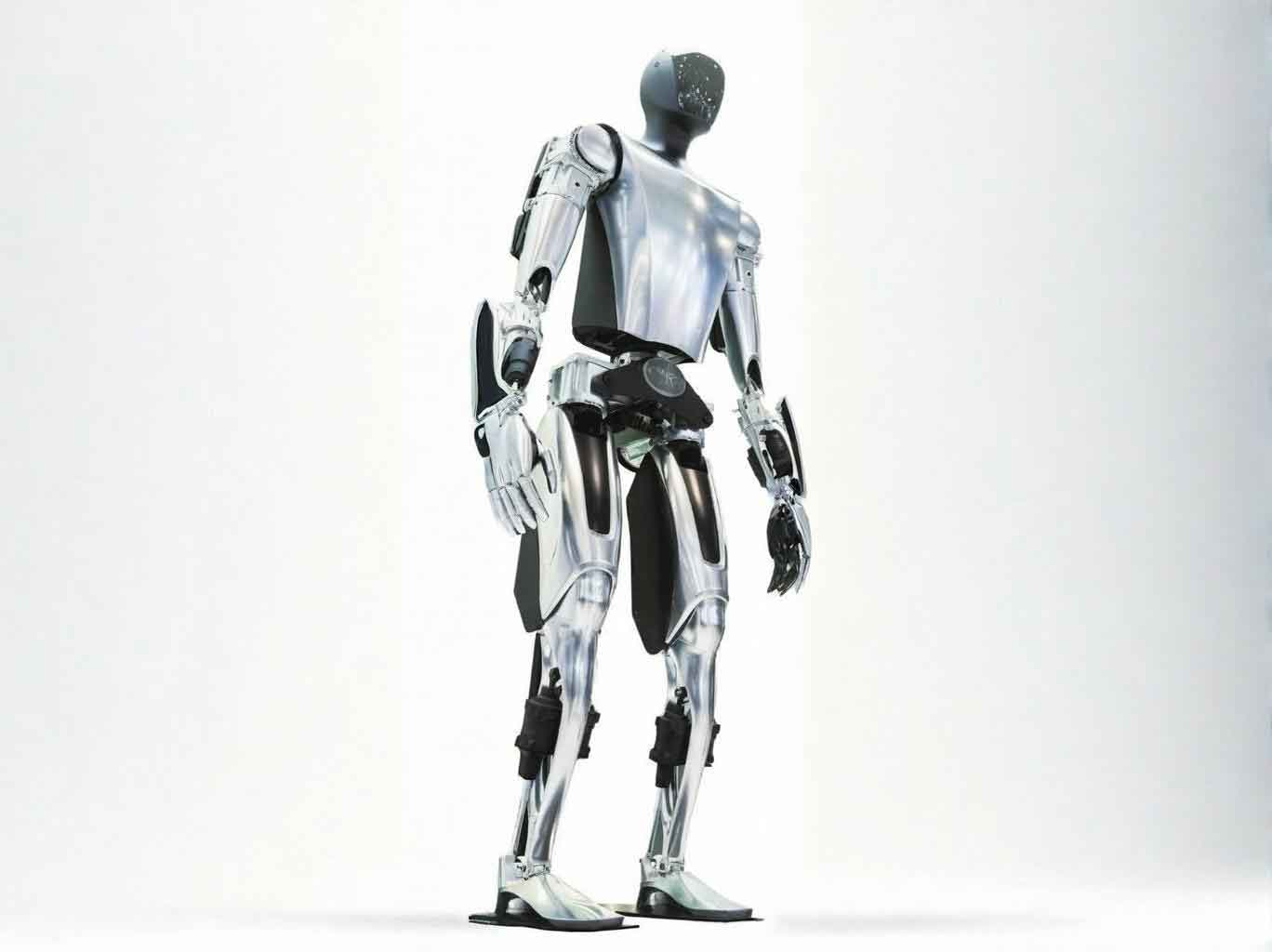
To begin, let us consider the foundational aspects of mobile manipulators. Traditional mobile manipulation robots rely on well-established techniques for perception, navigation, and control. Perception involves using sensors like cameras, LiDAR, and inertial measurement units to map environments and localize the robot. Navigation encompasses path planning and obstacle avoidance, while control ensures precise movement and manipulation. However, embodied AI robots elevate these capabilities by integrating cognitive modules that enable world understanding and intelligent decision-making. For instance, an embodied AI robot can receive a command like “tidy up the room,” perceive its surroundings through multimodal sensors, reason about object placements, and plan a sequence of actions to complete the task. This shift from reactive to proactive behavior underscores the paradigm change brought by embodied AI robots.
The current landscape of embodied AI robot development is vibrant, with both academic and industrial efforts pushing boundaries. Research institutions and companies worldwide are prototyping systems that demonstrate advanced skills. For example, some embodied AI robots can perform tool use, manipulate deformable objects, and engage in social navigation alongside humans. These advancements are fueled by progress in deep learning, reinforcement learning, and multimodal fusion. In particular, large language models (LLMs) and vision-language models (VLMs) have become central to endowing embodied AI robots with commonsense reasoning and instruction-following abilities. As we continue to innovate, the goal is to create embodied AI robots that are not only task-efficient but also safe, interpretable, and aligned with human values. The following sections detail the technological pillars, challenges, and strategic recommendations for advancing embodied AI robot systems.
Current State of Embodied AI Robot Systems
Embodied AI robot systems have evolved significantly, building upon decades of robotics research. Initially, mobile manipulators were designed for specific industrial applications, such as assembly or logistics, with limited autonomy. Today, they are becoming more general-purpose, thanks to AI integration. We categorize the development into two intertwined domains: mobile manipulation platforms and embodied intelligence algorithms.
On the hardware side, modern embodied AI robots feature robust mobile bases—often omnidirectional or differential-drive—coupled with multi-degree-of-freedom arms and adaptive grippers. Sensors are abundant, including RGB-D cameras for visual perception, LiDAR for 3D mapping, and force-torque sensors for tactile feedback. These components enable embodied AI robots to operate in diverse environments, from structured factories to cluttered homes. On the software side, embodied AI relies on machine learning models trained on vast datasets. For instance, vision-based manipulation models allow embodied AI robots to grasp novel objects by inferring geometry from images, while navigation models leverage semantic maps to avoid dynamic obstacles. The synergy between hardware and software is crucial for embodied AI robots to achieve fluid, human-like motion and interaction.
To illustrate the progress, we summarize key advancements in a table:
| Aspect | Traditional Mobile Manipulators | Embodied AI Robots |
|---|---|---|
| Perception | LiDAR-based SLAM, basic vision | Multimodal fusion (vision, LiDAR, touch), scene understanding |
| Cognition | Pre-defined task plans | LLM/VLM-driven reasoning, task decomposition |
| Decision-Making | Rule-based controllers | Reinforcement learning, hierarchical planning |
| Manipulation | Simple pick-and-place | Dexterous manipulation, tool use, soft object handling |
| Navigation | Static path planning | Social navigation, dynamic obstacle prediction |
| Learning | Offline programming | Online adaptation, few-shot learning |
This table highlights how embodied AI robots transcend conventional limitations. Moreover, the deployment of embodied AI robots is expanding beyond labs. In healthcare, embodied AI robots assist with patient care and supply delivery; in manufacturing, they enable flexible automation; in domestic settings, they serve as companions or helpers. The proliferation of embodied AI robot prototypes signals a trend toward ubiquitous robotic assistants. However, achieving robust, cost-effective embodiments remains a challenge, as we discuss later.
Key Technologies for Embodied AI Robot Systems
The advancement of embodied AI robot systems hinges on several core technologies. We explore these in detail, emphasizing how they contribute to the autonomy and intelligence of embodied AI robots.
1. Multimodal Perception Technology
Multimodal perception is the foundation for embodied AI robots to interact with the real world. It involves fusing data from various sensors—visual, auditory, tactile, and proprioceptive—to create a coherent representation of the environment. For an embodied AI robot, this means not only detecting objects but also understanding their properties, such as texture, weight, and functionality. Mathematical models for sensor fusion often employ probabilistic frameworks. For example, Bayesian fusion can integrate camera and LiDAR data to reduce uncertainty:
$$ p(\mathbf{x} | \mathbf{z}_1, \mathbf{z}_2) \propto p(\mathbf{z}_1 | \mathbf{x}) p(\mathbf{z}_2 | \mathbf{x}) p(\mathbf{x}) $$
where $\mathbf{x}$ is the state (e.g., object position), and $\mathbf{z}_1, \mathbf{z}_2$ are observations from different sensors. Deep learning approaches, such as convolutional neural networks (CNNs) for image processing and point cloud networks for LiDAR data, further enhance perception. An embodied AI robot uses these techniques to build dense 3D maps and segment objects in real-time, enabling precise manipulation. The table below summarizes common sensors and their roles in embodied AI robots:
| Sensor Type | Data Form | Role in Embodied AI Robot |
|---|---|---|
| RGB-D Camera | Color and depth images | Object recognition, 3D reconstruction |
| LiDAR | Point clouds | Long-range mapping, obstacle detection |
| IMU | Acceleration, orientation | Ego-motion estimation, stabilization |
| Force/Torque Sensor | Contact forces | Compliant manipulation, grasp control |
| Microphone Array | Audio signals | Human-robot interaction, sound localization |
By leveraging multimodal perception, embodied AI robots achieve robust situational awareness, which is critical for tasks like navigating crowded spaces or handling fragile items.
2. World Cognition and Understanding Technology
Cognition refers to the ability of an embodied AI robot to interpret perceived data and infer semantic meaning. This goes beyond pattern recognition to include reasoning about object affordances, causal relationships, and task contexts. Large-scale AI models, particularly multimodal LLMs, play a key role here. For instance, an embodied AI robot might use a VLM to associate visual scenes with textual descriptions, allowing it to understand commands like “fetch the red cup next to the laptop.” The cognitive process can be formalized as maximizing the likelihood of correct interpretation:
$$ \hat{y} = \arg\max_{y} P(y | \mathbf{I}, \mathbf{T}) $$
where $\mathbf{I}$ is an image, $\mathbf{T}$ is a text prompt, and $y$ is a semantic label or action sequence. Additionally, physical reasoning models enable embodied AI robots to predict outcomes of actions, such as how pushing an object affects its motion. Simulation environments are often used to train these models, providing embodied AI robots with a wealth of experiential data. We note that cognition in embodied AI robots is not merely algorithmic; it embodies a form of common sense derived from pre-training on diverse corpora. As embodied AI robots evolve, their cognitive faculties will become more nuanced, supporting complex planning and improvisation.
3. Intelligent Autonomous Decision-Making Technology
Decision-making empowers embodied AI robots to choose actions that achieve goals efficiently and safely. This involves hierarchical planning: from high-level task decomposition to low-level motion primitives. Reinforcement learning (RL) is a popular framework for training decision policies. In RL, an embodied AI robot learns by interacting with its environment to maximize cumulative reward. The Bellman equation captures this optimization:
$$ Q(s, a) = \mathbb{E}\left[ r + \gamma \max_{a’} Q(s’, a’) \right] $$
where $Q(s, a)$ is the expected return for taking action $a$ in state $s$, $r$ is the immediate reward, and $\gamma$ is a discount factor. For embodied AI robots, RL can be combined with imitation learning from human demonstrations to accelerate training. Moreover, ethical decision-making is crucial; embodied AI robots must align with human values, avoiding harmful behaviors. Techniques like inverse reinforcement learning infer human preferences from observations, ensuring that embodied AI robots act in socially acceptable ways. In dynamic environments, decision-making must be real-time. Model predictive control (MPC) is often used for this purpose, solving a finite-horizon optimization problem at each step:
$$ \min_{\mathbf{u}} \sum_{k=0}^{N-1} \left( \|\mathbf{x}_k – \mathbf{x}_{\text{ref}}\|^2 + \|\mathbf{u}_k\|^2 \right) $$
subject to dynamics $\mathbf{x}_{k+1} = f(\mathbf{x}_k, \mathbf{u}_k)$ and constraints. This allows embodied AI robots to adapt to changing conditions, such as avoiding sudden obstacles while carrying an object.
4. Motion and Manipulation Joint Planning Technology
Joint planning coordinates the mobile base and manipulator arm of an embodied AI robot to perform tasks seamlessly. Unlike separate planning, which can lead to inefficiencies, joint planning considers the entire system’s kinematics and dynamics. The problem can be formulated as optimizing a trajectory that satisfies constraints:
$$ \min_{\mathbf{q}(t), \mathbf{\dot{q}}(t)} \int_{0}^{T} \left( \|\mathbf{\dot{q}}(t)\|^2 + w \cdot \text{collision\_cost} \right) dt $$
where $\mathbf{q}(t)$ represents the joint angles of both the base and arm, and $w$ is a weight balancing motion smoothness and obstacle avoidance. For embodied AI robots, this planning must account for non-holonomic constraints of the base and the arm’s workspace limits. Sampling-based algorithms like RRT* or optimization-based approaches like CHOMP are commonly employed. Additionally, for manipulation tasks, grasp planning is integral. The quality of a grasp can be evaluated using metrics like the Ferrari-Canny measure:
$$ Q = \min_{\|\mathbf{f}\|=1} \max_{i} \mathbf{f} \cdot \mathbf{g}_i $$
where $\mathbf{g}_i$ are wrench vectors at contact points. An embodied AI robot uses such metrics to select stable grasps for varied objects. The integration of motion and manipulation planning enables embodied AI robots to perform complex behaviors, such as opening a door while navigating through it, which is essential for autonomy in human-centric environments.
Challenges Facing Embodied AI Robot Systems
Despite progress, embodied AI robot systems face significant hurdles. We categorize these challenges into perceptual, cognitive, decision-making, planning, and platform-related issues.
Perceptual Challenges: Embodied AI robots often struggle with autonomous perception in unstructured settings. For example, varying lighting conditions can degrade visual recognition, and sensor noise may lead to mapping errors. Moreover, interactive perception—where the robot actively moves to improve sensing—is computationally intensive. Multimodal data fusion, while beneficial, can be slow, hindering real-time response. Embodied AI robots need faster algorithms to integrate information from cameras, LiDAR, and touch sensors without latency.
Cognitive and Understanding Challenges: Understanding the world at a human level remains elusive for embodied AI robots. While LLMs offer promising capabilities, they sometimes generate “hallucinations” or illogical plans. For instance, an embodied AI robot might misinterpret a command due to ambiguous context. Additionally, physical reasoning about object dynamics—like how cloth drapes or liquids flow—requires sophisticated simulation that is often inaccurate. Embodied AI robots must improve their ability to learn from few interactions and generalize across domains.
Decision-Making Challenges: Autonomous decision-making in embodied AI robots must balance efficiency, safety, and ethical considerations. In social settings, embodied AI robots need to predict human intentions and navigate accordingly, which involves complex game-theoretic models. The alignment of robot decisions with human values is nontrivial; inverse reinforcement learning requires extensive data. Furthermore, real-time decision-making under uncertainty—such as in disaster response—demands robust algorithms that can handle partial observability.
Motion and Manipulation Planning Challenges: Joint planning for embodied AI robots is computationally hard, especially in dynamic environments. The curse of dimensionality affects search spaces when combining base and arm motions. Additionally, ensuring smooth, human-like trajectories is challenging; jerky movements can be unsafe or inefficient. Embodied AI robots also face difficulties in compliant manipulation, where force control must adapt to unknown object properties. Social navigation introduces another layer: planning paths that are not only collision-free but also socially courteous, requiring models of human comfort zones.
Platform and Simulation Challenges: There is a lack of universal simulation platforms for testing embodied AI robots. Developing and validating algorithms on physical hardware is costly and time-consuming. Simulations often fail to capture real-world physics accurately, leading to sim-to-real gaps. Moreover, standardized interfaces for integrating perception, planning, and control modules are scarce, slowing down innovation. Embodied AI robots would benefit from open-source frameworks that support rapid prototyping and benchmarking.
Recommendations for Advancing Embodied AI Robot Systems
To overcome these challenges and accelerate the development of embodied AI robot systems, we propose the following strategic recommendations.
1. Foster Policy Support and Industry Ecosystems: Governments should prioritize embodied AI robot research in national科技 strategies, allocating funds for basic and applied研究. Public-private partnerships can drive innovation, with industries providing real-world testing grounds for embodied AI robots. Regulatory frameworks must be established to ensure the safe deployment of embodied AI robots, addressing liability and ethical concerns. By creating a supportive ecosystem, we can accelerate the commercialization of embodied AI robots, making them accessible for various sectors.
2. Drive Breakthroughs in Core Technologies: Investment in multimodal perception, cognitive models, and joint planning algorithms is essential. Research should focus on making these technologies more efficient and robust. For example, developing lightweight neural networks for real-time perception on embodied AI robots, or advancing causal reasoning models for better decision-making. Cross-disciplinary collaborations—merging robotics, AI, neuroscience, and materials science—can yield novel solutions. Embodied AI robots will benefit from innovations in soft robotics for safer manipulation and energy-efficient actuators for longer operation.
3. Strengthen Interdisciplinary Education and Talent Cultivation: Universities should establish dedicated programs in embodied AI and robotics, offering degrees that blend theory with hands-on projects. Courses could cover topics like sensor fusion for embodied AI robots, ethical AI, and human-robot interaction. Increasing enrollment in related fields will build a skilled workforce. Additionally, international exchanges and competitions can inspire innovation, encouraging students to tackle real-world problems with embodied AI robots.
4. Develop Comprehensive Verification Platforms: Creating open, scalable simulation platforms is crucial for testing embodied AI robot systems. These platforms should include diverse environments—homes, factories, outdoors—and support physics-accurate rendering. Benchmarking suites can standardize evaluation metrics for tasks like object manipulation or social navigation. By providing shared resources, researchers can iterate faster and reduce development costs, ultimately leading to more reliable embodied AI robots.
5. Ensure Harmonious Integration with Society: As embodied AI robots become prevalent, we must address societal impacts. Ethical guidelines should mandate transparency in decision-making processes, allowing humans to understand and override robot actions when necessary. Legal frameworks need to define accountability for incidents involving embodied AI robots. Moreover, public engagement initiatives can foster acceptance, demonstrating how embodied AI robots can augment human capabilities rather than replace jobs. By prioritizing human-robot collaboration, we can build a future where embodied AI robots enhance quality of life.
Conclusion
In summary, embodied AI robot systems represent a frontier in robotics and artificial intelligence. By integrating mobility, manipulation, and cognitive intelligence, these robots have the potential to transform industries and everyday life. Key technologies—multimodal perception, world cognition, autonomous decision-making, and joint planning—form the backbone of embodied AI robots, enabling them to perform complex tasks autonomously. However, challenges in perception, cognition, decision-making, planning, and platform development must be addressed through concerted research and policy efforts. Our recommendations emphasize the need for strategic investments, interdisciplinary collaboration, and societal alignment. As we advance, embodied AI robots will become more adept, moving from specialized tools to general-purpose assistants. The journey toward truly intelligent embodied AI robots is ongoing, but with continued innovation, we can unlock their full potential, creating a future where humans and robots coexist synergistically.
Throughout this article, we have highlighted the significance of embodied AI robots, underscoring their role as enablers of a smarter, more automated world. The repeated emphasis on embodied AI robots throughout the discussion reflects their central importance in the evolution of robotics. By embracing the technologies and strategies outlined, we can propel the development of embodied AI robots, ensuring they meet the demands of diverse applications while adhering to ethical standards. The future of embodied AI robots is bright, and their continued progress will undoubtedly shape the trajectory of technological advancement for years to come.