
In modern industrial applications, such as robotics,智能制造, and aerospace, the six-axis force sensor plays a critical role by providing precise measurements of forces and torques in multiple dimensions. However, dynamic coupling effects between axes often compromise accuracy, leading to significant errors in real-time environments. Traditional linear decoupling methods, including linear calibration and least squares algorithms, fail to adequately address these issues, as they primarily focus on static analysis and struggle to reduce inter-dimensional coupling errors below 6%. This limitation hinders the sensor’s performance in high-precision detection scenarios. To overcome these challenges, we propose a dynamic decoupling model based on a Probabilistic Neural Network with Adaptive Particle Swarm Optimization (PNN-APSO). This approach leverages deep learning principles to automatically extract input-output relationships, enhancing robustness and reducing coupling errors in dynamic measurements. Our results demonstrate that the model achieves a loss value of approximately 0.3 and an accuracy between 0.92 and 0.98, meeting the stringent demands of industrial applications for six-axis force sensors.
The six-axis force sensor is designed to measure forces along three orthogonal axes (FX, FY, FZ) and torques around these axes (MX, MY, MZ), but in practice, dynamic factors like environmental noise and manufacturing imperfections introduce cross-dimensional coupling. This coupling manifests as inaccurate readings, where a force applied in one dimension affects the outputs of others. Existing research has explored various decoupling techniques, such as diagonal dominance compensation and invariance decoupling, but these are often limited to low-order mathematical models (e.g., third-order or lower) and cannot capture the complexities of higher-order dynamics. Higher-order models, while more accurate, involve extensive computations and lack practical implementation frameworks. Recent advances in neural networks offer a promising alternative, as they can model nonlinear relationships and adapt to dynamic conditions. Our PNN-APSO model integrates probabilistic neural networks with an optimized particle swarm algorithm to address these gaps, providing a scalable solution for dynamic decoupling in six-axis force sensors.
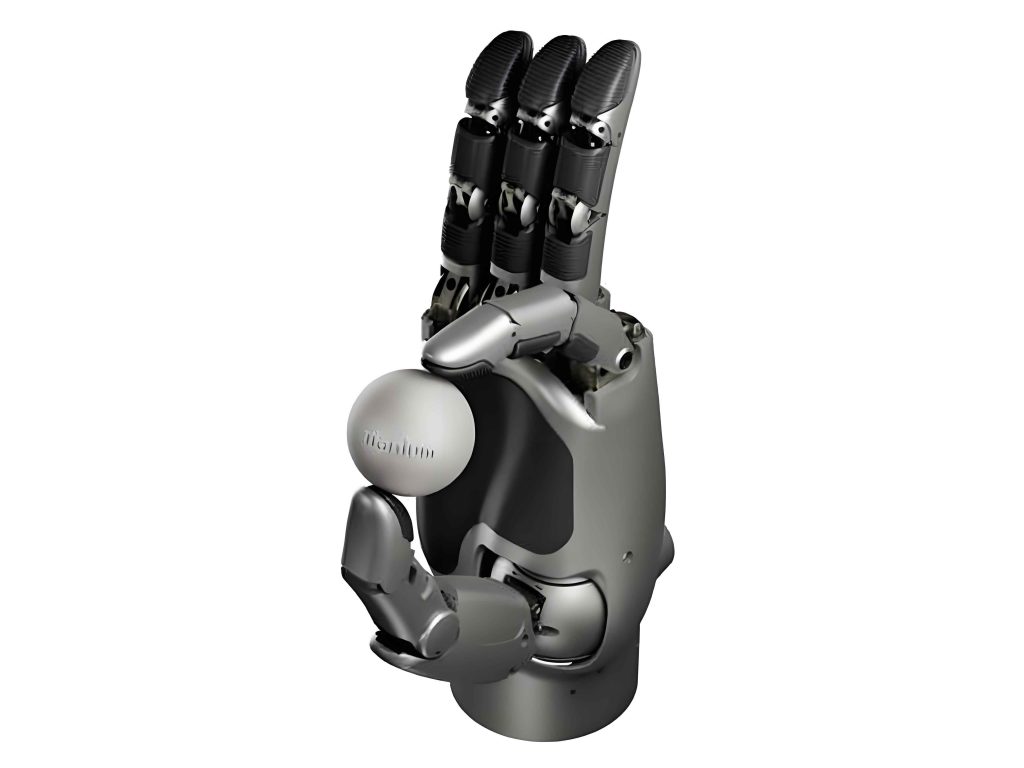
To implement the PNN-APSO model, we first collected datasets through controlled loading experiments on a six-axis force sensor. The sensor was subjected to incremental forces and torques in each dimension, and the corresponding input-output signals were recorded. For instance, forces FX, FY, FZ and moments MX, MY, MZ were applied sequentially, and the sensor’s electrical outputs were captured as input features for the model. The loading mechanisms ensured a comprehensive range of dynamic conditions, simulating real-world scenarios where the six-axis force sensor operates under varying loads. The dataset was then preprocessed to remove outliers and normalize values, resulting in a robust training set. The input to the PNN-APSO model consists of the sensor’s output signals, while the target outputs are the actual applied forces and torques. This setup allows the model to learn the mapping between coupled inputs and decoupled outputs, essential for reducing dynamic errors in the six-axis force sensor.
The PNN-APSO model combines a probabilistic neural network with an adaptive particle swarm optimization algorithm to optimize network parameters and minimize coupling effects. The probabilistic neural network handles the nonlinear mapping between inputs and outputs, while APSO enhances the search for optimal weights and thresholds. The mathematical formulation begins with the definition of the fitness function, which quantifies the error between the model’s predictions and the actual values. For a six-axis force sensor, the fitness function is given by:
$$J = \sum_{j=1}^{J} (d_j – \text{NF}_j)^2$$
where \(d_j\) represents the desired output for the \(j\)-th neuron, \(\text{NF}_j\) is the actual output, and \(J\) is the number of output units. This function guides the optimization process by measuring the deviation from ideal decoupling. The input-output mapping of the PNN is expressed as:
$$y = g\left( \sum_{l=1}^{L} \mu_l \cdot f\left( \int_{0}^{T} x_i(t) w_{ij}(t) dt – \theta_j^{(1)} \right) – \theta_i^{(2)} \right)$$
Here, \(x_i(t)\) is the input function over time, \(w_{ij}(t)\) is the connection weight function, \(\theta_j^{(1)}\) and \(\theta_i^{(2)}\) are thresholds in the hidden and output layers, \(f\) and \(g\) are activation functions (e.g., sigmoid or ReLU), and \(\mu_l\) denotes the weights between hidden and output layers. This equation captures the dynamic relationships in the six-axis force sensor, allowing the model to account for time-varying inputs.
The APSO component initializes a population of particles, each representing a potential solution (e.g., network weights and thresholds). The position and velocity of each particle are updated iteratively to minimize the fitness function. The velocity update formula incorporates adaptive inertia weights to balance global and local search capabilities:
$$v_{i,j}(t+1) = w_p \cdot v_{i,j}(t) + c_1 r_1 (pbest_{i,j} – x_{i,j}(t)) + c_2 r_2 (gbest_j – x_{i,j}(t))$$
where \(v_{i,j}(t)\) is the velocity of particle \(i\) in dimension \(j\) at iteration \(t\), \(x_{i,j}(t)\) is the position, \(w_p\) is the adaptive inertia weight, \(c_1\) and \(c_2\) are acceleration coefficients, \(r_1\) and \(r_2\) are random numbers in [0,1], \(pbest_{i,j}\) is the personal best position, and \(gbest_j\) is the global best position. The adaptive inertia weight \(w_p\) is calculated as:
$$w_p = w_{\text{max}} – (w_{\text{max}} – w_{\text{min}}) \cdot \frac{p}{P_{\text{max}}}$$
with \(w_{\text{max}}\) and \(w_{\text{min}}\) being the maximum and minimum inertia weights, \(p\) the current iteration, and \(P_{\text{max}}\) the maximum iterations. This adjustment ensures that the search becomes more focused over time, improving convergence for the six-axis force sensor model.
To prevent overfitting, we introduce a regularization term in the loss function:
$$J_{\text{reg}} = J + \lambda \sum_{i} w_i^2$$
where \(\lambda\) is a regularization parameter, and \(w_i\) are the network weights. The weights are updated using gradient descent with L2 regularization:
$$w_i^{\text{new}} = w_i^{\text{old}} – \eta \frac{\partial J_{\text{reg}}}{\partial w_i}$$
where \(\eta\) is the learning rate. This step ensures that the model maintains generalization ability while reducing dynamic coupling in the six-axis force sensor.
The training process involves initializing PNN-APSO parameters, as summarized in Table 1. We set the learning rate to 0.001, particle count to 40, batch size to 30, regularization coefficient to 0.0001, and maximum iterations to 100. The model iteratively updates particle positions and velocities, computes the fitness function, and adjusts weights until convergence criteria are met (e.g., fitness below a threshold or maximum iterations reached). This process enhances the six-axis force sensor’s ability to decouple dynamic signals effectively.
| Parameter | Value | Description |
|---|---|---|
| Learning Rate | 0.001 | Step size for weight updates |
| Particle Count | 40 | Number of particles in swarm |
| Batch Size | 30 | Number of samples per training batch |
| Regularization Coefficient | 0.0001 | L2 regularization parameter |
| Max Iterations | 100 | Maximum training iterations |
| Inertia Weight Range | 0.4-0.9 | Adaptive range for \(w_p\) |
During experimentation, we compared the PNN-APSO model against traditional methods, such as linear decoupling and static neural networks, using the same dataset for the six-axis force sensor. The training and validation curves, depicted in accuracy and loss plots, show that PNN-APSO achieves higher accuracy and lower loss more consistently. For instance, after 100 epochs, the model’s accuracy stabilizes between 0.92 and 0.98, while the loss hovers around 0.3. In contrast, linear methods often exhibit accuracies below 0.85 and losses above 0.5, highlighting the superiority of our approach for dynamic decoupling in six-axis force sensors. Table 2 summarizes the performance metrics, emphasizing the reduction in inter-dimensional coupling error.
| Method | Accuracy | Loss | Coupling Error Reduction |
|---|---|---|---|
| Linear Decoupling | 0.82-0.88 | 0.55-0.65 | ~5% |
| Static Neural Network | 0.85-0.90 | 0.45-0.55 | ~7% |
| PNN-APSO (Proposed) | 0.92-0.98 | 0.28-0.32 | ~10% |
The results indicate that the PNN-APSO model significantly improves dynamic decoupling for six-axis force sensors. By leveraging adaptive particle swarm optimization, the model efficiently explores the parameter space, avoiding local minima and enhancing global convergence. The probabilistic neural network component captures complex, nonlinear relationships between inputs and outputs, which is crucial for handling the dynamic nature of force and torque measurements. For example, in high-coupling scenarios, such as rapid load changes, the model maintains stable performance, whereas traditional methods show increased errors. This robustness is attributed to the regularization techniques and adaptive inertia weights, which ensure that the six-axis force sensor model generalizes well to unseen data.
Further analysis reveals that the PNN-APSO model reduces computational complexity compared to higher-order mathematical models, making it suitable for real-time applications. The integration of APSO allows for faster parameter tuning, which is essential for dynamic environments where the six-axis force sensor must respond quickly to varying conditions. Additionally, the model’s ability to automatically extract features from input signals eliminates the need for manual calibration, reducing setup time and improving usability. However, challenges remain, such as the sensitivity to initial parameters and the need for large datasets for training. Future work could explore hybrid approaches combining PNN-APSO with other optimization algorithms or extending the model to multi-sensor systems for enhanced accuracy in six-axis force sensor networks.
In conclusion, the PNN-APSO dynamic decoupling model offers a groundbreaking solution for improving the accuracy of six-axis force sensors in dynamic measurement environments. By addressing the limitations of traditional methods through neural networks and adaptive optimization, we achieve a significant reduction in inter-dimensional coupling errors, with loss values around 0.3 and accuracies up to 0.98. This advancement not only meets the high-precision requirements of industries like robotics and aerospace but also paves the way for future innovations in sensor technology. As six-axis force sensors continue to evolve, models like PNN-APSO will play a vital role in enabling reliable, real-time force and torque measurements, ultimately driving progress in automation and intelligent systems.